
중고외서
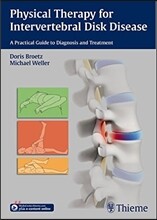
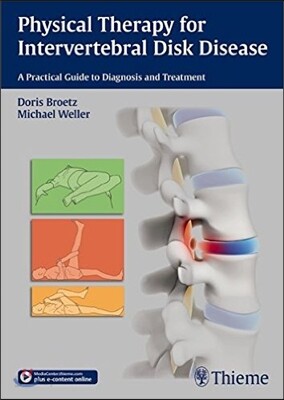
Physical Therapy for Intervertebral Disk Disease: A Practical Guide to Diagnosis and Treatment
A Practical Guide to Diagnosis and Treatment
Tps
2016.05.18.
- 판매자
-
gooddnicky
중고샵 판매자가 직접 등록/판매하는 상품으로 판매자가 해당 상품과 내용에 모든 책임을 집니다.
이미 소장하고 있다면 판매해 보세요.
- 한정판매의 특성상 재고 상황에 따라 품절 가능
중고외서 소개
|
책소개
목차
|
Foreword viii
Author Biographies ix Chapter 1 Introduction 1 Chapter 2 General Principles 3 2.1 Anatomy of the Spine and Nervous System 3 2.2 Pathophysiology of Disk Damage 16 2.3 Pain 24 2.4 Functional Limitation: Objective and Subjective Aspects and Questionnaires 29 2.5 Epidemiology and Risk Factors 33 Chapter 3 Medical Diagnosis and Treatment 36 3.1 Medical History and Clinical Examination 37 3.2 Technical Diagnostic Procedures 40 Chapter 4 Diagnosis in Physical Therapy 49 4.1 Medical History 49 4.2 Diagnosis by Observation 50 4.3 Movement Tests of the Spine 52 4.4 Examination of Nerve-gliding Capacity 53 4.5 General Instructions for Filling out Diagnostic Assessment Forms 54 4.6 Diagnosis 57 Chapter 5 Therapy 63 5.1 Overview 63 5.2 Course of Treatment 66 5.3 Basic Procedure in Physical Therapy for Patients with Disk Damage 68 5.4 Mechanical Effect of the Therapy on the Disk Injury 70 5.5 Mobilization of the Nervous System 71 5.6 Assessment of the Therapy and Evaluation of a Possible Change of Treatment Strategy 73 5.7 Indications for Surgery 74 5.8 Postoperative Therapy 74 Chapter 6 Lumbar Spine 76 6.1 Diagnostic Assessment Form for the Lumbar Spine 76 6.2 Diagnosis by Observation 76 6.3 Diagnostic Tests 78 6.4 Establishing the Diagnosis 88 6.5 Therapeutic Procedure with a Diagnosis of Disk Damage 90 6.6 After an Operation 105 6.7 Case Study 106 Chapter 7 Thoracic Spine 112 7.1 Diagnostic Assessment Form for the Thoracic Spine 112 7.2 Diagnosis by Observation 113 7.3 Diagnostic Tests 113 7.4 Establishing the Diagnosis 120 7.5 Therapeutic Procedure with a Diagnosis of Disk Damage 121 7.6 After an Operation 131 Chapter 8 Cervical Spine 133 8.1 Diagnostic Assessment Form for the Cervical Spine 133 8.2 Diagnosis by Observation 133 8.3 Diagnostic Tests 133 8.4 Establishing the Diagnosis 142 8.5 Therapeutic Procedure with a Diagnosis of Disk Damage 144 8.6 After an Operation 151 8.7 Case Study 153 Chapter 9 Rehabilitation and Prevention 162 9.1 Posture Training 163 9.2 Stability 164 9.3 Mobility 167 9.4 Sitting 167 9.5 Lifting 168 9.6 Strength 170 9.7 Coordination and Balance 172 9.8 Cardiovascular Fitness 172 9.9 Individual Compensatory Movements 173 Chapter 10 Diseases Occurring in Association WITH Prolapsed Disks 177 10.1 Additional Diseases With Mechanical Effects on the Spine 177 10.2 Nonmechanical Additional Diseases 179 Chapter 11 Psychosocial Risk Factors 180 Chapter 12 Selected Studies on the Topic of Spinal Disorders 183 12.1 Breig A, Troup JDC. Biomechanical considerations in the straight-leg-raising test. Cadaveric and clinical studies of the effects of medial hip rotation. Spine. 1979;4:242-250 184 12.2 Maigne JY, Deligne L. Computed tomographic follow-up study of 21 cases of nonoperatively treated cervical intervertebral soft disk hemiation. Spine. 1994;19:189-191 185 12.3 Donelson R, Aprill C, Medcalf R, Grant W, A prospective study of centralization of lumbar and referred pain. Spine. 1997; 22:1115-1122 186 12.4 Brötz D, Küker W, Maschke E, Wick W, Dichgans J, Weller M. A prospective trial of mechanical physiotherapy for lumbar disk prolapse. J Neurol. 2003;250:746-749 188 12.5 Weinstein JN, Tosteson TD, Lurie Jd, Tosteson ANA, Hanscom B, Skinner JS et al. Surgical versus nonoperative treatment for lumbar disk herniation. The Spine Patient Outcomes Research Trial (SPORT): a randomized trial. JAMA. 2006a;296:2441 -2450 190 12.6 Functional Investigation of the Lumbar Spine and the Spinal Canal in Flexion, Extension, and Neutral Position in Patients with Lumbar Disk Prolapse, Using Magnetic Resonance Tomography: Capture of Morphological Changes 192 Chapter 13 Significance, Types, and Objectives of Clinical Studies 196 Glossary 199 Bibliography/References 202 Index 213 |
관련 분류
- 카테고리 분류
품목정보
- 발행일
- 2016년 05월 18일
- 쪽수, 무게, 크기
- 220쪽 | 450g | 170*239*10mm
- ISBN13
- 9783131997616
상품정보안내
- 주문 전 중고상품의 정확한 상태 및 재고 문의는 [판매자에게 문의하기]를 통해 문의해 주세요.
- 주문완료 후 중고상품의 취소 및 반품은 판매자와 별도 협의 후 진행 가능합니다. 마이페이지 > 주문내역 > 주문상세 > 판매자 정보보기 > 연락처로 문의해 주세요.
부적합 상품 신고하기
신고하기- 구매에 부적합한 상품은 신고해주세요.
- 구매하신 상품의 상태, 배송, 취소 및 반품 문의는 판매자 묻고 답하기를 이용해주세요.
- 상품정보 부정확(카테고리 오등록/상품오등록/상품정보 오등록/기타 허위등록) 부적합 상품(청소년 유해물품/기타 법규위반 상품)
- 전자상거래에 어긋나는 판매사례: 직거래 유도
6,000원
총 1개
6,000원