
소득공제
수입
직수입양서
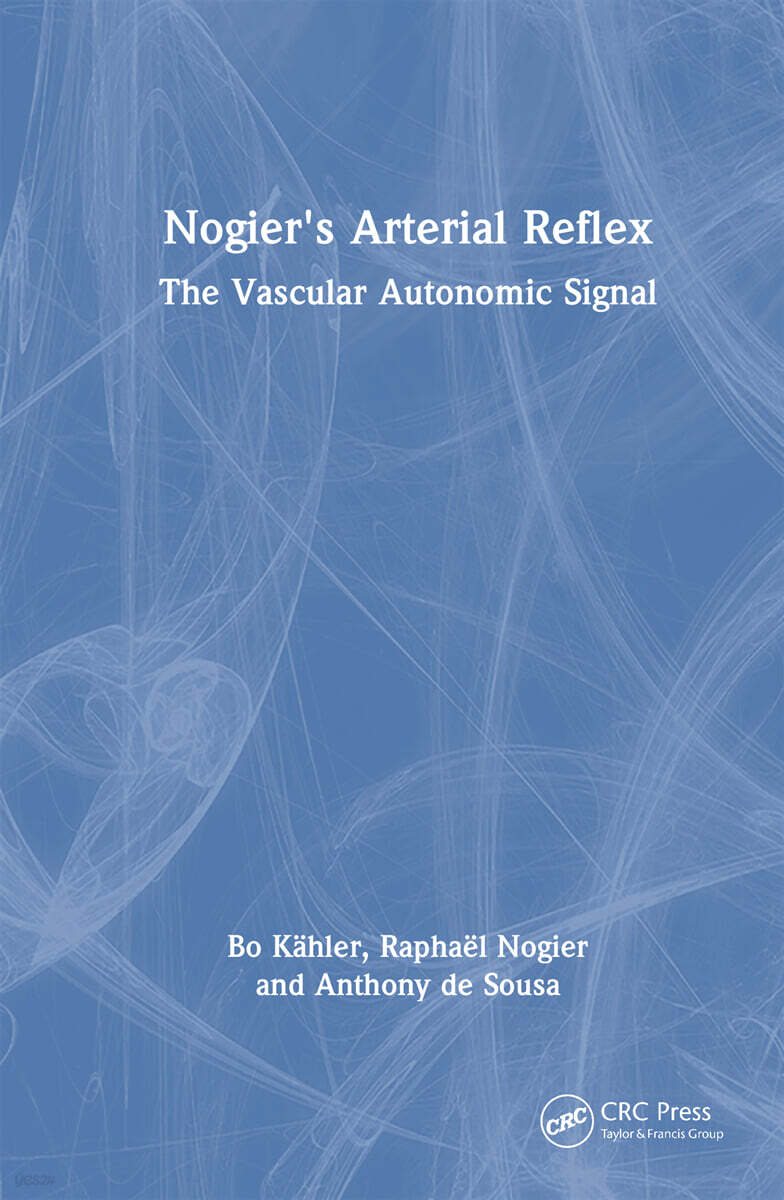
Nogier's Arterial Reflex
The Vascular Autonomic Signal
Hardback, 1st Edition, Illustrations, Color
Raphaël Nogier, Bo Kähler, Anthony de Sousa
CRC Press
2026.10.12.
- 국내배송만 가능
- 해외 거래처 사정에 의하여 품절/지연 가능
- 도서 정보 중 미표기 사항 안내?
- 문화비소득공제 가능
책소개
목차
|
Chapter 1 - Introduction and background Chapter 2 - The RAC, general considerations Chapter 3 - The neuro-vegetative system (autonomic system) Organ function Chapter 4 - Practical aspects of taking the RAC Chapter 5 - Physiological aspects of the RAC Chapter 6 - Experimental aspects Part2: Paul Nogier's progression Chapter 7 - Paul Nogier’s five main stages of research on the use of the RAC Chapter 8 - Use of colour filters Photoemission Photoreception Areas Frequencies Part3: Index of sympathetic reactivity Chapter 9 - The white light test Chapter 10 - The RAC exhaustion phenomenon: dental foci and pathological scars Part4: Overview of Paul Nogier’s classical techniques Chapter 11 ? Introduction Chapter 12 - Instruments used for measurements with the pulse response Chapter 13 - Initial stages of examination in pulse assisted auriculotherapy Chapter 14 - Detection of ear points with the RAC Chapter 15 - Analysis of the reactive quality of a point Chapter 16 - Pulse reactions to mechanical pressure applied to the skin Chapter 17 - Transfers of information and ear borders Chapter 18 - Techniques using colour stimuli Chapter 19 - Overview of the concept of phases Chapter 20 - Introduction to fundamental frequencies Chapter 21 - Areas of the ear and fundamental frequencies Chapter 22 - Other techniques based on fundamental frequencies Chapter 23 - Evaluation of a drug substance Chapter 24 - The RAC applied to smoking withdrawal Part5: More recent techniques Chapter 25 - The photogram Chapter 26 - Symmetry, laterality and tragus. The case of multiple sclerosis Chapter 27 - Food hypersensitivities and the RAC Chapter 28 - Use of the RAC in miscellaneous pathologies Part6: RAC and Dental Practice Chapter 29 - The RAC applied to dentistry: A brief introduction to auriculo-dental practice |
관련 분류
품목정보
- 발행 예정일
- 미정
- 쪽수, 무게, 크기
- 324쪽 | 160*230mm
- ISBN13
- 9781041272823
리뷰/한줄평0
상품정보안내
직수입외서의 경우, 해외거래처에서 제공하는 정보가 부족하여 제목, 표지, 가격, 유통상태 등의 정보가 미비하거나 변경되는 경우가 있습니다. 정확한 확인을 원하시는 경우, 일대일 상담으로 문의하여 주시면 답변 드리겠습니다.
(판형과 판수 등이 다양한 도서는 찾으시는 도서의 ISBN을 알려 주시면 보다 빠르고 정확한 안내가 가능합니다.)
해외거래처에서 품절인 경우, 2차 거래선을 통해 유럽과 미국 출판사로 직접 수입이 진행될 수 있습니다.
수입 진행 시점으로 부터 2~3주가 추가로 소요되며, 해외에서도 유통이 원활하지 않은 도서는 품절 안내가 지연될 수 있습니다.
해당 경우, 문자와 메일로 별도 안내를 드리고 있사오니 마이페이지에서 휴대전화번호와 메일주소를 다시 한번 확인해주시기 바랍니다.
(판형과 판수 등이 다양한 도서는 찾으시는 도서의 ISBN을 알려 주시면 보다 빠르고 정확한 안내가 가능합니다.)
해외거래처에서 품절인 경우, 2차 거래선을 통해 유럽과 미국 출판사로 직접 수입이 진행될 수 있습니다.
수입 진행 시점으로 부터 2~3주가 추가로 소요되며, 해외에서도 유통이 원활하지 않은 도서는 품절 안내가 지연될 수 있습니다.
해당 경우, 문자와 메일로 별도 안내를 드리고 있사오니 마이페이지에서 휴대전화번호와 메일주소를 다시 한번 확인해주시기 바랍니다.