
소득공제
수입
직수입양서
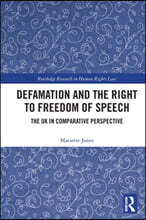
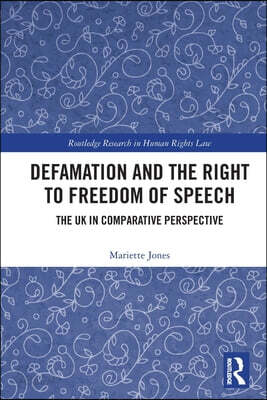
Defamation and the Right to Freedom of Speech
The UK in Comparative Perspective
Paperback, 1st Edition
Jones, Mariette
Routledge
2026.05.22.
이미 소장하고 있다면 판매해 보세요.
- 국내배송만 가능
- 해외 거래처 사정에 의하여 품절/지연 가능
- 도서 정보 중 미표기 사항 안내?
- 문화비소득공제 가능
Routledge Research in Human Rights Law
-
 Land, Control and Transnational Corporations 이동Land, Control and Transnational Corporations10% 361,810원
 -
Jurisdiction, Immunity and Transnational Human Rights Litigation 이동Jurisdiction, Immunity and Transnational Human Rights Litigation10% 220,880원
-
Refugee Displacement, Disability and Human Rights 이동Refugee Displacement, Disability and Human Rights10% 100,950원
-
Domestic Abuse and the European Court of Human Rights 이동Domestic Abuse and the European Court of Human Rights10% 52,560원
-
Bulk Surveillance, Democracy and Human Rights Law in Europe 이동Bulk Surveillance, Democracy and Human Rights Law in Europe10% 100,950원
-
Defamation and the Right to Freedom of Speech 이동Defamation and the Right to Freedom of Speech10% 100,950원
-
Surveillance Law, Data Retention and Human Rights 이동Surveillance Law, Data Retention and Human Rights10% 100,950원
-
Brexit and Rights Protection in the United Kingdom 이동Brexit and Rights Protection in the United Kingdom10% 361,810원
-
Rent Control, Property and Human Rights Law 이동Rent Control, Property and Human Rights Law10% 361,810원
-
International Law and the Regulation of Protest 이동International Law and the Regulation of Protest10% 361,810원
-
International Human Rights and Local Courts 이동International Human Rights and Local Courts10% 100,950원
-
Human Rights and Gender Based Violence in Asia 이동Human Rights and Gender Based Violence in Asia10% 361,810원
-
International Legal Framework on Violence Against Women 이동International Legal Framework on Violence Against Women10% 143,020원
-
Hate Speech and the European Court of Human Rights 이동Hate Speech and the European Court of Human Rights10% 361,810원
-
European Convention on Human Rights and the COVID-19 Pandemic 이동European Convention on Human Rights and the COVID-19 Pandemic10% 52,560원
-
Chinese Multinational Companies and Human Rights 이동Chinese Multinational Companies and Human Rights10% 220,880원
-
Extraterritoriality and International Human Rights Law 이동Extraterritoriality and International Human Rights Law10% 220,880원
-
Refugee Displacement, Disability and Human Rights 이동Refugee Displacement, Disability and Human Rights10% 361,810원
책소개
목차
|
Introduction 1 General background 2 Chapter summaries 4 1 Defamation and freedom of speech 6 Freedom of speech 6 Reputation 9 Other threats to free speech 11 The balancing exercise 13 England and Wales 15 The United States of America 17 Germany 20 The European Court of Human Rights 22 Conclusion 23 2 Common law of defamation in England and Wales prior to the Defamation Act 2013 25 Introduction 25 The common law tort of defamation 26 Defamatory statement 26 ‘Single meaning’ rule 29 Peculiar characteristics of the tort of defamation which may have led to the imbalance vis-a-vis free speech 31 Strict liability 31 Presumption of harm: actionable per se 33 Presumption of falsity 34 Free speech rationale for defamation reform 37 The chilling effect 37 Costs 38 Libel tourism 39 Conclusion 42 3 Defamation law in England and Wales after the 2013 reforms 45 Introduction 45 The Defamation Act 2013: the claimant 47 Defamatory meaning 48 Serious harm to reputation 51 Jury trials ‘abolished’ 63 Libel tourism 64 The Defamation Act 2013: defences 64 Truth 65 Honest opinion 66 Privilege 67 Publication on matter of public interest: successor to the Reynolds defence 69 Claims against persons who are not the primary publisher of the defamatory statement 79 Analysis 82 The Depp cases 82 Miscellaneous 85 Cost and complexity 85 Strict liability and the reverse burden of proof retained 89 The presumption of falsity retained 90 Summary 91 4 Defamation in the United States of America 93 Introduction 93 Constitutional protection of freedom of speech 94 Permissible limitation of freedom of expression in the United States 97 Clear and present danger (of imminent lawless action) 97 Prohibition against prior constraint 97 Compelling reason necessary for restriction of freedom of expression 98 Contemporary US defamation law 100 New York Times v Sullivan 100 From public officials to public figures 102 Purely private figures: Gertz 102 Comparison to UK defamation law 103 Analysis 107 Conclusion 109 5 Defamation in Germany 110 Introduction 110 Some caveats for the common law scholar 111 Constitutional protection of the right to freedom of expression 116 Protection of reputation as a subcategory of personality rights 117 Defamation law in Germany 118 Case study: the Jan Böhmermann affair 122 Guidelines from the German Federal Constitutional Court 124 Balancing exercise 125 Public discourse, context, and the right to reply 129 Status of the libel complainant 130 Opinions as opposed to abusive criticism 130 Analysis 134 6 Defamation in the European Court of Human Rights 138 Introduction 138 The ECtHR: balancing competing rights 139 Recognition of the chilling effect 140 Developments in the ECtHR 142 Freedom of expression 142 How the right to privacy being conflated with reputational rights led to a devaluation of the status of article 10 143 Balancing articles 10 and 8 148 Application in the ECtHR: a case study of Delfi v Estonia and Hoiness v Norway 155 Analysis 161 Balancing speech with reputation 162 The proportionality test 162 Margin of appreciation: types of speech 163 7 Analysis and conclusions 164 The value of a comparative analysis 165 Reputation, speech, and the events that led to the Defamation Act 2013 165 The Defamation Act 2013 169 United States 174 Germany 175 European Court of Human Rights 176 Conclusion 178 Index 180 |
품목정보
- 발행일
- 2026년 05월 22일
- 쪽수, 무게, 크기
- 190쪽 | 370g | 160*230mm
- ISBN13
- 9781032542638
리뷰/한줄평0
상품정보안내
직수입외서의 경우, 해외거래처에서 제공하는 정보가 부족하여 제목, 표지, 가격, 유통상태 등의 정보가 미비하거나 변경되는 경우가 있습니다. 정확한 확인을 원하시는 경우, 일대일 상담으로 문의하여 주시면 답변 드리겠습니다.
(판형과 판수 등이 다양한 도서는 찾으시는 도서의 ISBN을 알려 주시면 보다 빠르고 정확한 안내가 가능합니다.)
해외거래처에서 품절인 경우, 2차 거래선을 통해 유럽과 미국 출판사로 직접 수입이 진행될 수 있습니다.
수입 진행 시점으로 부터 2~3주가 추가로 소요되며, 해외에서도 유통이 원활하지 않은 도서는 품절 안내가 지연될 수 있습니다.
해당 경우, 문자와 메일로 별도 안내를 드리고 있사오니 마이페이지에서 휴대전화번호와 메일주소를 다시 한번 확인해주시기 바랍니다.
(판형과 판수 등이 다양한 도서는 찾으시는 도서의 ISBN을 알려 주시면 보다 빠르고 정확한 안내가 가능합니다.)
해외거래처에서 품절인 경우, 2차 거래선을 통해 유럽과 미국 출판사로 직접 수입이 진행될 수 있습니다.
수입 진행 시점으로 부터 2~3주가 추가로 소요되며, 해외에서도 유통이 원활하지 않은 도서는 품절 안내가 지연될 수 있습니다.
해당 경우, 문자와 메일로 별도 안내를 드리고 있사오니 마이페이지에서 휴대전화번호와 메일주소를 다시 한번 확인해주시기 바랍니다.
100,950원
총 1개
100,950원