

소득공제
베스트셀러
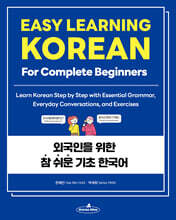
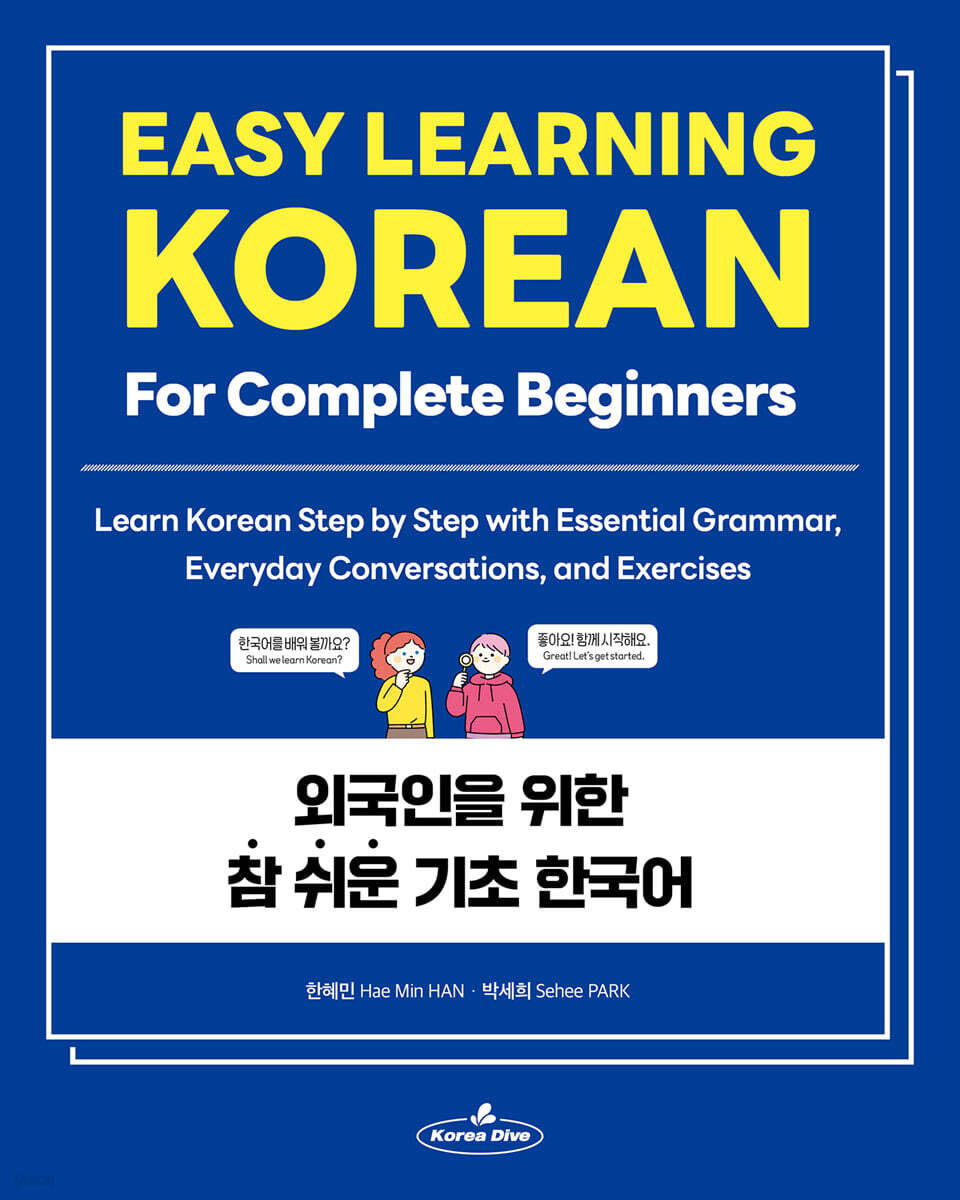
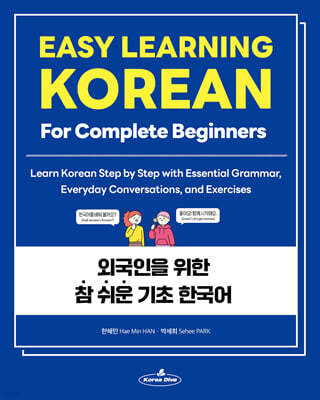
외국인을 위한 참 쉬운 기초 한국어 (Easy Learning Korean for Complete Beginners)
Learn Korean Step by Step with Essential Grammar, Everyday Conversations, and Exercises
Korea Dive(코리아다이브)
2026.09.24.
- 베스트
- 국어 91위 국어 top100 1주
이미 소장하고 있다면 판매해 보세요.
- 해외배송 가능?
- 문화비소득공제 가능
이 상품의 태그
책소개
목차
|
Chapter 1
CHAPTER FOCUS|Introduce yourself, identify people and things, and ask simple questions about nationality and occupation. Unit 1 N이에요/예요. “선생님이에요.” (I) am a teacher. Unit 2 N1은/는 N2이에요/예요. “우리는 친구예요.” We are friends. Unit 3 N1은/는 N2이에요/예요? “미나 씨는 가수예요?” Is Mina a singer? Chapter 2 CHAPTER FOCUS|Say what someone or something is not and correct incorrect information. Unit 1 N이/가 아니에요. “한국인이 아니에요.” (I) am not Korean. Unit 2 N1은/는 N2이/가 아니에요. “이것은 책이 아니에요” It is not a book. Chapter 3 CHAPTER FOCUS|Ask for and order one or more items in everyday situations. Unit 1 N 주세요. “카페라테 주세요.” Can I have a cafe latte? Unit 2 N1하고 N2 “숟가락하고 젓가락 좀 주세요.” Can I have a spoon and chopsticks? Chapter 4 CHAPTER FOCUS|Add information, refer to people and things around you, and express possession and relationships. Unit 1 N도 40 “저도 학생이에요.” I’m a student, too. Unit 2 이(것)/그(것)/저(것) “이거 뭐예요?” What is this? Unit 3 N의 “저건 제 친구의 가방이에요.” That is my friend’s bag. Chapter 5 CHAPTER FOCUS|Use Native Korean numbers and counting units to count and order items. Unit 1 고유어 숫자 “하나, 둘, 셋, 넷···” One, two, three, four... Unit 2 단위 명사 55 “치킨 한 마리하고 콜라 한 병 주세요.” I’d like a fried chicken and a bottle of cola. Chapter 6 CHAPTER FOCUS|Use Sino-Korean numbers to talk about prices and quantities. Unit 1 한자어 숫자 “일, 이, 삼, 사···” One, two, three, four... Unit 2 N은/는 (가격) 원이에요. “이 노트는 오천 원이에요.” This notebook is 5,000 won. Unit 3 N은/는 (숫자 + 단위)에 (가격) 원이에요. “떡볶이는 삼 인분에 만 이천 원이에요.” Tteokbokki is 12,000 won for three servings. Chapter 7 CHAPTER FOCUS|Talk about what you have or don’t have, say whether people and things exist, and describe where they are using common location words. Unit 1 N이/가 있어요. “한국 친구가 있어요.” I have a Korean friend. Unit 2 N이/가 없어요. “고양이가 없어요.” I don’t have a cat. Unit 3 N1이/가 N2 (위치어)에 있어요. “편의점이 은행 옆에 있어요.” The convenience store is next to the bank. Chapter 8 CHAPTER FOCUS|Tell time, say days and dates, and talk about schedules and important dates. Unit 1 시간 “런던은 지금 아침 열 시예요.” It’s 10 a.m. in London now. Unit 2 요일 “내일은 금요일이에요.” Tomorrow is Friday. Unit 3 날짜 “제 생일은 팔월 사 일이에요.” My birthday is August 4. Chapter 9 CHAPTER FOCUS| Talk about where people are going or coming, and say where they are not going or coming. Unit 1 (장소)에 가요/와요. “저는 강남역에 가요.” I’m going to Gangnam Station. Unit 2 (장소)에 안 가요/안 와요. “미나 씨는 모임에 안 와요.” Mina isn’t coming to the gathering. Chapter 10 CHAPTER FOCUS|Conjugate verbs in the present tense, use object particles, ask questions with 뭐 and 무슨, and talk about everyday activities and preferences. Unit 1 V.아요/어요/해요. “전 서울에 살아요.” I live in Seoul. Unit 2 N을/를 V.아요/어요/해요. “제 친구는 라면을 좋아해요.” My friend likes ramyeon. Unit 3 뭐/무슨 “무슨 드라마를 봐요?” What drama are you watching? Chapter 11 CHAPTER FOCUS|Make negative sentences with 안, express inability with 못, and talk about everyday activities and where they take place. Unit 1 N을/를 안 V-아요/어요/해요. “저는 소고기를 안 먹어요.” I don’t eat beef. Unit 2 N을/를 못 V-아요/어요/해요. “저는 커피를 못 마셔요.” I can’t drink coffee. Unit 3 (장소)에서 “식당에서 친구하고 저녁을 먹어요.” I have dinner with a friend at a restaurant. Chapter 12 CHAPTER FOCUS|Conjugate adjectives in the present tense, use subject particles with adjectives, make negative descriptions with 안, and describe people, places, and things. Unit 1 A-아요/어요/해요. “지하철에 사람이 많아요.” There are many people on the subway. Unit 2 N이/가 A-아요/어요/해요. “우리 집이 조금 멀어요.” My house is a bit far from here. Unit 3 N이/가 안 A-아요/어요/해요. “날씨가 별로 안 좋아요.” The weather isn’t very good. Chapter 13 CHAPTER FOCUS| Conjugate verbs and adjectives with ㅂ irregular and ㅡ drop patterns, and use these forms correctly in everyday situations. Unit 1 ㅂ 불규칙 “강아지가 아주 귀여워요.” The puppy is very cute. Unit 2 ㅡ 탈락 “미나 씨, 새 옷이 정말 예뻐요.” Mina, your new clothes are really pretty. Chapter 14 CHAPTER FOCUS| Use common conjunctions to connect sentences, link verbs and adjectives with 고, and connect actions and descriptions naturally. Unit 1 접속사 “배고파요. 그래서 점심을 일찍 먹어요.” I’m hungry, so I eat lunch early. Unit 2 V/A-고 “아침에 밥을 먹고 이를 닦아요.” I eat breakfast and brush my teeth in the morning. Chapter 15 CHAPTER FOCUS| Use 에 with time expressions to talk about schedules, make suggestions with V-을/ㄹ까요?, and ask for confirmation with (이)지요? Unit 1 에 (시간 표현) “3시에 수업이 끝나요.” The class ends at 3. Unit 2 V-을/ㄹ까요? “제가 점심을 살까요?” Shall I buy lunch? Unit 3 V/A/N-(이)지요? “시험이 아주 어렵지요?” The exam is very difficult, right? Chapter 16 CHAPTER FOCUS| Make polite requests with V-(으)세요, tell someone not to do something with V-지 마세요, and express what you want or wish to do with V-고 싶어요. Unit 1 V-(으)세요. “여기에 이름을 쓰세요.” Please write your name here. Unit 2 V-지 마세요. “절대 포기하지 마세요.” Never give up. Unit 3 V-고 싶어요. “오늘은 일찍 자고 싶어요.” I want to go to bed early today. Chapter 17 CHAPTER FOCUS| Describe direction with (으)로, make polite everyday requests with V-아/어/해 주세요, and express starting and ending points using 에서/부터 and 까지. Unit 1 N-(으)로 “이따가 강남 쪽으로 올게요.” I’ll come toward Gangnam later. Unit 2 V-아/어/해 주세요. “신촌으로 가 주세요.” Please take me to Sinchon. Unit 3 N1에서/부터 N2까지 “점심시간은 열두 시부터 한 시까지예요.” Lunchtime is from 12 to 1. Chapter 18 CHAPTER FOCUS| Conjugate verbs and adjectives in the past tense, describe what someone or something was in the past, use ㄷ irregular verbs correctly, and talk about past events. Unit 1 A/V-았어요/었어요/했어요. “미안해요! 약속을 깜빡 잊어버렸어요.” I’m sorry! I completely forgot our appointment. Unit 2 N이었어요/였어요. “민지 씨는 전에 운동선수였어요. 지금은 코치예요.” Minji used to be an athlete. Now she is a coach. Unit 3 ㄷ 불규칙 “우리 같이 요리 수업을 들을까요?” Shall we take a cooking class together? |
저자 소개 2
현 한국외국어대학교 KFL대학원 조교수. 한국외국어대학교 한국어문화교육원, 홍콩이공대학교, KAIST에서 한국어와 한국문화를 가르쳤으며, 현재 한국어교육의 디지털 전환과 AI 활용을 중심으로 한국어 교사 교육, 프롬프트 리터러시, 멀티미디어 기반 교수·학습, 온라인 및 하이브리드 한국어교육을 연구하고 있다. 국내외 한국어교육 정책 및 교육과정 개발, 세종학당 교재 개발, 교원 연수 등 다양한 연구와 교육 활동을 통해 한국어교육의 미래를 모색하고 있다. 공저로 『외국인을 위한 참 쉬운 한글 배우기』가 있다.
Hae Min HAN is an Assistant Professor
현 한국외국어대학교 KFL대학원 조교수. 한국외국어대학교 한국어문화교육원, 홍콩이공대학교, KAIST에서 한국어와 한국문화를 가르쳤으며, 현재 한국어교육의 디지털 전환과 AI 활용을 중심으로 한국어 교사 교육, 프롬프트 리터러시, 멀티미디어 기반 교수·학습, 온라인 및 하이브리드 한국어교육을 연구하고 있다. 국내외 한국어교육 정책 및 교육과정 개발, 세종학당 교재 개발, 교원 연수 등 다양한 연구와 교육 활동을 통해 한국어교육의 미래를 모색하고 있다. 공저로 『외국인을 위한 참 쉬운 한글 배우기』가 있다.
Hae Min HAN is an Assistant Professor at the Graduate School of KFL, Hankuk University of Foreign Studies. She has taught Korean language and culture at the Center for Korean Language and Culture of Hankuk University of Foreign Studies, The Hong Kong Polytechnic University, and KAIST. Her research focuses on the digital transformation of Korean language education and AI use in Korean language teaching, with interests in Korean language teacher education, prompt literacy, multimedia-enhanced instruction, and online and hybrid learning. She has been actively involved in Korean language education policy and curriculum development, King Sejong Institute textbook development and teacher training programs, while exploring future directions for Korean language education. She is also a co-author of Easy Learning Hangeul for Beginners.
Hae Min HAN is an Assistant Professor at the Graduate School of KFL, Hankuk University of Foreign Studies. She has taught Korean language and culture at the Center for Korean Language and Culture of Hankuk University of Foreign Studies, The Hong Kong Polytechnic University, and KAIST. Her research focuses on the digital transformation of Korean language education and AI use in Korean language teaching, with interests in Korean language teacher education, prompt literacy, multimedia-enhanced instruction, and online and hybrid learning. She has been actively involved in Korean language education policy and curriculum development, King Sejong Institute textbook development and teacher training programs, while exploring future directions for Korean language education. She is also a co-author of Easy Learning Hangeul for Beginners.
한혜민의 다른 상품
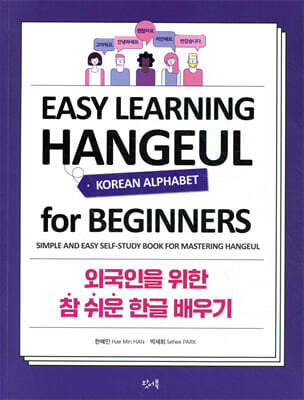
현 홍콩중문대학교 한국어 프로그램 전임강사. 대학교에서 외국인 학생 지원 업무를 담당하며 한국어교육에 관심을 갖게 되었다. 한국외국어대학교 대학원에서 ‘외국인을 위한 한국어교육’으로 석사학위를 취득했다. 국내에서는 대기업 외국인 임직원을 대상으로 한국어를 가르쳤으며, 홍콩에서는 HKU SPACE, 홍콩이공대학교, 홍콩중문대학교에서 한국어 강사로 재직했다. 현재 외국인 학습자를 위한 한국어 교재와 교육 자료 개발에 꾸준히 참여하고 있다. 공저로 『외국인을 위한 참 쉬운 한글 배우기』가 있다.
Sehee PARK is currently a Lecturer in the Korea
현 홍콩중문대학교 한국어 프로그램 전임강사. 대학교에서 외국인 학생 지원 업무를 담당하며 한국어교육에 관심을 갖게 되었다. 한국외국어대학교 대학원에서 ‘외국인을 위한 한국어교육’으로 석사학위를 취득했다. 국내에서는 대기업 외국인 임직원을 대상으로 한국어를 가르쳤으며, 홍콩에서는 HKU SPACE, 홍콩이공대학교, 홍콩중문대학교에서 한국어 강사로 재직했다. 현재 외국인 학습자를 위한 한국어 교재와 교육 자료 개발에 꾸준히 참여하고 있다. 공저로 『외국인을 위한 참 쉬운 한글 배우기』가 있다.
Sehee PARK is currently a Lecturer in the Korean Programme at The Chinese University of Hong Kong. After working in the Office of International Affairs at a university, she developed an interest in teaching Korean to international learners and earned a master’s degree in Korean language education from Hankuk University of Foreign Studies. In Korea, she taught Korean to international employees at major corporations. In Hong Kong, she taught Korean at HKU SPACE, The Hong Kong Polytechnic University, and The Chinese University of Hong Kong. She continues to contribute to Korean textbook and teaching material development for international learners. She is a co-author of Easy Learning Hangeul for Beginners.
Sehee PARK is currently a Lecturer in the Korean Programme at The Chinese University of Hong Kong. After working in the Office of International Affairs at a university, she developed an interest in teaching Korean to international learners and earned a master’s degree in Korean language education from Hankuk University of Foreign Studies. In Korea, she taught Korean to international employees at major corporations. In Hong Kong, she taught Korean at HKU SPACE, The Hong Kong Polytechnic University, and The Chinese University of Hong Kong. She continues to contribute to Korean textbook and teaching material development for international learners. She is a co-author of Easy Learning Hangeul for Beginners.
박세희의 다른 상품
관련 분류
품목정보
- 발행일
- 2026년 09월 24일
- 쪽수, 무게, 크기
- 232쪽 | 568g | 204*254*12mm
- ISBN13
- 9791199223462
출판사 리뷰
|
한국어를 처음 배우는 사람을 위한
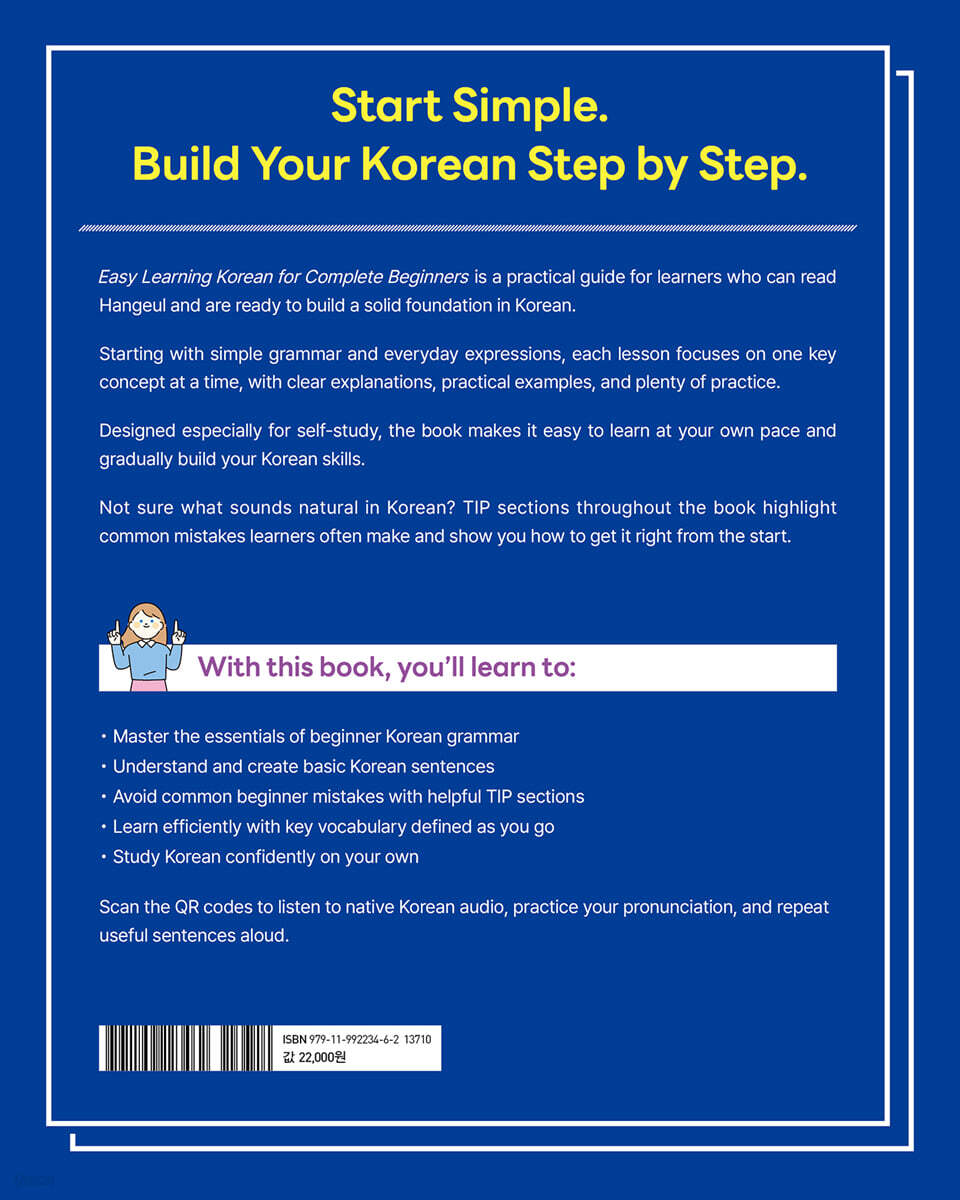
쉽고 친절한 기초 한국어 교재 한국어를 배우는 초심자들이 가장 어려움을 느끼는 부분은 무엇일까요? 바로 규칙을 이해해도 막상 이를 활용해 실제로 말하는 것이 어렵다는 점입니다. 설명을 들을 때는 알 것 같다가도, 막상 문장을 만들려면 어떻게 응용해야 할지 몰라 난감해하곤 합니다. 『외국인을 위한 참 쉬운 기초 한국어 (Easy Learning Korean for Complete Beginners)』는 한국어 기초 문법을 ‘외워야 하는 규칙’이 아닌 ‘쉽게 응용할 수 있는 문장 패턴’으로 배울 수 있는 교재입니다. 한 유닛에서 한 가지 문법을 제시하고, 이 문법을 패턴화하여 문장을 어떻게 만들 수 있는지 보여줍니다. 이때, 다양한 문장이 제시되기 때문에 학습자는 여러 문장을 공부하며 어떻게 응용되는지 완전히 익히게 됩니다. 본문의 QR코드를 스캔하면 샘플 문장의 음성을 바로 들을 수 있어, 발음을 따라하며 연습하기에 좋습니다. 각 문장에 나오는 단어는 같은 페이지에 뜻이 적혀 있어 따로 사전을 찾지 않아도 됩니다. 바로 앞 유닛에서 배운 단어라도 다시 등장하면 뜻도 다시 적어 놓아, 학습의 흐름을 깨지 않고 집중을 이어가며 공부할 수 있습니다. 특히, 각 유닛에 등장하는 팁은 초심자들이 자주 하는 실수와 이를 방지하는 방법을 알려줍니다. 따라서 혼자 공부하면 틀린 줄 모르고 넘어가기 쉬운 부분들을 처음부터 올바르게 배울 수 있습니다. 상세한 설명, 실용적인 예문, 현실적인 대화문, 학습을 도와주는 단원별 연습문제 등 기초 한국어를 배우는 데 필요한 모든 것을 이 책에 담았습니다. 하루에 한 가지 패턴을 익히고, 이를 활용해 말하고자 하는 문장을 만들어 보세요. 한국어 공부가 쉽고 재밌어질 것입니다. An Easy, Beginner-Friendly Korean Textbook for First-Time Learners What do beginners find most challenging about learning Korean? Even when they understand the rules, putting them into practice and actually speaking can be difficult. The explanations may seem clear, but when it is time to make their own sentences, learners often feel unsure of how to apply what they have learned. Easy Learning Korean for Complete Beginners helps you learn basic Korean grammar as sentence patterns you can easily use, rather than rules you have to memorize. Each unit introduces one grammar point and presents it as a pattern, showing you how to build sentences. A wide variety of examples helps you gain a thorough understanding of how to use each pattern in different sentences. Simply scan the QR codes in the book to listen to audio recordings of the sample sentences and practice your pronunciation by repeating what you hear. The meaning of each word used in the sentences is provided on the same page, so there is no need to look it up in a dictionary. Even words introduced in the previous unit are explained again whenever they reappear, helping you stay focused and keep learning without interruption. The tips in each unit highlight common mistakes beginners make and explain how to avoid them. They help you learn to use Korean correctly from the start, including points you might otherwise overlook when studying on your own. This book brings together everything you need to learn the basics of Korean: detailed explanations, practical examples, realistic dialogues, and exercises in every unit to support your learning. Learn one pattern a day, then use it to make the sentences you want to say. Studying Korean can be easier and more fun than you think! |
사락 별점0
혜택 및 유의사항밑줄0
혜택 및 유의사항
19,800원
총 1개
19,800원