

소득공제
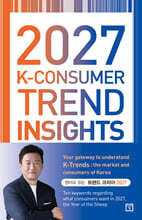
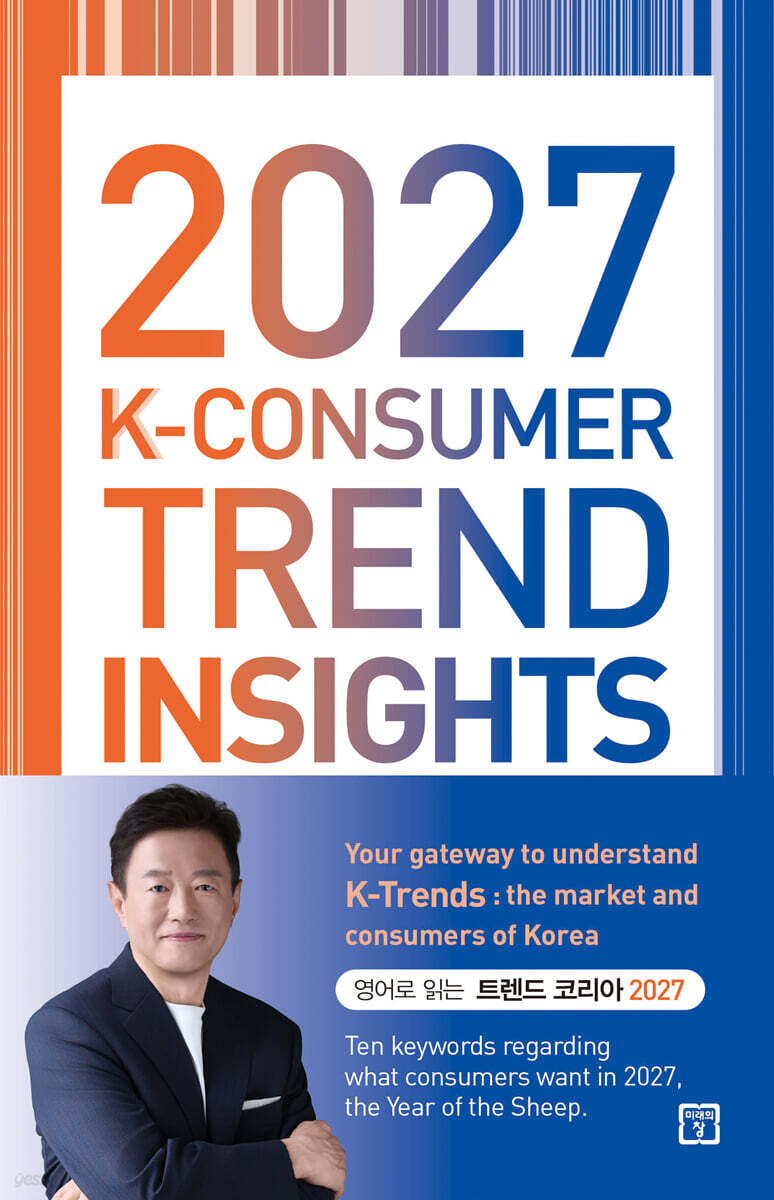
2027 K-CONSUMER TREND INSIGHTS
Ten keywords regarding what consumers want in 2027, the Year of the Sheep
트렌드 코리아 2027 영문판
이미 소장하고 있다면 판매해 보세요.
- 국내배송만 가능
- 문화비소득공제 가능
책소개
목차
|
Preface 005
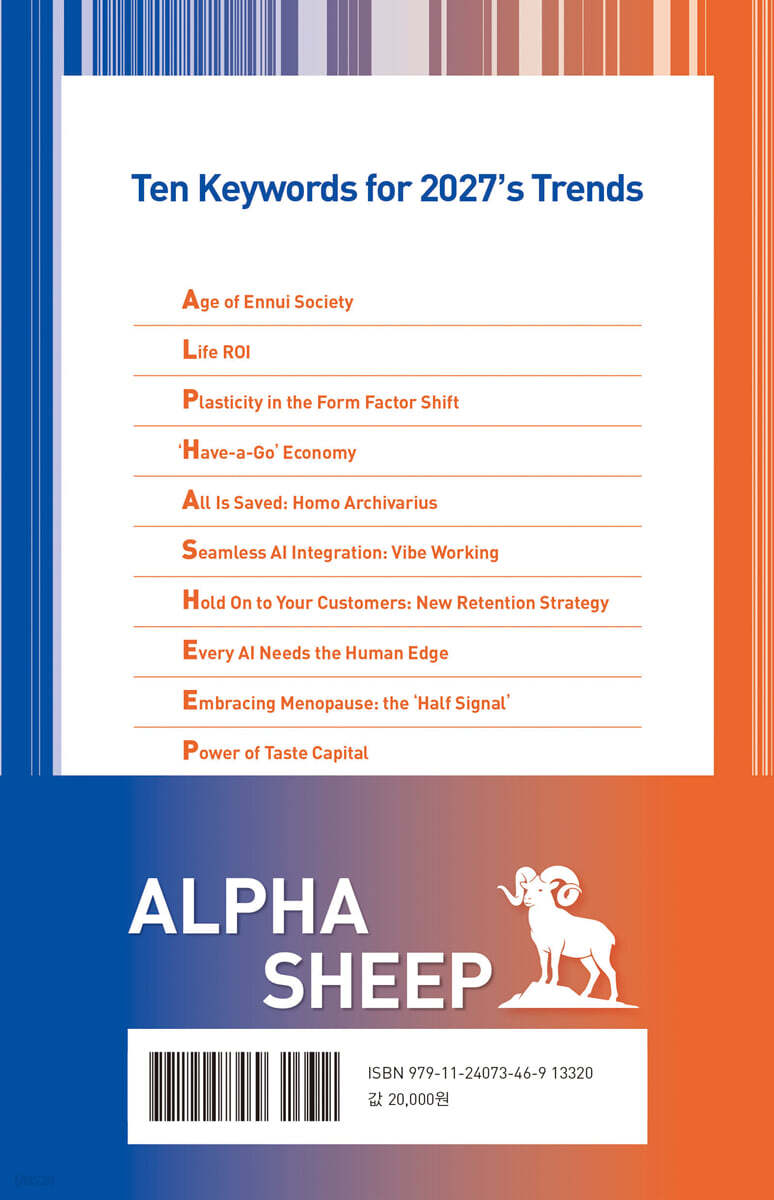
Ten Keywords Age of Ennui Society 023 Life ROI 051 Plasticity in the Form Factor Shift 073 ‘Have-a-Go’ Economy 093 All Is Saved: Homo Archivarius 117 Seamless AI Integration: Vibe Working 143 Hold On to Your Customers: New Retention Strategy 169 Every AI Needs the Human Edge 193 Embracing Menopause: the ‘Half Signal’ 219 Power of Taste Capital 241 Authors 265 |
저자 소개 1
Rando Kim
작가, 서울대 명예교수.
트렌드코리아 소비트렌드분석센터를 이끌며, 세계 소비시장의 트렌드를 연구하고 유튜버, 컨설턴트, 멘토로서도 활동하고 있다. 우리나라를 대표하는 트렌드서 <트렌드코리아> 시리즈를 2008년부터 18년간 써왔으며, 그 외에도 『김난도의 미래트렌드연구실』, 『청소년을 위한 김난도 교수의 트렌드수업』, 『K뷰티 트렌드』, 『대한민국 외식업 트렌드』, 『트렌드로드, 뉴욕 임파서블>, 『트렌드차이나』 등 많은 베스트셀러 트렌드 서적을 냈다.
온라인에서는, 유튜브 채널 <트렌드코리아 TV>를 2020년부터 진행하고, 온라인 공개 강좌 ‘K-MOOC’에서 〈소
작가, 서울대 명예교수.
트렌드코리아 소비트렌드분석센터를 이끌며, 세계 소비시장의 트렌드를 연구하고 유튜버, 컨설턴트, 멘토로서도 활동하고 있다. 우리나라를 대표하는 트렌드서 <트렌드코리아> 시리즈를 2008년부터 18년간 써왔으며, 그 외에도 『김난도의 미래트렌드연구실』, 『청소년을 위한 김난도 교수의 트렌드수업』, 『K뷰티 트렌드』, 『대한민국 외식업 트렌드』, 『트렌드로드, 뉴욕 임파서블>, 『트렌드차이나』 등 많은 베스트셀러 트렌드 서적을 냈다.
온라인에서는, 유튜브 채널 <트렌드코리아 TV>를 2020년부터 진행하고, 온라인 공개 강좌 ‘K-MOOC’에서 〈소비자와 시장〉이라는 강좌를 운영하며, 2024년부터 <김난도 GPT>를 개설했다. 이는 오픈AI의 인공지능 서비스 GPTs에 그동안 집필한 30여 권의 도서와 다수의 학술논문을 학습시켜 트렌드·경제경영·자기계발·인생관 등의 질문에 특화된 답변을 제시하게 만든 김난도 작가의 ‘디지털 쌍둥이’다.
수많은 기업과 공공기관이 다가올 미래를 대비할 수 있도록 조언하는 컨설턴트와 멘토로서의 역할도 수행하고 있다. 청와대와 장차관워크숍, 경기·경남 등 여러 교육청과 학교, 서울특별시·경기도 등 지방자치단체, 삼성전자·현대자동차·LG전자 등 대한민국을 대표하는 크고 작은 회사들에게 컨설팅과 강의를 해왔다. 『스물하나 서른아홉』, 『마켓컬리 인사이트』, 『더현대서울 인사이트』, 『소비자는 무엇을 원하는가』 등의 경제경영서도 여러 권 썼다.
1997년부터 28년 동안 서울대학교 생활과학대학 소비자학과 교수로 재직해오다가, 좀 더 자유롭고 활발한 저술에 집중하기 위해 2025년 명예퇴직했다. 앞으로 자유로운 작가로서, 더욱 다양하게 활동하려고 노력하고 있다.
Rando Kim is a professor in the Dept. of Consumer Science (DCS), Seoul National University (SNU). As a specialist in consumer behavior and market trend analysis, he has written more than 20 books including the Trend Korea series, Dining Business Trend series, Market Kurly Insight , The Hyundai Seoul Insight , Trend China, What Consumers Want, and Luxury Korea . He also wrote essay books, Amor Fati , Future and My Job , and Youth , It’s Painful which have sold three million copies in 17 countries. He has conducted research projects about consumer needs finding, new product planning, and market trend probing for Korea’s major companies like Samsung, LG, SK, CJ, Hyundai Motors, GS, LH, Amorepacific, Lotte, Fursys, Nongshim, and Coway.
트렌드코리아 소비트렌드분석센터를 이끌며, 세계 소비시장의 트렌드를 연구하고 유튜버, 컨설턴트, 멘토로서도 활동하고 있다. 우리나라를 대표하는 트렌드서 <트렌드코리아> 시리즈를 2008년부터 18년간 써왔으며, 그 외에도 『김난도의 미래트렌드연구실』, 『청소년을 위한 김난도 교수의 트렌드수업』, 『K뷰티 트렌드』, 『대한민국 외식업 트렌드』, 『트렌드로드, 뉴욕 임파서블>, 『트렌드차이나』 등 많은 베스트셀러 트렌드 서적을 냈다.
온라인에서는, 유튜브 채널 <트렌드코리아 TV>를 2020년부터 진행하고, 온라인 공개 강좌 ‘K-MOOC’에서 〈소비자와 시장〉이라는 강좌를 운영하며, 2024년부터 <김난도 GPT>를 개설했다. 이는 오픈AI의 인공지능 서비스 GPTs에 그동안 집필한 30여 권의 도서와 다수의 학술논문을 학습시켜 트렌드·경제경영·자기계발·인생관 등의 질문에 특화된 답변을 제시하게 만든 김난도 작가의 ‘디지털 쌍둥이’다.
수많은 기업과 공공기관이 다가올 미래를 대비할 수 있도록 조언하는 컨설턴트와 멘토로서의 역할도 수행하고 있다. 청와대와 장차관워크숍, 경기·경남 등 여러 교육청과 학교, 서울특별시·경기도 등 지방자치단체, 삼성전자·현대자동차·LG전자 등 대한민국을 대표하는 크고 작은 회사들에게 컨설팅과 강의를 해왔다. 『스물하나 서른아홉』, 『마켓컬리 인사이트』, 『더현대서울 인사이트』, 『소비자는 무엇을 원하는가』 등의 경제경영서도 여러 권 썼다.
1997년부터 28년 동안 서울대학교 생활과학대학 소비자학과 교수로 재직해오다가, 좀 더 자유롭고 활발한 저술에 집중하기 위해 2025년 명예퇴직했다. 앞으로 자유로운 작가로서, 더욱 다양하게 활동하려고 노력하고 있다.
Rando Kim is a professor in the Dept. of Consumer Science (DCS), Seoul National University (SNU). As a specialist in consumer behavior and market trend analysis, he has written more than 20 books including the Trend Korea series, Dining Business Trend series, Market Kurly Insight , The Hyundai Seoul Insight , Trend China, What Consumers Want, and Luxury Korea . He also wrote essay books, Amor Fati , Future and My Job , and Youth , It’s Painful which have sold three million copies in 17 countries. He has conducted research projects about consumer needs finding, new product planning, and market trend probing for Korea’s major companies like Samsung, LG, SK, CJ, Hyundai Motors, GS, LH, Amorepacific, Lotte, Fursys, Nongshim, and Coway.
김난도의 다른 상품

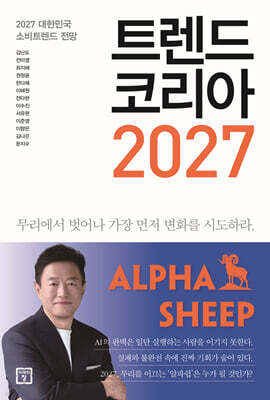



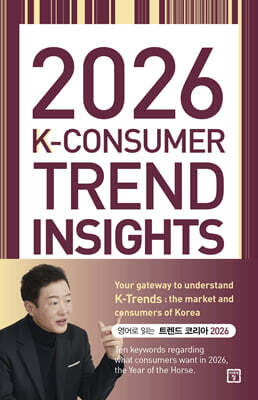


관련 분류
- 카테고리 분류
품목정보
- 발행일
- 2026년 10월 28일
- 쪽수, 무게, 크기
- 272쪽 | 135*209*20mm
- ISBN13
- 9791124073469
책 속으로
|
With this idea in mind, we have chosen ALPHA SHEEP as our slogan for 2027. Rather than simply following the flock and allowing ourselves to be swept along by the currents of the times, we should be willing to break away from the herd: to think for ourselves and become the first to put our own ideas into action.
Sheep may appear gentle, but they can also be remarkably stubborn and aggressive. Being docile does not mean being powerless. In a modern society swept by the powerful currents of socioeconomic polarization and artificial intelligence, 2027 will be a year in which we need, more than ever, not only to navigate the trends around us but also to exercise the initiative and drive to act as an ALPHA SHEEP. ---pp.16~17 Fragmented, meaningless flows of algorithmic information also make it difficult for an experience to become truly our own. For an experience to become ours, it needs a minimum amount of time. Like an egg that must be left undisturbed to incubate, individual stimuli need time before they can ripen into a coherent experience and become “my story.” What we lack today is precisely that time to ripen. We move on before something has even had the chance to become interesting, so our experiences repeatedly end at the opening chapter. As we jump to the next stimulus before the previous one has matured, we begin more and more things while completing fewer and fewer. ---p.36 ROI, along with various other investment terms, has permeated our daily lives. Economic logic is spreading through every aspect of our existence like a tumor. In this age of AI, as life becomes increasingly efficient yet dehumanized, are we perhaps losing things more precious than ROI in our relationships and the way we plan our lives? Maximizing ROI does not necessarily bring the happiness we expect. Psychologist Barry Schwartz uses the term “maximizer” to describe the compulsive tendency of a consumer to seek the best product at the best time and at the best price. His research suggests that, paradoxically, the stronger this tendency, the less happiness people feel. Even after making the best choice, maximizers dwell on the alternatives they passed up and experience regret. Professor Choi Incheol(최인철) of Seoul National University’s Department of Psychology, a leading expert on happiness research, explains in his latest book, The Good Life(굿 라이프), that rather than becoming maximizers, happy people choose satisfaction, thinking “This is good enough.” In other words, the very effort to boost ROI in pursuit of a better life can paradoxically push us further away from happiness. ---pp.70~71 Why must vitamins be swallowed, and why must shampoo be a liquid? The familiar forms of products are changing. The vitamins we used to swallow are now patches we attach to our skin, and shampoos are now becoming single-dose tiles. This is a change in a product’s “form factor.” Form factors encompass physical properties such as being a solid, liquid, gel, film, or spray; structures that fold, roll, and stretch; interactions by which users access functions, such as buttons and sprays, ingesting and wearing; and the location and method in which functions are incorporated. In other words, form factor refers to a product’s physical form: what it is made of, how it is structured, and how it is used. Even with the same functionality, the value consumers derive varies with a product’s form factor. Simply changing the form factor can therefore significantly alter a product’s utility and users’ experience with it. ---p.73 The innovative tools individuals now have at their disposal are not merely passive instruments; they function more like collaborators that compensate for personal shortcomings and help complete assigned tasks. Alongside these collaborators, people can now take immediate, independent action, without complex preparation or having the support of a large organization, and vastly expand the scope of their experiences. This shift reverses the traditional order of preparation and execution. In the past, people acted once they were prepared; today, they become prepared through the act of doing. Moreover, those taking action are no longer limited to a select few extraordinary individuals. An era of ordinary micro heroes solving problems firsthand has arrived. ---pp.110~111 In the age of AI, the nature of saving is evolving once again. A collection of everyday photos becomes a portfolio of personal tastes; recordings and videos may one day become evidence; wish lists become the basis for personalized recommendations; and years of work records can provide the foundation for creating one’s own AI agent. In an environment where AI can generate value on its own, people save almost as a habit or compulsion, afraid of letting anything slip away. Saving is no longer akin to “putting money aside” by steadily accumulating things. It is closer to an “investment” in value that may emerge in the future. ---p.121 AI adoption has surged across industries, yet in many organizations, productivity gains have not kept pace. For AI to generate real improvements in organizational productivity, companies must move beyond simply adopting and using AI. The flow of work itself must change. Tasks, AI, and people need to be connected seamlessly, so that work can move continuously from one stage to the next without friction. Only then can the speed of AI be translated into greater speed and efficiency for the organization as a whole. What companies need today is not more AI, but a redesign of work itself - one that allows humans and AI to operate within a single, integrated flow. Work must be structured so AI can understand and act upon it, with the right AI agent assigned to each task and clear points for human judgment or intervention. Organizations and AI must move in sync, like partners in a three-legged race. Only with a shared rhythm can the speed of AI become the productivity of the entire organization. ---p.143 What, then, makes customers choose to stay voluntarily? They need to be reassured that their choice is still the right one. As the relationship between a customer and a company grows longer, the expectations and satisfaction they felt when they first signed up gradually fade. Companies must therefore increase the tangible value customers receive, make that value visible, and continually demonstrate why choosing them remains worthwhile. ---pp.190~191 There are many reasons audiences were captivated by The Odyssey, but perhaps what moved them most was the master filmmaker’s signature embedded throughout the film in precisely these ways. In an age when results created by computers and AI have become easy to produce and commonplace, we are deeply moved by the intense human effort and meticulous touch invested in bringing those results into being. The message conveyed by the massive physical sets that overwhelm the viewer is not limited to the film industry. Here, we can sense a paradigm shift facing modern society. It is the fact that, in the age of advanced artificial intelligence, distinctively human qualities - imperfection, process, touch, and time - are becoming a source of premium value. In K-Consumer Trend Insights 2027, we call this tendency, in which traces that only humans can leave behind and become a source of differentiation in the age of AI automation, the “human edge.” ---p.195 A defining characteristic of menopause today is that people no longer hide it or rely on guesswork. People seek medical diagnoses, do research, and actively manage their physical and mental well-being through supplements and counseling. Menopause is evolving from a personal health issue into a family matter. Under one roof, menopause and puberty may collide, while couples are beginning to view this phase as a journey they navigate together. In their careers, menopause is no longer seen as a signal to quit working, but as a catalyst for taking on challenges. They are re-entering the workforce and beginning to share their experience of menopause at work, not as a weakness to conceal, but as a condition for which they can seek understanding. ---p.219 We live in an age when algorithms seem capable of everything. Yet Big Tech leaders driving the AI age consistently emphasize discernment and human judgment. The question must change: not simply, “How well will this sell?” but “Would a discerning consumer choose this?” Discerning consumers are exacting. To bring in customers, a company must consistently uphold high standards in every detail, visible or invisible. Where capital of the last century accumulated in factories and bank accounts, the capital of 2027 lies in the consumer’s discerning eye. This is how taste becomes capital. ---p.263 |
사락 별점0
혜택 및 유의사항밑줄0
혜택 및 유의사항
18,000원
총 1개
18,000원