

Routledge
2002.02.04.
- 판매자
-
사업자
일해요
중고샵 판매자가 직접 등록/판매하는 상품으로 판매자가 해당 상품과 내용에 모든 책임을 집니다.
이미 소장하고 있다면 판매해 보세요.
- 한정판매의 특성상 재고 상황에 따라 품절 가능
중고외서 소개
|
책소개
목차
|
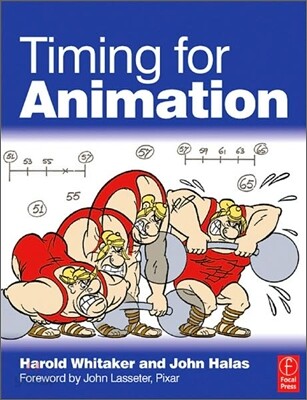
Foreword by John Lasseter
Preface
What is good timing?
The storyboard
Responsibility of the director
The basic unit of time in animation
Timing on bar sheets
Exposure charts
Animation and properties of matter
Movement and Caricature
Cause and effect
Newton's laws of motion
Object's thrown through the air
Timing of inanimate objects
rotating objects
Force transmitted through a flexible joint
Force transmitted through jointed limbs
Spacing of drawings
Timing as slow action
as fast action
getting into and out of holds
Single frames or double frames?
How long to hold?
Anticipation
Follow through
Overlapping action
Timing an oscillating movement
Timing to suggest weight and force
Timing to suggest force: repeat action
Character reaction and takes
Timing to give feeling of size
The effects of friction, air resistance and wind
Timing cycles
Effects animation: flames and smoke
Water
Rain
Snow
Explosions
repeat movements of inanimate objects
Timing a walk
Types of walk
Spacing of drawings in perspective animation
Timing animals' movements
Bird flight
Drybush (speed lines)
Accentuating movement
Strobing fast run cycles
Characterisation
The use of timing to suggest mood
Synchronising animation to speech
Lip-sync
Timing and music
Camera movements
Peg movements
|
관련 분류
품목정보
- 발행일
- 2002년 02월 04일
- 쪽수, 무게, 크기
- 174쪽 | 189*246mm
- ISBN13
- 9780240517148
상품정보안내
- 주문 전 중고상품의 정확한 상태 및 재고 문의는 [판매자에게 문의하기]를 통해 문의해 주세요.
- 주문완료 후 중고상품의 취소 및 반품은 판매자와 별도 협의 후 진행 가능합니다. 마이페이지 > 주문내역 > 주문상세 > 판매자 정보보기 > 연락처로 문의해 주세요.
판매자 정보
- 업체명
- 드림북
- 대표자명
- 이창승
- 사업자 등록번호
- 511-15-02633
- 사업자 종목
- 중고서적.중고CD
- 고객 상담 전화번호(유선)
- 010-2050-0729
- 고객 상담 이메일
- lcs0729@naver.com
- 배송 방법
- 타사택배(롯데택배)
- 본사 소재지
- 인천광역시 연수구 옥련동 633 현대2차아파트 207-1308
- 발송지 주소
- 인천광역시 연수구 옥련동 633 현대2차아파트 207동 1308호
- 반품지 주소
- 인천광역시 연수구 옥련동 633 현대2차아파트 207동 1308호
부적합 상품 신고하기
신고하기- 구매에 부적합한 상품은 신고해주세요.
- 구매하신 상품의 상태, 배송, 취소 및 반품 문의는 판매자 묻고 답하기를 이용해주세요.
- 상품정보 부정확(카테고리 오등록/상품오등록/상품정보 오등록/기타 허위등록) 부적합 상품(청소년 유해물품/기타 법규위반 상품)
- 전자상거래에 어긋나는 판매사례: 직거래 유도
23,000원
총 1개
23,000원