



소득공제
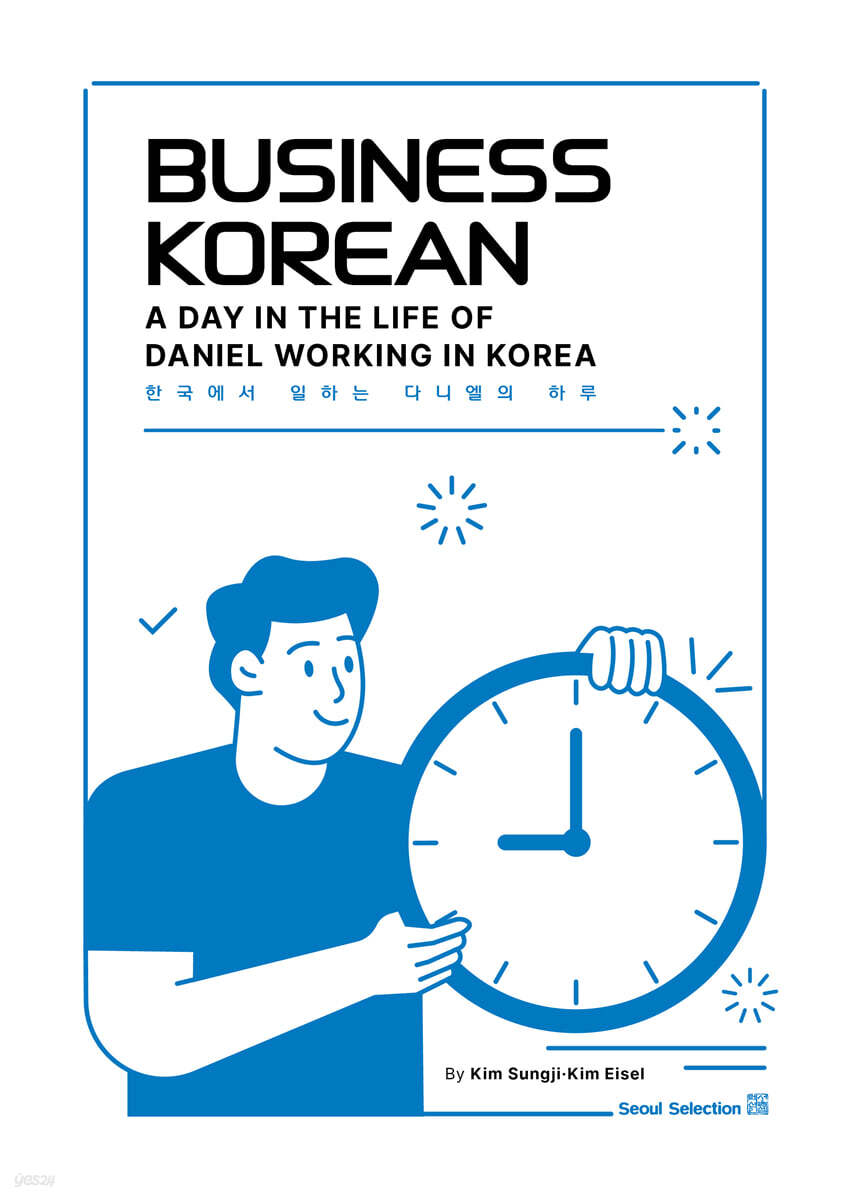
Business Korean
A DAY IN THE LIFE OF DANIEL WORKING IN KOREA 한국에서 일하는 다니엘의 하루
- 국내배송만 가능
- 예약상품과 함께 주문 시 제품 출시일에 함께 배송됩니다. (제작사의 사정으로 출시 지연 가능)
- 문화비소득공제 가능
책소개
목차
|
출근
세부주제 출근 대화 패턴 - [명사 ]이기도 하고 [형용사/동사]-아/어서 - [동사 ]-다가 [형용사/동사]-았/었는데 - [명사]에는 [명사]을/를 [동사]-아/어야 하는데 문화/팁 눈치 이메일 보내기 세부주제 이메일 대화 패턴 - [동사]-고자 연락드립니다. - [동사] 았/었으니 [명사]을/를 부탁드립니다. - [형용사/동사]-(으)면 [동사]-으시기 바랍니다. 문화/팁 이메일 표현 상사와 의사소통 세부주제 직급 대화 패턴 - 무슨 [명사](이)라도 있나요? - [동사]-아/어서 [동사]-겠습니다. - 가능한 한 빨리 [동사]-도록 하세요. 문화/팁 호칭 동료와 의사소통 세부 주제 동료와의 관계 대화 패턴 - [동사]-(으)ㄹ 겸 [동사]-(으)ㄹ까요? -[형용사/동사]-(으)ㄹ 정도로 [형용사]-아/어졌어요. - [형용사/동사]-(으)니까 [동사]-지 마세요. 문화/팁 동기 문화 회의 준비하기 세부 주제 회의 준비 대화 패턴 - [명사]에 대해(서) [동사]-(으)려고 하는데 [시간 명사]에 시간 괜찮아요? - [명사](을/를) [동사]-아/어 두겠습니다. - [시간 명사]에 [장소 명사]에서 [동사]-도록 하겠습니다. 문화/팁 사내 메신저 사용 매너 점심시간 세부 주제 식당 대화 패턴 - [동사]기로 했는데 [형용사/동사]지요? - [형용사](으)ㄴ/[동사]는다고 해서 꼭 [형용사](으)ㄴ/ [동사]는 것은 아니에요. - [형용사/동사](으)면 [동사]는 편이에요. 문화/팁 식사 쉐어 문화 전화하기 세부 주제 전화 대화 패턴 - [명사]에 관해(서) [명사]와/과 통화하고 싶은데 자리에 계신가요? - ·· 님/씨께 [동사]-ㄴ/는다고 메모 남겨 주시겠습니까? - ·· 님/씨, [명사]중이실 때 ·· 님/씨한테서 연락이 왔었습니다. 문화/팁 보고하기 회의하기 1(프레젠테이션) 세부 주제 PPT 만들기 대화 패턴 - [명사](으)로 보면, [형용사/동사]-(으)ㄴ/는 것으로 나타났습니다. - [명사]이/가 가장 [형용사/동사]-(으)ㄴ/는 것으로 나타났고 ([명사]와/과) [명사]이/가 그 뒤를 이었습니다. - [형용사/동사]-(으)ㄴ/는 반면(에), 문화/팁 프레젠테이션 회의하기 2(의견교환) 세부 주제 회의 참석 대화 패턴 - [명사]도 [동사]-고 있고 [명사]도 [동사]-고 있습니다. - 제 생각은 좀 다른데요, [형용사/동사]-기 때문입니다. - ··씨는 [명사]을/를 ·· 씨는 [명사]을/를 맡아 주세요. 문화/팁 회의 외근 세부 주제 외근 경험 대화 패턴 - [형용사]-(으)ㄴ지/[동사]-는지 [동사]-(으)러 왔습니다. - 얼마나 [형용사]-(으)ㄴ지/[동사]-는지 몰라요. - [명사]이/가 [형용사]-다는데/[동사]-는/ㄴ다는데 어쩌겠어요. 문화/팁 인사 야근 세부 주제 야근 대화 패턴 - [형용사/동사]-아/어서 [동사]-아/어야 할 것 같습니다. - [형용사/동사]-(으)ㄹ 때는 [동사]-(으)면서 [동사]-아/어야 돼요. - [명사] 좋다는 게 뭐예요. 문화/팁 야근 퇴근 세부 주제 퇴근 후 대화 패턴 - [동사]-느라고 [형용사/동사]-았/었지요? - [형용사/동사]-아/어서 그런지 [형용사/동사]-더라고요. - 기껏해야 [동사]-는 게 전부예요. 문화/팁 워라밸 |
저자 소개 2
Kim Sungji
MA in international Korean language and culture, Kyung Hee University
Since 2010, Kim has taught Korean at the language institutes of several universities, including Kyung Hee University, Sungkyunkwan University, and Myongji University. She currently teaches Korean at the Center for International Education of Ajou University
MA in international Korean language and culture, Kyung Hee University
Since 2010, Kim has taught Korean at the language institutes of several universities, including Kyung Hee University, Sungkyunkwan University, and Myongji University. She currently teaches Korean at the Center for International Education of Ajou University.
Her publications include Kyung Hee University Korean 2 (coauthored) and Ajou University Korean Writing 4 (coauthored).
경희대학교 국제한국언어문화학과 석사
2010년부터 경희대, 성균관대, 명지대 등 여러 대학 기관 어학원에서 한국어 강사로 일해 왔고, 현재는 아주대학교 국제교육센터에서 한국어를 가르치고 있다.
저서로는 『경희대 한국어 2』(공저), 『아주대 한국어 쓰기 4』(공저)가 있다.
Completed doctoral coursework in Economics and Management, at Harbin University of Science and Technology
Kim has taught Korean to international learners at several universities in Korea and previously served on the faculty of the Korean Department at Harbin University of Science and Technology in China.
She currently serve
Completed doctoral coursework in Economics and Management, at Harbin University of Science and Technology
Kim has taught Korean to international learners at several universities in Korea and previously served on the faculty of the Korean Department at Harbin University of Science and Technology in China.
She currently serves as a board member of the South Korea?China Committee to Find Ahn Jung-geun.
Her publications include the coauthored works Searching for Ahn Jung-geun Through Historical Records, Bring Ahn Jung-geun Home and Understanding Ahn Jung-geun: Questions and Answers.
하얼빈이공대학교 경제관리학과 박사 수료
한국의 여러 대학 기관에서 외국인을 대상으로 한국어 강의를 했으며, 중국 하얼빈이공대학교 한국어학과에서 외국인 교수로 근무했다.
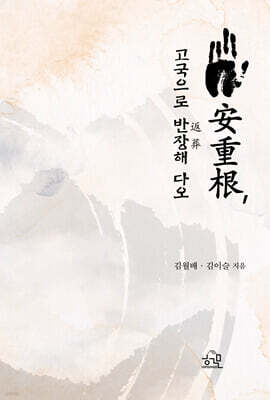
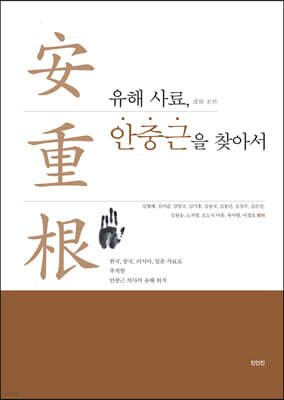
현 안중근의사찾기 한·중민간상설위원회 이사 『유해 사료, 안중근을 찾아서』, 『안중근, 고국으로 반장해 다오』, 『안중근 바로 알기, 묻고 답하다』 등의 공저가 있다.
김이슬의 다른 상품
관련 분류
품목정보
- 발행일
- 2026년 11월 06일
- 쪽수, 무게, 크기
- 208쪽 | 170*240*20mm
- ISBN13
- 9791124848036
책 속으로
|
다니엘 좋은 아침이에요. 지원 씨, 일찍 출근했네요.
김지원 오늘은 월요일이기도 하고 비도 와서 평소보다 집에서 일찍 출발했어요. 다니엘 씨도 일찍 나왔네요. 주말 잘 보냈어요? 다니엘 네, 아! 지원 씨, 출근하다가 봤는데 회사 앞에 닭갈빗집이 새로 오픈한 것 같더라고요. 혹시 보셨어요? 김지원 와! 정말요? 저 닭갈비 진짜 좋아하는데 이따 점심에 같이 먹으러 갈까요? (박 과장과 최 대리가 사무실에 함께 들어온다) 김지원 과장님, 나오셨어요? 좋은 아침입니다. 어? 대리님도 같이 오셨네요. 박 과장 네, 출근길에 만나서 같이 왔어요. 좋은 아침입니다. 최 대리 모두 주말 잘 보내셨나요? 오늘은 아침부터 비가 많이 오네요. 박 과장 오늘처럼 비가 많이 오는 날에는 따뜻한 칼국수를 먹어야 하는데…. 최 대리 와! 저도 오늘 칼국수가 생각났는데 과장님하고 생각이 통했네요. 그럼 오늘 점심에 칼국수 드시러 가시죠! 다니엘, 김지원 …… Daniel Good morning. Jiwon-ssi, you came to work early today. Kim Jiwon Well, it’s Monday and it's also raining, so I left home earlier than usual. You also came in early, Daniel-ssi. Did you have a good weekend? Daniel Yes, I did. Oh! Jiwon-ssi, I saw while coming to work that a new dakgalbi1 restaurant seems to have opened in front of our company. Did you notice it? Kim Jiwon Wow! Really? I really love dakgalbi. How about we go have it for lunch later? (Park gwajang2 and Choi daeri enter the office together) Kim Jiwon Gwajang-nim, you’re here? Good morning. Oh? Daeri-nim, you came with him? Park gwajang Yes, we ran into each other on our way to work. Good morning. Choi daeri Did everyone have a good weekend? It’s been raining quite a lot since the morning. Park gwajang On days like today when it rains a lot, it feels right to have warm kalguksu3. Choi daeri Wow! I was thinking about kalguksu today as well. It seems our thoughts aligned, gwajang-nim. Then, let’s have kalguksu for lunch today! (Daniel and Kim Jiwon exchange surprised glances.) --- 본문 중에서 |
출판사 리뷰
|
Want to Work in Korea? Learn the Korean You’ll Use on the Job
From arrival to clocking out, explore workplace Korean and culture through Daniel’s day You and a colleague have agreed to have dakgalbi for lunch. Then your manager remarks, “On a rainy day like this, a warm bowl of kalguksu would be nice…” Another colleague immediately suggests going out for kalguksu instead. Daniel, an international new hire at a Korean company, is puzzled. He understands the words, but he is less sure how the lunch plans suddenly changed. Understanding Korean does not always mean feeling at ease in a Korean workplace. Addressing people by their job titles, choosing how to express an opinion to a manager, and picking up on the unspoken cues known as nunchi all involve both language and culture. Communication becomes easier when you understand not only useful expressions but also the relationships and circumstances behind them. BUSINESS KOREAN: A Day in the Life of Daniel Working in Korea helps international learners prepare for the language and culture they will encounter on the job. Whether you hope to work in Korea or already do, Daniel’s day introduces the Korean you need for emails, phone calls, and meetings-and helps you understand how to communicate with your colleagues. Learn Workplace Korean Through Daniel’s Day Daniel is a new employee from Australia who joined a Korean company after graduating from a university in Korea. Follow him as he greets his manager, sends emails, answers calls, and shares ideas in meetings. Along the way, learn the everyday language of having lunch with colleagues and talking about plans after work. The book’s 12 units follow a workday from arrival to departure, covering situations employees regularly encounter. The email unit introduces message structure and expressions for requesting information and replying. The telephone unit teaches you how to ask for someone, leave a message, and pass along information. The meeting units cover presenting sales figures and research findings, expressing opinions, and explaining your reasoning. With a continuing cast of characters and a connected storyline, you can see how expressions work in different situations and relationships. Understand Unfamiliar Customs and Connect with Colleagues Each unit’s Culture / Work Tip section explores questions raised by the conversations. The episode about changing lunch plans leads into an explanation of nunchi, while the unit on communicating with your manager examines workplace forms of address. Other topics include office messaging etiquette, relationships among employees who joined at the same time, dining customs, reporting to managers, meetings, overtime, and work-life balance. Seeing these situations through Daniel’s eyes helps you understand cultural context that the words alone may not reveal. The book offers a practical introduction to differences you may encounter at work in Korea, helping you communicate more comfortably with colleagues. Built on Teaching Experience and International Employees’ Perspectives Coauthor Kim Sungji has taught Korean at university language institutes since 2010 and currently teaches at Ajou University’s Center for International Education. She is also a coauthor of Kyung Hee University Korean 2 and Ajou University Korean Writing 4. Kim Eisel has taught Korean to international learners at several universities in Korea and served on the faculty of the Korean Department at Harbin University of Science and Technology in China. The authors conducted in-depth interviews with international employees of various nationalities working in Korea, exploring the challenges they faced and what they needed to learn. Their findings informed the book’s dialogues and episodes, grounding the lessons in real workplace situations and communication needs. English Explanations and Step-by-Step Practice-for Independent Study or the Classroom English translations and explanations accompany the Korean dialogues, vocabulary, language patterns, and cultural and workplace tips, making the material accessible to learners who use English as a supporting language. Comprehension checks lead into vocabulary exercises, sentence-pattern practice, and activities that apply expressions to specific situations. This progression helps you move from understanding what you read to using it in your own speaking and writing. An answer key at the back supports self-study. The book can also serve as a textbook for workplace Korean courses at language education institutions. Its introductory guide suggests approximately six hours per unit, for a total of 72 hours over 14-16 weeks, with adjustments at the instructor’s discretion. It is a practical resource both for learners preparing to work in Korea and for the educators helping them get there. 한국에서 일하고 싶은 당신, 회사에서 쓸 한국어를 준비하세요 출근부터 퇴근까지, 다니엘의 하루로 배우는 한국어와 직장 문화 동료와 점심으로 닭갈비를 먹기로 했는데, 상사가 “비가 오는 날에는 따뜻한 칼국수를 먹어야 하는데…”라고 말한다. 함께 있던 다른 직원이 곧바로 칼국수를 먹으러 가자고 제안한다. 한국 회사의 외국인 신입 사원 다니엘은 어리둥절하다. 말의 뜻은 알겠는데, 점심 약속이 바뀌는 분위기는 낯설다. 한국어를 이해해도 한국의 직장 생활이 어렵게 느껴지는 순간이 있다. 이름 대신 직급으로 상대를 부르는 방식, 상사에게 의견을 전하는 말투, 동료 사이의 ‘눈치’처럼 언어와 문화가 맞닿아 있는 상황들이다. 업무에 필요한 표현과 함께, 그 말이 오가는 관계와 맥락을 알아야 소통이 한결 수월해진다. 『비즈니스 코리언(BUSINESS KOREAN): 한국에서 일하는 다니엘의 하루』는 한국에서 일하고 싶은 외국인이 입사 후 실제로 사용할 한국어와 직장 문화를 함께 배우는 책이다. 취업을 준비하는 학습자부터 이미 한국 회사에서 근무하는 외국인까지, 다니엘의 하루를 따라가며 이메일·전화·회의에 필요한 말과 글을 익히고 동료들과 소통하는 방식을 이해하도록 돕는다. 출근부터 퇴근까지, 다니엘과 함께 배우는 업무 한국어 주인공 다니엘은 한국에서 대학을 졸업하고 한국 회사에 취직한 호주 출신 신입 사원이다. 독자는 다니엘과 함께 상사에게 인사하고, 이메일을 보내고, 전화를 받고, 회의에서 의견을 나눈다. 동료와 점심을 먹거나 퇴근 후 계획을 이야기하는 일상적인 대화도 배운다. 출근부터 퇴근까지 이어지는 12개 단원에는 업무에서 자주 마주치는 상황을 담았다. 이메일 단원에서는 메일의 구성과 자료 요청·회신 표현을, 전화 단원에서는 담당자를 찾고 메모를 남기거나 전달하는 방법을 익힌다. 회의 단원에서는 판매 실적과 조사 결과를 설명하고, 자신의 의견과 이유를 밝히는 표현을 배운다. 같은 인물들의 이야기가 시간의 흐름에 따라 이어져 상대와 상황에 따른 표현의 쓰임을 이해하기 좋다. 낯선 직장 문화를 이해하고, 동료와 소통하다 각 단원의 ‘문화/업무 TIP’은 대화 속에서 생긴 궁금증을 풀어 준다. 점심 메뉴를 둘러싼 에피소드는 ‘눈치’에 대한 설명으로 이어지고, 상사와의 의사소통을 배운 뒤에는 호칭에 담긴 관습을 살펴본다. 사내 메신저 사용 매너, 동기 문화, 식사 문화, 보고하기, 회의, 야근, 워라밸 등도 다룬다. 외국인에게 낯설 수 있는 상황을 다니엘의 시선으로 보여 주어, 문장의 뜻만으로는 파악하기 어려운 문화적 맥락을 이해하도록 돕는다. 한국 직장에서 마주칠 수 있는 차이를 알아 가며 동료들과 더 원만하게 소통하기 위한 안내다. 한국어 교육 경험과 외국인 재직자의 목소리를 담다 저자 김성지는 2010년부터 여러 대학 기관에서 한국어를 가르쳐 왔으며, 현재 아주대학교 국제교육센터에서 강의하고 있다. 『경희대 한국어 2』와 『아주대 한국어 쓰기 4』의 공동 저자다. 김이슬은 국내 여러 대학 기관에서 외국인에게 한국어를 가르쳤으며, 중국 하얼빈이공대학교 한국어학과에서 외국인 교수로 근무했다. 두 저자는 한국에서 근무하는 다양한 국적의 외국인을 심층 인터뷰하고, 업무에서 겪는 어려움과 학습에 필요한 내용을 조사했다. 이를 바탕으로 실제 직장에서 필요한 표현과 상황을 대화와 에피소드에 담았다. 영어 설명과 단계별 연습으로, 개인 학습부터 수업까지 한국어 대화와 어휘, 표현 설명, 문화·업무 팁에 영어 번역과 설명을 함께 제공해 영어를 활용하는 외국인 학습자의 이해를 돕는다. 내용 확인, 어휘 연습, 문장 형태 연습, 상황에 맞춘 표현 연습으로 이어지는 구성은 읽고 이해한 내용을 직접 말하고 쓰도록 이끈다. 책 뒤에는 정답을 수록해 스스로 학습 내용을 점검할 수 있다. 개인 학습뿐 아니라 한국어 교육기관의 업무 한국어 수업 교재로도 활용할 수 있다. 일러두기에는 교육자의 재량에 따라 단원당 약 6시간, 총 72시간을 14~16주에 걸쳐 운영하는 수업안이 제시되어 있다. 한국에서 일할 준비를 하는 학습자와 이들을 가르치는 교육자 모두를 위한 실용적인 업무 한국어 교재다. [추천] 2016년에 한국에 와서 한국어를 배웠지만 취업을 준비하면서 회사에서 사용하는 한국어가 어렵게 느껴졌습니다. 이 책은 실무 한국어뿐만 아니라 한국 회사 문화까지 이해하는 데 도움이 되었습니다. 저처럼 한국 취업을 준비하는 외국인분들께 추천합니다. - 대만에서 한국으로 귀화한 결혼이민자 채야링 |
추천평
|
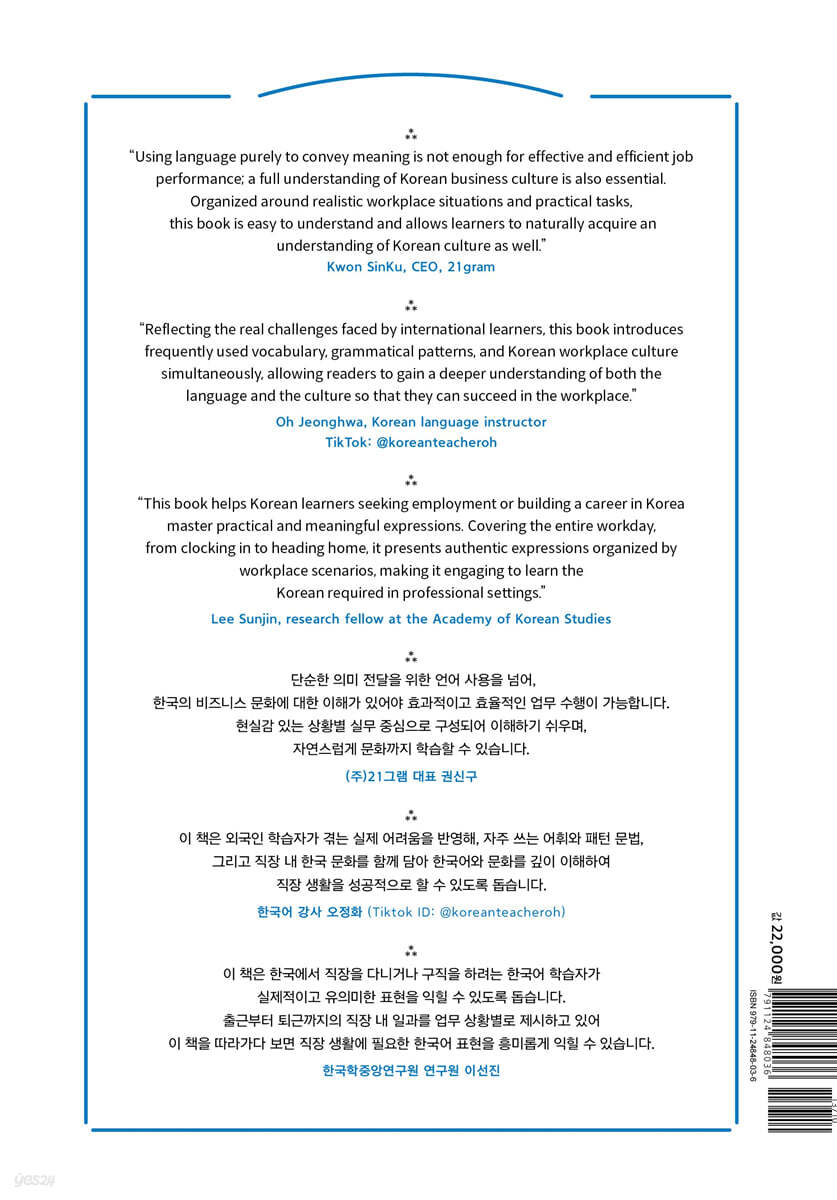
단순한 의미 전달을 위한 언어 사용을 넘어, 한국의 비즈니스 문화에 대한 이해가 있어야 효과적이고 효율적인 업무 수행이 가능합니다. 현실감 있는 상황별 실무 중심으로 구성되어 이해하기 쉬우며, 자연스럽게 문화까지 학습할 수 있는 본 교재를 추천드립니다. - 권신구 (㈜21그램 대표)
|
|
한국어만 잘한다고 해서 한국 직장 생활이 쉬운 것은 아닙니다. 이 책은 외국인 학습자가 겪는 실제 어려움을 반영해, 자주 쓰는 어휘와 패턴 문법, 그리고 직장 내 한국 문화를 함께 담아 한국어와 문화를 깊이 이해하여 직장 생활을 성공적으로 할 수 있도록 돕습니다. - 오정화 (한국어 강사)
|
|
이 책은 탄탄한 자료 조사를 바탕으로 내용을 구성하여 한국에서 직장을 다니거나 구직을 하려는 한국어 학습자가 실제적이고 유의미한 표현을 익힐 수 있도록 돕습니다. 출근부터 퇴근까지의 직장 내 일과를 업무 상황별로 제시하고 있어 이 책을 따라가다 보면 직장 생활에 필요한 한국어 표현을 흥미롭게 익힐 수 있습니다. - 이선진 (한국학중앙연구원 연구원)
|
|
문법 교육에 치중했던 기존 한국어 교재들과 다르게 실제 직장에서 사용할 수 있는 어휘와 문장의 형태를 직접적으로 보여주는 교재입니다. 일과를 중심으로 다양한 표현을 재미있게 배울 수 있기 때문에 비즈니스를 목적으로 한국어를 배우고자 하는 학습자들에게 추천합니다. - 이신영 (한국어 강사)
|
사락 별점0
혜택 및 유의사항밑줄0
혜택 및 유의사항
19,800원
총 1개
19,800원
