
- 판매자
-
레레
중고샵 판매자가 직접 등록/판매하는 상품으로 판매자가 해당 상품과 내용에 모든 책임을 집니다.
이미 소장하고 있다면 판매해 보세요.
- 한정판매의 특성상 재고 상황에 따라 품절 가능
- 수급불안정으로 인해 품절/지연 가능
중고도서 소개
|
책소개
목차
|
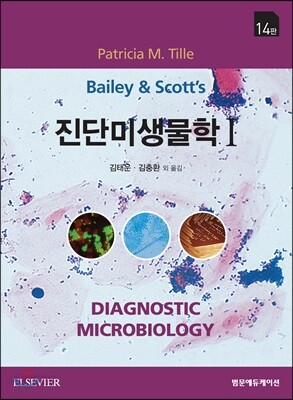
"옮긴이 머리말 / vii 지은이 머리말 / ix Part I 기본 의학미생물학 / 1 제1장 미생물 분류학 Microbial Taxonomy / 3 분류 Classification 4 명명법 Nomenclature 6 동정 Identification 7 제2장 세균의 유전, 물질대사 및 구조 Bacterial Genetics, Metabolism, and Structure / 11 세균의 유전 Bacterial Genetics 12 세균의 대사 Bacterial Metabolism 30 세균세포의 구조와 기능 Structure and Function of the Bacteria Cell 38 제3장 숙주와 미생물 상호작용 Host-Microorganism Interaction / 47 숙주와 미생물의 만남 The Encounter Between Host and Microorganism 49 숙주 표면의 미생물 집락화 Microorganism Colonization of Host Surfaces 53 미생물의 숙주 내 침범, 침습, 전파 Microorganism Entry, Invasion and Dissemination 58 감염 질환의 발병과 예방 Outcome and Prevention of Infectious Diseases 73 Part II 임상미생물학 일반원리 / 79 SECTION 1 안전과 검체 관리 Safety and Specimen Management / 80 제4장 검사실 안전 Laboratory Safety / 81 멸균, 소독 및 오염제거 Sterilization, Disinfection, and Decontamination 82 화학물질 안전 Chemical Safety 87 화재 안전 Fire Safety 88 전기 안전 Electrical Safety 89 압축가스 취급 Handling of Compressed Gases 89 생물학적 안전 Biosafety 90 노출 통제계획 Exposure Control Plan 91 직원 교육과 지도 Employee Education and Orientation 92 위험 폐기물 처리 Disposal of Hazardous Waste 92 표준예방지침 Standard Precautions 94 기술 관리 Engineering Controls 95 위해성에 근거한 생물학적 병원체의 분류 Classification of Biologic Agents Based on Hazard 99 생물학적 위험물질의 운송 Mailing Biohazardous Materials 100 제5장 검체 관리 Specimen Management / 105 검체 채취와 취급을 위한 일반 개념 General Concepts for Specimen Collection and Handling 106 검체 보존 Specimen Preservation 108 검체 정밀 검사 Specimen Workup 123 신속한 결과보고: 전산화 Expediting Results Reporting: Computerization 125 SECTION 2 감염병(질환) 진단을 위한 접근 Approaches to Diagnosis of Infectious Diseases/ 126 제6장 현미경검사의 역할 Role of Microscopy /127 명시야현미경검사 Bright-Field (Light) Microscopy 129 위상차현미경검사 Phase-Contrast Microscopy 140 형광현미경검사 Fluorescent Microscopy 141 암시야현미경검사 Dark-Field Microscopy 146 전자현미경검사 Electron Microscopy 146 디지털 방식의 자동화된 현미경검사 Digital Automated Microscopy 147 제7장 전통적 배양과 동정 Traditional Cultivation and Identification / 153 미생물의 동정 Organism Identification 153 세균 배양의 원리 Principle of Bacterial Cultivation 154 세균 배양 Bacterial Cultivation 170 동정의 원리 Principle of Identification 175 표현형 동정 계획의 원리 Principles of Phenotypic Identification Schemes 184 전통적 동정법 Conventional Identification 186 신속 동정법 Rapid Identification 186 MALDI-TOF 질량분석법 Matrix-Assisted Laser Desorption Ionization Time of Flight Mass Spectrometry 187 상업용 동정 체계 및 자동화 Commercial Identification Systems and Automation 191 제8장 미생물 동정과 특성 분석을 위한 핵산기반 분석 방법 Nucleic Acid-Based Analytic Methods for Microbial Identification and Characterization / 195 핵산기반 방법의 개요 Overview of Nucleic Acid-Based Methods 196 증폭 후 분석과 전통적인 분석 Postamplification and Traditional Analysis 230 제9장 미생물의 검출에 사용되는 면역화학적 방법의 개요 Overview of Immunochemical Methods Used for Organism Detection / 247 면역반응의 특징 Features of the Immune Response 248 임상 검사에 사용하기 위한 항체 생성 Production of Antibodies for Use in Laboratory Testing 253 IgM의 임상적 의의 IgM Clinical Significance 256 혈청 검사를 위한 IgG로부터 IgM의 분리 Separating IgM from IgG for Serologic Testing 256 미생물 검출에 사용되는 면역화학적 방법의 원리 Principles of Immunochemical Methods Used for Organism Detection 257 요약 Summary 272 SECTION 3 항균활성의 평가 Evaluation of Antimicrobial Activity / 274 제10장 항균제 작용과 내성의 원리 Principles of Antimicrobial Action and Resistance / 275 항균제의 작용 Antimicrobial Action 276 항균제 내성 기전 Mechanisms of Antibiotic Resistance 290 제11장 항균제감수성검사를 위한 검사실 방법 및 전략 Laboratory Methods and Strategies for Antimicrobial Susceptibility Testing / 305 항균제감수성검사의 목표와 한계 Goal and Limitations 306 시험 방법 Testing Methods 307 항균제감수성검사를 위한 검사실 전략 Laboratory Strategies for Antimicrobial Susceptibility Testing 338 정확성 Accuracy 343 통신 Communication 348 Part III 세균학 / 351 SECTION 1 동정의 원리 Principles of Identification / 352 제12장 세균 동정 방법과 전략의 개요 Overview of Bacterial Identifi cation Methods and Strategies / 353 미생물 동정에 대한 이론적 근거 Rationale for Approaching Organism Identification 353 미생물 동정의 미래 동향 Future Trends of Organism Identification 355 찾아보기 / 410" |
품목정보
- 발행일
- 2018년 03월 02일
- 쪽수, 무게, 크기
- 444쪽 | 190*260*30mm
- ISBN13
- 9791159430985
상품정보안내
- 주문 전 중고상품의 정확한 상태 및 재고 문의는 [판매자에게 문의하기]를 통해 문의해 주세요.
- 주문완료 후 중고상품의 취소 및 반품은 판매자와 별도 협의 후 진행 가능합니다. 마이페이지 > 주문내역 > 주문상세 > 판매자 정보보기 > 연락처로 문의해 주세요.
부적합 상품 신고하기
신고하기- 구매에 부적합한 상품은 신고해주세요.
- 구매하신 상품의 상태, 배송, 취소 및 반품 문의는 판매자 묻고 답하기를 이용해주세요.
- 상품정보 부정확(카테고리 오등록/상품오등록/상품정보 오등록/기타 허위등록) 부적합 상품(청소년 유해물품/기타 법규위반 상품)
- 전자상거래에 어긋나는 판매사례: 직거래 유도
20,000원
총 1개
20,000원
