

이미 소장하고 있다면 판매해 보세요.
- 해외배송 가능?
- 문화비소득공제 가능
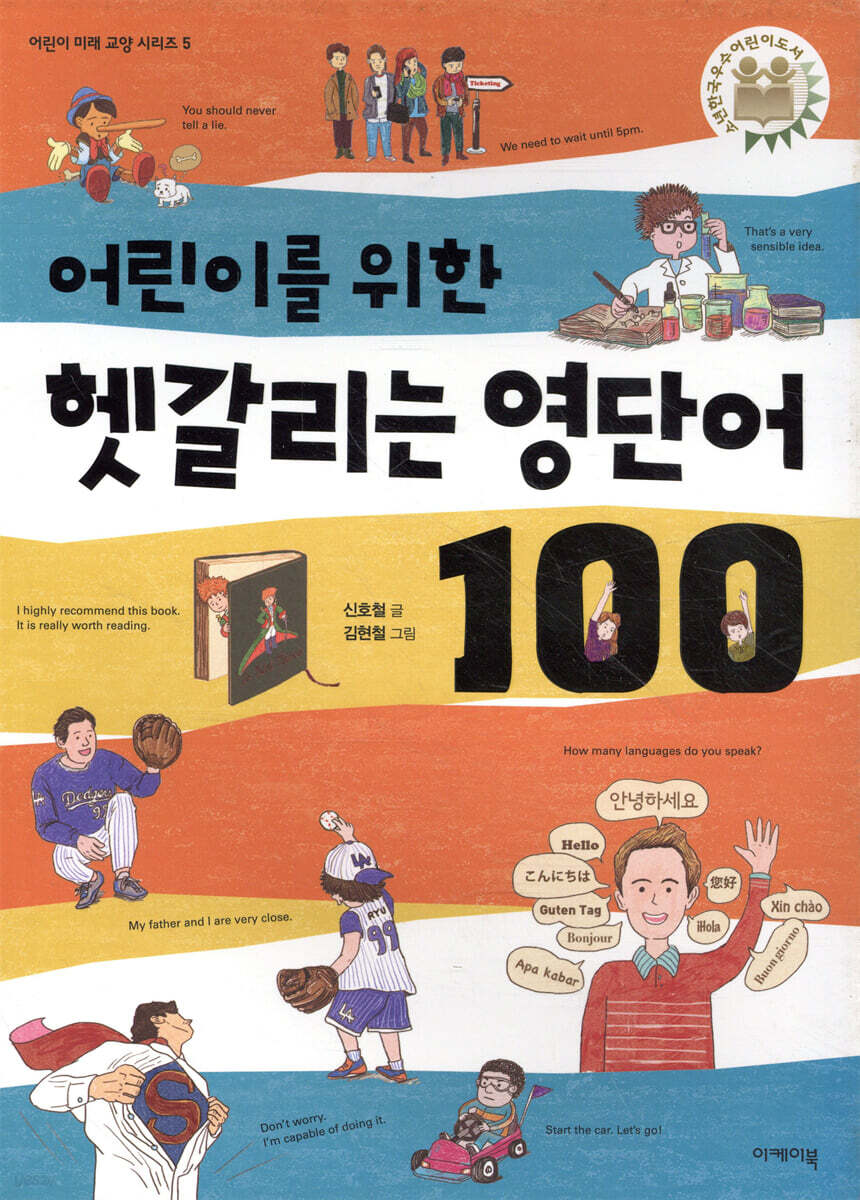
어린이 미래 교양 시리즈

책소개
목차
|
들어가는 말
1부 명사 accident v. incident | ache v. pain | aid v. help | appointment v. plan | break v. rest | chance v. opportunity | cost v. price | date v. day | job v. work | peak v. top | people v. person | problem v. trouble | relation v. relationship | salary v. wage | 못 다한 이야기 1 명사, 철자 하나로 뜻이 다른 단어들 2부 동사 accept v. receive | adapt v. adopt | affect v. effect | allow v. permit | answer v. reply | arrive v. reach | begin v. start | believe v. believe in | borrow v. lend | collect v. gather | come v. go | deny v. refuse | drop v. fall | eat v. feed | end v. finish | expect v. look forward to | find v. find out | fit v. suit | hang out v. play | hear v. listen | laugh v. smile | lay v. lie | learn v. study | let v. make | look v. see v. watch | lose v. miss | meet v. see | pause v. stop | put on v. wear | raise v. rise | remember v. remind | say v. tell | seat v. sit | shock v. surprise | speak v. talk | travel v. trip | 못 다한 이야기 2 동사, 어원 활용하기 3부 형용사 able v. capable | alive v. live | big v. large | certain v. sure | cheap v. inexpensive | close v. near | complete v. perfect | correct v. right | difficult v. hard | economic v. economical | empty v. vacant | famous v. popular | final v. last | fit v. healthy | fun v. funny | good v. well | high v. tall | high v. highly | ill v. sick | little v. small | moral v. morale | possible v. probable | sensible v. sensitive | slim v. thin | worth v. worthy | 못 다한 이야기 3 형용사, -ing형과 -ed형의 의미 구분하기 4부 나머지 품사 a v. the | above v. over | after v. behind | ago v. before | although v. despite | among v. between | any v. some | be going to v. will | beside v. besides | by v. until | during v. for | especially v. specially | even if v. even though | every day v. everyday | for sale v. on sale | hard v. hardly | may be v. maybe | must v. should | some time v. sometime v. sometimes | than v. then | too v. very | 못 다한 이야기 4 알아두면 유용한 영어 줄임말 |
저자 소개
글 : 신호철
스물한 살까지 영어 쓰는 것을 두려워하고, 영어권 국가로는 단기여행도 해보지 못한 영어 촌놈이었어요. 군대에서 우연히 영화 〈쇼생크 탈출〉에 보고 영화 대본을 통째로 외우면서 영어에 매료되었어요. 경희대학교 경제학과에서 공부하면서도 매학기 수업의 절반 이상을 원어 강의로 채울 정도였지요. 6개월간 2,000페이지 가까이 되는 원서와 씨름하며 미국의 인사관리 전문기관(SHRM)이 주관하는 국제인사전문가(PHR) 자격시험에서도 한 번에 합격했답니다.
현재는 현대모비스의 ‘신 대리’로 일하며, ‘영어사랑교’의 캡틴으로서 ‘영어는 학문이 아니라 애인’이라는 진리를 퍼뜨리고 있어요. 지은 책으로는 《사표 쓰지 말고 영어를 써라》가 있어요.
현재는 현대모비스의 ‘신 대리’로 일하며, ‘영어사랑교’의 캡틴으로서 ‘영어는 학문이 아니라 애인’이라는 진리를 퍼뜨리고 있어요. 지은 책으로는 《사표 쓰지 말고 영어를 써라》가 있어요.
그림 : 김현철
홍익대학교에서 시각디자인을 공부했습니다. 현재 북디자이너로 활동하며 다양한 분야의 책들을 디자인하고 있어요. 그림 그리는 것을 좋아해서 틈틈이 일러스트 작업도 하고 있습니다. 찰리브라운과 스누피를 좋아해요. 어린이들과 강아지들도 좋아하고요. 앞으로 어린이들의 행복에 조금이라도 기여하는 그림작가가 되고 싶답니다. 그린 책으로는 《어린이를 위한 헷갈리는 우리말 100》, 《슈퍼대디 레알 잉글리시》, 《내 아이 마음에 무슨 일이 생긴 걸까》, 《행복 저글링》, 《폭스 팩터》 등이 있어요.
품목정보
- 발행일
- 2016년 01월 22일
- 쪽수, 무게, 크기
- 216쪽 | 600g | 190*260*20mm
- ISBN13
- 9791186222065
출판사 리뷰
|
자주 쓰면서도 틀리기 쉬운 영단어 가운데 어린이들이 꼭 알아야 하는 단어를 엄선해 모았어요
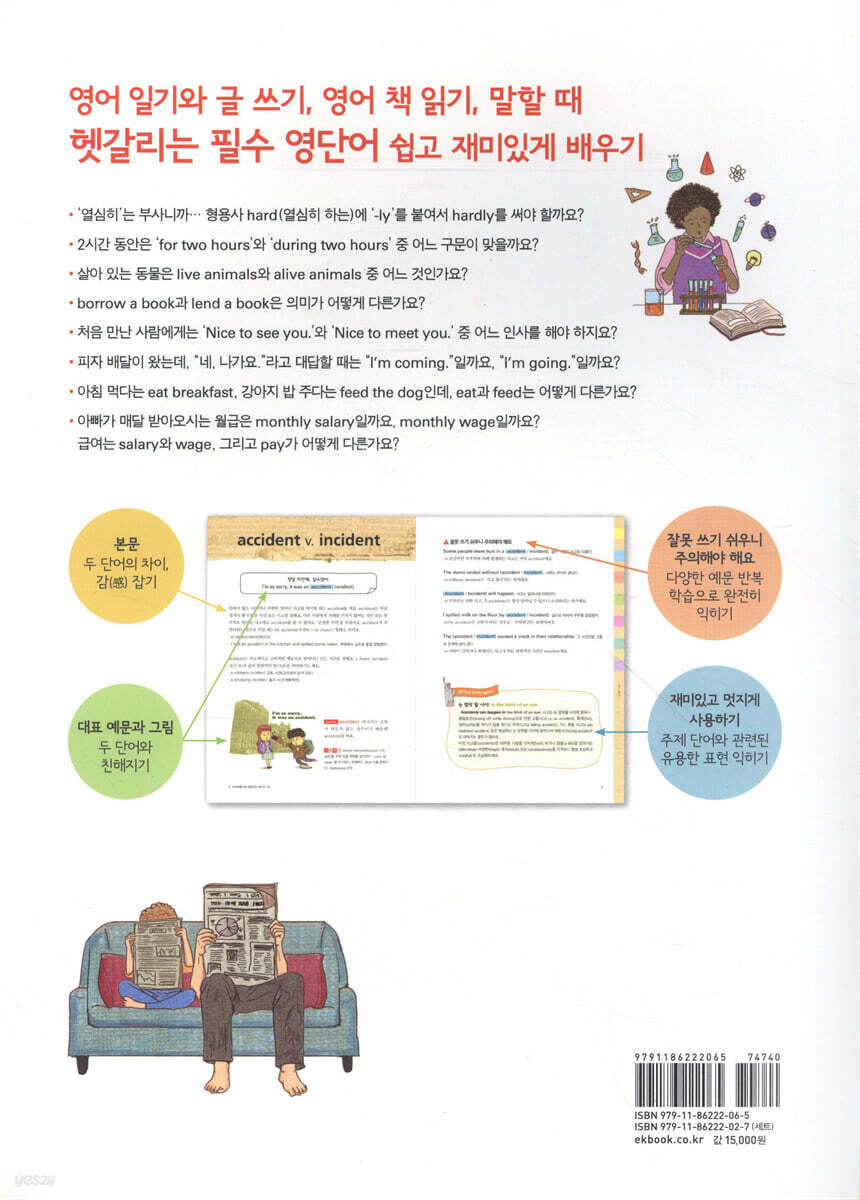
영어 단어는 우리말로 옮겨놓으면 똑같은 의미처럼 보이는 단어 쌍이 많아요. for와 during은 둘 다 우리말로 ‘-동안’이라는 기간을 나타내는 전치사예요. 우리말로 ‘말하다’는 의미의 speak, talk, say, tell은 모두 동의어라는 보자기에 담아 한꺼번에 외우고 있지요. 그러나 이 단어들은 의미뿐만 아니라 문장에서 쓰임새까지 전혀 달라요. - 피자 배달이 왔는데, “네, 나가요!”라고 대답할 때는 “I’m coming.”일까요, “I’m going.”일까요? - 2시간 동안은 ‘for two hours’와 ‘during two hours’ 중 어느 구문이 맞을까요? - ‘열심히’는 부사니까… 형용사 hard(열심히 하는)에 ‘-ly’를 붙여서 hardly를 써야 할까요? - 처음 만난 사람에게는 ‘Nice to see you.’와 ‘Nice to meet you.’ 중 어느 인사를 해야 하지요? - 아빠가 매달 받아오시는 월급은 monthly salary일까요, monthly wage일까요? 급여는 salary와 wage, pay가 어떻게 다른가요? - 살아 있는 동물은 live animals과 alive animals 중 어느 것인가요? - borrow a book과 lend a book은 의미가 어떻게 다른가요? - 아침 먹다는 eat breakfast, 강아지 밥 주다는 feed the dog인데, eat과 feed는 어떻게 다른가요? |
사락 별점0
혜택 및 유의사항밑줄0
혜택 및 유의사항
13,500원
총 1개
13,500원