
소득공제
외서
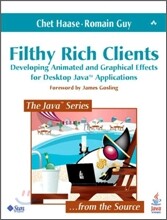
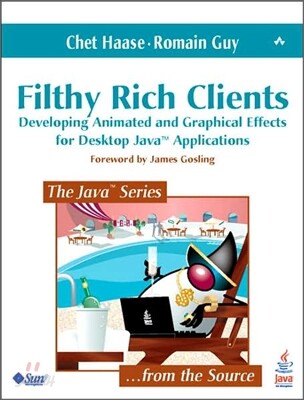
Filthy Rich Clients
Developing Animated and Graphical Effects for Desktop Java Applications
Paperback
Prentice Hall PTR
2007.08.19.
이미 소장하고 있다면 판매해 보세요.
- 국내배송만 가능
- 문화비소득공제 가능
The Java

책소개
목차
|
Foreword xviiPreface xixAcknowledgments xxvAbout the Authors xxviiIntroduction Part I: Graphics and GUI Fundamentals Chapter : Desktop Java Graphics APIs: Swing, AWT, and Java 2D
Abstract Window Toolkit (AWT) Java 2D Swing Chapter : Swing Rendering Fundamentals Events Swing Painting Swing Rendering Double-Buffering Threading Chapter : Graphics Fundamentals Java 2D Rendering Chapter : Images Image Types BufferedImage Image Scaling Chapter : Performance Use the Clip Compatible Images Managed Images Intermediate Images Optimal Primitive Rendering Benchmark Command-Line Flags Part II: Advanced Graphics Rendering Chapter : Composites AlphaComposite AlphaComposite: The Rules Creating and Setting Up an AlphaComposite Common Uses of AlphaComposite Issues with AlphaComposite Create Your Own Composite Summary Chapter : Gradients Two-Stops Linear Gradient Special Effects with Regular Gradients Multistops Linear Gradient Radial Gradient Optimizing Gradients Chapter : Image Processing Image Filters Processing an Image with BufferedImageOp AffineTransformOp ColorConvertOp ConvolveOp LookupOp RescaleOp Custom BufferedImageOp A Note about Filters Performance Summary Chapter : Glass Pane Painting on the Glass Pane Blocking Input Events Chapter : Layered Panes Using Layered Pane Layers Ordering Components within a Single Layer Layered Panes and Layouts Alternative to JLayeredPane with Layouts Chapter : Repaint Manager When Swing Gets Too Smart Meet the RepaintManager A Reflection on RepaintManager Summary Part III: Animation Chapter : Animation Fundamentals It’s About Time Fundamental Concepts Frame-Based Animation Timing (and Platform Timing Utilities) Resolution Animating Your Swing Application Summary Chapter : Smooth Moves Background: Why Does My Animation Look Bad? What Makes Animations Choppy, and How to Smooth Them Out SmoothMoves: The Demo Summary Chapter : Timing Framework: Fundamentals Introduction Core Concepts Interpolation Summary Chapter : Timing Framework: Advanced Features Triggers Property Setters Summary Part IV: Effects Chapter : Static Effects Blur Reflection Drop Shadows Highlights Sharpening Summary Chapter : Dynamic Effects Motion Fading Pulse Spring Morphing Summary Chapter : Animated Transitions Animating Application State Segues Animated Transitions: The Library Example: SearchTransition Example: SearchTransition Revisited: Customization Example: ImageBrowser Animated Transitions: Under the Hood, or How Do You Get Swing to Do That? Summary Chapter : Birth of a Filthy Rich Client Aerith Workflow Paper Design The Vision Screen Paper Design Mockup From Mockup to Code But . . . I’m Not an Artist! Choosing Nice Colors Read Design Books Summary Conclusion |
품목정보
- 발행일
- 2007년 08월 19일
- 쪽수, 무게, 크기
- 608쪽 | 크기확인중
- ISBN13
- 9780132413930
출판사 리뷰
|
In-depth coverage includes
Graphics and GUI fundamentals: Dig deep into the internals of how Swing and Java 2D work together to display GUI applications onscreen. Learn how to maximize the flexibility of these libraries and use them most effectively. Performance: Follow in-depth discussions and tips throughout the book that will help you write high-performing GUI applications. Images: Understand how images are created and used to make better Java applications. Advanced graphics: Learn more about elements of Swing and Java 2D that are of particular benefit to Filthy Rich Clients. Animation: Discover general concepts of animation, as well as how to use the facilities provided in the Java platform. Learn new utility libraries that vastlysimplify animations in Java. Effects: Learn how to create, customize, and use static and animated effects?the mainstays of Filthy Rich Clients. Code examples illustrate key concepts, and the book’s companion Web site, progx.org, which is an absurd mix of funny stories and programming advice. NOTES: 1. Think of it as a GeneralPath to enlightenment. 2. How full is it? It’s so full that our code font got so exhausted it caught mono. It’s so full that we edited the book by running lint on it. It’s so full that you could probably compile the text in the book if it weren’t for all of these annoying footnotes. |
리뷰/한줄평0
상품정보안내
직수입외서의 경우, 해외거래처에서 제공하는 정보가 부족하여 제목, 표지, 가격, 유통상태 등의 정보가 미비하거나 변경되는 경우가 있습니다. 정확한 확인을 원하시는 경우, 일대일 상담으로 문의하여 주시면 답변 드리겠습니다.
(판형과 판수 등이 다양한 도서는 찾으시는 도서의 ISBN을 알려 주시면 보다 빠르고 정확한 안내가 가능합니다.)
해외거래처에서 품절인 경우, 2차 거래선을 통해 유럽과 미국 출판사로 직접 수입이 진행될 수 있습니다.
수입 진행 시점으로 부터 2~3주가 추가로 소요되며, 해외에서도 유통이 원활하지 않은 도서는 품절 안내가 지연될 수 있습니다.
해당 경우, 문자와 메일로 별도 안내를 드리고 있사오니 마이페이지에서 휴대전화번호와 메일주소를 다시 한번 확인해주시기 바랍니다.
(판형과 판수 등이 다양한 도서는 찾으시는 도서의 ISBN을 알려 주시면 보다 빠르고 정확한 안내가 가능합니다.)
해외거래처에서 품절인 경우, 2차 거래선을 통해 유럽과 미국 출판사로 직접 수입이 진행될 수 있습니다.
수입 진행 시점으로 부터 2~3주가 추가로 소요되며, 해외에서도 유통이 원활하지 않은 도서는 품절 안내가 지연될 수 있습니다.
해당 경우, 문자와 메일로 별도 안내를 드리고 있사오니 마이페이지에서 휴대전화번호와 메일주소를 다시 한번 확인해주시기 바랍니다.