
소득공제
수입
직수입양서
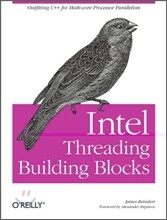
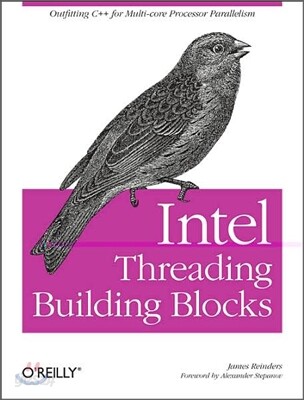
Intel Threading Building Blocks: Outfitting C++ for Multi-Core Processor Parallelism
Paperback
Reinders, James
O'Reilly Media
2007.07.12.
이미 소장하고 있다면 판매해 보세요.
- 국내배송만 가능
- 해외 거래처 사정에 의하여 품절/지연 가능
- 도서 정보 중 미표기 사항 안내?
- 문화비소득공제 가능
책소개
목차
|
Foreword
Note from the Lead Developer of Intel Threading Building Blocks Preface 1. Why Threading Building Blocks? Overview Benefits 2. Thinking Parallel Elements of Thinking Parallel Decomposition Scaling and Speedup What Is a Thread? Mutual Exclusion and Locks Correctness Abstraction Patterns Intuition 3. Basic Algorithms Initializing and Terminating the Library Loop Parallelization Recursive Range Specifications Summary of Loops 4. Advanced Algorithms Parallel Algorithms for Streams 5. Containers concurrent_queue concurrent_vector concurrent_hash_map 6. Scalable Memory Allocation Limitations Problems in Memory Allocation Memory Allocators Replacing malloc, new, and delete 7. Mutual Exclusion When to Use Mutual Exclusion Mutexes Mutexes Atomic Operations 8. Timing 9. Task Scheduler When Task-Based Programming Is Inappropriate Much Better Than Raw Native Threads Initializing the Library Is Your Job Example Program for Fibonacci Numbers Task Scheduling Overview How Task Scheduling Works Recommended Task Recurrence Patterns Making Best Use of the Scheduler Task Scheduler Interfaces Task Scheduler Summary 10. Keys to Success Key Steps to Success Relaxed Sequential Execution Safe Concurrency for Methods and Libraries Debug Versus Release For Efficiency's Sake Enabling Debugging Features Mixing with Other Threading Packages Naming Conventions 11. Examples The Aha! Factor A Few Other Key Points parallel_for Examples The Game of Life Parallel_reduce Examples CountStrings: Using concurrent_hash_map Quicksort: Visualizing Task Stealing A Better Matrix Multiply (Strassen) Advanced Task Programming Packet Processing Pipeline Memory Allocation Game Threading Example Physics Interaction and Update Code Open Dynamics Engine 12. History and Related Projects Libraries Languages Pragmas Generic Programming Caches Costs of Time Slicing Quick Introduction to Lambda Functions Further Reading Index |
관련 분류
품목정보
- 발행일
- 2007년 07월 12일
- 쪽수, 무게, 크기
- 303쪽 | 530g | 180*233*20mm
- ISBN13
- 9780596514808
리뷰/한줄평0
상품정보안내
직수입외서의 경우, 해외거래처에서 제공하는 정보가 부족하여 제목, 표지, 가격, 유통상태 등의 정보가 미비하거나 변경되는 경우가 있습니다. 정확한 확인을 원하시는 경우, 일대일 상담으로 문의하여 주시면 답변 드리겠습니다.
(판형과 판수 등이 다양한 도서는 찾으시는 도서의 ISBN을 알려 주시면 보다 빠르고 정확한 안내가 가능합니다.)
해외거래처에서 품절인 경우, 2차 거래선을 통해 유럽과 미국 출판사로 직접 수입이 진행될 수 있습니다.
수입 진행 시점으로 부터 2~3주가 추가로 소요되며, 해외에서도 유통이 원활하지 않은 도서는 품절 안내가 지연될 수 있습니다.
해당 경우, 문자와 메일로 별도 안내를 드리고 있사오니 마이페이지에서 휴대전화번호와 메일주소를 다시 한번 확인해주시기 바랍니다.
(판형과 판수 등이 다양한 도서는 찾으시는 도서의 ISBN을 알려 주시면 보다 빠르고 정확한 안내가 가능합니다.)
해외거래처에서 품절인 경우, 2차 거래선을 통해 유럽과 미국 출판사로 직접 수입이 진행될 수 있습니다.
수입 진행 시점으로 부터 2~3주가 추가로 소요되며, 해외에서도 유통이 원활하지 않은 도서는 품절 안내가 지연될 수 있습니다.
해당 경우, 문자와 메일로 별도 안내를 드리고 있사오니 마이페이지에서 휴대전화번호와 메일주소를 다시 한번 확인해주시기 바랍니다.
61,630원
총 1개
61,630원