

소득공제
외서
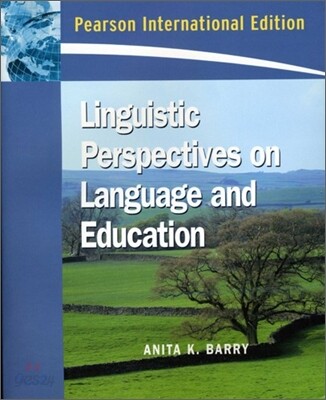
Linguistic Perspectives on Language and Education (IE)
Paperback, International Edition
Allyn & Bacon
2007.05.31.
이미 소장하고 있다면 판매해 보세요.
- 국내배송만 가능
- 문화비소득공제 가능
책소개
목차
|
CHAPTER 1 The Linguistic Perspective
Why Should Teachers Study Linguistics? What is the Linguistic Perspective? What is Linguistics? What Do Linguists Do? Goals of the Book Discussion of Exercises Suggested Projects Further Reading CHAPTER 2 Foundations of Linguistics: Phonetics Oral vs. Written Language Consonants Vowels Approximants Phonetic Spelling and the English Alphabet Discussion of Exercises Suggested Projects Further Reading CHAPTER 3 Foundations of Linguistics: Phonology and Morphology Phonology Morphology Discussion of Exercises Suggested Projects Further Reading CHAPTER 4 Syntax and Grammar Teaching Word Classes Constituent Structure Other Syntactic Knowledge Linear Order Agreement Sentence Nesting Traditional Grammar Grammar Teaching Revisited Teaching Usage Discussion of Exercises Suggested Projects Further Reading CHAPTER 5 Language Change and Variation Language Change History of English Overview Old English Middle English Modern English Mechanisms of Change Vocabulary Phonology Morphology and Syntax Regional Variation Overview Examples Sociolinguistic Variation Dialect and Ethnic Identity African American Vernacular English Other Ethnic Dialects Attitudes toward Dialect Differences Language and Gender Discussion of Exercises Suggested Projects Further Reading CHAPTER 6 The Written Word Writing Systems Background of English Orthography What English Spelling Represents Spelling Reform Other Writing Conventions Reading Discussion of Exercises Suggested Projects Further Reading CHAPTER 7 Using Language in Context Pragmatics Conversational Intent: How Do You Know What Someone Really Means? Disambiguating Ambiguity Discourse Function Conversational Appropriateness Language Choices and Social Appropriateness Classroom Register Discussion of Exercises Suggested Projects Further Reading CHAPTER 8 Child Language Acquisition Basic Assumptions Stages of Language Development Before First Words First Words Multiple Word Utterances: The Idea of Syntax Grammatical Morphemes: Fleshing Out the Telegram Later Development: Sounding Like an Adult Learning the Meaning of Words Acquiring Pragmatic Skills Learning Strategies and Individual Differences Acquisition Theory: How Do Children Do It? Brain Structure and the Critical Age Hypothesis Discussion of Exercises Suggested Projects Further Reading CHAPTER 9 Language Disorders and Impairment Hearing Impairment Visual Impairment Cognitive Impairment Some Theoretical Questions What is the Relationship between Language and Cognition? What is the Relationship between Language and Speech? Is There a Critical Age for Language Acquisition? Discussion of Exercises Suggested Projects Further Reading CHAPTER 10 Language Planning and Policy Language Planning and Policy around the World Choosing a National Language Dominant vs. Minority Languages Responses to Minority Dialects of English in the United States Educational Policy and Minority Dialects Educational Policy and Bilingualism The English-Only Movement Discussion of Exercises Suggested Projects Further Reading CHAPTER 11 Linguistics and Literacy What Do We Mean by "Literacy"? Elements of Literacy The Beginnings of Reading and Writing Decontextualized Language Construction of Discourse Metalanguage: Becoming Aware of Language Linguistics and Literacy: Reflections Discussion of Exercises Suggested Projects Further Reading GLOSSARY |
관련 분류
품목정보
- 발행일
- 2007년 05월 31일
- 쪽수, 무게, 크기
- 288쪽 | 189*232mm
- ISBN13
- 9780132069113
사락 별점0
혜택 및 유의사항밑줄0
혜택 및 유의사항상품정보안내
직수입외서의 경우, 해외거래처에서 제공하는 정보가 부족하여 제목, 표지, 가격, 유통상태 등의 정보가 미비하거나 변경되는 경우가 있습니다. 정확한 확인을 원하시는 경우, 일대일 상담으로 문의하여 주시면 답변 드리겠습니다.
(판형과 판수 등이 다양한 도서는 찾으시는 도서의 ISBN을 알려 주시면 보다 빠르고 정확한 안내가 가능합니다.)
해외거래처에서 품절인 경우, 2차 거래선을 통해 유럽과 미국 출판사로 직접 수입이 진행될 수 있습니다.
수입 진행 시점으로 부터 2~3주가 추가로 소요되며, 해외에서도 유통이 원활하지 않은 도서는 품절 안내가 지연될 수 있습니다.
해당 경우, 문자와 메일로 별도 안내를 드리고 있사오니 마이페이지에서 휴대전화번호와 메일주소를 다시 한번 확인해주시기 바랍니다.
(판형과 판수 등이 다양한 도서는 찾으시는 도서의 ISBN을 알려 주시면 보다 빠르고 정확한 안내가 가능합니다.)
해외거래처에서 품절인 경우, 2차 거래선을 통해 유럽과 미국 출판사로 직접 수입이 진행될 수 있습니다.
수입 진행 시점으로 부터 2~3주가 추가로 소요되며, 해외에서도 유통이 원활하지 않은 도서는 품절 안내가 지연될 수 있습니다.
해당 경우, 문자와 메일로 별도 안내를 드리고 있사오니 마이페이지에서 휴대전화번호와 메일주소를 다시 한번 확인해주시기 바랍니다.
