
이미 소장하고 있다면 판매해 보세요.
- 국내배송만 가능
- 문화비소득공제 가능
책소개
목차
|
Preface
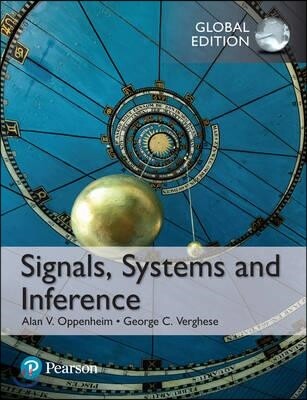
The Cover Acknowledgments Prologue 1. Signals and Systems 1.1 Signals, Systems, Models, and Properties 1.1.1 System Properties 1.2 Linear, Time-Invariant Systems 1.2.1 Impulse-Response Representation of LTI Systems 1.2.2 Eigenfunction and Transform Representation of LTI Systems 1.2.3 Fourier Transforms 1.3 Deterministic Signals and Their Fourier Transforms 1.3.1 Signal Classes and Their Fourier Transforms 1.3.2 Parseval’s Identity, Energy Spectral Density, and Deterministic Autocorrelation 1.4 Bilateral Laplace and Z-Transforms 1.4.1 The Bilateral z-Transform 1.4.2 The Bilateral Laplace Transform 1.5 Discrete-Time Processing of Continuous-Time Signals 1.5.1 Basic Structure for DT Processing of CT Signals 1.5.2 DT Filtering and Overall CT Response 1.5.3 Nonideal D/C Converters 1.6 Further Reading Problems Basic Problems Advanced Problems Extension Problems 2. Amplitude, Phase, and Group Delay 2.1 Fourier Transform Magnitude and Phase 2.2 Group Delay and the Effect of Nonlinear Phase 2.2.1 Narrowband Input Signals 2.2.2 Broadband Input Signals 2.3 All-Pass and Minimum-Phase Systems 2.3.1 All-Pass Systems 2.3.2 Minimum-Phase Systems 2.3.3 The Group Delay of Minimum-Phase Systems 2.4 Spectral Factorization 2.5 Further Reading Problems Basic Problems Advanced Problems Extension Problems 3. Pulse-Amplitude Modulation 3.1 Baseband Pulse-Amplitude Modulation 3.1.1 The Transmitted Signal 3.1.2 The Received Signal 3.1.3 Frequency-Domain Characterizations 3.1.4 Intersymbol Interference at the Receiver 3.2 Nyquist Pulses 3.3 Passband Pulse-Amplitude Modulation 3.3.1 Frequency-Shift Keying (FSK) 3.3.2 Phase-Shift Keying (PSK) 3.3.3 Quadrature-Amplitude Modulation (QAM) 3.4 Further Reading Problems Basic Problems Advanced Problems Extension Problems 4. State-Space Models 4.1 System Memory 4.2 Illustrative Examples 4.3 State-Space Models 4.3.1 DT State-Space Models 4.3.2 CT State-Space Models 4.3.3 Defining Properties of State-Space Models 4.4 State-Space Models from LTI Input-Output Models 4.5 Equilibria and Linearization of Nonlinear State-Space Models 4.5.1 Equilibrium 4.5.2 Linearization 4.6 Further Reading Problems Basic Problems Advanced Problems Extension Problems 5. LTI State-Space Models 5.1 Continuous-Time and Discrete-Time LTI Models 5.2 Zero-Input Response and Modal Representation 5.2.1 Undriven CT Systems 5.2.2 Undriven DT Systems 5.2.3 Asymptotic Stability of LTI Systems 5.3 General Response in Modal Coordinates 5.3.1 Driven CT Systems 5.3.2 Driven DT Systems 5.3.3 Similarity Transformations and Diagonalization 5.4 Transfer Functions, Hidden Modes, Reachability, and Observability 5.4.1 Input-State-Output Structure of CT Systems 5.4.2 Input-State-Output Structure of DT Systems 5.5 Further Reading Problems Basic Problems Advanced Problems Extension Problems 6. State Observers and State Feedback 6.1 Plant and Model 6.2 State Estimation and Observers 6.2.1 Real-Time Simulation 6.2.2 The State Observer 6.2.3 Observer Design 6.3 State Feedback Control 6.3.1 Open-Loop Control 6.3.2 Closed-Loop Control via LTI State Feedback 6.3.3 LTI State Feedback Design 6.4 Observer-Based Feedback Control 6.5 Further Reading Problems Basic Problems Advanced Problems Extension Problems 7. Probabilistic Models 7.1 The Basic Probability Model 7.2 Conditional Probability, Bayes’ Rule, and Independence 7.3 Random Variables 7.4 Probability Distributions 7.5 Jointly Distributed Random Variables 7.6 Expectations, Moments, and Variance 7.7 Correlation and Covariance for Bivariate Random Variables 7.8 A Vector-Space Interpretation of Correlation Properties 7.9 Further Reading Problems Basic Problems Advanced Problems Extension Problems 8. Estimation 8.1 Estimation of a Continuous Random Variable 8.2 From Estimates to the Estimator 8.2.1 Orthogonality 8.3 Linear Minimum Mean Square Error Estimation 8.3.1 Linear Estimation of One Random Variable from a Single Measurement of Another 8.3.2 Multiple Measurements 8.4 Further Reading Problems Basic Problems Advanced Problems Extension Problems 9. Hypothesis Testing 9.1 Binary Pulse-Amplitude Modulation in Noise 9.2 Hypothesis Testing with Minimum Error Probability 9.2.1 Deciding with Minimum Conditional Probability of Error 9.2.2 MAP Decision Rule for Minimum Overall Probability of Error 9.2.3 Hypothesis Testing in Coded Digital Communication 9.3 Binary Hypothesis Testing 9.3.1 False Alarm, Miss, and Detection 9.3.2 The Likelihood Ratio Test 9.3.3 Neyman-Pearson Decision Rule and Receiver Operating Characteristic 9.4 Minimum Risk Decisions 9.5 Further Reading Problems Basic Problems Advanced Problems Extension Problems 10. Random Processes 10.1 Definition and Examples of a Random Process 10.2 First- and Second-Moment Characterization of Random Processes 10.3 Stationarity 10.3.1 Strict-Sense Stationarity 10.3.2 Wide-Sense Stationarity 10.3.3 Some Properties of WSS Correlation and Covariance Functions 10.4 Ergodicity 10.5 Linear Estimation of Random Processes 10.5.1 Linear Prediction 10.5.2 Linear FIR Filtering 10.6 LTI Filtering of WSS Processes 10.7 Further Reading Problems Basic Problems Advanced Problems Extension Problems 11. Power Spectral Density 11.1 Spectral Distribution of Expected Instantaneous Power 11.1.1 Power Spectral Density 11.1.2 Fluctuation Spectral Density 11.1.3 Cross-Spectral Density 11.2 Expected Time-Averaged Power Spectrum and the Einstein-Wiener-Khinchin Theorem 11.3 Applications 11.3.1 Revealing Cyclic Components 11.3.2 Modeling Filters 11.3.3 Whitening Filters 11.3.4 Sampling Bandlimited Random Processes 11.4 Further Reading Problems Basic Problems Advanced Problems Extension Problems 12. Signal Estimation 12.1 LMMSE Estimation for Random Variables 12.2 FIR Wiener Filters 12.3 The Unconstrained DT Wiener Filter 12.4 Causal DT Wiener Filtering 12.5 Optimal Observers and Kalman Filtering 12.5.1 Causal Wiener Filtering of a Signal Corrupted by Additive Noise 12.5.2 Observer Implementation of the Wiener Filter 12.5.3 Optimal State Estimates and Kalman Filtering 12.6 Estimation of CT Signals 12.7 Further Reading Problems Basic Problems Advanced Problems Extension Problems 13. Signal Detection 13.1 Hypothesis Testing with Multiple Measurements 13.2 Detecting a Known Signal in I.I.D. Gaussian Noise 13.2.1 The Optimal Solution 13.2.2 Characterizing Performance 13.2.3 Matched Filtering 13.3 Extensions of Matched-Filter Detection 13.3.1 Infinite-Duration, Finite-Energy Signals 13.3.2 Maximizing SNR for Signal Detection in White Noise 13.3.3 Detection in Colored Noise 13.3.4 Continuous-Time Matched Filters 13.3.5 Matched Filtering and Nyquist Pulse Design 13.3.6 Unknown Arrival Time and Pulse Compression 13.4 Signal Discrimination in I.I.D. Gaussian Noise 13.5 Further Reading Problems Basic Problems Advanced Problems Extension Problems Bibliography Index |
품목정보
- 발행일
- 2017년 01월 17일
- 쪽수, 무게, 크기
- 608쪽 | 810g | 177*231*18mm
- ISBN13
- 9781292156200
사락 별점0
혜택 및 유의사항밑줄0
혜택 및 유의사항상품정보안내
직수입외서의 경우, 해외거래처에서 제공하는 정보가 부족하여 제목, 표지, 가격, 유통상태 등의 정보가 미비하거나 변경되는 경우가 있습니다. 정확한 확인을 원하시는 경우, 일대일 상담으로 문의하여 주시면 답변 드리겠습니다.
(판형과 판수 등이 다양한 도서는 찾으시는 도서의 ISBN을 알려 주시면 보다 빠르고 정확한 안내가 가능합니다.)
해외거래처에서 품절인 경우, 2차 거래선을 통해 유럽과 미국 출판사로 직접 수입이 진행될 수 있습니다.
수입 진행 시점으로 부터 2~3주가 추가로 소요되며, 해외에서도 유통이 원활하지 않은 도서는 품절 안내가 지연될 수 있습니다.
해당 경우, 문자와 메일로 별도 안내를 드리고 있사오니 마이페이지에서 휴대전화번호와 메일주소를 다시 한번 확인해주시기 바랍니다.
(판형과 판수 등이 다양한 도서는 찾으시는 도서의 ISBN을 알려 주시면 보다 빠르고 정확한 안내가 가능합니다.)
해외거래처에서 품절인 경우, 2차 거래선을 통해 유럽과 미국 출판사로 직접 수입이 진행될 수 있습니다.
수입 진행 시점으로 부터 2~3주가 추가로 소요되며, 해외에서도 유통이 원활하지 않은 도서는 품절 안내가 지연될 수 있습니다.
해당 경우, 문자와 메일로 별도 안내를 드리고 있사오니 마이페이지에서 휴대전화번호와 메일주소를 다시 한번 확인해주시기 바랍니다.
38,000원
총 1개
38,000원