
소득공제
수입
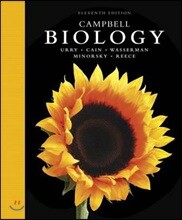
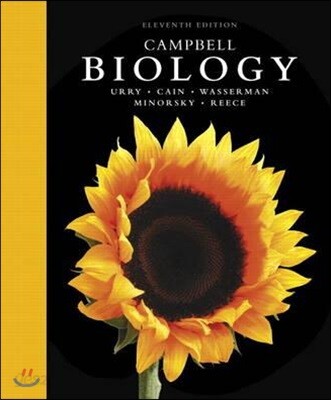
Urry, Lisa A. / Cain, Michael L. / Wasserman, Steven A. / Minorsky, Peter V. / Reece, Jane B.
Pearson College Div
2016.10.29.
이미 소장하고 있다면 판매해 보세요.
- 국내배송만 가능
- 해외 거래처 사정에 의하여 품절/지연 가능
- 도서 정보 중 미표기 사항 안내?
- 문화비소득공제 가능
책소개
목차
|
1 Evolution, the Themes of Biology, and Scientific Inquiry
Inquiring About Life CONCEPT 1.1 The study of life reveals common themes CONCEPT 1.2 The Core Theme: Evolution accounts for the unity and diversity of life CONCEPT 1.3 In studying nature, scientists make observations and form and test hypotheses CONCEPT 1.4 Science benefits from a cooperative approach and diverse viewpoints UNIT 1 THE CHEMISTRY OF LIFE 2 The Chemical Context of Life A Chemical Connection to Biology CONCEPT 2.1 Matter consists of chemical elements in pure form and in combinations called compounds CONCEPT 2.2 An element's properties depend on the structure of its atoms CONCEPT 2.3 The formation and function of molecules depend on chemical bonding between atoms CONCEPT 2.4 Chemical reactions make and break chemical bonds 3 Water and Life The Molecule That Supports All of Life CONCEPT 3.1 Polar covalent bonds in water molecules result in hydrogen bonding CONCEPT 3.2 Four emergent properties of water contribute to Earth's suitability for life CONCEPT 3.3 Acidic and basic conditions affect living organisms 4 Carbon and the Molecular Diversity of Life Carbon: The Backbone of Life CONCEPT 4.1 Organic chemistry is the study of carbon compounds CONCEPT 4.2 Carbon atoms can form diverse molecules by bonding to four other atoms CONCEPT 4.3 A few chemical groups are key to molecular function 5 The Structure and Function of Large Biological Molecules The Molecules of Life CONCEPT 5.1 Macromolecules are polymers, built from monomers CONCEPT 5.2 Carbohydrates serve as fuel and building material CONCEPT 5.3 Lipids are a diverse group of hydrophobic molecules CONCEPT 5.4 Proteins include a diversity of structures, resulting in a wide range of functions CONCEPT 5.5 Nucleic acids store, transmit, and help express hereditary information CONCEPT 5.6 Genomics and proteomics have transformed biological inquiry and applications UNIT 2 THE CELL 6 A Tour of the Cell The Fundamental Units of Life CONCEPT 6.1 Biologists use microscopes and biochemistry to study cells CONCEPT 6.2 Eukaryotic cells have internal membranes that compartmentalize their functions CONCEPT 6.3 The eukaryotic cell's genetic instructions are housed in the nucleus and carried out by the ribosomes CONCEPT 6.4 The endomembrane system regulates protein traffic and performs metabolic functions CONCEPT 6.5 Mitochondria and chloroplasts change energy from one form to another CONCEPT 6.6 The cytoskeleton is a network of fibers that organizes structures and activities in the cell CONCEPT 6.7 Extracellular components and connections between cells help coordinate cellular activities CONCEPT 6.8 A cell is greater than the sum of its parts 7 Membrane Structure and Function Life at the Edge CONCEPT 7.1 Cellular membranes are fluid mosaics of lipids and proteins CONCEPT 7.2 Membrane structure results in selective permeability CONCEPT 7.3 Passive transport is diffusion of a substance across a membrane with no energy investment CONCEPT 7.4 Active transport uses energy to move solutes against their gradients CONCEPT 7.5 Bulk transport across the plasma membrane occurs by exocytosis and endocytosis 8 An Introduction to Metabolism The Energy of Life CONCEPT 8.1 An organism's metabolism transforms matter and energy, subject to the laws of thermodynamics CONCEPT 8.2 The free-energy change of a reaction tells us whether or not the reaction occurs spontaneously CONCEPT 8.3 ATP powers cellular work by coupling exergonic reactions to endergonic reactions CONCEPT 8.4 Enzymes speed up metabolic reactions by lowering energy barriers CONCEPT 8.5 Regulation of enzyme activity helps control metabolism 9 Cellular Respiration and Fermentation Life Is Work CONCEPT 9.1 Catabolic pathways yield energy by oxidizing organic fuels CONCEPT 9.2 Glycolysis harvests chemical energy by oxidizing glucose to pyruvate CONCEPT 9.3 After pyruvate is oxidized, the citric acid cycle completes the energy-yielding oxidation of organic molecules CONCEPT 9.4 During oxidative phosphorylation, chemiosmosis couples electron transport to ATP synthesis CONCEPT 9.5 Fermentation and anaerobic respiration enable cells to produce ATP without the use of oxygen CONCEPT 9.6 Glycolysis and the citric acid cycle connect to many other metabolic pathways 10 Photosynthesis The Process That Feeds the Biosphere CONCEPT 10.1 Photosynthesis converts light energy to the chemical energy of food CONCEPT 10.2 The light reactions convert solar energy to the chemical energy of ATP and NADPH CONCEPT 10.3 The Calvin cycle uses the chemical energy of ATP and NADPH to reduce CO 2 to sugar CONCEPT 10.4 Alternative mechanisms of carbon fixation have evolved in hot, arid climates CONCEPT 10.5Life depends on photosynthesis 11 Cell Communication Cellular Messaging CONCEPT 11.1 External signals are converted to responses within the cell CONCEPT 11.2 Reception: A signaling molecule binds to a receptor protein, causing it to change shape CONCEPT 11.3 Transduction: Cascades of molecular interactions relay signals from receptors to target molecules in the cell CONCEPT 11.4 Response: Cell signaling leads to regulation of transcription or cytoplasmic activities CONCEPT 11.5 Apoptosis integrates multiple cell-signaling pathways 12 The Cell Cycle The Key Roles of Cell Division CONCEPT 12.1 Most cell division results in genetically identical daughter cells CONCEPT 12.2 The mitotic phase alternates with interphase in the cell cycle CONCEPT 12.3 The eukaryotic cell cycle is regulated by a molecular control system UNIT 3 GENETICS 13 Meiosis and Sexual Life Cycles Variations on a Theme CONCEPT 13.1 Offspring acquire genes from parents by inheriting chromosomes CONCEPT 13.2 Fertilization and meiosis alternate in sexual life cycles CONCEPT 13.3 Meiosis reduces the number of chromosome sets from diploid to haploid CONCEPT 13.4 Genetic variation produced in sexual life cycles contributes to evolution 14 Mendel and the Gene Idea Drawing from the Deck of Genes CONCEPT 14.1 Mendel used the scientific approach to identify two laws of inheritance CONCEPT 14.2 Probability laws govern Mendelian inheritance CONCEPT 14.3 Inheritance patterns are often more complex than predicted by simple Mendelian genetics CONCEPT 14.4 Many human traits follow Mendelian patterns of inheritance 15 The Chromosomal Basis of Inheritance Locating Genes Along Chromosomes CONCEPT 15.1 Morgan showed that Mendelian inheritance has its physical basis in the behavior of chromosomes: scientific inquiry CONCEPT 15.2 Sex-linked genes exhibit unique patterns of inheritance CONCEPT 15.3 Linked genes tend to be inherited together because they are located near each other on the same chromosome CONCEPT 15.4 Alterations of chromosome number or structure cause some genetic disorders CONCEPT 15.5 Some inheritance patterns are exceptions to standard Mendelian inheritance 16 The Molecular Basis of Inheritance Life's Operating Instructions CONCEPT 16.1 DNA is the genetic material CONCEPT 16.2 Many proteins work together in DNA replication and repair CONCEPT 16.3 A chromosome consists of a DNA molecule packed together with proteins 17 Gene Expression: From Gene to Protein The Flow of Genetic Information CONCEPT 17.1 Genes specify proteins via transcription and translation CONCEPT 17.2 Transcription is the DNA-directed synthesis of RNA: a closer look CONCEPT 17.3 Eukaryotic cells modify RNA after transcription CONCEPT 17.4 Translation is the RNA-directed synthesis of a polypeptide: a closer look CONCEPT 17.5 Mutations of one or a few nucleotides can affect protein structure and function 18 Regulation of Gene Expression Beauty in the Eye of the Beholder CONCEPT 18.1 Bacteria often respond to environmental change by regulating transcription CONCEPT 18.2 Eukaryotic gene expression is regulated at many stages CONCEPT 18.3 Noncoding RNAs play multiple roles in controlling gene expression CONCEPT 18.4 A program of differential gene expression leads to the different cell types in a multicellular organism CONCEPT 18.5 Cancer results from genetic changes that affect cell cycle control 19 Viruses A Borrowed Life CONCEPT 19.1 A virus consists of a nucleic acid surrounded by a protein coat CONCEPT 19.2 Viruses replicate only in host cells CONCEPT 19.3 Viruses and prions are formidable pathogens in animals and plants 20 DNA Tools and Biotechnology The DNA Toolbox CONCEPT 20.1 DNA sequencing and DNA cloning are valuable tools for genetic engineering and biological inquiry CONCEPT 20.2 Biologists use DNA technology to study gene expression and function CONCEPT 20.3 Cloned organisms and stem cells are useful for basic research and other applications CONCEPT 20.4 The practical applications of DNA-based biotechnology affect our lives in many ways 21 Genomes and Their Evolution Reading the Leaves from the Tree of Life CONCEPT 21.1 The Human Genome Project fostered development of faster, less expensive sequencing techniques CONCEPT 21.2 Scientists use bioinformatics to analyze genomes and their functions CONCEPT 21.3 Genomes vary in size, number of genes, and gene density CONCEPT 21.4 Multicellular eukaryotes have a lot of noncoding DNA and many multigene families CONCEPT 21.5 Duplication, rearrangement, and mutation of DNA contribute to genome evolution CONCEPT 21.6 Comparing genome sequences provides clues to evolution and development UNIT 4 MECHANISMS OF EVOLUTION 22 Descent with Modification: A Darwinian View of Life Endless Forms Most Beautiful CONCEPT 22.1 The Darwinian revolution challenged traditional views of a young Earth inhabited by unchanging species CONCEPT 22.2 Descent with modification by natural selection explains the adaptations of organisms and the unity and diversity of life CONCEPT 22.3 Evolution is supported by an overwhelming amount of scientific evidence 23 The Evolution of Populations The Smallest Unit of Evolution CONCEPT 23.1 Genetic variation makes evolution possible CONCEPT 23.2 The Hardy-Weinberg equation can be used to test whether a population is evolving CONCEPT 23.3 Natural selection, genetic drift, and gene flow can alter allele frequencies in a population CONCEPT 23.4 Natural selection is the only mechanism that consistently causes adaptive evolution 24 The Origin of Species That "Mystery of Mysteries" CONCEPT 24.1 The biological species concept emphasizes reproductive isolation CONCEPT 24.2 Speciation can take place with or without geographic separation CONCEPT 24.3 Hybrid zones reveal factors that cause reproductive isolation CONCEPT 24.4 Speciation can occur rapidly or slowly and can result from changes in few or many genes 25 The History of Life on Earth A Surprise in the Desert CONCEPT 25.1 Conditions on early Earth made the origin of life possible CONCEPT 25.2 The fossil record documents the history of life CONCEPT 25.3 Key events in life's history include the origins of unicellular and multicellular organisms and the colonization of land CONCEPT 25.4 The rise and fall of groups of organisms reflect differences in speciation and extinction rates CONCEPT 25.5 Major changes in body form can result from changes in the sequences and regulation of developmental genes CONCEPT 25.6 Evolution is not goal oriented UNIT 5 THE EVOLUTIONARY HISTORY OF BIOLOGICAL DIVERSITY 26 Phylogeny and the Tree of Life Investigating the Tree of Life CONCEPT 26.1 Phylogenies show evolutionary relationships CONCEPT 26.2 Phylogenies are inferred from morphological and molecular data CONCEPT 26.3 Shared characters are used to construct phylogenetic trees CONCEPT 26.4 An organism's evolutionary history is documented in its genome CONCEPT 26.5 Molecular clocks help track evolutionary time CONCEPT 26.6 Our understanding of the tree of life continues to change based on new data 27 Bacteria and Archaea Masters of Adaptation CONCEPT 27.1 Structural and functional adaptations contribute to prokaryotic success CONCEPT 27.2 Rapid reproduction, mutation, and genetic recombination promote genetic diversity in prokaryotes CONCEPT 27.3 Diverse nutritional and metabolic adaptations have evolved in prokaryotes CONCEPT 27.4 Prokaryotes have radiated into a diverse set of lineages CONCEPT 27.5 Prokaryotes play crucial roles in the biosphere CONCEPT 27.6 Prokaryotes have both beneficial and harmful impacts on humans 28 Protists Living Small CONCEPT 28.1 Most eukaryotes are single-celled organisms CONCEPT 28.2 Excavates include protists with modified mitochondria and protists with unique flagella CONCEPT 28.3 SAR is a highly diverse group of protists defined by DNA similarities CONCEPT 28.4 Red algae and green algae are the closest relatives of land plants CONCEPT 28.5 Unikonts include protists that are closely related to fungi and animals CONCEPT 28.6 Protists play key roles in ecological communities 29 Plant Diversity I: How Plants Colonized Land The Greening of Earth CONCEPT 29.1 Plants evolved from green algae CONCEPT 29.2 Mosses and other nonvascular plants have life cycles dominated by gametophytes CONCEPT 29.3 Ferns and other seedless vascular plants were the first plants to grow tall 30 Plant Diversity II: The Evolution of Seed Plants Transforming the World CONCEPT 30.1 Seeds and pollen grains are key adaptations for life on land CONCEPT 30.2 Gymnosperms bear "naked" seeds, typically on cones CONCEPT 30.3 The reproductive adaptations of angiosperms include flowers and fruits CONCEPT 30.4 Human welfare depends on seed plants 31 Fungi Mighty Mushrooms CONCEPT 31.1 Fungi are heterotrophs that feed by absorption CONCEPT 31.2 Fungi produce spores through sexual or asexual life cycles CONCEPT 31.3 The ancestor of fungi was an aquatic, single-celled, flagellated protist CONCEPT 31.4 Fungi have radiated into a diverse set of lineages CONCEPT 31.5 Fungi play key roles in nutrient cycling, ecological interactions, and human welfare 32 An Overview of Animal Diversity A Kingdom of Consumers CONCEPT 32.1 Animals are multicellular, heterotrophic eukaryotes with tissues that develop from embryonic layers CONCEPT 32.2 The history of animals spans more than half a billion years CONCEPT 32.3 Animals can be characterized by "body plans" CONCEPT 32.4 Views of animal phylogeny continue to be shaped by new molecular and morphological data 33 An Introduction to Invertebrates A Dragon Without a Backbone CONCEPT 33.1 Sponges are basal animals that lack tissues CONCEPT 33.2 Cnidarians are an ancient phylum of eumetazoans CONCEPT 33.3 Lophotrochozoans, a clade identified by molecular data, have the widest range of animal body forms CONCEPT 33.4 Ecdysozoans are the most species-rich animal group CONCEPT 33.5 Echinoderms and chordates are deuterostomes 34 The Origin and Evolution of Vertebrates Half a Billion Years of Backbones CONCEPT 34.1 Chordates have a notochord and a dorsal, hollow nerve cord CONCEPT 34.2 Vertebrates are chordates that have a backbone CONCEPT 34.3 Gnathostomes are vertebrates that have jaws CONCEPT 34.4 Tetrapods are gnathostomes that have limbs CONCEPT 34.5 Amniotes are tetrapods that have a terrestrially adapted egg CONCEPT 34.6 Mammals are amniotes that have hair and produce milk CONCEPT 34.7 Humans are mammals that have a large brain and bipedal locomotion UNIT 6 PLANT FORM AND FUNCTION 35 Vascular Plant Structure, Growth, and Development Are Plants Computers? CONCEPT 35.1 Plants have a hierarchical organization consisting of organs, tissues, and cells CONCEPT 35.2 Different meristems generate new cells for primary and secondary growth CONCEPT 35.3 Primary growth lengthens roots and shoots CONCEPT 35.4 Secondary growth increases the diameter of stems and roots in woody plants CONCEPT 35.5 Growth, morphogenesis, and cell differentiation produce the plant body 36 Resource Acquisition and Transport in Vascular Plants A Whole Lot of Shaking Going On CONCEPT 36.1 Adaptations for acquiring resources were key steps in the evolution of vascular plants CONCEPT 36.2 Different mechanisms transport substances o |
품목정보
- 발행일
- 2016년 10월 29일
- 쪽수, 무게, 크기
- 1488쪽 | 3360g | 234*277*51mm
- ISBN13
- 9780134093413
사락 별점0
혜택 및 유의사항밑줄0
혜택 및 유의사항상품정보안내
직수입외서의 경우, 해외거래처에서 제공하는 정보가 부족하여 제목, 표지, 가격, 유통상태 등의 정보가 미비하거나 변경되는 경우가 있습니다. 정확한 확인을 원하시는 경우, 일대일 상담으로 문의하여 주시면 답변 드리겠습니다.
(판형과 판수 등이 다양한 도서는 찾으시는 도서의 ISBN을 알려 주시면 보다 빠르고 정확한 안내가 가능합니다.)
해외거래처에서 품절인 경우, 2차 거래선을 통해 유럽과 미국 출판사로 직접 수입이 진행될 수 있습니다.
수입 진행 시점으로 부터 2~3주가 추가로 소요되며, 해외에서도 유통이 원활하지 않은 도서는 품절 안내가 지연될 수 있습니다.
해당 경우, 문자와 메일로 별도 안내를 드리고 있사오니 마이페이지에서 휴대전화번호와 메일주소를 다시 한번 확인해주시기 바랍니다.
