

이미 소장하고 있다면 판매해 보세요.
- 국내배송만 가능
- 해외 거래처 사정에 의하여 품절/지연 가능
- 도서 정보 중 미표기 사항 안내?
- 문화비소득공제 가능
책소개
목차
|
Foreword v Introduction xxi Chapter 1: Banking and Interest Rates in a World Without Money: The Effects of Uncontrolled Banking 1 Chapter 2: Active and Passive Monetary Policy in a Neoclassical Model 23 Chapter 3: Rational Economic Behavior and the Balance of Payments 43 Chapter 4: Uniqueness of the Price Level in Monetary Growth Models with Rational Expectations 65 Chapter 5: Purchasing Power Parity in an Equilibrium Model 81 Chapter 6: Ups and Downs in Human Capital and Business 85 Chapter 7: How Passive Monetary Policy Might Work 91 Chapter 8: What a Non-Monetarist Thinks 99 Chapter 9: Global Monetarism in a World of National Currencies 107 Chapter 10: The ABCs of Business Cycles 117 Chapter 11: A Gold Standard with Double Feedback and Near Zero Reserves 129 Chapter 12: The Trouble with Econometric Models 135 Chapter 13: General Equilibrium and Business Cycles 153 Chapter 14: Noise 169 Index 191 |
저자 소개
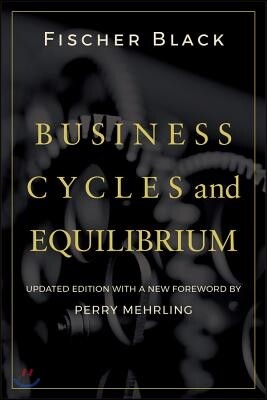
FISCHER BLACK is regarded as one of the great innovators of modern finance theory. He is most famous for cofounding the legendary Black-Scholes equation, although he contributed much more to finance in the areas of portfolio insurance, commodity futures pricing, bond swaps, interest rate futures, and global asset allocation models. Black worked at the University of Chicago and the MIT Sloan School of Management, as well as Goldman Sachs. He received his PhD in applied mathematics from Harvard University. Black died in 1995, two years before the Nobel Prize was awarded to Myron Scholes and Robert C. Merton for their work on option pricing. Since the Nobel Prize is not given posthumously, Black was given a prominent mention for the key role he played in developing the equation.
품목정보
- 발행일
- 2009년 11월 02일
- 쪽수, 무게, 크기
- 224쪽 | 163*236*22mm
- ISBN13
- 9780470499177
리뷰/한줄평0
상품정보안내
(판형과 판수 등이 다양한 도서는 찾으시는 도서의 ISBN을 알려 주시면 보다 빠르고 정확한 안내가 가능합니다.)
해외거래처에서 품절인 경우, 2차 거래선을 통해 유럽과 미국 출판사로 직접 수입이 진행될 수 있습니다.
수입 진행 시점으로 부터 2~3주가 추가로 소요되며, 해외에서도 유통이 원활하지 않은 도서는 품절 안내가 지연될 수 있습니다.
해당 경우, 문자와 메일로 별도 안내를 드리고 있사오니 마이페이지에서 휴대전화번호와 메일주소를 다시 한번 확인해주시기 바랍니다.