
이미 소장하고 있다면 판매해 보세요.
- 국내배송만 가능
- 문화비소득공제 가능
책소개
목차
|
Chapter 0 Reader's Guide
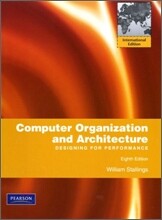
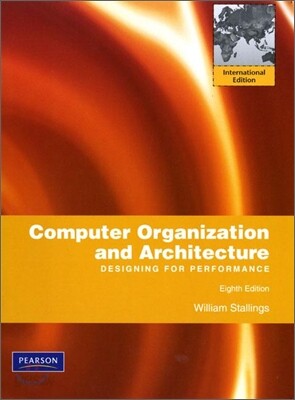
0.1 Outline of the Book 0.2 A Roadmap For Readers and Instructors 0.3 Why Study Computer Organization and Architecture 0.4 Internet and Web ResourcesPART ONE OVERVIEW Chapter 1 Introduction 1.1 Organization and Architecture 1.2 Structure and Function 1.3 Key Terms and Review Questions Chapter 2 Computer Evolution and Performance 2.1 A Brief History of Computers 2.2 Designing for Performance 2.3 The Evolution of the Intel x86 Architecture 2.4 Embedded Systems and the ARM 2.5 Performance Assessment 2.6 Recommended Reading and Web Sites 2.7 Key Terms, Review Questions, and ProblemsPART TWO THE COMPUTER SYSTEM Chapter 3 A Top-Level View of Computer Function and Interconnection 3.1 Computer Components 3.2 Computer Function 3.3 Interconnection Structures 3.4 Bus Interconnection 3.5 PCI 3.6 Recommended Reading and Web Sites 3.7 Key Terms, Review Questions, and Problems 3A Timing Diagrams Chapter 4 Cache Memory 4.1 Computer Memory System Overview 4.2 Cache Memory Principles 4.3 Elements of Cache Design 4.4 Pentium 4 Cache Organization 4.5 ARM Cache Organization 4.6 Recommended Reading 4.7 Key Terms, Review Questions, and Problems Appendix 4A Performance Characteristics of Two-Level Memorie Chapter 5 Internal Memory Technology 5.1 Semiconductor Main Memory 5.2 Error Correction 5.3 Advanced DRAM Organization 5.4 Recommended Reading and Web Sites 5.5 Key Terms, Review Questions, and Problems Chapter 6 External Memory 6.1 Magnetic Disk 6.2 RAID 6.3 Optical Memory 6.4 Magnetic Tape 6.5 Recommended Reading and Web Sites 6.6 Key Terms, Review Questions, and Problems Chapter 7 Input/Output 7.1 External Devices 7.2 I/O Modules 7.3 Programmed I/O 7.4 Interrupt-Driven I/O 7.5 Direct Memory Access 7.6 I/O Channels and Processors 7.7 The External Interface: FireWire and Infiniband 7.8 Recommended Reading and Web Sites 7.9 Key Terms, Review Questions, and Problems Chapter 8 Operating System Support 8.1 Operating System Overview 8.2 Scheduling 8.3 Memory Management 8.4 Pentium Memory Management 8.5 ARM Memory Management 8.6 Recommended Reading and Web Sites 8.7 Key Terms, Review Questions, and Problems Chapter 9 Computer Arithmetic 9.1 The Arithmetic and Logic Unit (ALU) 9.2 Integer Representation 9.3 Integer Arithmetic 9.4 Floating-Point Representation 9.5 Floating-Point Arithmetic 9.6 Recommended Reading and Web Sites 9.7 Key Terms, Review Questions, and Problems Chapter 10 Instruction Sets: Characteristics and Functions 10.1 Machine Instruction Characteristics 10.2 Types of Operands 10.3 Intel x86 and ARM Data Types 10.4 Types of Operations 10.5 Intel x86 and ARM Operation Types 10.6 Recommended Reading 10.7 Key Terms, Review Questions, and Problems Chapter 11 Instruction Sets: Addressing Modes and Formats 11.1 Addressing 11.2 x86 and ARM Addressing Modes 11.3 Instruction Formats 11.4 x86 and ARM Instruction Formats 11.5 Assembly Language 11.6 Recommended Reading 11.7 Key Terms, Review Questions, and Problems Chapter 12 Processor Structure and Function 12.1 Processor Organization 12.2 Register Organization 12.3 The Instruction Cycle 12.4 Instruction Pipelining 12.5 The x86 Processor Family 12.6 The ARM Processor 12.7 Recommended Reading 12.8 Key Terms, Review Questions, and Problems Chapter 13 Reduced Instruction Set Computers (RISCs) 13.1 Instruction Execution Characteristics 13.2 The Use of a Large Register File 13.3 Compiler-Based Register Optimization 13.4 Reduced Instruction Set Architecture 13.5 RISC Pipelining 13.6 MIPS R4000 13.7 SPARC 13.8 The RISC versus CISC Controversy 13.9 Recommended Reading 13.10 Key Terms, Review Questions, and Problems Chapter 14 Instruction-Level Parallelism and Superscalar Processors 14.1 Overview 14.2 Design Issues 14.3 Pentium 4 14.4 ARM Cortex-A8 14.5 Recommended Reading 14.6 Key Terms, Review Questions, and ProblemsPART FOUR THE CONTROL UNIT Chapter 15 Control Unit Operation 15.1 Micro-operations 15.2 Control of the Processor 15.3 Hardwired Implementation 15.4 Recommended Reading 15.5 Key Terms, Review Questions, and Problems Chapter 16 Microprogrammed Control 16.1 Basic Concepts 16.2 Microinstruction Sequencing 16.3 Microinstruction Execution 16.4 TI 8800 16.5 Recommended Reading 16.6 Key Terms, Review Questions, and ProblemsPART FIVE PARALLEL ORGANIZATION Chapter 17 Parallel Processing1 7.1 The Use of Multiple Processors 17.2 Symmetric Multiprocessors 17.3 Cache Coherence and the MESI Protocol 17.4 Multithreading and Chip Multiprocessors 17.5 Clusters 17.6 Nonuniform Memory Access Computers 17.7 Vector Computation 17.8 Recommended Reading and Web Sites 17.9 Key Terms, Review Questions, and Problems Chapter 18 Multicore Computers 18.1 HardwarePerformance Issues 18.2 Software Performance Issues 18.3 Multicore Organization 18.4 Intel x86 Multicore Organization 18.5 ARM11 MPCore 18.6 Recommended Reading and Web Sites 18.7 Key Terms, Review Questions, and ProblemsAPPENDIX A Projects for Teaching Computer Organization and Architecture A.1 Interactive Simulations A.2 Research Projects A.3 Simulation Projects A.4 Reading/Report Assignments A.5 Writing Assignments A.6 Test BankAppendix B Assembly Language, Assemblers, and Compilers B.1 Assembly Language B.2 Assemblers B.3 Loading and Linking B.4 Recommended Reading and Web Site B.5 Key Terms, Review Questions, and Problems ONLINE CHAPTERS WilliamStallings.com/COA/COA8e.html Chapter 19 Number Systems 19.1 The Decimal System 19.2 The Binary System 19.3 Converting between Binary and Decimal 19.4 Hexadecimal Notation 19.5 Key Terms, Review Questions, and Problems Chapter 20 Digital Logic 20.1 Boolean Algebra 20.2 Gates 20.3 Combinational Circuits 20.4 Sequential Circuits 20.5 Programmable Logic Devices 20.6 Recommended Reading and Web Site 20.7 Key Terms and Problems Chapter 21 The IA-64 Architecture 21.1 Motivation 21.2 General Organization 21.3 Predication and Speculation 21.4 IA-64 Instruction Set Architecture 21.5 Itanium Organization 21.6 Recommended Reading and Web Sites 21.7 Key Terms, Review Questions, and Problems ONLINE APPENDICES WilliamStallings.com/COA/COA8e.html Appendix C Hash Tables Appendix D Victim Cache Appendix E Interleaved Memory Appendix F International Reference Alphabet Appendix G Virtual Memory Page Replacement Algorithms Appendix H Recursive Procedures Appendix I Additional Instruction Pipeline TopicsH.1 Pipeline Reservation Tables H.2 Reorder Buffers H.3 Scoreboarding H.4 Tomasulo's AlgorithmReferences Glossary Index Acronyms |
품목정보
- 발행일
- 2009년 07월 30일
- 쪽수, 무게, 크기
- 792쪽 | 크기확인중
- ISBN13
- 9780135064177
사락 별점0
혜택 및 유의사항밑줄0
혜택 및 유의사항상품정보안내
직수입외서의 경우, 해외거래처에서 제공하는 정보가 부족하여 제목, 표지, 가격, 유통상태 등의 정보가 미비하거나 변경되는 경우가 있습니다. 정확한 확인을 원하시는 경우, 일대일 상담으로 문의하여 주시면 답변 드리겠습니다.
(판형과 판수 등이 다양한 도서는 찾으시는 도서의 ISBN을 알려 주시면 보다 빠르고 정확한 안내가 가능합니다.)
해외거래처에서 품절인 경우, 2차 거래선을 통해 유럽과 미국 출판사로 직접 수입이 진행될 수 있습니다.
수입 진행 시점으로 부터 2~3주가 추가로 소요되며, 해외에서도 유통이 원활하지 않은 도서는 품절 안내가 지연될 수 있습니다.
해당 경우, 문자와 메일로 별도 안내를 드리고 있사오니 마이페이지에서 휴대전화번호와 메일주소를 다시 한번 확인해주시기 바랍니다.
(판형과 판수 등이 다양한 도서는 찾으시는 도서의 ISBN을 알려 주시면 보다 빠르고 정확한 안내가 가능합니다.)
해외거래처에서 품절인 경우, 2차 거래선을 통해 유럽과 미국 출판사로 직접 수입이 진행될 수 있습니다.
수입 진행 시점으로 부터 2~3주가 추가로 소요되며, 해외에서도 유통이 원활하지 않은 도서는 품절 안내가 지연될 수 있습니다.
해당 경우, 문자와 메일로 별도 안내를 드리고 있사오니 마이페이지에서 휴대전화번호와 메일주소를 다시 한번 확인해주시기 바랍니다.
