
소득공제
외서
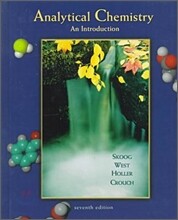
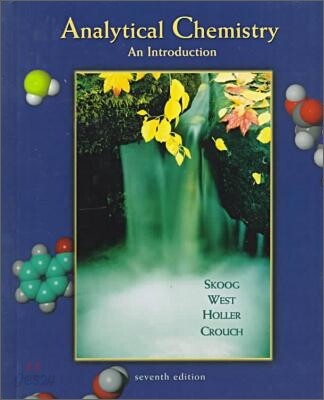
[Skoog]Analytical Chemistry : An Introduction, 7/E
7th Edition
Saunders College Publishing
2000.01.01.
- 구매혜택
-
특별할인도서
- 염가 판매 도서로 상태가 좋지 않을 수 있습니다
이미 소장하고 있다면 판매해 보세요.
- 국내배송만 가능
- 문화비소득공제 가능
Saunders Golden Sunburst Series
-
 [Skoog]Analytical Chemistry : An Introduction, 7/E 이동[Skoog]Analytical Chemistry : An Introduction, 7/E45% 11,000원
-
Introductory Astronomy and Astrophysics, 4/E 이동Introductory Astronomy and Astrophysics, 4/E35,000원
-
[Pavia/Lampman/Kriz]Introduction to Spectroscopy 2/E 이동[Pavia/Lampman/Kriz]Introduction to Spectroscopy 2/E31,000원
-
[Skoog]Fundamentals of Analytical Chemistry 7/E 이동[Skoog]Fundamentals of Analytical Chemistry 7/E30,000원
책소개
목차
|
1. What is Analytical Chemistry?
Section 1 The Tools of Analytical Chemistry 2. Chemicals and Apparatus : Putting the Tools to Work 3. Important Chemical Concepts : Expressing Quantities and Concentrations 4. The asic Approach to Chemical Equilibrium 5. Errors in Chemical Analyses : Assessing the Quality of Results 6. Random Error : How Certain Can We Be? 7. Statistical analysis : Evaluating the Data Section 2 Principles and Applications of Chemical Equilibria 8. Gravimetric Methods of Analysis 9. Electrolyte Effects : Activity or Concentrarion? 10. How Equilibrium Calculations Can Be Applied to Complex Systems 11titrarions : Taking Advantage of Stoivhiometric Reactions 12. Princi[ples of Neutralization Titrations : Determining Acids, Bases, and the pH of Buffer Solutions 13. Titraring Polyfunctional Acids and Bases 14. Applying Nwutralization Titrations 15. Complexation and Precipitation Titrations : Taking Advantage of Complexing and Precipitating Agents Section 3 Electrochemical Methods 16.Elements of Electrochemistry 17. Using Electrode Potentials 18. Applying Oxidation/Reduction Titrations 19. Potentiometry : Measuring Concentrations of Ions and Molecules 20. A Brief Look at Some Other Electroanalytical Methods Section 4 Spectrochemical Analysis 21. Spectroscopic Methods of Analysis : Making Measurements with Light 22. Instruments for Measuring Absorption : Is It a Photometer, a Spectrophotometer, or a Spectrometer? 23. Applying Molecular and Atomic Spectroscopic Methods : Shedding More Light on the Subject Section 5 Separation Methods 24. An Introduction to Anlytical Separations 25. Gas-Liquid and High-Performance Liquid Chromatography 26. Supercritical-Fluid Chromatography, Capillary Electrophoresis, and Capillary Electrochromatography Section 6 Selected Methods of Analysis 27. Selected Methods of Analysis Appendix 1 Solubility Product Constants at 25˚C Appendix 2 Acid Dissociation Constants at 25˚C Appendix 3 Formation Constants of Complex Compounds at 25˚C Appendix 4 Standard and Formal Electrode Potentials Appendix 5 Use of Exponential Numbers and Logarithms Appendix 6 Volumetric Calculations Using Normality and Equivalent Weight Appendix 7 Acronyms and Abbreviations of Significance in Analytical Chemistry Answers to Selected Questions and Problems Glossary Index |
품목정보
- 발행일
- 2000년 01월 01일
- 쪽수, 무게, 크기
- 773쪽 | 1778g | 210*260*40mm
- ISBN13
- 9780030202933
사락 별점0
혜택 및 유의사항밑줄0
혜택 및 유의사항상품정보안내
직수입외서의 경우, 해외거래처에서 제공하는 정보가 부족하여 제목, 표지, 가격, 유통상태 등의 정보가 미비하거나 변경되는 경우가 있습니다. 정확한 확인을 원하시는 경우, 일대일 상담으로 문의하여 주시면 답변 드리겠습니다.
(판형과 판수 등이 다양한 도서는 찾으시는 도서의 ISBN을 알려 주시면 보다 빠르고 정확한 안내가 가능합니다.)
해외거래처에서 품절인 경우, 2차 거래선을 통해 유럽과 미국 출판사로 직접 수입이 진행될 수 있습니다.
수입 진행 시점으로 부터 2~3주가 추가로 소요되며, 해외에서도 유통이 원활하지 않은 도서는 품절 안내가 지연될 수 있습니다.
해당 경우, 문자와 메일로 별도 안내를 드리고 있사오니 마이페이지에서 휴대전화번호와 메일주소를 다시 한번 확인해주시기 바랍니다.
(판형과 판수 등이 다양한 도서는 찾으시는 도서의 ISBN을 알려 주시면 보다 빠르고 정확한 안내가 가능합니다.)
해외거래처에서 품절인 경우, 2차 거래선을 통해 유럽과 미국 출판사로 직접 수입이 진행될 수 있습니다.
수입 진행 시점으로 부터 2~3주가 추가로 소요되며, 해외에서도 유통이 원활하지 않은 도서는 품절 안내가 지연될 수 있습니다.
해당 경우, 문자와 메일로 별도 안내를 드리고 있사오니 마이페이지에서 휴대전화번호와 메일주소를 다시 한번 확인해주시기 바랍니다.