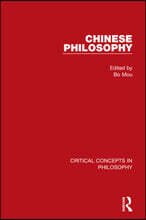
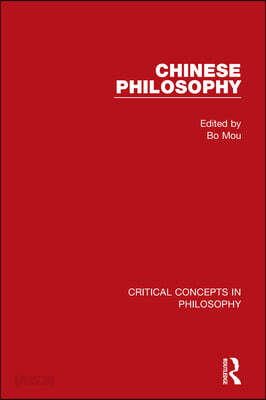
Volume 1: Identity, Methodologies, Unity of Truth, Good and Beauty Preface General Introduction: Constructive Engagement Strategy to Explore Chinese PhilosophyBo Mou Appendixes
- Comparative chronology of philosophers
- Notes on transcription
Part1. Identity of Chinese Philosophy
- Yu-lan Fung, ‘Chinese Philosophy and a Future World Philosophy’, The Philosophical Review, 57, 1948, pp. 539-549.
- Antonio S. Cua, ‘Emergence of the History of Chinese Philosophy’, in Bo Mou (ed.), History of Chinese Philosophy, (London: Routledge, 2009), pp. 43-68.
Part2. Methodologies
- Kwong-loi Shun, ‘Methodological Reflections on the Study of Chinese Thought’, in Sor-hoon Tan (ed.), The Bloomsbury Research Handbook of Chinese Philosophy Methodologies, (London: Bloomsbury, 2016), pp. 57-74.
- David L. Hall, ‘The Import of Analysis in Classical China’, in Bo Mou (ed.), Two Roads to Wisdom: Chinese and Analytic Philosophical Traditions, (Chicago: Open Court, 2001), pp. 153-167.
- Xianglong Zhang, ‘Pluralizing the Methodology of Chinese Philosophical Studies’, Contemporary Chinese Thought, 37, 2006, pp. 22-37.
Part3. Unity of Truth, Good and Beauty
- LI Zehou, excerpt from ‘The Complementarity of Confucian, Daoist and Buddhist Approaches in Aesthetic’, in The Chinese Aesthetic Tradition, translated by Maija Bell Samei [from Hua-Xia-Mei-Xue ?夏美?(北京中外文化出版公司1989年)], (Honolulu: University of Hawaii Press; 2010), pp. 181-193.
- D. L. Hall and R. T. Ames, ‘The Primacy of Aesthetic Order’, in Thinking Through Confucius, (Albany: SUNY Press, 1987), pp. 131-138.
- Brian Bruya, excerpt from ‘Action without Agency and Natural Human Action: Resolving a Double Paradox’, in Brian Bruya (ed.), The Philosophical Challenge from China, (Cambridge: MIT Press, 2015), pp. 353-358, p.
362.
- Bo Mou, ‘Truth Pursuit and Dao Pursuit: From Davidson’s Approach to Classical Daoist Approach in View of the Thesis of Truth as Strategic Normative Goal’, in Bo Mou (ed.), Davidson’s Philosophy and Chinese Philosophy: Constructive Engagement, (Leiden: Brill, 2006), pp. 329-340.
Volume 2: Moral and Social and Political Philosophy
Part4. Distinct Engaging Approaches to Morality
- Bryan W. Van Norden, ‘Virtue Ethics and Confucianism’, in Bo Mou (ed.), Comparative Approaches to Chinese Philosophy, (Aldershot: Ashgate, 2003), pp. 99-121.
- David B. Wong, ‘Mohist Approach to Morality’ [‘Mohism: The Founder, Mozi’], in Antonio S. Cua (ed.), Encyclopedia of Chinese Philosophy, (New York: Routledge, 2003), pp. 453-461.
- Kim-Chong Chong, ‘Egoism in Chinese Ethics’, in Antonio S. Cua (ed.), Encyclopedia of Chinese Philosophy, (New York: Routledge, 2003), pp. 241-246.
- Xiaogan Liu, ‘Zi-Ran and Wu-Wei: Daoist Value and Approach’, excerpt from ‘Daoism: Lao Zi and the Dao-De-Jing’ in Bo Mou (ed.), History of Chinese Philosophy, (London: Routledge, 2009), pp. 226-236.
- Paul R. Goldin, ‘Han Fei’s Doctrine of Self-Interest’, Asian Philosophy, 11, 3, 2001, pp. 151-159.
- Hsueh-li Cheng, ‘Chan/Zen Approach in Chinese Buddhism’ [‘Buddhism: Zen (Chan Zong, Ch’an Tsung’), in Antonio S. Cua (ed.), Encyclopedia of Chinese Philosophy, (New York: Routledge, 2003), pp. 19-24.
- R. T. Ames and H. Rosemont, ‘Where the Early Confucians Virtuous?’, in Chris Fraser, D. Robins, and T. O’Leary (eds.), Ethics in Early China: An Anthology (Hong Kong University Press, 2011), pp. 17-41.
- Justin Tiwald, ‘Confucianism and Virtue Ethics: Still a Fledgling in Chinese and Comparative Philosophy’, Comparative Philosophy, 1, 2, 2010, pp. 55-63.
Part5. Virtue, Moral Cultivation, and Moral Guidance
5.1 Moral Cultivation and Moral Guidance: Confucian Resources
- Jiyuan Yu, ‘Virtue: Confucius and Aristotle’, Philosophy East and West, 48, 1998, pp. 323-347.
- Bo Mou, ‘A Reexamination of the Structure and Content of Confucius’ Version of the Golden Rule’, Philosophy East and West, 54, 2004, pp. 218-248.
- Amy Olberding, ‘Etiquette: A Confucian Contribution to Moral Philosophy’, Ethics, 126, 2016, pp. 422-446.
5.2 Naturalness and Spontaneity: Confucian and Daoist Resources
- Joel Kupperman, ‘Confucius and the Problem of Naturalness’ in Learning from Asian Philosophy (Oxford: Oxford University Press, 1999), pp. 26-35.
- Philip J. Ivanhoe, ‘The Value of Spontaneity’, in K. Yu, J. Tao and P. Ivanhoe (eds.), Taking Confucian Ethics Seriously, (Albany: SUNY Press, 2010), pp. 183-207.
Part6. Weakness of Will and Agency
- David Nivison, ‘Weakness of Will in Ancient Chinese Philosophy’, in Bryan W. Van Norden (ed.), The Way of Confucianism: Investigation in Chinese Philosophy, (La Salle: Open Court, 1996), pp.79-90.
- C. Fraser and K. Wong, ‘Weakness of Will, the Background, and Chinese Thought’, in Bo Mou (ed.), Searle’s Philosophy and Chinese Philosophy: Constructive Engagement (Leiden: Brill, 2008), pp. 313-333.
Part7. Self, Autonomy, Community, and Freedom
- Kwong-loi Shun, ‘Conception of the Person in Early Confucian Thought’, in K. Shun and D. B. Wong (eds.), Confucian Ethics: A Comparative Study of Self, Autonomy, and Community, (Cambridge University Press, 2004), pp. 183-199.
- David B. Wong, ‘Rights and Community in Confucianism’, in K. Shun and D. B. Wong (eds.), Confucian Ethics: A Comparative Study of Self, Autonomy, and Community, (Cambridge University Press, 2004), pp. 31-48.
- Tao Jiang, ‘Two Notions of Freedom in Classical Chinese Thought: The Concept of Hua 化 in the Zhuangzi and the Xunzi’, Dao, 10, 2011, pp.463-486.
Part8. Harmony, Gender, and Environmental Ethics
- Chenyang Li, ‘The Confucian Ideal of Harmony’, Philosophy East and West, 56, 2006, pp. 583-603.
- Karyn Lai, ‘The Daodejing: Resources for Contemporary Feminist Thinking’, Journal of Chinese Philosophy, 27, 2000, pp. 131-53.
- Robin Wang, ‘Dong Zhongshu’s Transformation of Yin-Yang Theory and Contesting of Gender Identity’, Philosophy East and West, 55, 2005, pp. 209-231.
- Eric Sean Nelson, ‘Responding with Dao: Early Daoist Ethics and the Environment’, Philosophy East and West, 59, 2009, pp. 294-316.
Part9. Justice, Governing, and Human Rights
- Ruiping Fan, ‘Social Justice: Rawlsian or Confucian?’, in Bo Mou (ed.), Comparative Approaches to Chinese Philosophy, (Aldershot: Ashgate, 2003), pp. 144-168.
- Sor-hoon Tan, excerpt from Confucian Democracy: A Deweyan Reconstruction, (Albany: State University of New York Press, 2004), pp. 201-209.
- Weiming Tu, ‘Confucianism: Humanism and the Enlightenment’, in Antonio S. Cua (ed.), Encyclopedia of Chinese Philosophy, (New York: Routledge, 2003), pp. 89-96.
- Yong Huang, ‘Neo-Confucian Political Philosophy: The Cheng Brothers on Li (Propriety) as Political, Psychological, and Metaphysical’, Journal of Chinese Philosophy, 34, 2, pp. 217-238.
- Stephen C. Angle, ‘Introduction to Human Rights and Chinese Thought: A Cross-Cultural Inquiry’ (Cambridge: Cambridge University Press, 2002), pp. 1-25.
Volume 3 Metaphysics, Epistemology, Reflection on Science
Part10. Metaphysics
10.1 Meta-metaphysical Accounts
- Dunhua Zhao, ‘Metaphysics in China and in the West: Common Origin and Later Divergence’, Frontier of Philosophy in China, 1, 1, 2006, pp. 22-32.
- Robert Cummings Neville, ‘Chinese Philosophy in Systematic Metaphysics’, Journal of Chinese Philosophy, 40, 2013, pp. 59-75.
- Ralph Weber, ‘Why Talk about Chinese Metaphysics?’, Frontiers of Philosophy in China, 8, 1, 2013, pp. 99?119.
10. 2 Metaphysical Unification and Distinct Identities: Engagement
- Benjamin Schwartz, excerpt from ‘Correlative Cosmology: The "School of Yin and Yang"’, in The World of Thought in Ancient China, (Cambridge: Harvard University Press, 1985), pp. 350-369.
- Chung-ying Cheng, excerpt from ‘Chinese Metaphysics as Non-Metaphysics: Confucian and Daoist Insights into the Nature of Reality’, in Robert E. Allinson (ed.), Understanding the Chinese Mind, (Oxford: Oxford University Press, 1990), pp. 167?182, pp. 203-208.
- Qingjie Wang, ‘"It-self-so-ing" and "Other-ing" in Lao Zi’s Concept of Zi Ran’, in Bo Mou (ed.), Comparative Approaches to Chinese Philosophy, (Aldershot: Ashgate, 2003), pp .225-244.
- Chenyang Li, ‘Zhuang Zi and Aristotle on What A Thing Is’, in Bo Mou (ed.), Comparative Approaches to Chinese Philosophy, (Aldershot: Ashgate, 2003), pp. 263-277.
- Bo Mou, ‘On Daoist Approach to the Issue of Being in Engaging Quinean and Heideggerian Approaches’, in B. Mou and R. Tieszen (eds.), Constructive Engagement of Analytic and Continental Approaches in Philosophy: From the Vantage Point of Comparative Philosophy, (Leiden: Brill, 2013), pp. 289-319.
10. 3 Being and Nothing
- Zhihua Yao, ‘Typology of Nothing: Heidegger, Daoism and Buddhism’, Comparative Philosophy, 1, 1, 2010, pp. 78-89.
- JeeLoo Liu, ‘Was There Something in Nothingness?: The Debate on the Primordial State between Daoism and Neo-Confucianism’, in J. Liu and D. Berger (eds.), Nothingness in Asian Philosophy, (New York: Routledge, 2014), pp. 181-196.
10.4 Contradiction and Metaphysics in Actions
- Brook Ziporyn, ‘What Does the Law of Non-Contradiction Tell Us, If Anything? Paradox, Parameterization, and Truth in Tiantai Buddhism’, in Brian Bruya (ed.), The Philosophical Challenge from China, (Cambridge: MIT Press, 2015), pp. 253-278.
- Chad Hansen, ‘The Metaphysics of Dao’, in Bo Mou (ed.), Comparative Approaches to Chinese Philosophy, (Aldershot: Ashgate, 2003), pp. 205-224.
Part11. Epistemology
11.1 Conceptions of Knowledge and Modes of Knowing
- Christoph Harbsmeier, ‘Conception of Knowledge in Ancient China’, in H. Lenk and G. Paul (eds.), Epistemological Issues in Classical Chinese Philosophy, (Albany: SUNY Press, 1993), pp. 11-30.
- Xinyan Jiang, excerpt from ‘Zhang Dongsun: Pluralist Epistemology’, in Bo Mou (ed.), History of Chinese Philosophy, (London: Routledge, 2009), pp. 499-511.
- S. Hetherington and K. L. Lai, ‘Knowing-How and Knowing-To’, in Brian Bruya (ed.), The Philosophical Challenge from China, (Cambridge: MIT Press, 2015), pp. 279-301.
11.2 Skepticism and Possibility of Knowledge
- Paul Kjellber, ‘Sextus Empiricus, Zhuangzi, and Xunzi on "Why Be Skeptical"’, in P. Kjellberg and P. J. Ivanhoe (eds.), Essays on Skepticism, Relativism, and Ethics in the Zhuangzi, (Albany: SUNY Press, 1996), pp. 1-25.
- Dick Garner, ‘Skepticism, Ordinary Language and Zen Buddhism’, Philosophy East and West, 27, 2, 1977, pp. 165-181.
11.3 Justification and Knowledge
- Hui-Chieh Loy, ‘Justification and Debate: Thoughts on Moist Moral Epistemology’, Journal of Chinese Philosophy, 35, 2, 2008, pp.445-471.
- Owen Flanagan, excerpt from ‘Buddhist Epistemology and Science’, in The Bodhisattva’s Brain: Buddhism Naturalized, (Cambridge: the MIT Press, 2011), pp. 65-80.
11.4 Virtue Epistemology, Ethical Knowledge, Knowledge and Action
- Chienkuo Mi, ‘Reflective Knowledge: Confucius and Virtue Epistemology’, Comparative Philosophy, 8, 2, 2017, pp. 31-46.
- Antonio S. Cua, excerpt from ‘Xun Zi on Ethical Knowledge, Deliberation, and Argumentation’, in Antonio S. Cua (ed.), Encyclopedia of Chinese Philosophy, (New York: Routledge, 2003), pp. 825-829.
- Weiming Shi, ‘The Quest for Ethical Truth ? Wang Yangming on the Unity of Knowing and Acting’, Comparative Philosophy, 8, 2, 2017, pp. 47-65.
Part12. Reflections on Sciences in China
- Angus C. Graham, ‘China, Europe, and the Origins of Modern Science’, Asia Minor NS, 16, 1971, pp. 178-96.
- G. Lloyd and N. Sivin, ‘Chinese and Greek Sciences Compared’, in The Way and the Word: Science and Medicine in Early China and Greece, (New Haven: Yale University Press, 2002), pp. 239-251.
- Robin D. S. Yates, ‘Science and Technology’, in Antonio S. Cua (ed.), Encyclopedia of Chinese Philosophy, (New York: Routledge, 2003), pp. 657-663.
- Weimin Sun, ‘Are Chinese Sciences Science?’, Journal of East-West Thought, 2, 2, 2012, pp. 65-80.
Volume 4 Philosophy of Language, Mind and Logic
Part13. Philosophy of Language
13.1 Language and World (1): Mass-Noun, Count-Noun, and Collective-Noun Hypotheses Concerning the Semantic-Syntactic Structure of Chinese Common Nouns
- Chad Hansen, ‘The Context of Chinese Philosophy: Language and Theory of Language’, in A Daoist Theory of Chinese thought: A Philosophical Interpretation, (Oxford: Oxford University Press, 1992), pp. 30-54.
- Christoph Harbsmeier, ‘The Mass Noun Hypothesis and the Part-Whole Analysis of the White Horse Dialogue’, in Henry Rosemont (ed.), Chinese Texts and Philosophical Contexts, (La Salle: Open Court, 1989), pp. 49-66.
- Bo Mou, ‘The Structure of Chinese Language and Ontological Insights: A Collective-Noun Hypothesis’, Philosophy East and West, 49, 1, 1999, pp. 45-62.
13.2 Language and World (2): Reference and Truth
- Chung-ying Cheng, ‘Chinese Philosophy and Symbolic Reference’, Philosophy East and West, 27, 3, 1977, pp. 307?322.
- Dan Robins, ‘Names, Cranes, and the Later Moists’, Journal of Chinese Philosophy, 39, 3, 2012, pp. 369-385.
- Alexus McLeod, excerpt from ‘Truth, Philosophy, and Chinese Thought’, in Theories of Truth in Chinese Philosophy, (London: Rowman & Littlefield, 2016), pp.1-41.
13.3 Meaning and Cross-Linguistic-Community Understanding
- A.C. Graham, ‘Conceptual Schemes and Linguistic Relativism in Relation to Chinese’, Synthesis Philosophica, 4, 2, 1989, pp. 713-32.
- Yiu-ming Fung, ‘On Graham’s Sinologist’s Criticism of Davidson’s Principle of Charity and the Myth of "Pre-logical" Thinking"’, in Bo Mou (ed.), Davidson’s Philosophy and Chinese Philosophy: Constructive Engagement, (Leiden: Brill, 2006), pp. 117-131.
13.4 Language in Action
- Yang Xiao, ‘Reading the Analects with Davidson: Mood, Force, and Communicative Practice in Early China’, in Bo Mou (ed.), Davidson’s Philosophy and Chinese Philosophy: Constructive Engagement, (Leiden: Brill, 2006), pp. 247-268.
- Chung-I Lin, ‘Mohist Approach to the Rule-Following Problem’, Comparative Philosophy, 4, 1, 2013, pp. 41-66.
- Kim-chong Chong: ‘Metaphorical Use versus Metaphorical Essence: Examples from Chinese Philosophy’, in Bo Mou (ed.), Davidson’s Philosophy and Chinese Philosophy: Constructive Engagement, (Leiden: Brill, 2006), pp.229-246.
Part14. Philosophy of Mind
14.1 Ontology of Mind
- Owen Flanagan, ‘Matter and Consciousness’, in The Bodhisattva’s Brain: Buddhism Naturalized, (Cambridge: MIT Press, 2011), pp. 80-90.
- Edward Slingerland, ‘Conclusion from What Science Offers the Humanities: Integrating Body and Culture’ (Cambridge: Cambridge University Press, 2008), pp. 297-312.
- GAO Xinmin, ‘The Truth-Seeking Objective of Chinese Philosophy of Mind’, trans. Zhang Yu, Gui-Zhou-She-Hui-Ke-Xue (Guizhou Social Sciences), 293, 5, 2014, pp. 4-9.
14.2 Structure of Mind
- Robert E. Allinson, "Searle’s Master Insight and the Non-Dual Solution of the Sixth Patriarch: Sorting Through some Problems of Consciousness", Comparative Philosophy, 8, 1, 2017, pp. 82-93.
- Steven Geisz, ‘Understanding the Heart-Mind Within the Heart-Mind of the Neiye (Inward Training)’, Dao, 15, 2016, pp. 393-412.
14.3 Intentionality and Morality: Naturalist and Experimental Approach to Moral Psychology
- Ryan Nichols, ‘A Genealogy of Early Confucian Moral Psychology’, Philosophy East and West, 61, 4, 2011, pp. 609-629.
- Hagop Sarkissian, ‘Why You Think It’s Bad, It’s Worse Than You Think: Psychological Bias and the Ethics of Negative Character Assessment’, in Brian Bruya (ed.), The Philosophical Challenge from China, (Cambridge: MIT Press, 2015), pp. 3-21.
14. 4 Subconsciousness, Dreams, and Motivation-Heart
- LIU Wenying, ‘Where Does the Subconscious Come From?’, in An Oriental Interpretation of Dreams, trans. ZHANG Zhixiang & PAN Chuanfa, (Beijing: China Social Sciences Publishing House, 1995), pp. 459-468.
- Franklin Perkins, ‘Motivation and the Heart in the Xing Zi Ming Chu’, Dao, 8, 2009, pp.117-131.
Part15. Philosophy of Logic
15.1 General Accounts
- Chung-ying Cheng, ‘Inquiries into Classical Chinese Logic’, Philosophy East and West, 15, 1965, pp. 195-216.
- Christoph Harbsmeier, ‘Logical Practice’, in Science and Civilisation in China, Vol. 7, Part1: Language and Logic, (Cambridge: Cambridge University Press, 1998), pp. 261-286.
- F. Liu, J. Seligman and J. van Benthem, ‘Models of Reasoning in Ancient China’, Studies in Logic, 4, 3, 2011, pp. 57?81.
15.2 On Mohist Logic and Its Significance
- Marshall Willman, ‘Logical Analysis and Later Mohist Logic: Some Comparative Reflection’, Comparative Philosophy, 1, 1, 2010, pp. 53-77
- Yiu-ming Fung, ‘A Logical Perspective on the Parallelism in Later Moism’, Journal of Chinese Philosophy, 39, 3, 2012, pp. 333-350.
- Bo Mou, ‘How the Validity of the Parallel Inference is Possible: From the Ancient Mohist Diagnosis to a Modern Logical Treatment of Its Semantic-Syntactic Structure’, History and Philosophy of Logic, 37, 4, 2016, pp. 301-324
|

 Van Dyke: Medieval Philosophy, 4-vol. set 이동Van Dyke: Medieval Philosophy, 4-vol. set10% 2,173,500원