

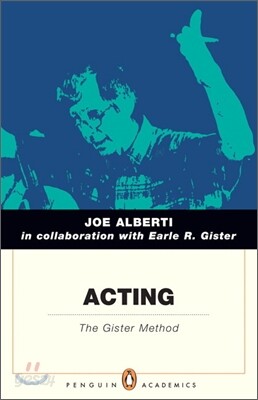
이미 소장하고 있다면 판매해 보세요.
- 국내배송만 가능
- 문화비소득공제 가능
Penguin Academics
-
 Poetry: A Pocket Anthology (Penguin Academics Series) 이동Poetry: A Pocket Anthology (Penguin Academics Series)10% 87,510원
책소개
목차
|
Introduction
A Brief Tour of the Evolution of Acting Methodology since Constantine Stanislavski Students of Stanislavski: Strasberg, Chekhov, Meisner, et al Gister Chapter 1: Who am I? The play as A Guide to Who am I? First Reading Second Reading Third Reading The Imagination Exercising your Imagination Transformation into Character Types Stereotypes and Functional Characters Real People Anomalies Narratives Actions Other Areas to Investigate Body Relationships Vulnerability Discovery Questions and Answers Chapter 2: Where am I and When am I there? Designers Sources The Play as a Guide to establishing Where am I? What Where am I? means to You as the Character Some Areas to Investigate The Play as a Guide to Establishing When am I there? What When am I there? means to you as the Who am I? Preceding Time Some Areas to Investigate Questions and Answers Chapter 3: What do I want? Super-objective and Objective Action, Intention and Motivation Classical Plays Prior Knowledge Articulating the Super-objective and the Objective Revealed Meaning Stakes Obstacles A Word about Listening What do I do after I get or fail to get what I want? Questions and Answers Chapter 4: How do I get what I want? Some Common Definitions and Why to Put Them Aside Action Defined in this Approach The “How” of the Action Using Action with Images and Objects Consequences of Playing an Action Action is Anchored in the Objective Action in Classical and Modern Plays Action, Objective, Paradox and the Present Moment Questions and Answers Chapter 5: Putting it all together Getting Started First Reading First Impressions Second Reading Third Reading The Questions Who am I? Where am I? When am I there? What do I want? How do I get what I want? How of the Action What do I do after I get or fail to get what I want? Using this Approach to Analyze a Scene The Test to be Analyzed: The Sea Gull, Act 2, Nina and Treplev A Note about Transitions Remembering it all: Marking your Script Preparation and Rehearsal Chapter 6: More Examples of Applying the Methodology Yelena in Uncle Vanya by Anton Chekhov Commentary Reading One: Understanding the Story Reading Two: Gathering the Facts Reading Three: Yelena's Point of View Commentary Emilia in Othello by William Shakespeare Reading One: Understanding the Play ReadingTwo: Gathering the Facts Reading Three: Emilia’s Point of View Commentary Male or Female in Sonnet Number One by William Shakespeare Commentary Action on an Audience Male or Female Using Lines from Savage/Love by Sam Shepard and Joseph Chaikin Creating your own Text In Conclusion Appendix 1: Action Word Lexicon Appendix 2: How of the Action Word Lexicon Appendix 3: Annotated Playlist Work Cited Index |
품목정보
- 발행일
- 2012년 01월 29일
- 쪽수, 무게, 크기
- 192쪽 | 137*213*20mm
- ISBN13
- 9780205032259
리뷰/한줄평0
상품정보안내
직수입외서의 경우, 해외거래처에서 제공하는 정보가 부족하여 제목, 표지, 가격, 유통상태 등의 정보가 미비하거나 변경되는 경우가 있습니다. 정확한 확인을 원하시는 경우, 일대일 상담으로 문의하여 주시면 답변 드리겠습니다.
(판형과 판수 등이 다양한 도서는 찾으시는 도서의 ISBN을 알려 주시면 보다 빠르고 정확한 안내가 가능합니다.)
해외거래처에서 품절인 경우, 2차 거래선을 통해 유럽과 미국 출판사로 직접 수입이 진행될 수 있습니다.
수입 진행 시점으로 부터 2~3주가 추가로 소요되며, 해외에서도 유통이 원활하지 않은 도서는 품절 안내가 지연될 수 있습니다.
해당 경우, 문자와 메일로 별도 안내를 드리고 있사오니 마이페이지에서 휴대전화번호와 메일주소를 다시 한번 확인해주시기 바랍니다.
(판형과 판수 등이 다양한 도서는 찾으시는 도서의 ISBN을 알려 주시면 보다 빠르고 정확한 안내가 가능합니다.)
해외거래처에서 품절인 경우, 2차 거래선을 통해 유럽과 미국 출판사로 직접 수입이 진행될 수 있습니다.
수입 진행 시점으로 부터 2~3주가 추가로 소요되며, 해외에서도 유통이 원활하지 않은 도서는 품절 안내가 지연될 수 있습니다.
해당 경우, 문자와 메일로 별도 안내를 드리고 있사오니 마이페이지에서 휴대전화번호와 메일주소를 다시 한번 확인해주시기 바랍니다.