
이미 소장하고 있다면 판매해 보세요.
- 국내배송만 가능
- 문화비소득공제 가능
책소개
목차
|
List of Contributors xiii Preface xv Acknowledgements xvii List of Abbreviations xix 1 Introduction 1 Harri Holma and Antti Toskala 1.1 Introduction 1 1.2 Radio Technology Convergence Towards LTE 1 1.3 LTE Capabilities 3 1.4 Underlying Technology Evolution 4 1.5 Traffic Growth 4 1.6 LTE-Advanced Schedule 6 1.7 LTE-Advanced Overview 6 1.8 Summary 7 2 LTE-Advanced Standardization 8 Antti Toskala 2.1 Introduction 8 2.2 LTE-Advanced and IMT-Advanced 8 2.3 LTE-Advanced Requirements 9 2.4 LTE-Advanced Study and Specification Phases 10 2.5 Further LTE-Advanced 3GPP Releases 11 2.6 LTE-Advanced Specifications 11 2.7 Conclusions 12 References 12 3 LTE Release 8 and 9 Overview 14 Antti Toskala 3.1 Introduction 14 3.2 Physical Layer 14 3.3 Architecture 22 3.4 Protocols 23 3.5 EPC and IMS 26 3.6 UE Capability and Differences in Release 8 and 9 27 3.7 Conclusions 28 References 29 4 Downlink Carrier Aggregation 30 Mieszko Chmiel and Antti Toskala 4.1 Introduction 30 4.2 Carrier Aggregation Principle 30 4.3 Protocol Impact from Carrier Aggregation 33 4.4 Physical Layer Impact from Carrier Aggregation 38 4.5 Performance 42 4.6 Band Combinations for Carrier Aggregation 46 4.7 Conclusions 48 Reference 49 5 Uplink Carrier Aggregation 50 Jari Lindholm, Claudio Rosa, Hua Wang and Antti Toskala 5.1 Introduction 50 5.2 Uplink Carrier Aggregation Principle 50 5.3 Protocol Impacts from Uplink Carrier Aggregation 51 5.4 Physical Layer Impact from Uplink Carrier Aggregation 52 5.5 Performance 56 5.6 Band Combinations for Carrier Aggregation 61 5.7 Conclusions 62 References 62 6 Downlink MIMO 63 Timo Lunttila, Peter Skov and Antti Toskala 6.1 Introduction 63 6.2 Downlink MIMO Enhancements Overview 63 6.3 Protocol Impact from Downlink MIMO Enhancements 64 6.4 Physical Layer Impact from Downlink MIMO 65 6.5 Performance 70 6.6 Conclusions 73 References 74 7 Uplink MIMO 75 Timo Lunttila, Kari Hooli, YuYu Yan and Antti Toskala 7.1 Introduction 75 7.2 Uplink MIMO Enhancements Overview 75 7.3 Protocol Impacts from Uplink MIMO 76 7.4 Physical Layer Impacts from Uplink MIMO 77 7.4.1 Uplink Reference Signal Structure 77 7.4.2 MIMO Transmission for Uplink Data 79 7.4.3 MIMO Transmission for Uplink Control Signalling 82 7.4.4 Multi-User MIMO Transmission in the Uplink 82 7.5 Performance 83 7.6 Conclusions 84 References 85 8 Heterogeneous Networks 86 Harri Holma, Patrick Marsch and Klaus Pedersen 8.1 Introduction 86 8.2 Base Station Classes 87 8.3 Traffic Steering and Mobility Management 89 8.3.1 Traffic Steering and Mobility Management in Idle State 90 8.3.2 Traffic Steering and Mobility Management in the Connected State 91 8.3.3 Traffic Steering and Mobility Management with Femto Cells 91 8.3.4 WiFi Offloading 92 8.4 Interference Management 94 8.4.1 Static Interference Avoidance through Frequency Reuse Patterns 96 8.4.2 Dynamic Interference Coordination in the Frequency Domain 97 8.4.3 Dynamic Interference Coordination in the Time Domain 98 8.4.4 Dynamic Interference Coordination in the Power Domain 101 8.5 Performance Results 101 8.5.1 Macro and Outdoor Pico Scenarios 102 8.5.2 Macro and Femto Scenarios 105 8.6 Local IP Access (LIPA) 107 8.7 Summary 108 References 108 9 Relays 110 Harri Holma, Bernhard Raaf and Simone Redana 9.1 Introduction 110 9.2 General Overview 111 9.3 Physical Layer 112 9.3.1 Inband and Outband Relays 112 9.3.2 Sub-frames 113 9.3.3 Retransmissions 115 9.3.4 Relays Compared to Repeaters 116 9.3.5 Relays in TD-LTE 118 9.4 Architecture and Protocols 118 9.4.1 Sub-frame Configuration with Relay Nodes 118 9.4.2 Bearer Usage with Relay Nodes 119 9.4.3 Packet Header Structure in the Relay Interface 120 9.4.4 Attach Procedure 121 9.4.5 Handovers 121 9.4.6 Autonomous Neighbour Relations 122 9.5 Radio Resource Management 124 9.6 Coverage and Capacity 125 9.6.1 Coverage Gain 126 9.6.2 User Throughput Gains 128 9.6.3 Cost Analysis 129 9.7 Relay Enhancements 130 9.8 Summary 132 References 132 10 Self-Organizing Networks (SON) 135 Cinzia Sartori and Harri Holma 10.1 Introduction 135 10.2 SON Roadmap in 3GPP Releases 135 10.3 Self-Optimization 137 10.3.1 Mobility Robustness Optimization 137 10.3.2 Mobility Load Balancing 142 10.3.3 Minimization of Drive Tests 142 10.3.4 MDT Management and Reporting 144 10.3.5 Energy Savings 145 10.3.6 eNodeB Overlay 146 10.3.7 Capacity-Limited Network 147 10.3.8 Capacity and Coverage Optimization 148 10.4 Self-Healing 150 10.4.1 Cell Outage Compensation 150 10.5 SON Features in 3GPP Release 11 151 10.6 Summary 151 References 152 11 Performance Evaluation 153 Harri Holma and Klaus Pedersen 11.1 Introduction 153 11.2 LTE-Advanced Targets 154 11.2.1 ITU Evaluation Environments 155 11.3 LTE-Advanced Performance Evaluation 156 11.3.1 Peak Data Rates 156 11.3.2 UE Categories 157 11.3.3 ITU Efficiency Evaluation 158 11.3.4 3GPP Efficiency Evaluation 160 11.4 Network Capacity and Coverage 163 11.5 Summary 165 References 165 12 Release 11 and Outlook Towards Release 12 166 Timo Lunttila, Rapeepat Ratasuk, Jun Tan, Amitava Ghosh and Antti Toskala 12.1 Introduction 166 12.2 Release 11 LTE-Advanced Content 166 12.3 Advanced LTE UE Receiver 168 12.3.1 Overview of MMSE-MRC and MMSE-IRC Methods 169 12.3.2 Performance of UE Receiver using IRC and its Comparison to MRC Receiver for Various DL Transmit Modes 170 12.4 Machine Type Communications 172 12.5 Carrier Aggregation Enhancements 177 12.6 Enhanced Downlink Control Channel 179 12.7 Release 12 LTE-Advanced Outlook 181 12.8 Conclusions 183 References 183 13 Coordinated Multipoint Transmission and Reception 184 Harri Holma, Kari Hooli, Pasi Kinnunen, Troels Kolding, PatrickMarsch and Xiaoyi Wang 13.1 Introduction 184 13.2 CoMP Concept 184 13.3 Radio Network Architecture Options 187 13.4 Downlink CoMP Transmission 190 13.4.1 Enablers for Downlink CoMP in 3GPP 191 13.4.2 Signal Processing and RRM for CoMP 192 13.4.3 Other Implementation Aspects 194 13.5 Uplink CoMP Reception 194 13.6 Downlink CoMP Gains 198 13.7 Uplink CoMP Gains 201 13.8 CoMP Field Trials 204 13.9 Summary 205 References 205 14 HSPA Evolution 206 Harri Holma and Karri Ranta-aho 14.1 Introduction 206 14.2 Multicarrier Evolution 206 14.3 Multiantenna Evolution 208 14.4 Multiflow Transmission 211 14.5 Small Packet Efficiency 213 14.6 Voice Evolution 215 14.6.1 Adaptive Multirate Wideband (AMR-WB) Voice Codec 215 14.6.2 Voice Over IP (VoIP) 215 14.6.3 CS Voice Over HSPA (CSoHSPA) 215 14.6.4 Single Radio Voice Call Continuity (SR-VCC) 215 14.7 Advanced Receivers 215 14.7.1 Advanced UE Receivers 215 14.7.2 Advanced NodeB Receivers 216 14.8 Flat Architecture 217 14.9 LTE Interworking 218 14.10 Summary 218 References 219 Index 221 |
저자 소개
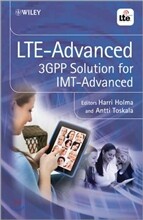
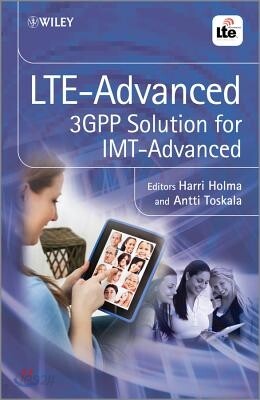
Harri Holma and Antti Toskala are both with Nokia Siemens Networks (NSN), Finland,? working on cutting edge technologies for mobile communications today.? They are actively involved with 3GPP Standardisation and product development.
품목정보
- 발행일
- 2012년 08월 17일
- 쪽수, 무게, 크기
- 248쪽 | 174*245*18mm
- ISBN13
- 9781119974055
사락 별점0
혜택 및 유의사항밑줄0
혜택 및 유의사항상품정보안내
직수입외서의 경우, 해외거래처에서 제공하는 정보가 부족하여 제목, 표지, 가격, 유통상태 등의 정보가 미비하거나 변경되는 경우가 있습니다. 정확한 확인을 원하시는 경우, 일대일 상담으로 문의하여 주시면 답변 드리겠습니다.
(판형과 판수 등이 다양한 도서는 찾으시는 도서의 ISBN을 알려 주시면 보다 빠르고 정확한 안내가 가능합니다.)
해외거래처에서 품절인 경우, 2차 거래선을 통해 유럽과 미국 출판사로 직접 수입이 진행될 수 있습니다.
수입 진행 시점으로 부터 2~3주가 추가로 소요되며, 해외에서도 유통이 원활하지 않은 도서는 품절 안내가 지연될 수 있습니다.
해당 경우, 문자와 메일로 별도 안내를 드리고 있사오니 마이페이지에서 휴대전화번호와 메일주소를 다시 한번 확인해주시기 바랍니다.
(판형과 판수 등이 다양한 도서는 찾으시는 도서의 ISBN을 알려 주시면 보다 빠르고 정확한 안내가 가능합니다.)
해외거래처에서 품절인 경우, 2차 거래선을 통해 유럽과 미국 출판사로 직접 수입이 진행될 수 있습니다.
수입 진행 시점으로 부터 2~3주가 추가로 소요되며, 해외에서도 유통이 원활하지 않은 도서는 품절 안내가 지연될 수 있습니다.
해당 경우, 문자와 메일로 별도 안내를 드리고 있사오니 마이페이지에서 휴대전화번호와 메일주소를 다시 한번 확인해주시기 바랍니다.
15,000원
총 1개
15,000원