
이미 소장하고 있다면 판매해 보세요.
- 국내배송만 가능
- 해외 거래처 사정에 의하여 품절/지연 가능
- 도서 정보 중 미표기 사항 안내?
- 문화비소득공제 가능
책소개
목차
|
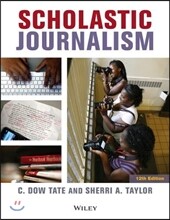
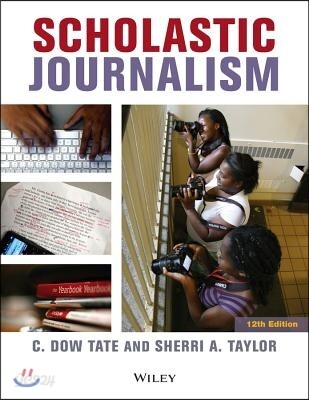
About the authors xi Preface xii Acknowledgments xiii Walk through xvi Timeline xxii 1 Understanding news 3 Where does news come from? 6 News value 6 Timeliness 6 Proximity 7 Prominence 8 Audience impact 9 Surprise or oddity 10 Human interest 10 Conflict and drama 10 Visual impact 10 The importance of audience 11 Beat reporting 12 Featurizing news 15 News in other contexts 17 Sourcing news 17 Primary sources 17 Secondary sources 20 Other factors affecting coverage 22 Conclusion 25 2 Interviewing and reporting 29 Interviewing 30 Developing questions 31 Organizing the interview 32 Setting up the interview 32 Conducting the interview 33 Observation 40 Reliability of sources 42 Internet research 44 Conventional research 47 Conclusion 48 3 News writing 51 News writing 52 The news lead 54 Alternative news lead approaches 55 Feature leads 59 Contrast lead 59 Vignette lead 61 The descriptive lead 62 Developing a news story 63 Body of a news story 66 Flow and organization 69 Potential weaknesses in news writing 69 Vagueness 69 Wordiness 71 Jargon and pretentious vocabulary 71 Editorializing 72 Numerical distortions 72 Passive voice 74 Online news coverage 74 Using quotes and attribution 75 A news writer’s checklist 75 Conclusion 77 4 Writing specialty stories 81 Health writing 82 Academic writing 85 Death coverage 87 Speech stories 87 Poll story 94 Selecting respondents 94 Civic journalism 97 Yearbook writing 99 Unique story angles 101 Alternative copy or sidebar writing 101 Conclusion 106 5 Writing feature stories 111 The feature story Idea 112 The feature-writing process 113 Conclusions 116 Elements of feature writing 116 Precise writing 117 Details 117 Pace 118 Examples 118 Dialogue 118 Voice 118 Feature story types 124 Profiles 124 Human interest story 126 Informative feature story 130 Other types of features 131 Conclusion 132 6 Sportswriting 139 Writing the sports story 140 Sports slang and sports language 141 Developing a sports story with statistics 142 Types of sports stories 143 Advance story 143 Trend story 145 Sports news story 146 Game story 146 Sports feature story 151 Feature leads for sports stories 152 Packaged coverage 154 Sports webcasting 155 Getting started 155 The webcast staff 156 Conclusion 158 7 Opinion writing 165 Developing editorial ideas 168 Role of the editorial 168 Opinion vs. fact 169 Editorial writing: the formula 169 Editorial leads 170 Developing the argument 172 Editorial cartoon 172 Columns 175 Blog writing 176 Review writing 178 Reviewing tips 178 Packaged opinion coverage 183 Conclusion 183 8 In-depth reporting 189 Finding topics for in-depth coverage 192 School governing boards 193 Athletics 193 Curricular areas 193 Extracurricular and other areas 194 Beyond the school 195 Localizing national and state trends 195 Getting started 198 Full-page coverage 198 Double truck coverage 200 Beyond the double truck 200 Special issues 203 The yearbook 203 Writing the in-depth story 204 Anonymous sources 209 Layering information 211 The need for accuracy 211 Conclusion 211 9 Coaching writers and editing copy 215 The coaching process 216 Planning stage 216 Collecting stage 216 Writing stage 217 The lead 217 Body organization and flow 217 Proofreading and correcting a story 218 Fact check 218 Clarity and conciseness 220 Detail 220 Common editing mistakes 225 Using journalistic style 226 Names and identification 226 Capitalization 227 Abbreviations 228 Numbers 229 Punctuation 229 Italics 232 Computer-related terms 232 Spelling 232 Screening sexist language 234 Problem words 236 Race, ethnicity and other terms of identity 236 Coaching writing continues 237 Conclusion 237 10 Writing headlines 245 Headlines: the basics 246 Teaser and teller headlines 246 Getting the words to fit 246 News website headlines 248 The appearance of headlines 248 Writing a headline 250 Writing a teller 250 Headline construction rules 253 Feature headlines 255 Conclusion 258 11 Typography and production 263 Type: the basics 264 Type terms 265 Categories of type 267 Choosing type 272 Factors to consider 272 Contrast and creativity 274 Consistency 277 Production and printing 281 Digital toning for printing 281 Printing 283 Conclusion 286 12 Newspaper layout and design 291 The importance of design 292 Changes in news presentation 292 Elements of design 292 Information packaging 301 Grid and column considerations 301 Modular design 306 Preparing for design 306 Special considerations for design 310 Using color effectively 317 Pacing the newspaper’s design 317 Conclusion 319 13 Yearbook design 323 Speaking the language 324 Getting ready to design 327 Designing the pages 331 Special considerations 335 DVD and interactive coverage 341 The use of color 343 Conclusion 343 14 Online journalism 347 Creating web publications 348 Website hosting and privacy policies 350 Assembling a publication website 351 Creating online content 353 Multimedia content 354 Involving the readers 358 Enhanced yearbook content 360 Design of the website 361 Cooperative efforts 368 Conclusion 368 15 Visual storytelling: pictures, art and graphics 371 The importance of visuals 372 Photographs 374 Technical parameters 374 Content and composition 375 Telling stories through images 380 Picture packages or groups 380 Picture stories 381 Digital shooting 384 Lenses 384 Flash 386 Camera bodies 387 Captions and cutlines 387 Cropping photographs 389 Photo editing 389 Abuse of images 391 Photo alteration 396 Art and illustrations 396 Information graphics 400 Other graphic forms 400 Conclusion 401 16 Advertising in newspapers and yearbooks 405 Creating an advertising program 406 Preparation 406 Advertising policy 409 Business knowledge 411 Preparing for the sales call 411 The sales call 411 Telephone sales 414 Creating an advertisement 414 Define the message 414 Creating the advertisement, one step at a time 417 Some other considerations in ad design 418 Conclusion 421 17 Student press law 427 Who, what, where, when and how ? and student press law 428 The law 428 The First Amendment 430 Unprotected speech 431 The Supreme Court and speech in school 436 Tinker 437 Fraser 438 Morse 438 Hazelwood 439 Post-Hazelwood cases 442 Conclusion 448 18 Ethics for student journalists 451 What is ethics? 452 Ethics, the law and the First Amendment 452 Media ethics 453 Newsgathering ethics 454 Publishing ethics 456 Post-publication ethics 457 Common ethical issues journalists face 458 Quotes 458 Anonymity and confidentiality 459 Conflicts of interests 460 Crimes, victims and the suspect 460 Photo integrity 461 Using someone else’s photographs or artwork 461 Ethical lapses ? gaffes, quandaries and journalistic felonies 461 Fabrication 462 Plagiarism 463 Lies, deception and undercover reporting 463 Stolen materials and unauthorized access 464 Identification of groups/stereotyping/sexist/racist/personal details 464 News vs. opinion 464 Obscenity, profanity and vulgarity 464 Web reporting 464 Journalism codes of ethics 467 Conclusion 467 19 Careers in the media 471 Studying media in high school 472 After high school 474 After college 475 Advertising 475 Public relations 476 News organizations 476 Magazines 477 Multimedia photography 478 Wire services 480 Broadcasting 482 Freelancing 482 Other opportunities 482 Conclusion 483 Professional and student organizations 485 Glossary 488 Index 498 |
저자 소개
C. Dow Tate is a journalism teacher at Shawnee Mission East High School in Prairie Village, Kansas, and the director of the Gloria Shields All-American Publication Workshop sponsored by Dallas County Schools. In 2011, he was named a Kansas Teacher of the Year finalist. He was inducted into the Scholastic Journalism Hall of Fame at the University of Oklahoma and was named a Texas Legend, as one of the most influential people in the state’s 75-year scholastic journalism history. His students’ publications ? the newspaper, yearbook and news website -- have earned the nation’s highest honors, including the National Scholastic Press Association’s National Pacemaker and the Columbia Scholastic Press Association’s Gold Crown. Tate has been named the Dow Jones Newspaper Fund’s National High School Journalism Teacher of the Year as well as the Texas Max R. Haddick Teacher of the Year.
Sherri A. Taylor teaches graphic design in the Multimedia, Photography and Design Department of the S.I. Newhouse School of Public Communications at Syracuse University. She is also Director of the Empire State School Press Association at Syracuse University, and Director of the School Press Institute, a summer journalism workshop for high school students. As a high school teacher in Irving, Texas, she advised a state and national award-winning yearbook and newspaper. She has been inducted into the Scholastic Journalism Hall of Fame at the University of Oklahoma, was named a Pioneer from the National Scholastic Press Association and received a Gold Key from the Columbia Scholastic Press Association. She also received the Max R. Haddick Teacher of the Year award, and named a Texas Legend. She has judged the Society of News Design’s international competition and judged the Katie awards for the Dallas Press Club. She advises a magazine, MPJ, that has won both Associated Collegiate Press Pacemakers and Society of Professional Journalists regional and national Best College Magazine awards.
품목정보
- 발행일
- 2013년 09월 10일
- 쪽수, 무게, 크기
- 544쪽 | 218*282*28mm
- ISBN13
- 9780470659335
사락 별점0
혜택 및 유의사항밑줄0
혜택 및 유의사항상품정보안내
(판형과 판수 등이 다양한 도서는 찾으시는 도서의 ISBN을 알려 주시면 보다 빠르고 정확한 안내가 가능합니다.)
해외거래처에서 품절인 경우, 2차 거래선을 통해 유럽과 미국 출판사로 직접 수입이 진행될 수 있습니다.
수입 진행 시점으로 부터 2~3주가 추가로 소요되며, 해외에서도 유통이 원활하지 않은 도서는 품절 안내가 지연될 수 있습니다.
해당 경우, 문자와 메일로 별도 안내를 드리고 있사오니 마이페이지에서 휴대전화번호와 메일주소를 다시 한번 확인해주시기 바랍니다.