

소득공제
외서
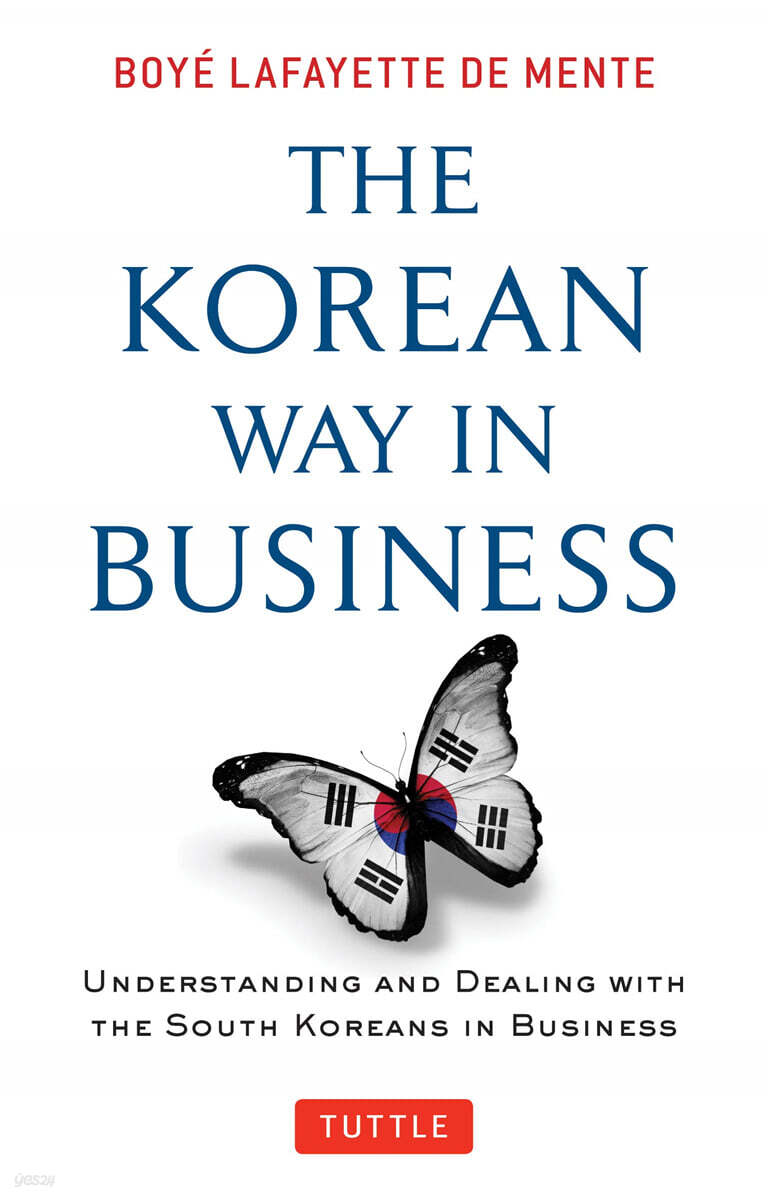
Korean Way in Business: Understanding and Dealing with the South Koreans in Business
Understanding and Dealing With the South Koreans in Business
Paperback
De Mente, Boye Lafayette
Tuttle Publishing
2014.03.25.
이미 소장하고 있다면 판매해 보세요.
- 국내배송만 가능
- 문화비소득공제 가능
책소개
목차
|
Preface: The Origin of South Korea 8
Introduction: The Rise of South Korea The Great Chaebol Conglomerates 11 The KOTRA Contribution 14 Major Business Centers 15 TV Sales and Internet Shopping 15 The Corporate Graveyard 15 Foreign Companies in South Korea 15 Opportunities for Green Industries 16 The Defense Industries 16 Success of the Fast-Food Chains 17 Using Lawyers in South Korea 17 Marketing and Sales Infrastructure 18 Business Entertainment Industry 18 A Difference in Corporate Philosophy 18 Other Reasons Why Foreign Companies Fail 19 Getting Help from Chambers of Commerce 20 Getting Help from Private Consultants 21 The "Force" that Drives Koreans 22 Work as Religion 26 The Lust for Power 26 Fighting at the Drop of a Hat 27 The Legacy of Enforced Harmony 28 The Clans Are Alive and Well 30 The Problem of Names 31 A Primary Contact for Newcomers 36 Chapter 1 A Historical Profile 38 Early Kingdoms 38 The Last Dynasty 40 Contact with Japan 41 Colonization by Japan 43 The Korean War and Its Aftermath 44 Chapter 2 The Basics of Korean Etiquette & Ethics 46 The Perils of Using Logic 47 The Ethics of Group Consciousness 49 The "Good Mood" Syndrome 50 Dealing with Sensitive Feelings 51 Dealing with Powerful Emotions 52 Avoiding the Appearance of Arrogance 53 Dealing with South Korean Nationalism 54 The Western Way vs. the South Korean Way 55 What is Fair in South Korea? 56 The Emotional Content of Business 57 Chapter 3 The Enduring Korean Character 59 Humanism and Benevolence in Business 60 Defining South Korean Management 60 "Scold Management" 63 Mind Control 64 Striving for Power 64 The Battle for an Education 65 Etiquette as Morality 66 Dealing with Duty and Obligations 67 Korean-Style Sin 68 The Personal Nature of Business 69 More Personal Elements in Business 72 Respect in South Korea 74 The Personal Loyalty Factor 75 Saving Everybody's Face 76 Hospitality as Face 78 Avoiding Shame 79 The Unbearable Burden 80 The Shame of Failure 81 Death before Dishonor 81 Peace of Mind 82 Situational Truth 83 Justice South Korean Style 84 The Communications Problem 86 The Great Ethical Divide 88 The Kindness Trap 89 Class Consciousness and School Ties 89 Juniors and Seniors 90 The Power of Social Debts 92 The Stubborn Syndrome 92 Doing Things by the Book 93 Dealing with Facts 94 When "Maybe" Means "No" 95 Personal Responsibility 96 Dealing with "Big Brother" 97 The Guiding Hand of Government 99 The Role of Friends in Business 101 The Importance of Sincerity 102 The Self-Reliant Syndrome 103 Chapter 4 Korean Business Culture Today 105 Manners as Morality 106 Circumstantial Ethics 107 The Perils of Pipyong 108 The Ethics of Revenge 109 The Jealousy Virus 110 Honoring Superiors 111 The Social Pecking Order 112 The Faction Syndrome 113 Corporations as Military Units 114 The Rank-Based Society 114 Rank has its Privileges 115 The Military Factor in Business 116 Cold Calls Are Out 117 Appointments and Meetings 118 Office Call Protocol 118 Dressing for Business 119 The Dual Role of Name Cards 120 The Use of First Names 121 Gift Giving vs. Bribery 121 To Bow or Not to Bow? 123 Standing Up at the Right Time 125 Rounds of Greetings 126 The South Korean View and Use of Contracts 127 Big Foreign Company Myopia 132 Major Problem Areas 132 Conflicting Goals 134 Playing Games with the Books 134 Privacy South Korean Style 135 Working for a Boss, Not a Company 135 Female Employees 136 Women and Male Chauvinism 136 The Great Walls of South Korea 137 Disobeying Laws 138 Reading Each Other's Nunchi 139 The Role and Importance of Social Status 142 Relationships and Connections 142 Human Harmony in Management 144 Ties that Bind 144 The Importance of a Dignified Manner 146 The Decision-Making System 147 Negotiating South Korean Style 150 Negotiations Dos and Don'ts 151 The Bargaining Factor in Business 153 Controlling Competition 154 Hospitality and Business 154 Private Invitations 156 Business Dining 156 Business Drinking 157 Singing Your Way to Success 160 Having Fun in a Kisaeng House 162 The Job Rotation System 164 Company Mottos and Creeds 165 Dealing with Office Stress 166 Advice for Foreign Managers 166 Avoiding Cultural Backlash 167 The Role of "Go-Betweens" 168 The Need for Patience 169 Formula for Keeping Best Workers 170 Developing Team Spirit 170 The Use of Collective Punishment 171 Veterans' Law 171 Foreign Workers 172 Emphasis on Company Training 172 Arbitration Taboos 173 The Importance of the Apology 173 The Korean Adaptation of English 174 Dos and Don'ts 175 Regulation by Competitors 176 The Prime Contact for Newcomers 176 The Good Side 177 A Pending Retirement Law 179 Chapter 5 Vocabulary of the Korean Way 180 Appendix 1 Management Titles and Their Korean Equivalents 210 Appendix 2 Guide to Korean Pronunciation 212 Index 216 |
품목정보
- 발행일
- 2014년 03월 25일
- 쪽수, 무게, 크기
- 224쪽 | 129*203*18mm
- ISBN13
- 9780804844574
리뷰/한줄평0
상품정보안내
직수입외서의 경우, 해외거래처에서 제공하는 정보가 부족하여 제목, 표지, 가격, 유통상태 등의 정보가 미비하거나 변경되는 경우가 있습니다. 정확한 확인을 원하시는 경우, 일대일 상담으로 문의하여 주시면 답변 드리겠습니다.
(판형과 판수 등이 다양한 도서는 찾으시는 도서의 ISBN을 알려 주시면 보다 빠르고 정확한 안내가 가능합니다.)
해외거래처에서 품절인 경우, 2차 거래선을 통해 유럽과 미국 출판사로 직접 수입이 진행될 수 있습니다.
수입 진행 시점으로 부터 2~3주가 추가로 소요되며, 해외에서도 유통이 원활하지 않은 도서는 품절 안내가 지연될 수 있습니다.
해당 경우, 문자와 메일로 별도 안내를 드리고 있사오니 마이페이지에서 휴대전화번호와 메일주소를 다시 한번 확인해주시기 바랍니다.
(판형과 판수 등이 다양한 도서는 찾으시는 도서의 ISBN을 알려 주시면 보다 빠르고 정확한 안내가 가능합니다.)
해외거래처에서 품절인 경우, 2차 거래선을 통해 유럽과 미국 출판사로 직접 수입이 진행될 수 있습니다.
수입 진행 시점으로 부터 2~3주가 추가로 소요되며, 해외에서도 유통이 원활하지 않은 도서는 품절 안내가 지연될 수 있습니다.
해당 경우, 문자와 메일로 별도 안내를 드리고 있사오니 마이페이지에서 휴대전화번호와 메일주소를 다시 한번 확인해주시기 바랍니다.