
소득공제
수입
직수입양서
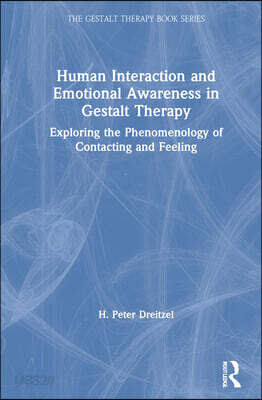
Human Interaction and Emotional Awareness in Gestalt Therapy
Exploring the Phenomenology of Contacting and Feeling
Hardback, 1st Edition
Dreitzel, H. Peter
Routledge
2021.03.26.
이미 소장하고 있다면 판매해 보세요.
- 국내배송만 가능
- 해외 거래처 사정에 의하여 품절/지연 가능
- 도서 정보 중 미표기 사항 안내?
- 문화비소득공제 가능
The Gestalt Therapy Book Series
-
 Phenomenology of the Self in Gestalt Therapy 이동Phenomenology of the Self in Gestalt Therapy15% 70,730원
 -
Phenomenology of the Self in Gestalt Therapy 이동Phenomenology of the Self in Gestalt Therapy15% 328,920원
-
Situation, Field Perspective and Formation of Forms in Gestalt Therapy 이동Situation, Field Perspective and Formation of Forms in Gestalt Therapy15% 279,190원
-
Situation, Field Perspective and Formation of Forms in Gestalt Therapy 이동Situation, Field Perspective and Formation of Forms in Gestalt Therapy15% 70,730원
-
Gestalt Therapist’s Guide Through the Depressive Field 이동Gestalt Therapist’s Guide Through the Depressive Field15% 328,920원
-
Gestalt Therapist’s Guide Through the Depressive Field 이동Gestalt Therapist’s Guide Through the Depressive Field15% 64,990원
-
Psychopathology of the Situation in Gestalt Therapy 이동Psychopathology of the Situation in Gestalt Therapy20% 59,370원
-
Psychopathology of the Situation in Gestalt Therapy 이동Psychopathology of the Situation in Gestalt Therapy10% 295,620원
-
History, Theory and Community of Gestalt Therapy 이동History, Theory and Community of Gestalt Therapy10% 295,620원
-
History, Theory and Community of Gestalt Therapy 이동History, Theory and Community of Gestalt Therapy20% 64,770원
-
Human Interaction and Emotional Awareness in Gestalt Therapy 이동Human Interaction and Emotional Awareness in Gestalt Therapy10% 348,270원
-
Human Interaction and Emotional Awareness in Gestalt Therapy 이동Human Interaction and Emotional Awareness in Gestalt Therapy10% 74,890원
-
Exploring Masculinity, Sexuality, and Culture in Gestalt Therapy 이동Exploring Masculinity, Sexuality, and Culture in Gestalt Therapy10% 348,270원
-
Exploring Masculinity, Sexuality, and Culture in Gestalt Therapy 이동Exploring Masculinity, Sexuality, and Culture in Gestalt Therapy10% 76,920원
책소개
목차
|
Contents Acknowledgements Translator’s Note, by Michaela von Britzke Foreword, by Michael Vincent Miller, PhD I. Introduction II. Historical Context The Fate of the Body and the Senses in the Civilizing Process III. The satisfying Experience The Contacting Process in the Interaction between Humans and their Environments 1. Figure and Ground The process of gestalt formation in the contacting situation 2. The Phases of the Contacting Process The unfolding of the self 3. The Instincts Needing and desiring 4. Sensori-motor Functions Perceiving and acting 5. Consciousness and Awareness Accepting and rejecting 6. Aggression Destroying and annihilating 7. Integration Surrender and enjoyment 8. Post Contact Enjoying the afterglow of an experience and affirming 9. Assimilation Remembering and forgetting 10. Self-Identification and social Anchoring Identifying oneself and taking responsibility IV. Emotional Orientation in the Phases of the Contacting Process Considering the Significance of Emotions in the Contacting Process The Relationship between the Senses and the Emotions.
On the anthropology of emotions 3. The fore-contact Emotions Aversion and attraction 4. Aggression The differences between aggression and assertiveness 6. Smiling, Laughing and Crying Emotional gestures and emotional expressions 7. Beyond the Moment Timeless emotions 8. Post-contact Appreciative emotions 9. The inhibiting Emotions Being anxious and feeling ashamed V. The Impact of Emotions on Personality and Society On the many Ways our Civilization depends on the refinement of our feelings 1. The Problem of Violence The limits of emotional freedom 2. Un-integrated Affects and emotional Habits Emotional attitudes and character 3. Forms of Sympathy Contagious emotions and shared emotions 4. Forms of Empathy To be emotionally sensitive to others and to identify with them 5. Catharsis and Therapy On the relationship between involvement and distance in emotional experience 6. Aliveness and the Joy of Life: General goals of Gestalt Therapy VI. Cultural Context Man´s Transformations in the Age of Environmental Destruction 1. Looking down from the Moon or End and Eternity of Nature 2. Anxiety and Civilization in everyday Life on Earth 3. Pressure of Time and the Fragility of Hope 4. The Uncertainty of the Future and the Certainty of Death 5. Flight into the trans-human Realm and the Misery of Power VII. Epilogue: Gestalt Therapy of Environmental Destruction Attachments Bibliography |
품목정보
- 발행일
- 2021년 03월 26일
- 쪽수, 무게, 크기
- 282쪽 | 760g | 160*230mm
- ISBN13
- 9780367644567
사락 별점0
혜택 및 유의사항밑줄0
혜택 및 유의사항상품정보안내
직수입외서의 경우, 해외거래처에서 제공하는 정보가 부족하여 제목, 표지, 가격, 유통상태 등의 정보가 미비하거나 변경되는 경우가 있습니다. 정확한 확인을 원하시는 경우, 일대일 상담으로 문의하여 주시면 답변 드리겠습니다.
(판형과 판수 등이 다양한 도서는 찾으시는 도서의 ISBN을 알려 주시면 보다 빠르고 정확한 안내가 가능합니다.)
해외거래처에서 품절인 경우, 2차 거래선을 통해 유럽과 미국 출판사로 직접 수입이 진행될 수 있습니다.
수입 진행 시점으로 부터 2~3주가 추가로 소요되며, 해외에서도 유통이 원활하지 않은 도서는 품절 안내가 지연될 수 있습니다.
해당 경우, 문자와 메일로 별도 안내를 드리고 있사오니 마이페이지에서 휴대전화번호와 메일주소를 다시 한번 확인해주시기 바랍니다.
(판형과 판수 등이 다양한 도서는 찾으시는 도서의 ISBN을 알려 주시면 보다 빠르고 정확한 안내가 가능합니다.)
해외거래처에서 품절인 경우, 2차 거래선을 통해 유럽과 미국 출판사로 직접 수입이 진행될 수 있습니다.
수입 진행 시점으로 부터 2~3주가 추가로 소요되며, 해외에서도 유통이 원활하지 않은 도서는 품절 안내가 지연될 수 있습니다.
해당 경우, 문자와 메일로 별도 안내를 드리고 있사오니 마이페이지에서 휴대전화번호와 메일주소를 다시 한번 확인해주시기 바랍니다.
348,270원
총 1개
348,270원