

소득공제
크레마클럽
PDF
eBook
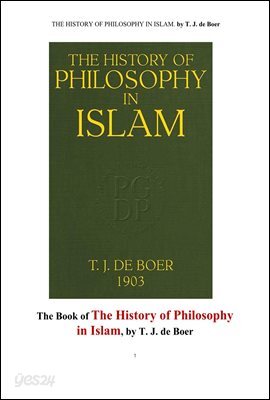
이슬람세계의 문화에서의 철학의 역사이야기.THE HISTORY OF PHILOSOPHY IN ISLAM. by T. J. de Boer
PDF
뉴가출판사
2021.10.19.
- PDF 안내
-
이 상품은 구매 후 지원 기기에서 예스24 eBook앱 설치 후 바로 이용 가능한 상품입니다.
이 상품의 태그


















소개
목차
|
이슬람세계의 문화에서의 철학의 역사이야기.THE HISTORY OF PHILOSOPHY IN ISLAM. by T. J. de Boer
CONTENTS. CHAPTER I. INTRODUCTION. Page 1. The Theatre 1?6 1. Ancient Arabia 1 2. The first Caliphs. Medina. The Shi?ites 2 3. The Omayyads. Damascus, Basra and Kufa 3 4. The Abbasids. Bagdad 3 5. Minor States. Fall of the Caliphate 5 2. Oriental Wisdom 6?11 1. Semitic Speculation 6 2. Persian Religion. Zrwanism 8 3. Indian Wisdom 8 3. Greek Science 11?30 1. The Syrians 11 2. The Christian Churches 11 3. Edessa and Nisibis 12 4. Harran 13 5. Gondeshapur 14 6. Syriac Translations 14 7. Philosophy among the Syrians 16 8. Arabic Translations 17 9. The Philosophy of the Translators 19 10. Range of Tradition 21 11. Continuation of Neo-Platonism 22 12. The “Book of the Apple” 24 13. The “Theology of Aristotle” 25 14. Conception of Aristotle 27 15. Philosophy in Islam 28 [X] CHAPTER II. PHILOSOPHY AND ARAB KNOWLEDGE. 1. Grammatical Science 31?35 1. The several Sciences 31 2. The Arabic Language. The Koran 31 3. The Grammarians of Basra and Kufa 32 4. Grammar influenced by Logic. Metrical Studies 33 5. Grammatical Science and Philosophy 35 2. Ethical Teaching 36?41 1. Tradition and Individual Opinion (Sunna, Hadith, Ra?y) 36 2. Analogy (Qiyas). Consensus of the Congregation (Idjma) 37 3. Position and Contents of the Muslim Ethical System (al-Fiqh) 38 4. Ethics and Politics 40 3. Doctrinal Systems 41?64 1. Christian Dogmatic 41 2. The Kalam 42 3. The Mutazilites and their Opponents 43 4. Human and Divine Action 44 5. The Being of God 46 6. Revelation and Reason 48 7. Abu-l-Hudhail 49 8. Nazzam 51 9. Djahiz 53 10. Muammar and Abu Hashim 54 11. Ashari 55 12. The Atomistic Kalam 57 13. Mysticism or Sufism 62 4. Literature and History 65?71 1. Literature 65 2. Abu-l-Atahia. Mutanabbi. Abu-l-Ala. Hariri 65 3. Annalistic. Historical Tradition 67 4. Masudi and Muqaddasi 69 CHAPTER III. THE PYTHAGOREAN PHILOSOPHY. 1. Natural Philosophy [XI] 72?80 1. The Sources 72 2. Mathematical Studies 73 3. Natural Science 75 4. Medicine 76 5. Razi 77 6. The Dahrites 80 2. The Faithful Brethren of Basra 81?96 1. The Karmatites 81 2. The Brethren and their Encyclopaedia 82 3. Eclecticism 84 4. Knowledge 85 5. Mathematics 87 6. Logic 89 7. God and the World 90 8. The Human Soul 92 9. Philosophy of Religion 93 10. Ethics 94 11. Influence of the Encyclopaedia 95 CHAPTER IV. THE NEO-PLATONIC ARISTOTELIANS OF THE EAST. 1. Kindi 97?106 1. His Life 97 2. Relation to Theology 99 3. Mathematics 100 4. God; World; Soul 101 5. Doctrine of the Spirit (?aql) 102 6. Kindi as an Aristotelian 104 7. The School of Kindi 105 2. Farabi 106?128 1. The Logicians 106 2. Farabi’s Life 107 3. Relation to Plato and Aristotle 108 4. Farabi’s Conception of Philosophy 110 5. His Logic 111 6. His Metaphysics. Being. God 114 7. The Celestial World 115 8. The Terrestrial World 117 9. The Human Soul 118 10. The Spirit in Man 119 11. Farabi’s Ethics 121 12. His Politics 122 13. The Future Life 123 14. General Survey of Farabi’s System 124 15. Effects of his Philosophy. Sidjistani 126 3. Ibn Maskawaih [XII] 128?131 1. His Position 128 2. The Nature of the Soul 128 3. The Principles of his Ethics 129 4. Ibn Sina (Avicenna) 131?148 1. His Life 131 2. His Work 132 3. Branches of Philosophy. Logic 134 4. Metaphysics and Physics 135 5. Anthropology and Psychology 139 6. The Reason 141 7. Allegorical Representation of the Doctrine of the Reason 143 8. Esoteric Teaching 144 9. Ibn Sina’s Time. Beruni 145 10. Behmenyar 146 11. Survival of Ibn Sina’s Influence 147 5. Ibn al-Haitham (Alhazen) 148?153 1. Scientific Movement turning Westward 148 2. Ibn al-Haitham’s Life and Works 149 3. Perception and Judgment 150 4. Slender effect left by his Teaching 152 CHAPTER V. THE OUTCOME OF PHILOSOPHY IN THE EAST. 1. Gazali 154?168 1. Dialectic and Mysticism 154 2. Gazali’s Life 155 3. Attitude towards his Time: Hostility to Aristotelianism 158 4. The World as the Production of God’s Free Creative Might 159 5. God and Divine Providence 162 6. Doctrine of the Resurrection 163 7. Gazali’s Theology 164 8. Experience and Revelation 166 9. Estimate of Gazali’s Position and Teaching 168 2. The Epitomists 169?171 1. Position of Philosophy in the East, after Gazali’s Time 169 2. Philosophical Culture 170 CHAPTER VI. PHILOSOPHY IN THE WEST. 1. Beginnings [XIII] 172?175 1. The Age of the Omayyads 172 2. The Eleventh Century 174 2. Ibn Baddja (Avempace) 175?181 1. The Almoravids 175 2. Ibn Baddja’s Life 176 3. The Character of his Works 177 4. His Logic and Metaphysics 177 5. His Opinions regarding Soul and Spirit 178 6. The Individual Man 179 3. Ibn Tofail (Abubacer) 181?187 1. The Almohads 181 2. Ibn Tofail’s Life 182 3. “Hai ibn Yaqzan” 182 4. “Hai” and the Development of Humanity 184 5. “Hai’s” Ethics 185 4. Ibn Roshd (Averroes) 187?199 1. His Life 187 2. Ibn Roshd and Aristotle 188 3. Logic. Attainability of Truth 189 4. The World and God 191 5. Body and Spirit 193 6. Spirit and Spirits 194 7. Estimate of Ibn Roshd as a Thinker 196 8. Summary of his Views on the Relations of Theology, Religion and Philosophy to one another. Practical Philosophy 197 CHAPTER VII. CONCLUSION. 1. Ibn Khaldun 200?208 1. The Conditions of his Time 200 2. Ibn Khaldun’s Life 201 3. Philosophy and Worldly Experience 202 4. Philosophy of History. Historical Method 204 5. The Subject of History 205 6. Characterization 206 2. The Arabs and Scholasticism 208?213 1. Political Situation. The Jews 208 2. Palermo and Toledo 209 3. Parisian Averroism in the Thirteenth Century 211 |
저자 소개
이슬람세계의 문화에서의 철학의 역사이야기.THE HISTORY OF PHILOSOPHY IN ISLAM. by T. J. de Boer
네덜란드의 대학교 교수.
Title: The History of Philosophy in Islam Author: T. J. de Boer
Translator: Edward R. Jones Language: English
THE
HISTORY OF PHILOSOPHY IN ISLAM
BY DR. T. J. DE BOER, UNIVERSITY OF GRONINGEN.
TRANSLATED
(with the sanction of the Author)
BY
EDWARD R. JONES B.D.
LONDON
LUZAC & CO., 46, GREAT RUSSELL STREET,
1903.
PRINTED BY E. J. BRILL?LEYDEN (HOLLAND).
네덜란드의 대학교 교수.
Title: The History of Philosophy in Islam Author: T. J. de Boer
Translator: Edward R. Jones Language: English
THE
HISTORY OF PHILOSOPHY IN ISLAM
BY DR. T. J. DE BOER, UNIVERSITY OF GRONINGEN.
TRANSLATED
(with the sanction of the Author)
BY
EDWARD R. JONES B.D.
LONDON
LUZAC & CO., 46, GREAT RUSSELL STREET,
1903.
PRINTED BY E. J. BRILL?LEYDEN (HOLLAND).
품목정보
- 발행일
- 2021년 10월 19일
- 지원기기
- 크레마, PC(윈도우 - 4K 모니터 미지원), 아이폰, 아이패드, 안드로이드폰, 안드로이드패드, 전자책단말기(저사양 기기 사용 불가), PC(Mac)
- 파일/용량
- PDF(DRM) | 1.58MB ?
- 글자 수/ 페이지 수
- 약 134쪽 ?
- ISBN13
- 9791168200401
출판사 리뷰
|
이슬람세계의 문화에서의 철학의 역사이야기.THE HISTORY OF PHILOSOPHY IN ISLAM. by T. J. de Boer
PREFACE. The following is the first attempt which has been made, since the appearance of Munk’s excellent sketch1, to present in connected form a History of Philosophy in Islam. This work of mine may therefore be regarded as a fresh initiation,?not a completion of such a task. I could not know of all that had been done by others, in the way of preliminary study in this field; and when I did know of the existence of such material, it was not always accessible to me. As for manuscript assistance, it was only in exceptional cases that this was at my disposal. Conforming to the conditions which I had to meet, I have in the following account refrained from stating my authorities. But anything which I may have taken over, nearly word for word or without testing it, I have marked in foot-references. For the rest, I deeply regret that I cannot duly indicate at present how much I owe, as regards appreciation of the sources, to men like Dieterici, de Goeje, Goldziher, Houtsma, Aug. Muller, Munk, Noldeke, Renan, Snouck Hurgronje, van Vloten, and many, many others. Since the completion of this volume an interesting monograph on Ibn Sina2 has appeared, which farther extends [VIII]its survey over the earlier history of Philosophy in Islam. It gives rise to no occasion, however, to alter substantially my conception of the subject. For all bibliographical details I refer the reader to “die Orientalische Bibliographie”, Brockelmann’s “Geschichte der Arabischen Litteratur”, and Ueberweg?Heinze’s “Grundriss der Geschichte der Philosophie” II3, p. 213 sqq. In the transcription of Arabic names I have been more heedful of tradition and German pronunciation, than of consistency. Be it noted only that z is to be pronounced as a soft s, and th like the corresponding English sound3. In the Index of Personal Names, accents signify length. As far as possible I have confined myself to Islam. On that ground Ibn Gebirol and Maimonides have received only a passing notice, while other Jewish thinkers have been entirely omitted, although, philosophically considered, they belong to the Muslim school. This, however, entails no great loss, for much has been written already about the Jewish philosophers, whereas Muslim thinkers have hitherto been sadly neglected. G r o n i n g e n (Netherlands). T. J. DE BOER. |