
소득공제
수입
직수입양서
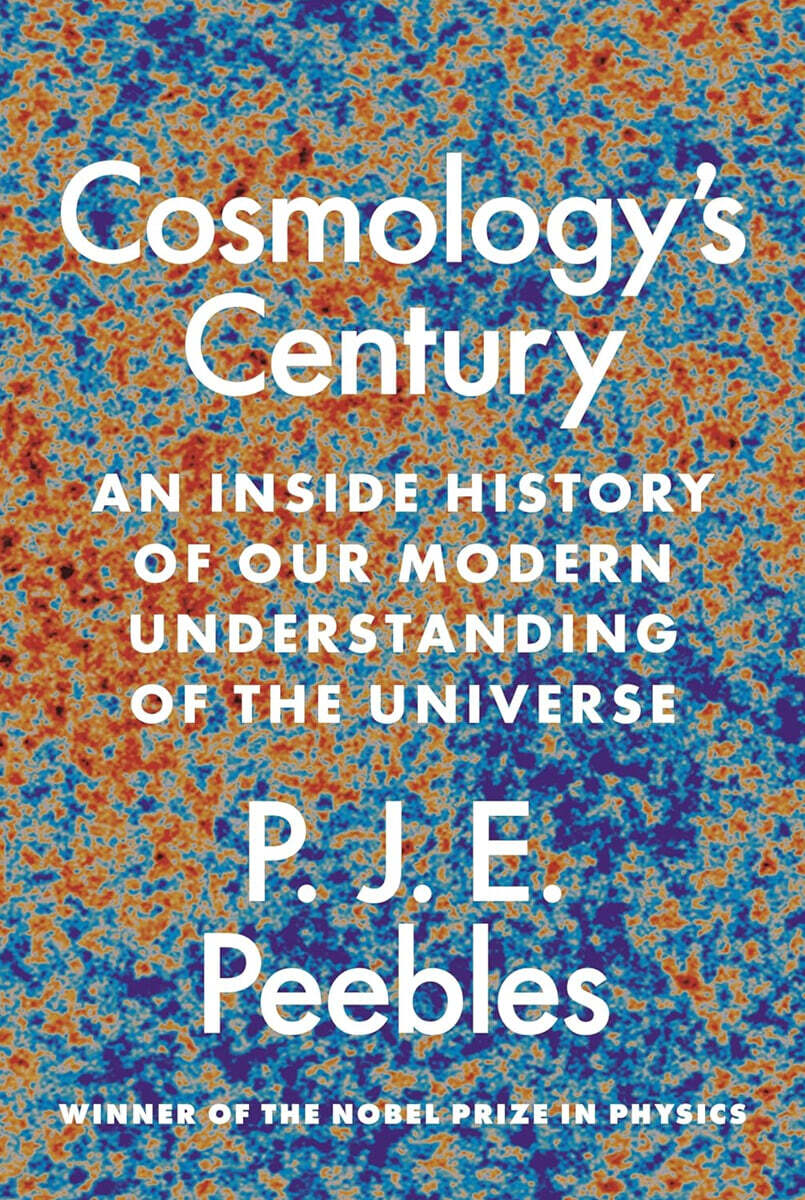
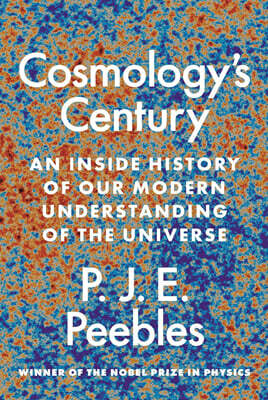
Cosmology's Century
An Inside History of Our Modern Understanding of the Universe
Paperback
제임스 피블스 저
Princeton University Press
2022.04.26.
- 번역서
- 우주론, 100년
이미 소장하고 있다면 판매해 보세요.
- 국내배송만 가능
- 해외 거래처 사정에 의하여 품절/지연 가능
- 도서 정보 중 미표기 사항 안내?
- 문화비소득공제 가능
이 상품의 태그









책소개
목차
|
Preface and Acknowledgments xiii
Chapter 1 Introduction 1 1.1 The Science and Philosophy of Cosmology 2 1.2 An Overview 6 Chapter 2 The Homogeneous Universe 12 2.1 Einstein's Cosmological Principle 12 2.2 Early Evidence of Inhomogeneity 16 2.3 Early Evidence of Homogeneity: Isotropy 18 2.4 Early Evidence of Homogeneity: Counts and Redshifts 22 2.5 The Universe as a Stationary Random Process 25 2.6 A Fractal Universe 31 2.7 Concluding Remarks 34 Chapter 3 Cosmological Models 36 3.1 Discovery of the Relativistic Expanding Universe 36 3.2 The Relativistic Big Bang Cosmology 45 3.3 The Steady-State Cosmology 50 3.4 Empirical Assessments of the Steady-State Cosmology 51 3.5 Nonempirical Assessments of the Big Bang Model 56 3.5.1 Early Thinking 56 3.5.2 Cosmological Inflation 62 3.5.3 Biasing 66 3.6 Empirical Assessments of the Big Bang Model 69 3.6.1 Time Scales 71 3.6.2 Cosmological Tests in the 1970s 74 3.6.3 Mass Density Measurements: Introduction 77 3.6.4 Mass Density Measurements: Hubble to the Revolution 82 3.6.5 Mass Density Measurements: Assessments 105 3.7 Concluding Remarks 111 Chapter 4 Fossils: Microwave Radiation and Light Elements 114 4.1 Thermal Radiation in an Expanding Universe 115 4.2 Gamow's Scenario 122 4.2.1 Gamow's 1948 Papers 123 4.2.2 Predicting the Present CMB Temperature 130 4.2.3 The Alpher, Bethe, and Gamow Paper 133 4.3 Helium and Deuterium from the Hot Big Bang 139 4.3.1 Recognition of Fossil Helium 139 4.3.2 Helium in a Cold Universe 143 4.3.3 Developments in 1964 and 1965 146 4.4 Sources of Microwave Radiation 151 4.4.1 Interstellar Cyanogen 153 4.4.2 Detection at Bell Laboratories 156 4.4.3 Zel'dovich's Group 158 4.4.4 Dicke's Group 160 4.4.5 Recognition of the CMB 162 4.5 Measuring the CMB Intensity Spectrum 164 4.5.1 The Situation in the 1970s 164 4.5.2 Alternative Interpretations 166 4.5.3 The Submillimeter Anomalies 169 4.5.4 Establishing the CMB Thermal Spectrum 171 4.6 Nucleosynthesis and the Baryon Mass Density 174 4.7 Why Was the Hot Big Bang Cosmology Reinvented? 182 Chapter 5 How Cosmic Structure Grew 184 5.1 The Gravitational Instability Picture 186 5.1.1 Lemaître's Solution 193 5.1.2 Lifshitz's Perturbation Analyses 198 5.1.3 Nongravitational Interaction of Baryons and the CMB 202 5.1.4 The Jeans Mass 208 5.2 Scenarios 210 5.2.1 Chaos and Order 210 5.2.2 Primeval Turbulence 213 5.2.3 Gravitational Origin of Galaxy Rotation 216 5.2.4 Explosions 221 5.2.5 Spontaneously Broken Homogeneity 223 5.2.6 Initial Conditions 229 5.2.7 Bottom-Up or Top-Down Structure Formation 233 5.3 Concluding Remarks 236 Chapter 6 Subluminal Mass 239 6.1 Clusters of Galaxies 240 6.2 Groups of Galaxies 245 6.3 Galaxy Rotation Curves 247 6.3.1 The Andromeda Nebula 248 6.3.2 NGC 3115 255 6.3.3 NGC 300 257 6.3.4 NGC 2403 258 6.3.5 The Burbidges's Program 260 6.3.6 Challenges 260 6.4 Stabilizing Spiral Galaxies 265 6.5 Recognizing Subluminal Matter 272 6.6 What Is the Nature of the Subluminal Matter? 276 Chapter 7 Nonbaryonic Dark Matter 279 7.1 Hot Dark Matter 280 7.1.1 Apparent Detection of a Neutrino Rest Mass 285 7.2 Cold Dark Matter 289 7.2.1 What Happened in 1977 290 7.2.2 The Situation in the Early 1980s 295 7.2.3 The Search for Dark Matter Detection 297 Chapter 8 The Age of Abundance of Cosmological Models 300 8.1 Why Is the CMB So Smooth? 301 8.2 The Counterexample: CDM 302 8.3 CDM and Structure Formation 307 8.4 Variations on the Theme 311 8.4.1 TCDM 312 8.4.2 DDM and MDM 313 8.4.3 ΛCDM and τCDM 314 8.4.4 Other Thoughts 315 8.5 How Might It All Fit Together? 316 Chapter 9 The 1998-2003 Revolution 323 9.1 The Redshift-Magnitude Test 323 9.2 The CMB Temperature Anisotropy 332 9.3 What Happened at the Turn of the Century 335 9.4 The Future of Physical Cosmology 340 Chapter 10 The Ways of Research 343 10.1 Technology 343 10.2 Human Behavior 344 10.3 Roads Not Taken 345 10.4 The Social Construction of Science 348 References 355 Index 399 |
저자 소개 1
P. J. E Peebles
프린스턴대학교 물리학과 명예 교수. 평생을 프린스턴대학교에서 연구하며 현대 우주론의 표준 모형인 ΛCDM 확립에 결정적으로 기여하는 등 현대 우주론의 토대를 이루는 연구들을 주도한 천문학의 거장이다. 2019년 “물리적 우주론에 대한 이론적 발견”으로 노벨 물리학상을 받았다. 《우주론, 100년》 은 그가 직접 몸담으며 목격한 현대 우주론 100년 역사의 집대성이다.
품목정보
- 발행일
- 2022년 04월 26일
- 쪽수, 무게, 크기
- 440쪽 | 610g | 154*232*24mm
- ISBN13
- 9780691234472
사락 별점0
혜택 및 유의사항밑줄0
혜택 및 유의사항상품정보안내
직수입외서의 경우, 해외거래처에서 제공하는 정보가 부족하여 제목, 표지, 가격, 유통상태 등의 정보가 미비하거나 변경되는 경우가 있습니다. 정확한 확인을 원하시는 경우, 일대일 상담으로 문의하여 주시면 답변 드리겠습니다.
(판형과 판수 등이 다양한 도서는 찾으시는 도서의 ISBN을 알려 주시면 보다 빠르고 정확한 안내가 가능합니다.)
해외거래처에서 품절인 경우, 2차 거래선을 통해 유럽과 미국 출판사로 직접 수입이 진행될 수 있습니다.
수입 진행 시점으로 부터 2~3주가 추가로 소요되며, 해외에서도 유통이 원활하지 않은 도서는 품절 안내가 지연될 수 있습니다.
해당 경우, 문자와 메일로 별도 안내를 드리고 있사오니 마이페이지에서 휴대전화번호와 메일주소를 다시 한번 확인해주시기 바랍니다.
(판형과 판수 등이 다양한 도서는 찾으시는 도서의 ISBN을 알려 주시면 보다 빠르고 정확한 안내가 가능합니다.)
해외거래처에서 품절인 경우, 2차 거래선을 통해 유럽과 미국 출판사로 직접 수입이 진행될 수 있습니다.
수입 진행 시점으로 부터 2~3주가 추가로 소요되며, 해외에서도 유통이 원활하지 않은 도서는 품절 안내가 지연될 수 있습니다.
해당 경우, 문자와 메일로 별도 안내를 드리고 있사오니 마이페이지에서 휴대전화번호와 메일주소를 다시 한번 확인해주시기 바랍니다.
