
- 본 도서는 영어로 구성 되어 있습니다.
이미 소장하고 있다면 판매해 보세요.
- 국내배송만 가능
- 문화비소득공제 가능
Korea Essentials
-
 Korean Wines & Spirits: Drinks That Warm the Soul 이동Korean Wines & Spirits: Drinks That Warm the Soul10% 8,820원
 -
Hangeul: Korea's Unique Alphabet-Korea Essentials Series 1 이동Hangeul: Korea's Unique Alphabet-Korea Essentials Series 110% 8,820원
이 상품의 태그
책소개
목차
|
Introduction
Chapter 1 Shamanism History|Basic Beliefs & Practices|Mudang|Gut|Impact on Other Religions Chapter 2 Buddhism History|Basic Beliefs|Seon vs. Gyo|Buddhist Monks and Nuns|Korean Buddhist Temples|Buddhist Art Chapter 3 Confucianism History|Basic Beliefs|Confucian Practices|The Seowon|Impact on Society Chapter 4 Christianity History|The Great Persecutions|Missionaries|Christianity and the Nationalist and Democracy Movements Chapter 5 Other Religions Cheondogyo|Won Buddhism|Daejonggyo Appendix Statistics on Religion by Population in Korea More about Religion in Korea 7 Buddhist Temples 7 Confucian Sites 7 Christian Sites Map of 21 Religious Sites In Korea |
품목정보
- 발행일
- 2012년 11월 01일
- 쪽수, 무게, 크기
- 113쪽 | 188*254*20mm
- ISBN13
- 9788997639052
출판사 리뷰
|
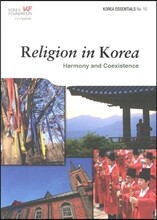
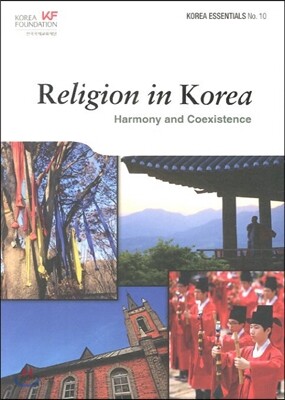
Korea is a remarkable case study in religious coexistence. Even though only about half the country identifies as religious, the half that does displays a remarkable diversity of both indigenous and imported faiths, including Buddhism and Christianity (of both the Catholic and Protestant varieties).
Korean religious pluralism is no recent phenomenon. Koreans have respected religious diversity since ancient times. Indeed, if there is one overriding religious tendency in the Korean population, it is a preference for syncretism, of finding essential and common truths amidst diverse and often competing doctrines. Current Korean leaders have continued making efforts to further inter-faith understanding. This book surveys the rich religious and spiritual tapestry that is contemporary Korea. We begin with the earliest of Korean faiths?the shamanism that prehistoric Koreans brought with them as they migrated to the peninsula from Central Asia?and continue on to today's most prominent faiths: Buddhism, Christianity, andConfucianism. Korea has given birth to a large number of indigenous faiths, and we will take a look at some of these, too. |
리뷰/한줄평0
8,820원
총 1개
8,820원