
소득공제
수입
직수입양서
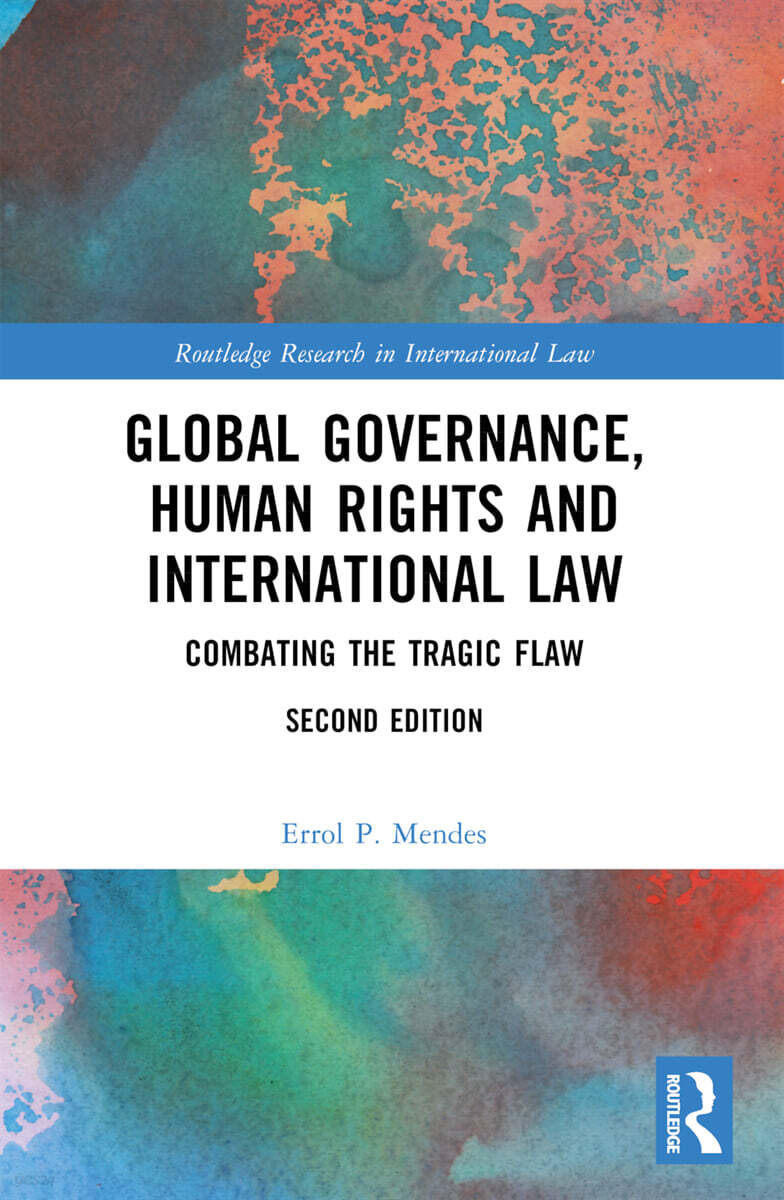
Global Governance, Human Rights and International Law
Combating the Tragic Flaw
Paperback, 2nd Edition
Mendes, Errol P.
Routledge
2024.05.27.
이미 소장하고 있다면 판매해 보세요.
- 국내배송만 가능
- 해외 거래처 사정에 의하여 품절/지연 가능
- 도서 정보 중 미표기 사항 안내?
- 문화비소득공제 가능
Routledge Research in International Law
-
 Sustainable Development Goals in International Law and Policy 이동Sustainable Development Goals in International Law and Policy10% 52,840원
 -
Reconciling Trade and Environmental Conflicts in International Law 이동Reconciling Trade and Environmental Conflicts in International Law10% 363,750원
-
Relational Normativity of International Law 이동Relational Normativity of International Law10% 363,750원
-
Theory of Obligations in International Law 이동Theory of Obligations in International Law10% 95,140원
-
African Continental Free Trade Area Agreement 이동African Continental Free Trade Area Agreement10% 101,490원
-
Legal Challenges of China's One Belt One Road Initiative 이동Legal Challenges of China's One Belt One Road Initiative10% 363,750원
-
Legal Perspectives on the Russia-Ukraine War 이동Legal Perspectives on the Russia-Ukraine War10% 363,750원
-
Sovereignty and the Limits of International Law 이동Sovereignty and the Limits of International Law10% 101,490원
-
Public Interest Litigation in International Law 이동Public Interest Litigation in International Law10% 101,490원
-
Towards an Independent Kurdistan: Self-Determination in International Law 이동Towards an Independent Kurdistan: Self-Determination in International Law10% 101,490원
-
Sustainable Development Goals in International Law and Policy 이동Sustainable Development Goals in International Law and Policy10% 143,790원
-
Rural and Remote Communities as Non-State Actors 이동Rural and Remote Communities as Non-State Actors10% 46,500원
-
Private International Law and Arbitral Jurisdiction 이동Private International Law and Arbitral Jurisdiction10% 93,030원
-
Global Governance, Human Rights and International Law 이동Global Governance, Human Rights and International Law10% 93,030원
-
Theory of Obligations in International Law 이동Theory of Obligations in International Law10% 549,900원
-
African Continental Free Trade Area Agreement 이동African Continental Free Trade Area Agreement10% 363,750원
-
Ancient Indigenous Human Remains and the Law 이동Ancient Indigenous Human Remains and the Law10% 99,370원
책소개
목차
|
CHAPTER 1
is it a model for the rest of the world? turning points in the hold of the tragic flaw? impunity for the most serious international crimes. core of sovereignty as the legitimate exercise of power? 2.1 The evolution of the world trade regime; another area of global governance, another tragic flaw. 2.2 Who and what killed the Doha Development Round? 2.3 The global trade regime; can it assist in promoting human rights and justice for the global labour force? 2.3.1 Debating the duty to promote justice and fairness for the global labour force between the WTO and the ILO 2.3.2 The ILO attempts to strengthen justice and fairness for the global labour force 2.3.3 Searching for the original vision of justice and human rights for global labour in the ITO; Can labour standards provisions in bilateral free trade agreements play a part? 2.4 In the long term do we survive? Trading off the environment. 2.5. Conclusion: solving the democratic deficit: a critical part of the long term solution 2.6 The evolution and failures of the global financial system: a growing tragic flaw that undermines fundamental principles of justice and human rights 2.6.1 The Bretton Woods System: the global financial system counterpart of the Atlantic Charter 2.6.2 The financial tragic flaw undermines the Bretton Woods vision 2.6.3 The tragic flaws in the Bretton Woods system triggers recurrent global financial crises and the urgent reforms to combat the tragic flaws 2.7. Conclusion: massive winners that thrive on the tragic flaws drive massive inequality and instability in the global trade and financial systems responsibility. 3.2 Case studies where corporate power is exercised without responsibility 3.2.1 Corruption 3.2.2 The health and safety of local communities: Bophal almost half a century later as a case study. 3.2.3 The environmental impact of corporate activities: The failed $9.5 billion claim for damages against Texaco/Chevron for environmental damage in Ecuador 3.2.4 The human rights impact of global private sector activities; a case study of Shell in Nigeria 3.3 The abuse of corporate Power: a direct or indirect role for international law? 3.4 Moving from the absence of hard law to soft law: the Ruggie Framework 3.4.1 The state’s duty to protect 3.4.2 The corporate responsibility to respect 3.4.3 Access to an effective remedy 3.5 Human rights and corporate social responsibility in the global economy 3.5.1 Corporate codes 3.5.2 Sectorial and industry-wide initiatives (involving coalitions from civil society, states and the private sector) 3.5.3 Multi-stakeholder transnational Initiatives 3.5.4 Global guidelines, standards and initiatives for corporate social responsibilities 3.5.5 Initiatives by multilateral organizations 3.6 The international legal duties of corporate officials and the global MNEs. 3.7. Conclusion; The MNE as the main beneficiary of globalization and global governance: why the gap between power and responsibility must be bridged 4. The foundations of global pluralism as the next stage of global governance |
관련 분류
품목정보
- 발행일
- 2024년 05월 27일
- 쪽수, 무게, 크기
- 286쪽 | 560g | 160*230mm
- ISBN13
- 9781032287584
리뷰/한줄평0
상품정보안내
직수입외서의 경우, 해외거래처에서 제공하는 정보가 부족하여 제목, 표지, 가격, 유통상태 등의 정보가 미비하거나 변경되는 경우가 있습니다. 정확한 확인을 원하시는 경우, 일대일 상담으로 문의하여 주시면 답변 드리겠습니다.
(판형과 판수 등이 다양한 도서는 찾으시는 도서의 ISBN을 알려 주시면 보다 빠르고 정확한 안내가 가능합니다.)
해외거래처에서 품절인 경우, 2차 거래선을 통해 유럽과 미국 출판사로 직접 수입이 진행될 수 있습니다.
수입 진행 시점으로 부터 2~3주가 추가로 소요되며, 해외에서도 유통이 원활하지 않은 도서는 품절 안내가 지연될 수 있습니다.
해당 경우, 문자와 메일로 별도 안내를 드리고 있사오니 마이페이지에서 휴대전화번호와 메일주소를 다시 한번 확인해주시기 바랍니다.
(판형과 판수 등이 다양한 도서는 찾으시는 도서의 ISBN을 알려 주시면 보다 빠르고 정확한 안내가 가능합니다.)
해외거래처에서 품절인 경우, 2차 거래선을 통해 유럽과 미국 출판사로 직접 수입이 진행될 수 있습니다.
수입 진행 시점으로 부터 2~3주가 추가로 소요되며, 해외에서도 유통이 원활하지 않은 도서는 품절 안내가 지연될 수 있습니다.
해당 경우, 문자와 메일로 별도 안내를 드리고 있사오니 마이페이지에서 휴대전화번호와 메일주소를 다시 한번 확인해주시기 바랍니다.
93,030원
총 1개
93,030원