

이미 소장하고 있다면 판매해 보세요.
- 해외배송 가능?
- 문화비소득공제 가능
카드뉴스로 보는 책


상세 이미지

책소개
목차
|
Prologue
Global Business Leader Foreword A Message of Advice for Global Leaders Hidden Leader Who Shows the Path to Becoming a Global Leader By Song, Young Soo The "Initial Power" of Thriving in a Multicultural Organization By Eom, Jun Ha Mind's Compass on a Phenomenal Journey By James Roh A Guide to Understand American Society and Organizations By Kim, Young Hun Ⅰ. American Society Respect, Honesty, Trust, Attention and Care, Family-Like Organizing Marathon The Vision of the Company and Me Gossip Compensation and Motivation Diversity and Inclusion Communication and Listening Efficiency and Effectiveness Good Company From "Myself" to "We" and "Together" Work Life and Satisfaction Five Core Values for Communication and Relationships Why Eat Together? Ⅱ. American Organization "STAND" Makes Leader 101 a Reality Personal Management Innovation My Between Words and Actions Diagnostic Technique for Leaders The Age of Lifelong Learning The Difference Between a Pro and an Amateur Harmonization of the Viewpoint Change for Improvement and Growth Is Not an Option but Mandatory The Distance Between Colleagues An Attitude of a Leader with Dignity The Lubricant of Relationships The Give-and-Take Formula Basics The Class of Leaders Who Will Set Nations and Organizations Right A Truly Professional Manager The Necessity of Non-Business Communication and Relationships Ⅲ. American Business Understand Melting Pot and Salad Bowl First Individualism and Collectivism Coexist Cultural Generalization Boundaries A Gap Between Formal and Pragmatic Logic Sharing the Korean Sentiment Stereotypes and Misconceptions About the United States The Difference Between Friendliness and Friendship Inherent Characteristics of United States Organizations Basic Manners in American Organizations Epilogue Competencies Required for Leading Diverse Organizations in the United States |
저자 소개 1
Evan Eun Sung Kim
1957년 따뜻한 가정에서 출생한 후 서울의 명문 고등학교, 대학교, 대학원을 거치며 화학공학과 산업공학을 공부하고 미국에서 MBA를 수학했다. 1985년 주재원으로 도미한 후 지금까지 미국에서 조직 생활과 컨설팅 비즈니스를 풍부하게 경험하는 가운데 다양성 및 포용성Diversity & Inclusion을 요하는 조직의 인재 관리와 양성에 기여하며 이중문화Bicultural 조직 전문가로 자리했다.
한국과 미국의 구성원이 공존하는 조직의 성과 도출 최적화를 위해서는 제품, 서비스, 시스템 등의 하드웨어적 요소와 함께 조직에 내재된 양국의 문화, 관습, 가치관 등의 소프트웨어
1957년 따뜻한 가정에서 출생한 후 서울의 명문 고등학교, 대학교, 대학원을 거치며 화학공학과 산업공학을 공부하고 미국에서 MBA를 수학했다. 1985년 주재원으로 도미한 후 지금까지 미국에서 조직 생활과 컨설팅 비즈니스를 풍부하게 경험하는 가운데 다양성 및 포용성Diversity & Inclusion을 요하는 조직의 인재 관리와 양성에 기여하며 이중문화Bicultural 조직 전문가로 자리했다.
한국과 미국의 구성원이 공존하는 조직의 성과 도출 최적화를 위해서는 제품, 서비스, 시스템 등의 하드웨어적 요소와 함께 조직에 내재된 양국의 문화, 관습, 가치관 등의 소프트웨어적 요소의 이해와 존중이 필요하다는 사실을 뼈저리게 경험했으며, 이를 바탕으로 《Milestones for Global Leaders’ Success in the United States》, 《미국에서 성공하는 리더의 마일스톤》, 《미국생활 가이드》, 《프랜차이즈》, 《한국인은 흰 양말만 신어요?》, 《미국 인사제도의 이해》 등의 저서를 집필했다. 그리고 칼럼, 교육, 강연 등을 통해 다양성 공동체에 대한 내면적 속성을 전달하고자 끊임없이 노력하고 있다.
이제는 45년여 동안 개인적, 조직적, 사회적 삶에서 얻었던 지식, 체험, 반성, 배움, 교훈은 물론 이중문화 공동체 생활에 필요한 요소들을 집중적으로 세간에 나누며 살고자 한다. 동시에 인생이라는 우주에서 허락받은 시공간에 잠시 머물다 떠나는 한 인간으로서 ‘지구의 향기로웠던 세입자’로 세상에 기억되고자 소신 있고 책임 있는 메시지를 전달하기 위한 공부와 수행을 지속하려 한다.
김은성의 다른 상품

품목정보
- 발행일
- 2025년 02월 14일
- 쪽수, 무게, 크기
- 296쪽 | 453g | 140*205*18mm
- ISBN13
- 9791198389138
책 속으로
|
The United States is a vast country. Most individuals live within a limited geographic area and time frame, with constrained experience and knowledge. Yet, some confidently assert, "This is what America is." When such voices belong to those with high social status and economic power, their distorted views risk shaping an incomplete or misleading picture of the country.
Immigrants, expatriates, and travelers in the U.S. often experience distinct phases when encountering or adapting to a new culture. The first is the so-called "tourist phase" or "honeymoon phase," which lasts typically lasts first three to six months. During this period, excitement and curiosity dominates as individuals focus on learning and understanding the new culture. Psychological conflicts are rare, as Americans generally display inclusiveness and hospitality toward short-term visitors and new arrivals. The second phase is the "confusion and frustration stage," which usually emerges within the first year. By this time, the initial excitement of the move or visit has worn off. As individuals integrate into daily life among Americans, they are no longer seen as visitors but are treated as equals. This shift often brings new challenges and cultural confrontations as they navigate the realities of adapting to a different way of life. This confusion and frustration may lead to feelings of resentment, dislike, or even inferiority toward the U.S. It is not uncommon for individuals to criticize Americans as a way to expressing their negative emotions. The third stage, known as the "adaptation stage," follows the "confusion and frustration" phase. During this stage, individuals begin to recognize the gap between their expectations and reality and make conscious efforts to bridge it. Over time, you may find themselves gradually embracing the new culture, often without even realizing it. Actively working to understand cultural differences through careful observation and analysis is crucial during this stage, as if helps foster greater acceptance and integration. For a culture to take shape, certain basic elements are required, often referred to as the 3Ps: place, people, and period. First, culture is shaped by geographic regions. For instance, the New England area in the Northeastern U.S. is generally conservative, while the West Coast, especially California, is known for its liberal values. The "Bible belt" in the South is heavily influenced by religion and regional pride. These regional differences result in distinct cultural variations, even within the U.S. Next, culture is shaped by specific people, or demographics. Populations are often categorized by income levels?high, middle, or low?and by occupation, with white-collar workers referring to professionals and mental labors, and blue-collar to those in manual labors. Additionally, the U.S. comprises a diverse range of racial and ethnic groups, including white, black, Latino, and Asian populations. This mix of demographics and social classes creates unique and sometimes surprising cultural dynamics. In addition, specific generations and time periods play a pivotal role in shaping culture. Older generations often have distinct mindsets and lifestyles compared to younger ones, and as times progresses, culture naturally evolves. The culture of 1000 years ago is vastly different from that of 100 years ago, just as today's culture will differ from that of 100 years in the future. When describing American culture, metaphors like the "melting pot" and the "salad bowl" are often invoked. The "melting pot" symbolizes unity through blending, while the "salad bowl" highlights the preservation of individual identities within a collective whole. The United States has a rich history shaped by immigration, evolving into a federation where diverse races from around the world come together as equal members in pursuit of common goals. The "melting pot" metaphor symbolizes the unity of different races and cultures blending together to achieve shared objectives within the "crockpot" of America. In contrast, the "salad bowl" represents the diversity of races and cultures in the U.S., where each retain its unique characteristics, flavors, and colors, much like the vegetables and fruits in a bowl. Recognizing this, Koreans in the U.S. should strive to maintain pride in their heritage and roots while actively contributing to the growth and prosperity of the U.S. and its communities as Americans or residents or citizens. This calls for a positive and proactive approach, one that seeks to understand and appreciate American culture rather than criticizing it. By living alongside Americans and embracing their perspectives, words, and behaviors, Koreans can foster meaningful communication and connections, ultimately serving as civilian diplomat for Korea and engaged citizens of the United States. --- 본문 중에서 |
출판사 리뷰
|
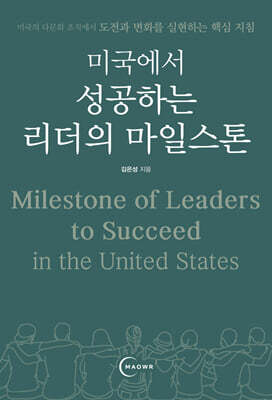
영문으로 공개하는 한국-미국 다문화 조직 내 글로벌 리더로 성장하는 핵심 지침
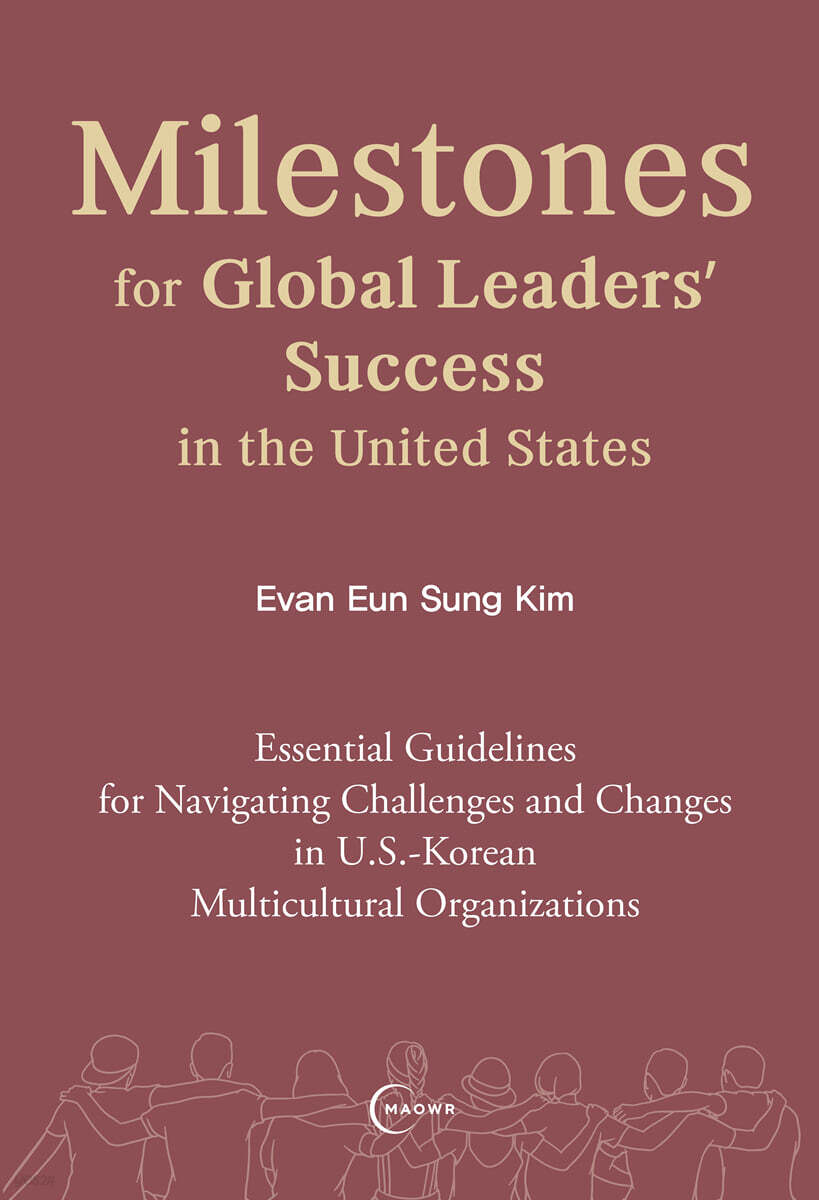
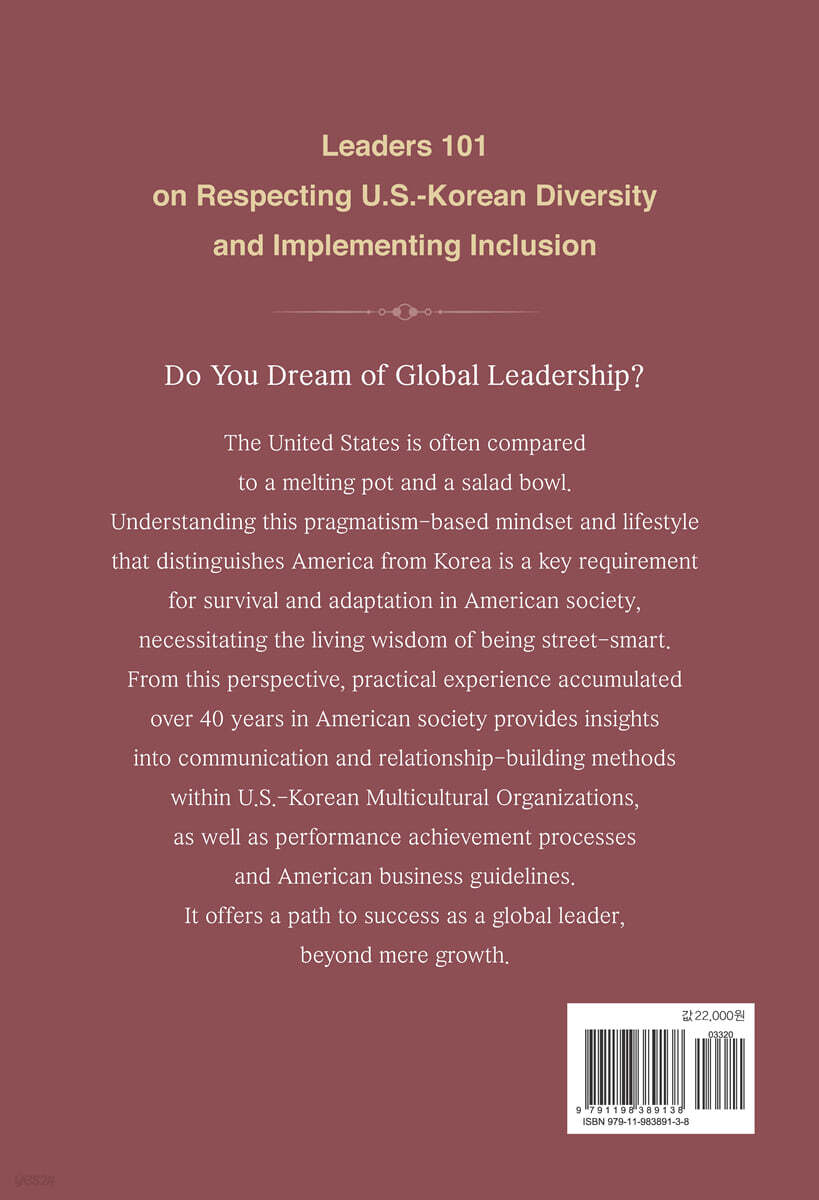
글로벌 우량기업의 경쟁우위는 경영 현장에서 지속가능한 성장의 밑거름을 다지는 리더들이 있기에 가능했다. 《미국에서 성공하는 리더의 마일스톤》의 저자 역시 무(無)에서 유(有)를, 평범에서 비범한 성과를 창조한 히든 리더(Hidden Leader)이다. 40여 년의 세월을 미국의 다양한 기업에서 열정과 헌신을 쏟아부으며 축적한 저자의 실천적 지혜는 4차 산업혁명(Industrial Revolution)과 디지털 전환(Digital Transformation) 시대를 살아가는 우리에게 미국 사회와 조직에서의 생존을 넘어 성장, 그리고 리더로서 성공의 길을 안내한다. 무엇보다 해외 주재 생활에 관록이 쌓인 경영 베테랑의 지혜는 세계에서, 특히 미국에서 비즈니스를 해야 하는 주재원, 또는 파견 예정자, 경영자, HR 담당자, 지역전문가, 나아가 글로벌 리더를 꿈꾸는 청년층에게 강력한 이니셜 파워, 즉 시동력을 제시하며 언어와 화법, 가치관과 사고방식, 역사와 문화 등에 대한 관점을 잡아 주고 있다. 그 가운데 개개인의 비전, 미션, 핵심가치 등 삶의 태도와 자세에 대해서도 설득력 있게 짚어주고 있어 의미가 남다르다. 이는 저자의 언행일치의 삶에서 비롯된 독자를 위한 권면이다. 미국 사회, 특히 다문화 조직에서 리더로 성장하는 길은 만만치 않다. 오직 스스로를 넘어서는 여정만이 기다릴 뿐이다. 《미국에서 성공하는 리더의 마일스톤》은 그 여정의 방향을 밝히는 등불로 자리할 것이라 믿는다. |
사락 별점0
혜택 및 유의사항밑줄0
혜택 및 유의사항
19,800원
총 1개
19,800원
