
이미 소장하고 있다면 판매해 보세요.
- 국내배송만 가능
- 문화비소득공제 가능
이 상품의 시리즈 11
이 상품의 시리즈 알림신청-
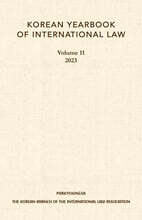
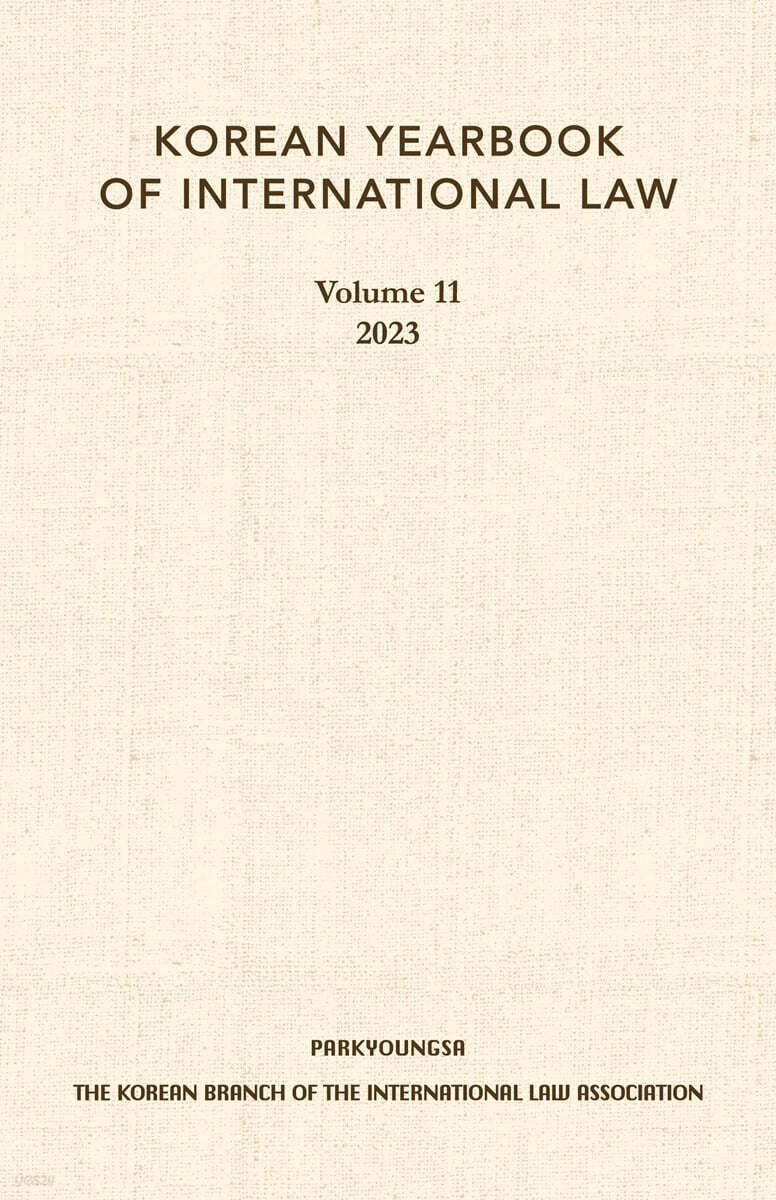
Korean Yearbook of International Law (Vol.11) 이동Korean Yearbook of International Law (Vol.11)40,000원
-
Korean Yearbook of International Law (Vol.10) 이동Korean Yearbook of International Law (Vol.10)34,000원
-
Korean Yearbook of International Law (Vol.9) 이동Korean Yearbook of International Law (Vol.9)40,000원
-
Korean Yearbook of International Law (Vol.8) 이동Korean Yearbook of International Law (Vol.8)40,000원
-
Korean Yearbook of International Law (Vol. 7) 이동Korean Yearbook of International Law (Vol. 7)40,000원
책소개
목차
|
EDITORIAL NOTE
Junha Kang _ 11 ARTICLES Chang Wee LEE Sovereignty over Dokdo as Seen through Japanese Historical Documents _ 19 Seokyong LEE ICJ Judgment on the North Sea Continental Shelf Cases and Its Impacts _ 39 on the Law of the Sea and Korea’s Maritime Law and Policy Jaehyun RYU, Sungjae HWANG A Case about the Avalokiteshvara Statue of Buseoksa Temple (Seoju, Goryeo) _ 85 and the International Cultural Heritage Law -After the Final Decision SPECIAL REPORTS Chang Wee LEE Recovering of Space Objects and Legal Status of Drop Area _ 107 between Korea and Japan See-Hwan DOH International Legal Review of Japan’s Invasion of Dokdo and _ 125 History of Japanese Colonialism JunHa KANG Loss and Damage under the UN Climate Change Regime _ 147 Soo-Jin CHO Recent Discussions on the Hague Jurisdiction Project _ 155 Jung-Hwa YOU Private International Law Issues in Recent Korean Court Rulings _ 165 from 2020 to 2023 on Criminal Cases RECENT DEVELOPMENTS Han Taek KIM North and South Korean Satellite Launch, Space Security, and Space Law _ 179 Min Jung CHUNG Korean National Assembly’s Proposed Legislations Related to _ 191 Import Ban on Any Seafood from Japan and the World Trade Organization Sok Young CHANG An Overview of Recent ISDS Cases Involving Korea _ 211 Gyooho LEE Domestic Implementation of the HCCH 1993 Adoption Convention _ 219 CONTEMPORARY PRACTICE AND JUDICIAL DECISIONS Min Jung CHUNG Resolutions Relating to International Law Adopted by the 21st National Assembly _ 229 of Korea in 2023 Eungi HONG Judicial Decisions in Public International Law (2023) _ 255 Jiyong JANG Judicial Decisions in Private International Law (2023) _ 281 Treaties/Agreements Concluded by the Republic of Korea _ 295 INDEX _ 299 AUTHOR GUIDELINES AND STYLE SHEET _ 303 |
저자 소개 1
LEE Jang-Hie
Emeritus Professor
Hankuk University of Foreign Studies, Law School, Seoul, Korea
SUNG Jae-Ho
Professor
Sungkyunkwan University Law School, Seoul, Republic of Korea
SEO Jin-Woong
Senior Researcher
The Institute of Legal Studies, Sungkyunkwan University, Seoul, Republic of Korea
GUAN Jian-Qiang
Pro
LEE Jang-Hie
Emeritus Professor
Hankuk University of Foreign Studies, Law School, Seoul, Korea
SUNG Jae-Ho
Professor
Sungkyunkwan University Law School, Seoul, Republic of Korea
SEO Jin-Woong
Senior Researcher
The Institute of Legal Studies, Sungkyunkwan University, Seoul, Republic of Korea
GUAN Jian-Qiang
Professor
International Law School, East China University of Political Science and Law, Shanghai, PRC
GUAN Yue
LL.M. in Public International Law, University of Liverpool; G.D.L., University of Law
KANG Pyoungkeun
Professor
Korea University School of Law, Seoul, Korea
CHOI Seung-Hwan
Emeritus Professor
Kyung Hee University Law School, Seoul, Korea
CHUNG Min-Jung
Legislative Research Officer
National Assembly Research Service, Seoul, Korea
KIM Doo-Su
Adjunct Professor
Hankuk University of Foreign Studies, Seoul, Korea
BAEK Buhm-Suk
Professor, Kyung Hee University, Seoul, Korea
AHN Hosung
Lecturer, Korea Military Academy, Seoul, Korea
AHN Jun-Hyeong
Assistant Professor, Korea National Defense University
Research Fellow, Research Institute for National Security Affairs, KNDU
LEE Jong Hyeok
Assistant Professor
Hanyang University, School of Law, Seoul, Korea
DOH See-Hwan
Senior Research Fellow
Northeast Asian History Foundation, Seoul, Korea
LEE Seryon
Professor
Jeonbuk National University, School of Law, Jeonju, Korea
CHUNG Min-Jung
Legislative Research Officer
National Assembly Research Service, Seoul, Korea
PARK Eon-Kyung
Visiting Professor
Kyung Hee University, Office of Career Development, Seoul, Korea
LEE Gyooho
Professor
Chung-Ang University, School of Law, Seoul, Korea
LEE Jee-Hyung
Executive Editor
International law researcher
LEE Keun-Gwan
Professor
School of Law, Seoul National University, Seoul, Korea
LEE Jee-Hyung
Executive Editor
International law researcher
PARK Hyeon-Seok
Professor
Department of Law, Hongik University, Seoul, Korea
LEE Jee-Hyung
Executive Editor
International law researcher
PARK Hyeon-Seok
Professor
Department of Law, Hongik University, Seoul, Korea
JANG Jiyong
High Court Judge
Suwon High Court, Suwon, Korea
Emeritus Professor
Hankuk University of Foreign Studies, Law School, Seoul, Korea
SUNG Jae-Ho
Professor
Sungkyunkwan University Law School, Seoul, Republic of Korea
SEO Jin-Woong
Senior Researcher
The Institute of Legal Studies, Sungkyunkwan University, Seoul, Republic of Korea
GUAN Jian-Qiang
Professor
International Law School, East China University of Political Science and Law, Shanghai, PRC
GUAN Yue
LL.M. in Public International Law, University of Liverpool; G.D.L., University of Law
KANG Pyoungkeun
Professor
Korea University School of Law, Seoul, Korea
CHOI Seung-Hwan
Emeritus Professor
Kyung Hee University Law School, Seoul, Korea
CHUNG Min-Jung
Legislative Research Officer
National Assembly Research Service, Seoul, Korea
KIM Doo-Su
Adjunct Professor
Hankuk University of Foreign Studies, Seoul, Korea
BAEK Buhm-Suk
Professor, Kyung Hee University, Seoul, Korea
AHN Hosung
Lecturer, Korea Military Academy, Seoul, Korea
AHN Jun-Hyeong
Assistant Professor, Korea National Defense University
Research Fellow, Research Institute for National Security Affairs, KNDU
LEE Jong Hyeok
Assistant Professor
Hanyang University, School of Law, Seoul, Korea
DOH See-Hwan
Senior Research Fellow
Northeast Asian History Foundation, Seoul, Korea
LEE Seryon
Professor
Jeonbuk National University, School of Law, Jeonju, Korea
CHUNG Min-Jung
Legislative Research Officer
National Assembly Research Service, Seoul, Korea
PARK Eon-Kyung
Visiting Professor
Kyung Hee University, Office of Career Development, Seoul, Korea
LEE Gyooho
Professor
Chung-Ang University, School of Law, Seoul, Korea
LEE Jee-Hyung
Executive Editor
International law researcher
LEE Keun-Gwan
Professor
School of Law, Seoul National University, Seoul, Korea
LEE Jee-Hyung
Executive Editor
International law researcher
PARK Hyeon-Seok
Professor
Department of Law, Hongik University, Seoul, Korea
LEE Jee-Hyung
Executive Editor
International law researcher
PARK Hyeon-Seok
Professor
Department of Law, Hongik University, Seoul, Korea
JANG Jiyong
High Court Judge
Suwon High Court, Suwon, Korea
The Korean Branch of the International Law Association의 다른 상품
-
Korean Yearbook of International Law (Vol.8) 이동Korean Yearbook of International Law (Vol.8)40,000원
품목정보
출판사 리뷰
|
It is our great pleasure to present Volume 11 of the Korean Yearbook of International Law. Above all, we would like to express our deep gratitude to the writers submitting valuable papers. With the active participation of experts, this yearbook can be truly special and unique.
This edition covers various topics of international law, from the law of the sea to international environmental law. Professor Chang Wee LEE’s article “Sovereignty over Dokdo as Seen through Japanese Historical Documents” examines historical Japanese documents that prove Korean sovereignty over Dokdo. LEE analyzes key documents from the 1667 Onshu Shichogakki to the 1877 Dajokan Directive, showing Japan historically acknowledged Dokdo was not its territory. The paper highlights two crucial pieces of evidence: the 1695 correspondence between the Tokugawa Shogunate and Tottori-han where Tottori admitted Dokdo was not its territory, and the 1877 Dajokan Directive where Japan’s highest administrative body officially declared Dokdo had no relation to Japan. LEE argues these historical documents invalidate Japan’s 1905 incorporation of Dokdo and suggests that resolving the dispute requires Japan to abandon its territorial claims. Taking up a significant development in maritime law, Professor Seokyong LEE's article analyzes the recent ICJ judgment in Nicaragua v. Colombia (2023) where the Court ruled that under customary international law, a State’s entitlement to continental shelf beyond 200nm cannot extend within 200nm of another State's baselines. This judgment effectively overrules the natural prolongation doctrine from the 1969 North Sea Continental Shelf cases. The article examines implications for Korea-Japan Joint Development Zone (JDZ) in the East China Sea and explores options for the future as the JDZ Agreement approaches its potential termination. Professor LEE suggests maintaining the JDZ system could be preferable to new delimitation negotiations, given the conflict between Korea’s natural prolongation theory and Japan’s distance standard. Delving into cultural heritage law, Jaehyun RYU and Sungjae HWANG’s paper analyzes Korean courts’ rulings on the Buseoksa Temple’s Avalokiteshvara statue case from a private international law perspective. The paper examines the applicability of the UNESCO 1970 Convention, evaluates Korea’s compliance with Article 20 of the Cultural Heritage Protection Act, and expresses hope that this case will encourage further research and efforts toward achieving restorative justice in international cultural heritage law. In the wake of Korea’s space achievements, Chang Wee LEE’s paper “Recovering of Space Objects and Legal Status of Drop Area between Korea and Japan” analyzes recovery procedures and drop areas following Nuri’s successful launch. The paper examines competing rights between coastal states and other states in the EEZ, jurisdiction and ownership of space objects, and the legal status of the intermediate zone in the East China Sea, while emphasizing the need for Korea-Japan cooperation. Through detailed historical analysis, See-Hwan DOH’s paper demonstrates how Japan utilized the Japanese Society of International Law and the concealed Temporary Investigation Committee to establish legal justifications for its invasion of Dokdo and colonization of Korea. The paper shows these organizations deliberately distorted international legal principles to support Japanese colonialism, particularly around the 1905 invasion of Dokdo and forced Korea-Japan Treaty. The author argues that Japan’s continued claims stem from this colonial legacy. At a critical juncture in climate policy, Professor Junha Kang traces the 30-year evolution of the Loss and Damage Fund from initial discussions to its formal establishment at COP 28. His analysis covers key concepts, institutional developments, and remaining challenges in operationalization. With particular attention to South Korea’s position as a significant global emitter, Kang explores the complex dynamics between developed and developing nations in addressing climate-related losses. Amid evolving jurisdictional challenges, Judge Soo-Jin CHO examines the ongoing development of a new convention on parallel proceedings at the Hague Conference. Her paper analyzes three crucial aspects: the scope of “related matters,” approaches to resolving jurisdictional conflicts between civil and common law traditions, and mechanisms for judicial cooperation. Drawing from judicial experience, Cho advocates for core principles focused on pure parallel proceedings while emphasizing court-to-court communication. With cross-border criminal cases on the rise, Judge Jung-Hwa YOU analyzes Korean criminal court decisions from 2020-2023 involving private international law issues. Through detailed case studies including embezzlement of a Singaporean company’s assets and inheritance disputes involving U.S. citizens, the paper demonstrates how Korean courts determine applicable laws through conflict-of-laws rules when addressing civil law elements within criminal cases. Against the backdrop of regional tensions, Professor Han Taek KIM examines the legal implications of recent satellite launches by both Koreas under international space law. The paper contrasts North Korea’s violation of UN Security Council resolutions with South Korea’s legitimate space development, while exploring broader questions of space security, militarization, and the evolving legal framework for military space activities. Focusing on trade implications, Min Jung CHUNG examines proposed amendments to ban Japanese seafood imports following the Fukushima water discharge. Drawing on the WTO Appellate Body Report Korea-Radionuclides case, the paper assesses how future WTO challenges might differ, particularly regarding scientific evidence requirements under the SPS Agreement. In a comprehensive review of recent disputes, Professor Sok Young CHANG examines two significant ISDS cases involving Korea: Lone Star v. Korea and Elliott v. Korea. The paper analyzes their proceedings, awards, and subsequent developments, noting the USD 216 million Lone Star award undergoing annulment proceedings and the USD 107.8 million Elliott award being challenged in UK courts. Marking a major shift in adoption policy, Professor Gyooho LEE's article examines Korea's legislative preparations for implementing the HCCH 1993 Convention through two significant laws enacted in 2023. The article details how Korea is restructuring its adoption system through the International Adoption Act and Special Act on Domestic Adoption, effective July 19, 2025. These laws aim to strengthen state responsibility, separate international and domestic procedures, and align with international standards. Throughout a diplomatically active year, Min Jung CHUNG analyzes 14 international law-related resolutions passed by Korea's National Assembly in 2023. The article notes significant increases in both quantity and scope compared to 2022, particularly in human rights-related resolutions and those concerning Japan. The paper details how these resolutions reflect Korea’s diplomatic priorities and response to major international events. Breaking new ground in public international law, Judge Eungi HONG examines four significant Korean court decisions from 2023. The article analyzes cases concerning state immunity in embassy property disputes, application of the Refugee Convention in criminal cases, state immunity in comfort women compensation claims, and interpretation of assault requirements in sexual offense cases considering international human rights standards. Complementing public law developments, High Court Judge Jiyong JANG analyzes four pivotal private international law decisions from 2023. The cases examined include a sovereign immunity dispute involving diplomatic property, validity of exclusive international jurisdiction agreements in consumer contracts, application of CISG principles in international sales disputes, and determination of applicable law in cross-border cultural asset cases. This volume of the Korean Yearbook of International Law features a diverse array of timely and impactful research from leading experts in international law. The papers cover crucial topics such as the Dokdo territorial dispute, maritime boundary delimitation, cultural heritage repatriation, space law, climate policy, and private international law developments in Korean courts. The insights and analyses presented will undoubtedly further the discourse on these important issues within the international legal community. We are grateful to the contributing authors for their valuable scholarship. We look forward to continued growth and prominence of this publication as it serves to elevate global research in international law. Junha Kang Editor-in-Chief Hongik University Dahae Jung Executive Editor Legal Research Institute of Korea University |