

소득공제
수입
직수입양서
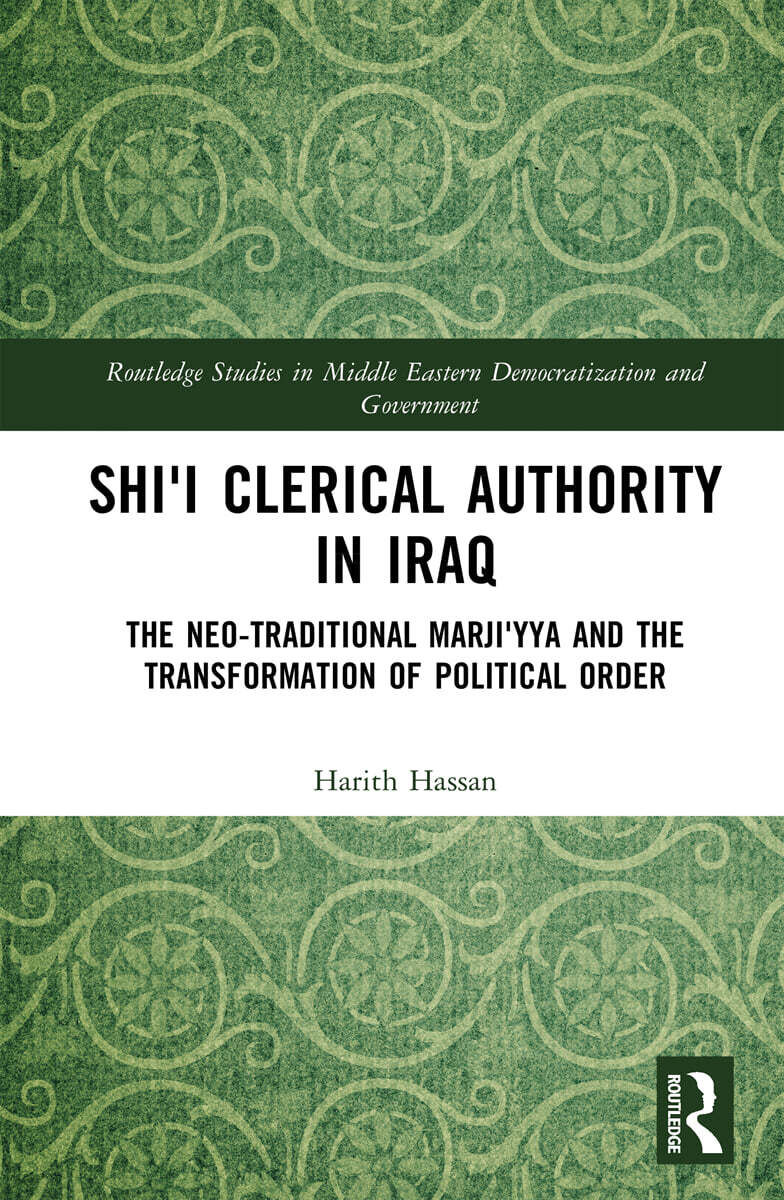
Shi'i Clerical Authority in Iraq
The Neo-Traditional Marji'yya and the Transformation of Political Order
Hardback, 1st Edition
Harith Hassan
Routledge
2026.04.23.
이미 소장하고 있다면 판매해 보세요.
- 국내배송만 가능
- 해외 거래처 사정에 의하여 품절/지연 가능
- 도서 정보 중 미표기 사항 안내?
- 문화비소득공제 가능
Routledge Studies in Middle Eastern Democratization and Government
-
 Role of the Military in the Arab Uprisings 이동Role of the Military in the Arab Uprisings10% 91,540원
 -
Tunisian Revolution and Democratic Transition 이동Tunisian Revolution and Democratic Transition10% 97,790원
-
Role of the Military in the Arab Uprisings 이동Role of the Military in the Arab Uprisings10% 357,940원
-
Good Governance and Civil–Security Relations 이동Good Governance and Civil–Security Relations10% 91,540원
-
Tunisian Revolution and Democratic Transition 이동Tunisian Revolution and Democratic Transition10% 357,940원
-
Good Governance and Civil–Security Relations 이동Good Governance and Civil–Security Relations10% 357,940원
책소개
목차
|
Table of Contents Acknowledgments Introduction Chapter One: The Modern State, Secularization and Religious Authority in Iraq The Construction of the Marji?yya Moder State formation and Shi?i Clerical Authorities Marj?iyya under the authoritarian state Chapter Two: State Atrophy, Islamization, and the Dynamics of the Religious Field Shi?i Clerics and the Response to Secularization The Decline of the Modernizing State The Shi?i Uprising, Khoui’s Death and the Emergence of Sistani The Rise of Sadr II and the Division in the religious Field Chapter Three: Marji?yya and the Recreation of Sociopolitical Order after 2003 The Occupation and Disintegration of State Authority Marji?yya and State-Rebuilding Between Legal Tradition and New Realities Marji?yya as an Extra-Constitutional Body Chapter Four: Marji?yya and the Shi?i Political Power: National and Transnational Dimensions The Marji?yya and Shi?i Islamism: From Opposition to domination Historical Background Marji?yya and the Shi?i-led State Moral Authority or Political Guarantor Marji?yya, Wilayat Al-Faqih and Transnational Relations The Controversy on Wilayat al-Faqih The Neo-Traditional Marji?yya vs. Wilayat al-Faqih Chapter Five: The Neo-Traditional Marji?yya: Religious Authority and the New Articulations Restructuring the Religious Field: Awqaf, Atabat and Marji?yya’s New roles The hybrid administration of Shrines Shrine Administrations and their Socioeconomic Activities The loose institutionalization The Neo-Traditional Marj’iyya and the Questions of Legitimacy, Legality and Public Morality The Question of Legitimacy: The Marji?yya as a Parallel Authority The Marji?yya, Public Morality and Social Governance Between Religious Jurisprudence and Formal Law Conclusions Bibliography Index |
품목정보
- 발행일
- 2026년 04월 23일
- 쪽수, 무게, 크기
- 208쪽 | 560g | 160*230mm
- ISBN13
- 9781041152651
리뷰/한줄평0
상품정보안내
직수입외서의 경우, 해외거래처에서 제공하는 정보가 부족하여 제목, 표지, 가격, 유통상태 등의 정보가 미비하거나 변경되는 경우가 있습니다. 정확한 확인을 원하시는 경우, 일대일 상담으로 문의하여 주시면 답변 드리겠습니다.
(판형과 판수 등이 다양한 도서는 찾으시는 도서의 ISBN을 알려 주시면 보다 빠르고 정확한 안내가 가능합니다.)
해외거래처에서 품절인 경우, 2차 거래선을 통해 유럽과 미국 출판사로 직접 수입이 진행될 수 있습니다.
수입 진행 시점으로 부터 2~3주가 추가로 소요되며, 해외에서도 유통이 원활하지 않은 도서는 품절 안내가 지연될 수 있습니다.
해당 경우, 문자와 메일로 별도 안내를 드리고 있사오니 마이페이지에서 휴대전화번호와 메일주소를 다시 한번 확인해주시기 바랍니다.
(판형과 판수 등이 다양한 도서는 찾으시는 도서의 ISBN을 알려 주시면 보다 빠르고 정확한 안내가 가능합니다.)
해외거래처에서 품절인 경우, 2차 거래선을 통해 유럽과 미국 출판사로 직접 수입이 진행될 수 있습니다.
수입 진행 시점으로 부터 2~3주가 추가로 소요되며, 해외에서도 유통이 원활하지 않은 도서는 품절 안내가 지연될 수 있습니다.
해당 경우, 문자와 메일로 별도 안내를 드리고 있사오니 마이페이지에서 휴대전화번호와 메일주소를 다시 한번 확인해주시기 바랍니다.
357,940원
총 1개
357,940원