
소득공제
수입
직수입양서
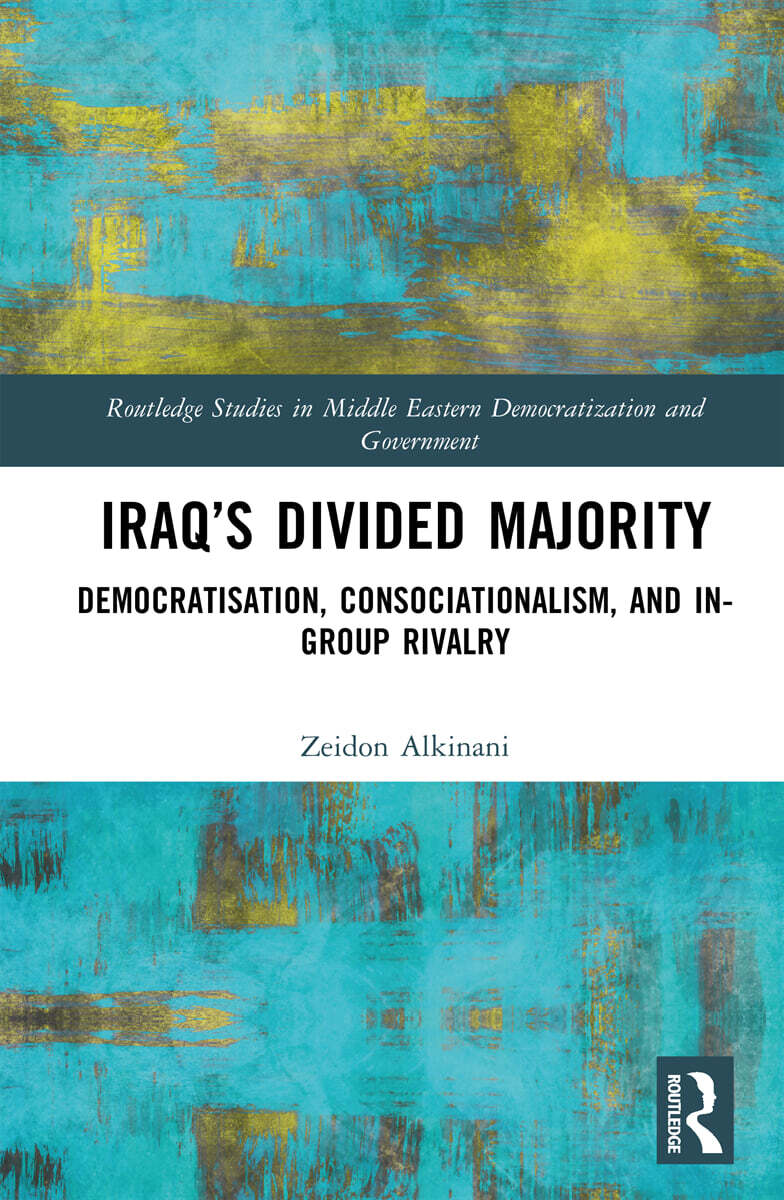
Iraq’s Divided Majority
Democratisation, Consociationalism, and In-Group Rivalry
Hardback, 1st Edition
Zeidon Alkinani
Routledge
2026.09.23.
- 국내배송만 가능
- 예약도서와 함께 주문 시 도서 출간일에 함께 배송됩니다. (출판사의 사정으로 출간 지연 가능)
- 해외 거래처 사정에 의하여 품절/지연 가능
- 도서 정보 중 미표기 사항 안내?
- 문화비소득공제 가능
Routledge Studies in Middle Eastern Democratization and Government
-
 Role of the Military in the Arab Uprisings 이동Role of the Military in the Arab Uprisings10% 91,540원
 -
Tunisian Revolution and Democratic Transition 이동Tunisian Revolution and Democratic Transition10% 97,790원
-
Role of the Military in the Arab Uprisings 이동Role of the Military in the Arab Uprisings10% 357,940원
-
Good Governance and Civil–Security Relations 이동Good Governance and Civil–Security Relations10% 91,540원
-
Tunisian Revolution and Democratic Transition 이동Tunisian Revolution and Democratic Transition10% 357,940원
-
Good Governance and Civil–Security Relations 이동Good Governance and Civil–Security Relations10% 357,940원
책소개
목차
|
Table of Contents Acknowledgements List of Abbreviations List of Definitions 1. Chapter: Introduction 1.1. Introduction 1.2. Existing Scholarly Debate 1.3. Current Situation 1.4. Research Importance and Identified Gap 1.5. Research Question 1.6. Theoretical and Methodological Framework 1.6.1. Primary Data A ? Elite Speeches 1.6.2. The Selected Shia Iraqi Elite Actors 1.6.3. The Core Themes 1.6.4. Primary Data B ? Semi-Structured Interviews 1.6.5. Secondary Data ? Academic Literature 1.6.6. Data Analysis: Critical Discourse Analysis 1.7. Structure of the Book 2. Chapter: Consociationalism and State Building in the Aftermath of Regime Change in Iraq 2.1. Introduction 2.2. Consociationalism ? Proportional Representation or Enforced Homogenisation? 2.2.1. An Evolving Debate 2.2.2. Theoretical Definitions 2.2.3. Limitations and Potentials 2.2.4. From Consociational Theory to Practice 2.2.5. Centripetalism 2.2.6. Consociation and Identity 2.2.7. Ethnic Outbidding: Identity Over Issue 2.2.8. Consociationalism and Intra-Group Rivalries 2.3. Consociationalism in Iraq ? Between Democratisation and Power-Sharing 2.3.1. Foundational Systemic Loopholes 2.3.2. The (Early) Noticed Potentials 2.3.3. The Current Status-Quo of Iraq’s Consociationalism 2.4. Imagining Iraq’s ‘Muhasasa’ Consociational Democracy 2.4.1. Liberation or Occupation? The Militarised Democratisation 2.4.2. Democratisation or Sectarianisation? 2.4.3. International Regime-Change vs. Religious Democratisation: The Rise of Sistani 2.4.4. Imposed Consociation 2.5. Research Gap and Contribution 3. Chapter: Imagining Iraq’s ‘Muhasasa’ Consociational Democracy 3.1. Introduction 3.2. The Intra-Shia Rivalry in Post-2003 Iraq 3.2.1. Authority and Governance in Shia Political Thought: Origins, Evolution, and Khomeinism 3.2.2. Najaf’s New and Old Elites: Early Majoritarian Breakup 3.2.3. The Iran Factor 3.2.4. The (Un)divided Popular Mobilisation Forces: From Battlefields to Ballot Boxes 3.2.5. Investigating the Intra-Shia Rivalry through Tishreen’s Protest Movement 3.3. Modern Exploitation of Religious Identities 3.3.1. Re-Constructing Post-2003 Iraq’s Sectarian Mobilisation 3.3.2. Secularisation and Modernisation Thesis 3.3.3. Modernity, A Factor of Religious Evolution 3.3.4. Religious Worldviews 3.4. Muhasasa’s Theoretical Rationale and Practical Implementation 3.4.1. The Assumed Demographics 3.4.2. Recognising Muhasasa’s Implementation and Exploiting its Unpopularity 3.4.3. Sectarianism and Intra-Sectarianism Facilitated by Muhasasa 3.5. Ingroup Legitimacy Rivalry 3.5.1. Sadr’s Political-Religious Discourse 3.6. The New Shia Majority-Rule 3.6.1. The Imagined Homogenous Community 3.6.2. Iraq’s Muhasasa and the Regional Sectarianisation 3.7. Conclusion 4. Chapter: The Dynamic Transformation of the Shia Political Camp 4.1. Introduction 4.2. The Early Majoritarian Schism 4.2.1. The Early Najaf?Qom Theological Divide in Post-2003 Iraq 4.2.2. The Incorporation of Iran’s Proxies into Iraq’s Political System 4.3. The Exploitation and Limitations of Shia Victimhood 4.4. Political Repositioning: Ideology versus Interests 4.4.1. Sadr: Nationalist or Pragmatist? 4.4.2. Maliki: State of Law versus Deep State 4.4.3. Amiri and Khazali: The Dilemma of Paramilitarism and Politics 4.5. Iran: The Ally, the Enemy, or the Neighbour? 4.5.1. Najaf?Qom Shia Theological Quietist Rivalry 4.5.2. Da‘wa: From Islamist Ideology to Communalism 4.5.3. Badr and Supreme Council: Balancing Iran’s Changing Influence 4.5.4. The Multilateral Intra-Shia Rivalry: The Sadrist Factor 4.6. Popular Mobilisation Forces and Re-Emerging Shia Militancy 4.7. Competition over Resources and Power 4.8. Conclusion 5. Chapter: Tishreen’s Shia Popular Rebellion against Shia Rule 5.1. Introduction 5.2. The Shiasation of Tishreen 5.3. The Shadow of the Intra-Shia Political Rivalry over Tishreen 5.3.1. Shia Constituents versus Shia Representatives 5.3.2. The Sadrist Shadow over Tishreen 5.4. Reshaping Iraq’s Intra-Shia Political Rivalry through Declining Iranian Influence 5.4.1. Tishreen’s Anti-Iran Sentiment: Why and How? 5.4.2. Post-Tishreen Iraq’s Reconciliation with the Arab World 5.5. Silent or Accomplice Marja‘iyah? 5.6. Tishreen versus Muhasasa: De-Legitimising the Consociational Rationale 5.7. Political Change versus Political Deadlock 5.7.1. Infiltrating Tishreen 5.8. Conclusion 6. Chapter: Conclusion Chapter 6.1. Introduction 6.2. Finding 6.3. Contribution 6.4. Recommendations 6.4.1. Recommendations from Empirical Evidence 6.4.2. Recommendations for Future Research 6.5. Conclusion 6.5.1. Consociational Reflections on the Intra-Shia Rivalry 6.5.2. Reconstruction of Political Identity in Iraq’s Intra-Shia Rivalry 6.5.3. Concluding Statement 7. Bibliography 7.1. Primary Data A (Speeches) 7.2. Primary Data B (Interviews) 7.3. Secondary Data 8. Appendix 8.1. List of Interviewees 8.2. List of Speeches Index |
품목정보
- 발행일
- 2026년 09월 23일
- 쪽수, 무게, 크기
- 278쪽 | 700g | 160*230mm
- ISBN13
- 9781041323495
리뷰/한줄평0
상품정보안내
직수입외서의 경우, 해외거래처에서 제공하는 정보가 부족하여 제목, 표지, 가격, 유통상태 등의 정보가 미비하거나 변경되는 경우가 있습니다. 정확한 확인을 원하시는 경우, 일대일 상담으로 문의하여 주시면 답변 드리겠습니다.
(판형과 판수 등이 다양한 도서는 찾으시는 도서의 ISBN을 알려 주시면 보다 빠르고 정확한 안내가 가능합니다.)
해외거래처에서 품절인 경우, 2차 거래선을 통해 유럽과 미국 출판사로 직접 수입이 진행될 수 있습니다.
수입 진행 시점으로 부터 2~3주가 추가로 소요되며, 해외에서도 유통이 원활하지 않은 도서는 품절 안내가 지연될 수 있습니다.
해당 경우, 문자와 메일로 별도 안내를 드리고 있사오니 마이페이지에서 휴대전화번호와 메일주소를 다시 한번 확인해주시기 바랍니다.
(판형과 판수 등이 다양한 도서는 찾으시는 도서의 ISBN을 알려 주시면 보다 빠르고 정확한 안내가 가능합니다.)
해외거래처에서 품절인 경우, 2차 거래선을 통해 유럽과 미국 출판사로 직접 수입이 진행될 수 있습니다.
수입 진행 시점으로 부터 2~3주가 추가로 소요되며, 해외에서도 유통이 원활하지 않은 도서는 품절 안내가 지연될 수 있습니다.
해당 경우, 문자와 메일로 별도 안내를 드리고 있사오니 마이페이지에서 휴대전화번호와 메일주소를 다시 한번 확인해주시기 바랍니다.
357,940원
총 1개
357,940원