
소득공제
수입
직수입양서
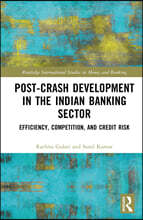
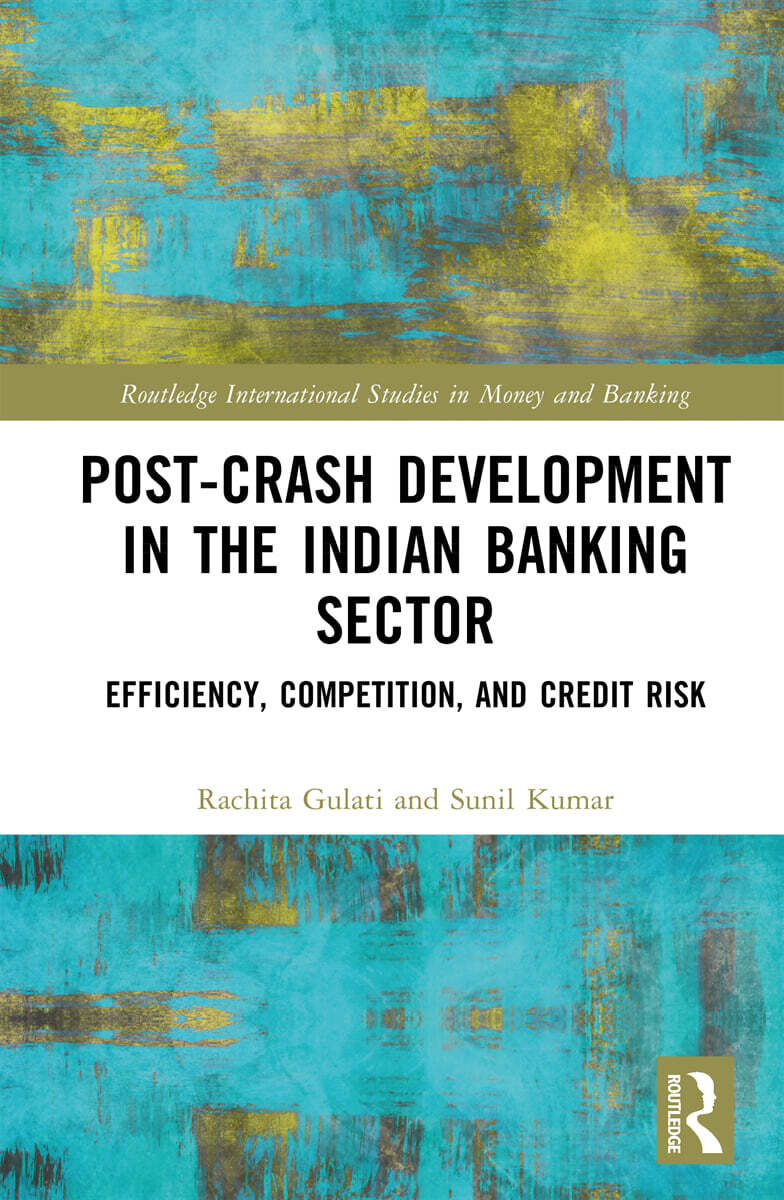
Post-Crash Development in the Indian Banking Sector
Efficiency, Competition, and Credit Risk
Hardback, 1st Edition
Rachita Gulati, Sunil Kumar
Routledge
2026.09.23.
- 국내배송만 가능
- 예약도서와 함께 주문 시 도서 출간일에 함께 배송됩니다. (출판사의 사정으로 출간 지연 가능)
- 해외 거래처 사정에 의하여 품절/지연 가능
- 도서 정보 중 미표기 사항 안내?
- 문화비소득공제 가능
Routledge International Studies in Money and Banking
-
 Post-Crash Development in the Indian Banking Sector 이동Post-Crash Development in the Indian Banking Sector10% 356,010원
 -
Central Bank Digital Currencies in Asia Pacific 이동Central Bank Digital Currencies in Asia Pacific10% 356,010원
-
Profitability and Competition in Chinese Banking 이동Profitability and Competition in Chinese Banking10% 217,350원
-
Strategic Risk Management and Sustainable Banking 이동Strategic Risk Management and Sustainable Banking10% 356,010원
-
Strategy, Finance and Sustainable Value Creation 이동Strategy, Finance and Sustainable Value Creation10% 99,330원
-
Environmental, Social and Governance Practices in the FinTech Era 이동Environmental, Social and Governance Practices in the FinTech Era10% 356,010원
-
International Banking in Global Perspective 이동International Banking in Global Perspective10% 99,330원
-
Clean Energy Funds and Portfolio Diversification 이동Clean Energy Funds and Portfolio Diversification10% 356,010원
-
Financial Regulation, Governance, and Stability 이동Financial Regulation, Governance, and Stability10% 356,010원
-
Investment Promotion Agencies and Foreign Direct Investment 이동Investment Promotion Agencies and Foreign Direct Investment10% 356,010원
-
Financial and Technological Innovation for Sustainability 이동Financial and Technological Innovation for Sustainability10% 99,330원
-
Innovation in Banking and Financial Intermediaries 이동Innovation in Banking and Financial Intermediaries10% 356,010원
-
Sustainable Investing Through Exchange-Traded Products 이동Sustainable Investing Through Exchange-Traded Products10% 356,010원
책소개
목차
|
Abbreviations 1. INTRODUCTION 1.1 Background 1.2 Motivation, Objectives, and Research Questions 1.2.1 Motivation and Context 1.2.2 Research Objectives 1.2.3 Research Questions 1.3 Contributions 1.4 Structure of the Book 2. INDIAN BANKING SECTOR: A TRAJECTORY FROM REGULATION TO DEREGULATION TO REREGULATION AND BEYOND 2.1 Introduction 2.2 The Regulation Phase: Pre-Independence to Early 1990s 2.2.1 Pre-Independence Era: Foundation of Formal Banking 2.2.2 Post-Independence Development-Oriented Banking (1947–1960s) 2.2.3 Nationalisation and Social Banking (1960s–1980s) 2.2.4 Financial Repression and Pre-Reform Crisis (1980s–1991) 2.3 The Deregulation Phase: Early 1990s to Global Financial Crisis (2007–09) 2.3.1 Genesis and Philosophy of Banking Reforms 2.3.2 Implementation Framework: The Gradualist Approach 2.3.3 Complementary Institutional and Legal Measures 2.3.4 Outcomes and Transformation of the Banking Sector 2.4 The Reregulation Phase: Post-Global Financial Crisis (2008 Onwards) 2.4.1 Indian Banking and the Global Financial Crisis (2007–2009) 2.4.2 Shift to Macroprudential Regulation, Institutional Framework, and Basel III Implementation 2.4.3 The Domestic Banking Crisis: Non-Performing Asset Surge (2013–2017) 2.4.4 Policy Responses to the NPL Crisis and Comprehensive Governance Reforms (2015–Present) 2.4.5 Demonetisation and Banking Sector Impact (2016) 2.4.6 Banking Sector Response to COVID-19 Pandemic (2020–2022) 2.5 Beyond Reregulation: Key Emerging Regulatory Frontiers in the Post-GFC Era 2.5.1 Financial Inclusion: The PMJDY Framework and Universal Banking Access 2.5.2 Digital Payment Infrastructure and Regulatory Framework 2.5.3 Climate Risk Regulation and Sustainable Finance 2.6 Conclusion: Lessons from Three Decades of Calibrated Regulatory Evolution References 3. POST-CRASH TRANSFORMATION: STRUCTURAL EVOLUTION AND PERFORMANCE DYNAMICS OF INDIAN BANKING 3.1 Introduction 3.2 Current Structure of the Indian Banking System 3.2.1 Composition of Banks in the Indian Banking Industry 3.2.2 Public Sector Bank Consolidation and Competitive Dynamics 3.2.3 Emergence of Differentiated Banking Entities 3.3 Post-Crash Trends in the Indian Banking Industry 3.3.1 Bank Earnings and Profitability 3.3.2 Exposure to Off-Balance Sheet Activities by Banks 3.3.3 Asset Quality of Banks 3.3.3.1 Sectoral Composition of NPLs 3.3.3.2 NPL Recovery Channels and Regulatory Framework 3.3.4 Bank Frauds 3.3.4.1 Recent Fraud Patterns across Bank Groups 3.3.4.2 Fraud Incidents by Area of Operations 3.3.5 Technological Development and Digital Payments 3.3.5.1 Card-Based Payment Systems 3.3.5.2 Non-Card-Based Payment Systems 3.3.6 Basel III and Capital Adequacy 3.3.7 Consolidation and Recapitalisation of Public Sector Banks 3.3.7.1 Mergers and Acquisitions of Public Sector Banks 3.3.7.2 Recapitalisation and Restructuring of PSBs 3.3.8 Banking Performance During Global and Local Disruptions and Regulatory Forbearance 3.3.8.1 Regulatory Forbearance following GFC (2008–2015) 3.3.8.2 Demonetisation Impact (2016–2018) 3.3.8.3 COVID-19 Pandemic Impact (2020–2022) 3.4 Synthesis: Connecting Regulatory Evolution to Performance Outcomes 3.5 Summary and Conclusions 4. CRISES AND BANK EFFICIENCY IN INDIA: A TWO-STAGE METAFRONTIER NETWORK DEA ANALYSIS 4.1 Introduction 4.2 Relevant Literature Review 4.2.1 Bank Efficiency Assessment 4.2.2 Crisis and Bank Efficiency 4.3 Methodology and Data 4.3.1 Two-Stage Network Production Process for a Bank 4.3.2 Research Design 4.3.2.1 Mathematical Description 4.3.2.2 Network Production Technology Set and Network Direction Distance Function 4.3.2.3 (In)efficiency Measurement with Respect to Group Frontiers 4.3.2.4 Directional Distance Function-Based Network DEA Model for Constructing Metafrontier 4.3.3 Econometric Analysis 4.3.4 Data 4.4 Empirical Results 4.4.1 Dynamics of Bank Efficiency Levels in the Indian Banking Industry 4.4.2 Efficiency Comparison across Bank Ownership Groups 4.4.3 Crisis and Bank Efficiency 4.4.3.1 Global Financial Crisis and Bank Efficiency 4.4.3.2 Local NPL Crisis and Bank Efficiency 4.4.3.3 Currency Note Ban Crisis and Bank Efficiency 4.4.3.4 COVID-19 Pandemic and Bank Efficiency 4.4.4 Bank Heterogeneity, Inefficiency, and Innovation Gaps during the Crisis 4.4.5 Econometric Validation 4.5 Conclusions and Policy Implications References 5. BANK MARKET STRUCTURE AND COMPETITION IN INDIA: DYNAMICS FROM FINANCIAL MELTDOWN TO COVID-19 PANDEMIC 5.1 Introduction 5.2 Structural Changes in the Indian Banking Industry 5.3 Relevant Literature Review 5.3.1 Theoretical Literature 5.3.2 Empirical Literature on Bank Competition Using the Panzar–Rosse Approach and Its Extensions 5.4 Methodology, Variables, and Data 5.4.1 Estimation of Yearly H- and E-Statistics 5.4.2 Measuring Five-Year Rolling Window H-Statistic 5.4.3 Measuring H-Statistic under Dynamic Competitive Market Conditions 5.4.4 Estimation of Cost Efficiency 5.4.5 Data 5.5 Empirical Results 5.5.1 Dynamics of Bank Competition in the Short-Run 5.5.1.1 Yearly Evolution in the Bank Competition 5.5.1.2 Evolution of Bank Competition over Five-Year Rolling Window Periods 5.5.2 Long-Run Market Equilibrium Test and Validity of the Dynamic P-R Specification 5.5.3 Dynamics of Bank Competition in the Long-Run 5.5.3.1 Line of Business Activities and Competitive Behaviour 5.5.3.2 Foreign Bank Ownership and Competitive Behaviour 5.5.3.3 Bank Size and Competitive Behaviour 5.5.3.4 Banking Crises and Competitive Behaviour 5.6 Conclusions and Policy Implications References 6. CREDIT RISK IN INDIA: DETERMINANTS AND CONVERGENCE 6.1 Introduction 6.2 Literature Review 6.2.1 International Evidence on Credit Risk Determinants 6.2.2 Studies on the Indian Banking Context 6.3 Econometric Methodology and Data 6.3.1 Identifying Credit Risk Clubs in the Indian Banking Industry: Phillips and Sul's Club Clustering 6.3.2 Dynamic Panel Specification 6.4 Variables and Data 6.4.1 Specification of Variables and Empirical Hypotheses 6.4.2 Data 6.5 Empirical Results 6.5.1 NPL Trends in the Indian Banking Industry 6.5.2 Risk Convergence Clubs 6.5.3 Determinants of Credit Risk 6.5.3.1 Industry Analysis 6.5.3.2 Ownership-Specific Determinants 6.5.3.3 Impact of Crisis Episodes on Credit Risk 6.6 Conclusion and Policy Implications References 7. SYNTHESIS, POLICY IMPLICATIONS, AND FUTURE RESEARCH DIRECTIONS 7.1 Background 7.2 Summary of Key Findings 7.3 Interdependencies Among Efficiency, Competition, and Credit Risk 7.4 Answering the Central Research Question: Resilience or Vulnerability 7.5 Key Policy Implications 7.5.1 Implications for Banking Regulators 7.5.2 Implications for Bank Management 7.6 International Relevance and Comparative Implications 7.7 Directions for Future Research 7.8 Concluding Remarks INDEX |
품목정보
- 발행일
- 2026년 09월 23일
- 쪽수, 무게, 크기
- 324쪽 | 453g | 160*230mm
- ISBN13
- 9780367200732
리뷰/한줄평0
상품정보안내
직수입외서의 경우, 해외거래처에서 제공하는 정보가 부족하여 제목, 표지, 가격, 유통상태 등의 정보가 미비하거나 변경되는 경우가 있습니다. 정확한 확인을 원하시는 경우, 일대일 상담으로 문의하여 주시면 답변 드리겠습니다.
(판형과 판수 등이 다양한 도서는 찾으시는 도서의 ISBN을 알려 주시면 보다 빠르고 정확한 안내가 가능합니다.)
해외거래처에서 품절인 경우, 2차 거래선을 통해 유럽과 미국 출판사로 직접 수입이 진행될 수 있습니다.
수입 진행 시점으로 부터 2~3주가 추가로 소요되며, 해외에서도 유통이 원활하지 않은 도서는 품절 안내가 지연될 수 있습니다.
해당 경우, 문자와 메일로 별도 안내를 드리고 있사오니 마이페이지에서 휴대전화번호와 메일주소를 다시 한번 확인해주시기 바랍니다.
(판형과 판수 등이 다양한 도서는 찾으시는 도서의 ISBN을 알려 주시면 보다 빠르고 정확한 안내가 가능합니다.)
해외거래처에서 품절인 경우, 2차 거래선을 통해 유럽과 미국 출판사로 직접 수입이 진행될 수 있습니다.
수입 진행 시점으로 부터 2~3주가 추가로 소요되며, 해외에서도 유통이 원활하지 않은 도서는 품절 안내가 지연될 수 있습니다.
해당 경우, 문자와 메일로 별도 안내를 드리고 있사오니 마이페이지에서 휴대전화번호와 메일주소를 다시 한번 확인해주시기 바랍니다.
356,010원
총 1개
356,010원
