

소득공제
수입
직수입양서
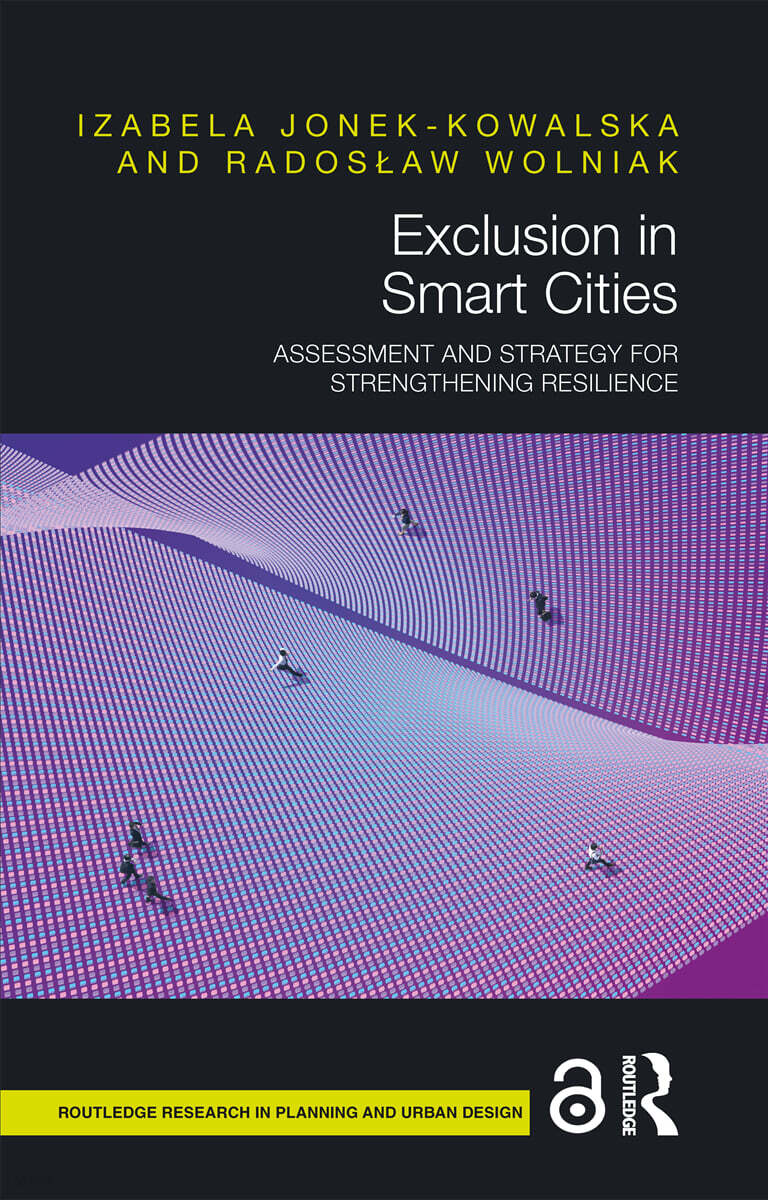
Exclusion in Smart Cities
Assessment and Strategy for Strengthening Resilience
Paperback, 1st Edition
Izabela Jonek-kowalska, Radosław Wolniak
Routledge
2026.07.20.
이미 소장하고 있다면 판매해 보세요.
- 국내배송만 가능
- 해외 거래처 사정에 의하여 품절/지연 가능
- 도서 정보 중 미표기 사항 안내?
- 문화비소득공제 가능
Routledge Research in Planning and Urban Design
-
 Infrastructure and Planning in Central and Eastern Europe 이동Infrastructure and Planning in Central and Eastern Europe10% 346,330원
 -
Protection of Green Spaces for Climate Change Adaptation 이동Protection of Green Spaces for Climate Change Adaptation10% 96,630원
-
Chinese Collaborative Planning in the Digital Era 이동Chinese Collaborative Planning in the Digital Era10% 346,330원
-
Australia and China Perspectives on Urban Regeneration and Rural Revitalization 이동Australia and China Perspectives on Urban Regeneration and Rural Revitalization10% 96,630원
-
Planning for Resilient Small and Medium-Sized Cities in Ghana 이동Planning for Resilient Small and Medium-Sized Cities in Ghana10% 346,330원
-
Socially Sustainable Neighbourhood Design for Children and Youth 이동Socially Sustainable Neighbourhood Design for Children and Youth10% 346,330원
-
Waterfront Regeneration in a Time of Climate Change 이동Waterfront Regeneration in a Time of Climate Change10% 346,330원
책소개
목차
|
List of figures List of tables Introduction 1. The concept of a Smart City in modern economies 1.1. Creation and assumptions of the Smart City concept 1.2. Areas of Smart City development and evaluation 2. Bright and dark sides of Smart City 2.1. The role of Smart City in improving the quality of urban life 2.2. Criticism of the Smart City concept on the literature on the subject 3. Dimensions of exclusion in a Smart City 3.1. The essence and causes of exclusion in a Smart City 3.2. Research methodology of exclusion in a Smart City 4. The issue of exclusion in Smart City rankings 4.1. Characteristics of Smart City rankings 4.2. Assessment of areas and indicators of exclusion in selected Smart City rankings 5. Exclusivity and inclusiveness of Smart City in practice 5.1. Leaders and losers of inclusiveness in Smart City 5.2. Smart City inclusiveness best practices: case studies 6. Proposal for assessing the inclusiveness of Smart City 6.1. Areas and principles of measuring inclusiveness 6.2. Concept of the Smart City inclusiveness assessment 7. Long-term strategy for strengthening inclusiveness in the Smart City 7.1. Identification of future trends in exclusion in the Smart City 7.2. Strategy to strengthen resistance to exclusions in the Smart City 8. Inclusiveness versus exclusivity: discussion and conclusions 8.1. Discussion in the light of current research and practices 8.2. Summary, research limitations, and directions for further research Conclusions Index |
관련 분류
품목정보
- 발행일
- 2026년 07월 20일
- 쪽수, 무게, 크기
- 224쪽 | 410g | 140*220mm
- ISBN13
- 9781032814650
사락 별점0
혜택 및 유의사항밑줄0
혜택 및 유의사항상품정보안내
직수입외서의 경우, 해외거래처에서 제공하는 정보가 부족하여 제목, 표지, 가격, 유통상태 등의 정보가 미비하거나 변경되는 경우가 있습니다. 정확한 확인을 원하시는 경우, 일대일 상담으로 문의하여 주시면 답변 드리겠습니다.
(판형과 판수 등이 다양한 도서는 찾으시는 도서의 ISBN을 알려 주시면 보다 빠르고 정확한 안내가 가능합니다.)
해외거래처에서 품절인 경우, 2차 거래선을 통해 유럽과 미국 출판사로 직접 수입이 진행될 수 있습니다.
수입 진행 시점으로 부터 2~3주가 추가로 소요되며, 해외에서도 유통이 원활하지 않은 도서는 품절 안내가 지연될 수 있습니다.
해당 경우, 문자와 메일로 별도 안내를 드리고 있사오니 마이페이지에서 휴대전화번호와 메일주소를 다시 한번 확인해주시기 바랍니다.
(판형과 판수 등이 다양한 도서는 찾으시는 도서의 ISBN을 알려 주시면 보다 빠르고 정확한 안내가 가능합니다.)
해외거래처에서 품절인 경우, 2차 거래선을 통해 유럽과 미국 출판사로 직접 수입이 진행될 수 있습니다.
수입 진행 시점으로 부터 2~3주가 추가로 소요되며, 해외에서도 유통이 원활하지 않은 도서는 품절 안내가 지연될 수 있습니다.
해당 경우, 문자와 메일로 별도 안내를 드리고 있사오니 마이페이지에서 휴대전화번호와 메일주소를 다시 한번 확인해주시기 바랍니다.
96,630원
총 1개
96,630원