

소득공제
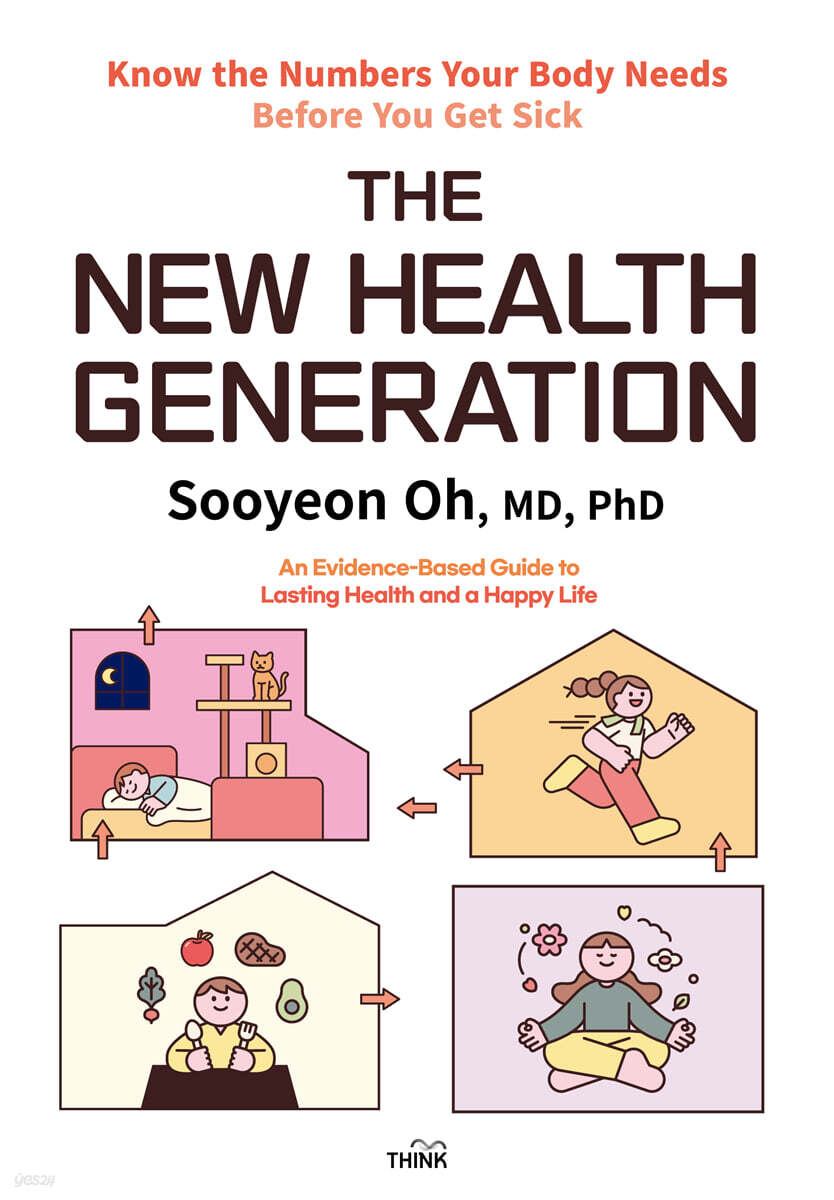
THE NEW HEALTH GENERATION
Know the Numbers Your Body Needs Before You Get Sick
- 이 도서는 『질병 예방 세대』의 영문판 도서입니다.
이미 소장하고 있다면 판매해 보세요.
- 해외배송 가능?
- 문화비소득공제 가능
관련 상품
상세 이미지

책소개
목차
|
Forward: Beyond “Shutting the Stable Door After the Horse Has Bolted”: A Record of Wisdom for Protecting Life
Notes to Readers Prologue: The Paradigm of Disease Is Changing — Prevention! Modern Medicine: It Cannot Fix Everything What Struck My Parents—I Prevent! Which Diseases Should We Prevent? An 18-Year Gap Between Life Expectancy and Healthy Life Expectancy The Disease Continuum: Before It Is Too Late *Figure 1. Continuum from Health to Disease *Summary│ What the New Health Generation Needs to Know Part 1. Diabetes: It Can Be Prevented, and Diet Is the Key Why Diabetes Is Truly Frightening—and Yet Preventable Chapter 1. Carbohydrate What Is the Optimal Intake of Carbohydrates? *Figure 2. U-Shaped Relationship Between Nutrient Intake and Mortality Risk “Why So Little Rice on Your Plate?” *Table 1. Diagnostic Criteria for Diabetes Mellitus *Figure 3. My Daily Carbohydrate Intake from Foods Other Than Rice *Good to Know 1. Glycemic Index and Glycemic Load Don’t Cut Carbs to Zero *Good to Know 2. The Ketogenic Diet and Atherosclerosis *Table 2. Carbohydrate Content of Different Types of Rice *Good to Know 3. If You’d Like to Eat More Fruit An Eating Pattern That Tames Diabetes *Figure 4. Examples of Vegetable Dishes *Quick Note 1. Can I Eat Fruit First? *Summary│A Carbohydrate Strategy for Controlling Diabetes Chapter 2. Alcohol Why Limit Alcohol for Diabetes Prevention Definitions of Heavy and Binge Drinking *Figure 5. What Is a Standard Drink? Evidence Linking Alcohol to Type 2 Diabetes *Summary │ Diabetes and Alcohol —Key Facts Chapter 3. Protein: Could a High-Protein Diet Worsen Glycemic Control? Protein Acts Much Like Carbohydrates in the Body How Much Protein Is Enough? The Hidden Renal Risks of High-Protein Diets “Can I Take Protein Powder?” Is Plant-Based Protein Really Better? What Is the Optimal Plant-to-Animal Protein Ratio? *Good to Know 4. What Is a Limiting Amino Acid? Why Is Plant Protein Better? Daily Protein Intake: What It Looks Like *Figure 6. Animal-Based Foods for 20 g of Protein *Good to Know 5. Common Plant Protein Foods *Good to Know 6. Protein Content of Common Beans (per 1/2 cup, cooked) *Practical Guide 1. Replacing 3% of Daily Energy from Animal Protein with Plant Protein *Summary │ The Truth About Protein Chapter 4. The Paleolithic Diet Why Not Just Follow the Paleo Diet? What Makes the Paleo Diet Compelling? *Figure 7. 1 Bowl of Rice = 3 Big Apples The Paleo Diet: More Plant-Based Than We Think *Figure 8. The Paleo Diet Is More Plant-Based Than You Think Have You Found Truly Lean Meat? Colorectal Cancer: A Concern with the Paleo Diet? TMAO: Another Concern with the Paleo Diet Quick Note 2. Carnitine Supplements A Modified Paleo Diet: Add Legumes Who Should Consider the Paleo Diet? *Summary │ A Safer, Healthier Approach to the Paleo Diet Part 2. Atherosclerosis: Myocardial Infarction and Stroke—Prevention Is the Only Answer A Close Call with a Heart Attack Chapter 1. Hypertension President Roosevelt and Hypertension Complications of Hypertension Diagnostic Criteria for Hypertension The Framingham Heart Study *Summary │ The Silent Threat of Hypertension—aught Through Regular Monitoring Chapter 2. Hyperlipidemia Why Does Hyperlipidemia Occur? Treatment Thresholds for Hyperlipidemia and Cardiovascular Risk Factors Cholesterol: The Lower, the Better! Cholesterol: Can It Be Too Low? “I Want to Raise My HDL-C” “I Want to Check My Small Dense LDL-C” Small dense LDL-C and Carbohydrates Eggs and Cholesterol Dietary Cholesterol and Small Dense LDL-C Familial Hypercholesterolemia Atherosclerosis Prevented by Vegetables Same Pork Belly, Different Arteries *Summary │ Atherosclerosis—topping It Before It Builds Up Chpter 3. Statins Pharmacologic Treatment of Hyperlipidemia Statins and Diabetes Statins, Myopathy, and Coenzyme Q10 Can Supplements Control Hyperlipidemia? Statins and Cancer Statins and Dementia *Summary │ Reassuring Facts About Statins Chapter 4. The Mediterranean Diet Mediterranean Diet: Why So Special? Core Elements of the Mediterranean Diet *Figure 9. Mediterranean Diet Pyramid Cardiovascular Benefits of the Mediterranean Diet Mediterranean Diet Protocol in the Study *Quick Note 3. Olive Oil Shots? *Good to Know 7. Mediterranean Diet Adherence Checklist Types of Olive Oil *Good to Know 8. Acidity Standards for Olive Oil What Makes Olive Oil Special? *Table 3. Fatty Acid Composition of Major Cooking Oils Balancing the Omega-6:Omega-3 Ratio *Good to Know 9. Healthy Saturated Fat Intake Is Olive Oil Suitable for Frying? *Good to Know 10. How to Choose an Oil for Frying Extra Virgin Olive Oil: Expensive, but Worth It Polyphenols: Nature’s Protective Shield *Table 4. Top 20 Readily Available Polyphenol-Rich Foods *Quick Note 4. Mediterranean Diet and TMAO? Want to Reduce Belly Fat? Eat Nuts. *Table 5. Diagnostic Criteria for Metabolic Syndrome The Many Virtues of Beans *Table 6. Nutritional Composition per Serving of Legumes, Nuts, and Whole Grains *Practical Guide 2. Starting a Mediterranean Diet—Right Now! *Summary│The Mediterranean Diet—Golden Rules Part 3. Dementia: Half of It Preventable Dementia: A Chronic Disease That Develops Gradually Amyloid-beta and Alzheimer’s Disease A Request for Genetic Testing Risk Factors for Dementia *Good to Know 11. 14 Modifiable Risk Factors for Dementia Prevention Why Learning Matters — Cognitive Reserve Too Little Sleep, Too Much Sleep Sleep: The Brain’s Cleaning Time Do Sleeping Pills Cause Dementia? Melatonin: More Than a Sleep Aid Can the Shingles Vaccine Prevent Dementia? Avoid Heading in Soccer Cholesterol as a Dementia Risk Factor? The MIND Diet and Cognitive Function Oxysterols and Dementia Bulletproof Coffee, MCT Oil, and Dementia Alcohol for Dementia Prevention? Memory Supplements: Phosphatidylserine? Amyloid-beta Oligomer Testing *Summary│Protect Your Brain! Part 4. Immunity: The Era of Immune Health When People Say Their Immunity Is Low Chapter 1. Immune Health “Please Test My Immunity” *Good to Know 12. Innate and Adaptive Immunity The Immune System Also Ages: Immunosenescence 4 Key Principles for Protecting Your Immunity Are You Eating Well? Micronutrients: The First Step in Immune Health Oxidative Stress: What Is It? *Figure 10. Hormetic Response Exercise That Harnesses Oxidative Stress Exercise to Boost Immunity *Figure 11. Relationship Between Exercise and Immunity Immunosenescence and Exercise Beating Oxidative Stress: Fruits and Vegetables *Figure 12. One Serving of Fruit *Practical Guide 3. Self-Assessment of Oxidative Stress and Exercise Strategies Aim for 7-8 Hours of Sleep *Table 8. Recommended Sleep Duration by Age Group When Immunity Doesn’t Improve *Summary│Strengthening Immunity—tart with the Basics Chapter 2. Chronic Pain and Chronic Inflammation Different “Languages” of Alternative and Modern Medicine A Burning House Needs a Fire Extinguisher Autoantibodies Precede the Diagnosis of Autoimmune Disease by Years *Good to Know 13. What Are Autoantibodies? Rheumatoid Factor and Rheumatoid Arthritis Systemic Lupus Erythematosus and Family History Risk Factors for Autoimmune Disease: What to Avoid *Quick Note 5. Turn Off the Inflammatory Signal with Vitamin D Fibromyalgia: Pain Without a Clear Cause “Even the Brush of Clothing Hurts” The Problem Lies in Digestive Function *Summary │ Put Out Inflammation While It Is Still a Small Fire Chapter 3. Leaky Gut Syndrome and the Gut Microbiome Leaky Gut Syndrome—What Is It? Urticaria and Leaky Gut Syndrome Why Does the Gut Become “Leaky”? Human Gut Microbiota Mucus: The Slimy Companion of the Gut Microbiota The Two Faces of Akkermansia muciniphila Hungry Microbes: “We Want Microbiota-Accessible Carbohydrates!” Do Beans Cause Abdominal Pain? Dietary Fiber and the Gut Microbiota “Chubby microbes” and inflammatory bowel disease Gut Microbiota Testing and Probiotics How Much Dietary Fiber Should We Eat? *Table 9. Dietary Fiber Content per Serving of Major Foods This Can Increase Gut Permeability Do Vegetables Kill Us? The Puzzling World of the Gut Microbiota 25 *Summary│Feed Your Gut Microbes, Too Part 5. Cancer Prevention and Health Screening: Risk Factor Management and Early Detection “Keep Up with Your Health Screenings” Start with Correcting Risk Factors *Table 10. Risk Factors for Major Cancers Are E-Cigarettes Okay? Helicobacter pylori: A Group 1 Carcinogen! The Benefits of Annual Upper Endoscopy Why Repeat a Colonoscopy Before Five Years? *Figure 13. Blind Spots During Colonoscopy Why Is “Early-Onset Colorectal Cancer” Increasing? Sausages Should Be an Occasional Treat Cancer Screening: Public Guidelines and Personal Choices *Table 11. Commonly Recommended Cancer Screening Tests Lung Cancer Screening for Non-Smokers? Mammography and Ultrasound: Why Both Are Needed “Can I Be Screened for Pancreatic Cancer?” Hair Loss Medications and Prostate Cancer Screening Potential Harms of Screening: Radiation Exposure *Figure 14. Medical Radiation Exposure Can Cancer Be Detected with a Blood Test? *Good to Know 14. Sensitivity, Specificity, and Predictive Values *Summary│Today’s Choices, Tomorrow’s Cancer Prevention Part 6. Supplements: Understanding Nutrients and Using Supplements Safely “Supplements” That Should Be Treated Like “Medicine” Understanding Dietary Reference Intakes *Figure 15. Dietary Reference Intakes Vitamin B Complex for Fatigue Why the Half-Life of Nutrients Matters Do Supplements Cause Cancer? Do Supplements Prevent Cancer? Vitamins B6, B9, and B12 and Cancer: Timing Matters Vitamin C and Immune Health High-Dose Vitamin C Therapy and Cancer Choosing the Right Form of Selenium *Quick Note 6. Selenium and Disease Selenium and Cancer Prevention Vitamin D: Daily Doses Rather Than High-Dose Injections *Table 12. Comparison of Vitamin D Level Criteria Calcium: Osteoporosis, Cancer, and Atherosclerosis Vitamin K: Directing Calcium to Bone, Not Arteries NMN: A Magic Bullet for Longevity? NMN: What Vitamin B3 Research Warns Us About What Is the Optimal Dose of NMN? Health Effects of Omega-3 Fatty Acids Omega-3 Supplements and Atrial Fibrillation EPA and DHA: How Much to Take? *Table 13. Omega-3 Content of Common Fish *Summary│Supplements: Weigh the Evidence and Choose Carefully Part 7. Meditation: A Journey Toward Healing—Body and Mind When We Need to Look Within Medical Effects of Meditation Chronic Pain and Mindfulness Meditation Meditation Is Not Placebo, Distraction, or Relaxation What Is Mindfulness? *Practical Guide 4. Even “Spacing Out” Can Be Meditation Creating Space Between Stimulus and Reaction Why Meditation Feels Difficult: Undoing Conditioning Why Active Meditation Is Needed *Practical Guide 5. Meditation Journaling and Emotional Release The Source of Meditation’s Healing Power *Practical Guide 6. Golden Flower Meditation Traditional Medicine and Modern Medicine: Different Perspectives Modern Physics and Energy *Practical Guide 7. Breath Meditation and Heart Meditation Meditation, Enlightenment, and Illness A Different Way of Understanding Illness Ask Your Body! *The Ten Admonitions in the Discourse on the Samadhi of the Jewel King Epilogue References Acknowledgments |
저자 소개 1
내과 전문의·의학박사
차의과학대학교 내과학교실 교수로 재직하며, 차움(Chaum) 면역증강클리닉에서 진료하고 있다. 서울대학교 의과대학을 졸업하고, 동 대학원에서 분자유전체학 석사 및 내과학 박사학위를 받았다. 서울대학교병원에서 인턴·내과 전공의·소화기내과 전임의 수련 과정을 거치며, 내과전문의, 소화기내시경 세부전문의, 소화기내과 분과전문의 자격을 취득하였다. 진료의 폭과 깊이를 더하기 위해, 영양, 보완대체의학, 통합의학, 기능의학, 명상을 공부하였고, 이를 실제 임상 현장에 적용하여 식단·검진·약·영양제·명상의 방법을 아우르는 통합적인 질병 관리 및 예방 전략을 제시해
내과 전문의·의학박사
차의과학대학교 내과학교실 교수로 재직하며, 차움(Chaum) 면역증강클리닉에서 진료하고 있다. 서울대학교 의과대학을 졸업하고, 동 대학원에서 분자유전체학 석사 및 내과학 박사학위를 받았다. 서울대학교병원에서 인턴·내과 전공의·소화기내과 전임의 수련 과정을 거치며, 내과전문의, 소화기내시경 세부전문의, 소화기내과 분과전문의 자격을 취득하였다. 진료의 폭과 깊이를 더하기 위해, 영양, 보완대체의학, 통합의학, 기능의학, 명상을 공부하였고, 이를 실제 임상 현장에 적용하여 식단·검진·약·영양제·명상의 방법을 아우르는 통합적인 질병 관리 및 예방 전략을 제시해 왔다. 방송·신문·매거진 등 다양한 매체에서 면역력, 건강검진, 영양, 비타민 관련 집필과 자문 및 출연을 하고 있으며, 환자 교육용 유튜브 채널(@건강한생활방식)을 운영하고 있다.
차의과학대학교 내과학교실 교수로 재직하며, 차움(Chaum) 면역증강클리닉에서 진료하고 있다. 서울대학교 의과대학을 졸업하고, 동 대학원에서 분자유전체학 석사 및 내과학 박사학위를 받았다. 서울대학교병원에서 인턴·내과 전공의·소화기내과 전임의 수련 과정을 거치며, 내과전문의, 소화기내시경 세부전문의, 소화기내과 분과전문의 자격을 취득하였다. 진료의 폭과 깊이를 더하기 위해, 영양, 보완대체의학, 통합의학, 기능의학, 명상을 공부하였고, 이를 실제 임상 현장에 적용하여 식단·검진·약·영양제·명상의 방법을 아우르는 통합적인 질병 관리 및 예방 전략을 제시해 왔다. 방송·신문·매거진 등 다양한 매체에서 면역력, 건강검진, 영양, 비타민 관련 집필과 자문 및 출연을 하고 있으며, 환자 교육용 유튜브 채널(@건강한생활방식)을 운영하고 있다.
오수연의 다른 상품
품목정보
- 발행일
- 2026년 08월 15일
- 쪽수, 무게, 크기
- 418쪽 | 670g | 145*210*30mm
- ISBN13
- 9791124789063
책 속으로
|
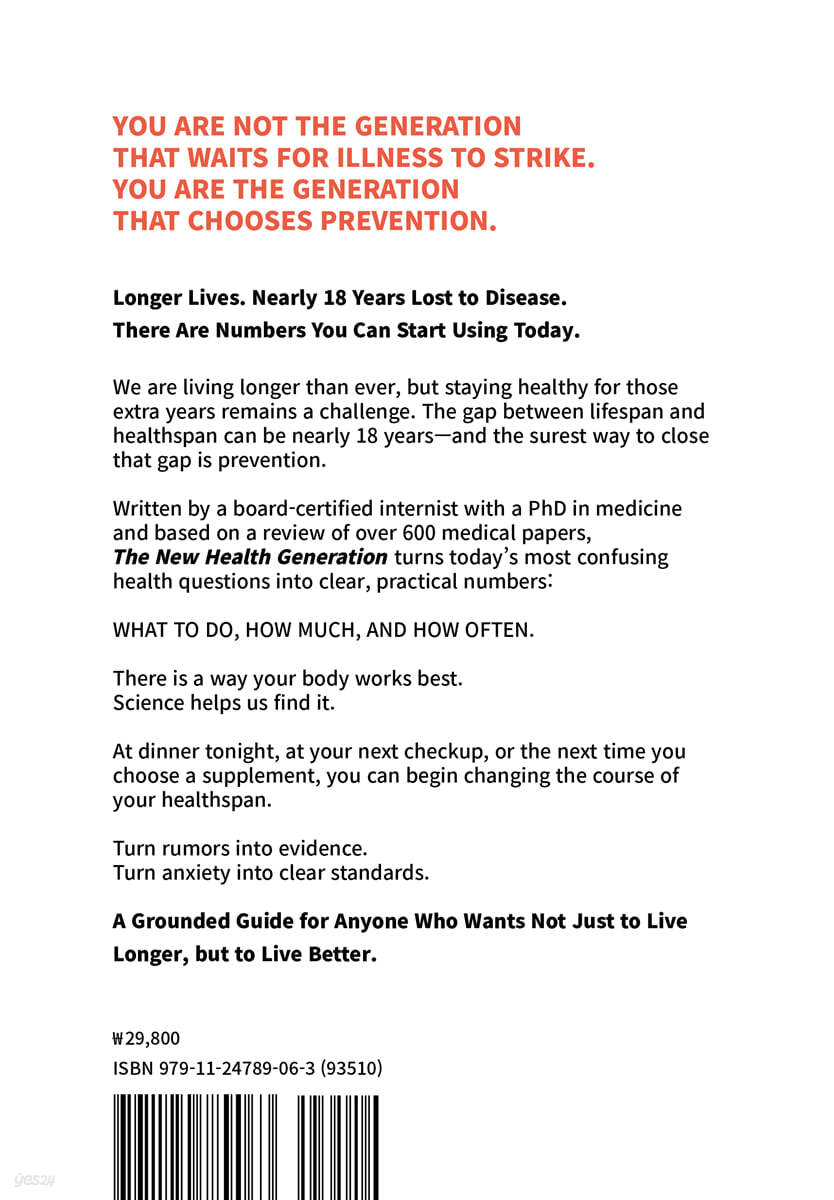
Today, we live under the constant threat of countless diseases. Yet despite the remarkable advances of modern medicine, the most complete treatment ultimately leads us back to one timeless truth: prevention. This book embodies precisely that “eldest brother’s medicine”—practical wisdom for keeping disease at bay and managing one’s health in everyday life.
“I wholeheartedly recommend it to anyone who seeks not merely to live longer, but to live with vitality and dignity.” Caring for patients as an internist taught me two important lessons. First, modern medicine has clear limits. Much of what we do alleviates symptoms, but it cannot undo serious disease once it has progressed. Second, the best treatment is prevention. Although medicine cannot cure many major illnesses once they are firmly established, the hopeful reality is that many diseases can be prevented. In fact, a large proportion of the conditions that burden society arise from modifiable lifestyle factors. For example, someone whose father collapsed from a heart attack may worry whenever chest discomfort occurs. Watching a loved one suffer from illness can be traumatic and may lead to persistent anxiety about one’s own health. When I encounter individuals with such concerns, I say this: “Your parents’ generation was the one struck by disease. Your generation is the one that can prevent it. If you manage dyslipidemia and maintain healthy habits, that kind of heart attack cannot happen to you.” According to recent statistics, life expectancy in Korea was 83.7 years in 2024, while healthy life expectancy was only 65.5 years. This means that although people are living longer than ever, they spend an average of about 18 years living with illness. A similar pattern is observed in many other countries. If life expectancy continues to extend toward 100 years while healthy life expectancy does not increase accordingly, it is conceivable that people could spend as many as 30 years living with disease. Rather than offering vague advice to “manage your lifestyle better,” I intend to present quantitative, evidence-based approaches grounded in research. Is there evidence that plant-based protein is truly better? The Paleo diet and colorectal cancer—should we be concerned? Same pork belly—so why was I the one who developed atherosclerosis? The cardiovascular benefits of the Mediterranean diet “Dementia runs in my family. Should I get genetic testing?” Can sleeping pills increase the risk of dementia? Could shingles vaccination help prevent dementia? What kind of exercise helps support immunity? Can a supplement cause cancer? Vitamins B6, B9, and B12: cancer prevention when young, but cancer promotion after diagnosis? The deeper reason meditation may have healing effects As we have seen throughout this book, countless medical studies have already been conducted. Research has explored how much carbohydrate and meat we should eat, how much fruit and vegetables are beneficial, what criteria we should use when choosing cooking oils, how many hours we should sleep, and how exercise should be timed and balanced with adequate rest and recovery. These findings may seem trivial at first glance, but they are important discoveries—ones that can serve as a compass for managing our daily habits in healthier, more measurable ways. What is unfortunate, however, is that much of this practical knowledge remains hidden from the general public, locked away in academic databases. This book was written through a careful process of verifying the medical accuracy of each sentence while reviewing more than 600 research papers. --- 본문 중에서 |
출판사 리뷰
|
The New Health Generation
Turning Medical Evidence into Everyday Health Decisions Every day, we're surrounded by health advice. Eat less carbohydrate. Eat more protein. Take vitamin D. Avoid seed oils. Try intermittent fasting. Stop taking statins. Start taking NMN. Some advice is supported by strong scientific evidence. Some are based on weak evidence. Some are simply wrong. So how do you know what to trust? The New Health Generation was written to answer that question. Drawing on more than 600 medical studies, internist Dr. Sooyeon Oh translates complex medical research into clear, practical guidance that readers can apply in everyday life. Rather than telling you simply what to do, she explains why the evidence supports it, when it applies, and how to put it into practice. Because better health begins with better decisions. Modern medicine helps us live longer—but not necessarily healthier. Life expectancy continues to increase around the world, yet millions of people spend the final decades of life living with diabetes, heart disease, dementia, cancer, and other chronic illnesses. The greatest challenge today is no longer extending lifespan. It is extending healthspan—the years we remain healthy, independent, and active. Fortunately, many of the diseases we fear most are influenced by lifestyle choices that research has already identified. The problem is not a lack of scientific knowledge. The problem is that most of this knowledge remains hidden in medical journals or is buried beneath an overwhelming amount of conflicting health information. This book bridges that gap. Why you can trust this book Unlike many health books built around personal opinions or individual clinical experience, The New Health Generation is grounded in evidence from more than 600 peer-reviewed medical studies. Every recommendation has been compared, evaluated, and interpreted using the principles of critical appraisal, the evidence-based methodology physicians use to judge the quality and reliability of medical research. The result is not a collection of health tips, but a practical guide built on carefully evaluated scientific evidence. Inside this book, you'll discover: * How to evaluate today's most popular health advice using scientific evidence rather than trends or social media. * How diet, sleep, exercise, supplements, medications, health screening, and stress management work together—not as isolated habits, but as one integrated strategy for preventing chronic disease. * Why the Mediterranean diet consistently ranks among the healthiest dietary patterns—and exactly how to apply the clinical trial protocols to your own meals. * What current research says about statins, omega-3 fatty acids, vitamin D, NMN, melatonin, and other widely discussed supplements and medications. * How sleep influences brain health and immune function, and dementia risk. * How to interpret conflicting information about vitamins, cancer screening, cholesterol, and popular diets without relying on headlines or internet myths. * Practical guidance supported by numbers—not vague advice—including recommended food quantities, protein intake, sleep duration, vitamin D levels, and much more. More than information—an evidence-based way of thinking Health advice often sounds simple: “Eat more vegetables.” “Exercise regularly.” “Sleep well.” But real medicine is rarely that simple. Should the same advice apply to everyone? When does a supplement help—and when might it become harmful? Can the same vitamin help prevent cancer in one situation but increase risk in another? Why might a diet improve blood sugar while still raising concerns for long-term cardiovascular health? Rather than offering one-size-fits-all answers, The New Health Generation teaches readers how to understand medical evidence in context. Instead of asking you to accept expert opinion, it helps you understand why recommendations differ and how evidence should be interpreted. Medical research translated into everyday life Scientific studies often tell us what works. They rarely tell us how to make it work in everyday life. This book does. Clinical trials may recommend four tablespoons of extra virgin olive oil per day, 30 grams of nuts, specific amounts of vegetables and legumes, or carefully defined protein targets. Rather than leaving those numbers inside research papers, The New Health Generation demonstrates how they can realistically fit into everyday meals and daily routines. The same practical approach is applied throughout the book—from choosing cooking oils and protein sources to understanding sleep, supplements, preventive screening, and healthy aging. Written by a physician who believes in prevention before disease begins. As an internist, Dr. Sooyeon Oh reached a simple but powerful conclusion: Modern medicine can treat many diseases, but it cannot always cure them completely. That is why prevention—before disease begins—is our best defense. This philosophy shapes every page of the book. Rather than waiting until disease appears, readers learn how today’s everyday choices influence tomorrow’s health. This book is for readers who want more than health tips. It is for readers who want to understand the evidence behind those tips. Whether you’re trying to reduce your risk of chronic disease, make sense of conflicting health advice, or simply make more confident decisions about your long-term health, The New Health Generation offers an evidence-based roadmap grounded in science and designed for real life. Because living longer is only part of the goal. Living healthier is what truly matters. |
사락 별점0
혜택 및 유의사항밑줄0
혜택 및 유의사항
26,820원
총 1개
26,820원
