
- 판매자
-
책뜰
중고샵 판매자가 직접 등록/판매하는 상품으로 판매자가 해당 상품과 내용에 모든 책임을 집니다.
이미 소장하고 있다면 판매해 보세요.
- 한정판매의 특성상 재고 상황에 따라 품절 가능
중고도서 소개
|
목차
|
Preface and Acknowledgments
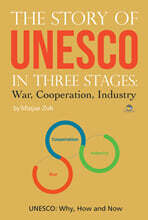
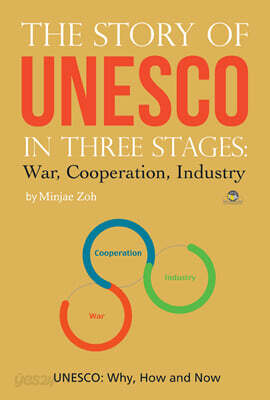
1. Introduction - The Story of UNESCO Three keywords: War, Cooperation, Industry Important concerns: National (Nationalism) to Universal (Universalism) Aims and structure of the book 2. Nationalism and Universalism - Important concerns Nationalism overview Universalism overview Reflections 3. Pre UNESCO - ‘War’ Two World Wars The assassination of Archduke Franz Ferdinand that changed the world The First World War Declared Aftermath: Damage and Death Desperation to find peace The World’s Second Breakdown The Holocaust: discrimination at its worst Reflections Summary of the story: pre UNESCO 4. UNESCO, early years - ‘Cooperation’ Part I - The World Cooperates A cooperative international gathering amid the Second World War The establishment of UNESCO The political decision to move away from politics and move towards culture Repairing Milan: a cooperative and symbolic act Part II - Launching UNESCO’s World Heritage Convention The Nubian Campaign: what it did and what it meant The official 1972 World Heritage Convention Registering a site as ‘World Heritage’ Outstanding Universal Value (OUV) Part III - World Heritage Expansion Physical heritage sites Preserving Documents and Traditions Special-aid heritage De-listing heritage Reflections Summary of the story: the formation years 5. UNESCO today - ‘Industry’ International Committee International Vision International Goal International Recognition International Tourism International Funding Reflections Summary of the story: its international capacity today 6. Conclusions - Steps towards universalism The scope of UNESCO’s universalism Limitations of UNESCO’s universalism Reflections Summary of UNESCO's scopes and limitations of universalism ㆍBibliography ㆍFurther Readings ㆍOnline References ㆍAppendices A - The Universal Declaration of Human Rights (UDHR) B - The Fourteen Points, by Woodrow Wilson C - Details of the meetings for the Nubian Campaign D - The ten criteria for World Heritage Selection E - List of the Director-General of UNESCO since its formation |
저자 소개 1
Dr. Minjae Zoh
University College London (UCL, 영국) 고고학 학사(BA)
University College London (UCL, 영국) 공공 고고학 석사(MA)
University of Cambridge(영국) 문화유산 철학박사(Ph.D.)
조민재 박사는 1991년에 서울에서 태어나, 1996년 아버지의 유학을 위해 온 가족이 영국으로 갈 때에 함께 영국에 건너가 영국에서 초등학교부터 박사 과정까지 23년간 교육을 받았다. 학부와 대학원에서는 고고학을 전공하였고, ‘독재정권과 문화유산의 관계를 이론적으로 고찰’하여 Authorised Dictatorial D
University College London (UCL, 영국) 고고학 학사(BA)
University College London (UCL, 영국) 공공 고고학 석사(MA)
University of Cambridge(영국) 문화유산 철학박사(Ph.D.)
조민재 박사는 1991년에 서울에서 태어나, 1996년 아버지의 유학을 위해 온 가족이 영국으로 갈 때에 함께 영국에 건너가 영국에서 초등학교부터 박사 과정까지 23년간 교육을 받았다. 학부와 대학원에서는 고고학을 전공하였고, ‘독재정권과 문화유산의 관계를 이론적으로 고찰’하여 Authorised Dictatorial Discourse(ADD) 이론을 발표함으로 2019년에 영국 케임브리지대학교에서 박사학위를 취득하였다. 조민재 박사는 현재 서울대학교 아시아연구소 HK연구교수로 아시아의 문화유산과 세계문화유산을 연구하고 있다.
저서
『The Impacts of Dictatorship on Heritage Management』 Vernon Press, 2020
『석·박사 논문 작성법 꿀팁』 조민혜, 조민재, 조병호 공저 / 통독원, 2021
B.A. in Archaeology, University College London
M.A. in Public Archaeology, University College London
Ph.D. in Heritage Studies, University of Cambridge
Minjae Zoh was awarded her Ph.D. in Heritage Studies from the University of Cambridge in 2019. Her doctoral dissertation investigated the relationship between dictatorship and heritage, particularly how a 'dictatorial discourse' is implemented during dictatorial regimes. Her former degrees were in Archaeology and Public Archaeology, both obtained from University College of London. Dr. Minjae Zoh is currently a Research Professor at Seoul National University Asia Centre conducting research on Asia's diverse heritage.
University College London (UCL, 영국) 공공 고고학 석사(MA)
University of Cambridge(영국) 문화유산 철학박사(Ph.D.)
조민재 박사는 1991년에 서울에서 태어나, 1996년 아버지의 유학을 위해 온 가족이 영국으로 갈 때에 함께 영국에 건너가 영국에서 초등학교부터 박사 과정까지 23년간 교육을 받았다. 학부와 대학원에서는 고고학을 전공하였고, ‘독재정권과 문화유산의 관계를 이론적으로 고찰’하여 Authorised Dictatorial Discourse(ADD) 이론을 발표함으로 2019년에 영국 케임브리지대학교에서 박사학위를 취득하였다. 조민재 박사는 현재 서울대학교 아시아연구소 HK연구교수로 아시아의 문화유산과 세계문화유산을 연구하고 있다.
저서
『The Impacts of Dictatorship on Heritage Management』 Vernon Press, 2020
『석·박사 논문 작성법 꿀팁』 조민혜, 조민재, 조병호 공저 / 통독원, 2021
B.A. in Archaeology, University College London
M.A. in Public Archaeology, University College London
Ph.D. in Heritage Studies, University of Cambridge
Minjae Zoh was awarded her Ph.D. in Heritage Studies from the University of Cambridge in 2019. Her doctoral dissertation investigated the relationship between dictatorship and heritage, particularly how a 'dictatorial discourse' is implemented during dictatorial regimes. Her former degrees were in Archaeology and Public Archaeology, both obtained from University College of London. Dr. Minjae Zoh is currently a Research Professor at Seoul National University Asia Centre conducting research on Asia's diverse heritage.
품목정보
- 발행일
- 2020년 09월 30일
- 쪽수, 무게, 크기
- 121쪽 | 152*225*20mm
- ISBN13
- 9791190540155
출판사 리뷰
|
The inspiration to write this book followed after giving an undergraduate lecture titled: UNESCO, from Cooperation to Competition. The aim of this lecture was to discuss and argue how there has been a shift in UNESCO; how the overall focus in terms of its perspective and impact has considerably transitioned from international cooperation to global competition. In order to make this argument, it was necessary to explain and cover the background context of UNESCO regarding how and why it began, what internal and external factors drove its core values and what aspects have remained the same and what has changed.
Whilst putting the lecture together, it occurred to me that it would be beneficial to write a story book about UNESCO. Many people are aware of what UNESCO stands for and what it does but what is comparably lesser known is the deeply political and violent historical background that spurred the world leaders to launch and develop the international organisation that became UNESCO. As UNESCO continues to expand into the public’s consciousness and as it broadens its territories in terms of more World Heritage nominations and global projects, it is beneficial to be aware of the historical procedures that created and developed UNESCO in order to better understand the impact UNESCO creates in the modern world. A great deal of information that this book deals with can be found scattered online and in various publications. In other words, this book is by no means the first to layout the history of UNESCO. However, what this book aims to do is to bring the scattered information and interpretations together into one space so that there is a comprehensive and engaging storyboard presented. |
상품정보안내
- 주문 전 중고상품의 정확한 상태 및 재고 문의는 [판매자에게 문의하기]를 통해 문의해 주세요.
- 주문완료 후 중고상품의 취소 및 반품은 판매자와 별도 협의 후 진행 가능합니다. 마이페이지 > 주문내역 > 주문상세 > 판매자 정보보기 > 연락처로 문의해 주세요.
부적합 상품 신고하기
신고하기- 구매에 부적합한 상품은 신고해주세요.
- 구매하신 상품의 상태, 배송, 취소 및 반품 문의는 판매자 묻고 답하기를 이용해주세요.
- 상품정보 부정확(카테고리 오등록/상품오등록/상품정보 오등록/기타 허위등록) 부적합 상품(청소년 유해물품/기타 법규위반 상품)
- 전자상거래에 어긋나는 판매사례: 직거래 유도
5,500원
총 1개
5,500원
