
이미 소장하고 있다면 판매해 보세요.
- 국내배송만 가능
- 해외 거래처 사정에 의하여 품절/지연 가능
- 도서 정보 중 미표기 사항 안내?
- 문화비소득공제 가능
책소개
목차
|
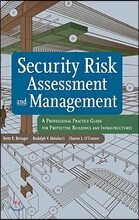
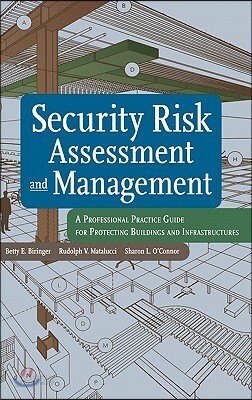
Figures xv Tables xix Preface xxi Acknowledgments xxv Part I 1 1 Security Risk Assessment and Management Process 3 1.1 Introduction 3 1.2 Security Risk Equation 6 1.3 Security Risk Assessment and Management Process 8 1.3.1 Facility Characterization 9 1.3.2 Threat Analysis 10 1.3.3 Consequence Analysis 11 1.3.4 System Effectiveness Assessment 13 1.3.5 Risk Estimation 16 1.3.6 Comparison of Estimated Risk Levels 17 1.3.7 Risk Reduction Strategies 17 1.4 Presentation to Management 18 1.5 Risk Management Decisions 18 1.6 Information Protection 19 1.7 Process Summary 19 1.8 References 20 1.9 Exercises 21 2 Screening Analysis 23 2.1 Introduction 23 2.2 Screening Analysis Methods 23 2.3 Summary 30 2.4 References 30 2.5 Exercises 30 3 Facility Characterization 31 3.1 Introduction 31 3.2 Undesired Events 32 3.3 Facility Description 33 3.3.1 Physical Details 33 3.3.2 Cyber-Information System 34 3.3.3 Facility Operations 34 3.3.4 Security Protection Systems 35 3.3.5 Workforce Description 38 3.3.6 Restrictions, Requirements, Limitations 39 3.4 Critical Assets 40 3.4.1 Generic Fault Tree 40 3.4.2 Identifying Critical Assets 42 3.5 Protection Objectives 44 3.6 Summary 45 3.7 References 46 3.8 Exercises 46 4 Threat Analysis 49 4.1 Introduction 49 4.2 Sources of Threat Information 50 4.2.1 Local and State Sources 51 4.2.2 National Sources 52 4.3 Adversary Spectrum 53 4.4 Adversary Capability 56 4.5 Threat Potential for Attack 58 4.5.1 Outsider Threat 62 4.5.2 Insider Threat 69 4.6 Summary 71 4.7 References 71 4.8 Exercises 72 5 Consequence Analysis 75 5.1 Introduction 75 5.2 Reference Table of Consequences 75 5.3 Consequence Values for Undesired Events 77 5.4 Summary 81 5.5 References 81 5.6 Exercises 81 6 Asset Prioritization 83 6.1 Introduction 83 6.2 Prioritization Matrix 84 6.3 Summary 85 6.4 References 85 6.5 Exercises 86 7 System Effectiveness 87 7.1 Introduction 87 7.2 Protection System Effectiveness 88 7.2.1 Adversary Strategies 88 7.2.2 Physical Protection System Effectiveness 90 7.2.3 Cyber-Protection System Effectiveness 106 7.3 Summary 116 7.4 References 117 7.5 Exercises 118 8 Estimating Security Risk 121 8.1 Introduction 121 8.2 Estimating Security Risk 121 8.2.1 Conditional Risk 122 8.2.2 Relative Risk 122 8.3 Summary 125 8.4 References 125 8.5 Exercises 125 9 Risk Reduction Strategies 127 9.1 Introduction 127 9.2 Strategies for Reducing Likelihood of Attack 127 9.3 Strategies for Increasing Protection System Effectiveness 129 9.3.1 Physical Protection System Upgrades 129 9.3.2 Cyber-Protection System Upgrades 129 9.3.3 Protection System Upgrade Package(s) 129 9.4 Strategies for Mitigating Consequences 132 9.4.1 Construction Hardening 133 9.4.2 Redundancy 141 9.4.3 Optimized Recovery Strategies 143 9.4.4 Emergency Planning 145 9.5 Combinations of Reduction Strategies 148 9.6 Summary 149 9.7 References 150 9.8 Exercises 151 10 Evaluating Impacts 153 10.1 Risk Level 153 10.2 Costs 157 10.3 Operations/Schedules 159 10.4 Public Opinion 160 10.5 Other Site-Specific Concerns 160 10.6 Review Threat Analysis 161 10.7 Summary 162 10.8 References 162 10.9 Exercises 163 11 Risk Management Decisions 165 11.1 Introduction 165 11.2 Risk Assessment Results 166 11.2.1 Executive Summary 167 11.2.2 Introduction 167 11.2.3 Threat Analysis 168 11.2.4 Consequence Analysis 168 11.2.5 System Effectiveness Assessment 169 11.2.6 Risk Estimation 169 11.2.7 Risk Reduction Strategies and Packages 170 11.2.8 Impact Analysis 170 11.2.9 Supporting Documentation 171 11.2.10 Report Overview 171 11.3 Risk Management Decisions 171 11.4 Establish Design Threat 173 11.5 Summary 174 11.6 References 174 11.7 Exercises 174 12 Summary 175 12.1 Facility Characterization 177 12.2 Threat Analysis 178 12.3 Consequence Analysis 180 12.4 System Effectiveness Assessment 180 12.5 Risk Estimation 182 12.6 Comparison of Estimated Risk Level to Threshold 183 12.7 Risk Reduction Strategies 183 12.8 Analysis of Impacts Imposed by Risk Reduction Upgrade Packages 184 12.9 Presentation to Management 185 12.10 Risk Management Decisions 185 Part II 187 13 Demonstration of the Security Risk Assessment and Management Process 189 13.1 Introduction 189 13.2 Security Risk Assessment and Management Process 190 13.3 Screening Analysis 192 13.4 Facility Characterization 195 13.5 Operations 196 13.6 General Description 198 13.7 Threat 214 13.8 Consequences 228 13.9 Prioritization Analysis 238 13.10 Protection System Effectiveness 243 13.10.1 Physical Protection System Effectiveness 245 13.10.2 Analysis of Blast Effects 264 13.11 Estimation of Risk 269 13.11.1 Risk Summary 269 13.12 Risk Reduction Strategies 272 13.12.1 Physical Protection System Upgrades 273 13.12.2 Result of Physical Protection System Upgrades 276 13.12.3 Cyber-Protection System Upgrades 280 13.12.4 Results of Cyber-Protection System Upgrades 281 13.12.5 Consequence Mitigation Upgrades 281 13.12.6 Summary 284 13.13 Impact Analysis 285 13.13.1 Impacts of Upgrade Package 285 13.13.2 Impacts of Consequence Mitigation Package 288 13.14 Presentation to Management 288 13.14.1 Threat Description 289 13.14.2 Security Risk Estimates for the Baseline System 289 13.14.3 Risk Reduction Packages 290 13.14.4 Impact Analysis for Risk Reduction Package 294 13.15 Risk Management Decisions 295 Appendix A: Generic Fault Tree for Buildings 297 Appendix B: Adversary Sequence Diagrams 303 Appendix C: Physical System Effectiveness Worksheets 309 Appendix D: Insider Threat 329 Acronyms 345 Glossary 347 Index 353 |
저자 소개
RUDOLPH V. MATALUCCI, PhD, PE, is a retired Lieutenant Colonel in the United States Air Force and President of Rudolph Matalucci Consultants, Inc. Prior to starting his consulting firm, Dr. Matalucci was a project engineer/manager for Sandia National Laboratories, where he directed numerous risk-related projects for the Department of Energy, the Department of Defense, several other government agencies, and private organizations. He has developed, validated, implemented, and taught risk assessment methodologies for dams/locks/levees, electric power generation/transmission facilities, buildings, and other infrastructures.
SHARON L. O'CONNOR is a Principal Member of the Laboratory Staff in the Security Systems and Technology Center at Sandia National Laboratories. For the last ten years, she has supported Architectural Suretyⓒ and security risk assessment work. Her baccalaureate degree is from the University of New Mexico.
품목정보
- 발행일
- 2007년 02월 20일
- 쪽수, 무게, 크기
- 384쪽 | 703g | 164*243*27mm
- ISBN13
- 9780471793526
리뷰/한줄평0
상품정보안내
(판형과 판수 등이 다양한 도서는 찾으시는 도서의 ISBN을 알려 주시면 보다 빠르고 정확한 안내가 가능합니다.)
해외거래처에서 품절인 경우, 2차 거래선을 통해 유럽과 미국 출판사로 직접 수입이 진행될 수 있습니다.
수입 진행 시점으로 부터 2~3주가 추가로 소요되며, 해외에서도 유통이 원활하지 않은 도서는 품절 안내가 지연될 수 있습니다.
해당 경우, 문자와 메일로 별도 안내를 드리고 있사오니 마이페이지에서 휴대전화번호와 메일주소를 다시 한번 확인해주시기 바랍니다.