

소득공제
수입
직수입양서
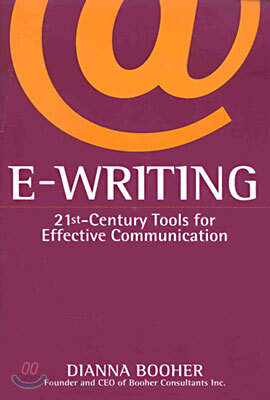
E-Writing: 21st-Century Tools for Effective Communication
21St-Century Tools for Effective Communication
Paperback
Booher, Dianna
Gallery Books
2001.02.01.
이미 소장하고 있다면 판매해 보세요.
- 국내배송만 가능
- 해외 거래처 사정에 의하여 품절/지연 가능
- 도서 정보 중 미표기 사항 안내?
- 문화비소득공제 가능
책소개
목차
|
Introduction : Writing Electronically
PART 1: E-MAIL EXCHANGE 1. Select the Right Medium to Communicate 2. Follow the Rules of E-Mail Etiquette to Create Proper Image 3. Compose Clear. to-the-Point Messages 4. Aim to Get Attention for Your Own E-Mail 5. Manage High-Volume E-Mail Effectively 6. Become Savvy About E-Mail Mechanics 7. Make Sure You're Legal PART 2: THE E-WRITING CULTURE 8. Counterproductive Comunication Habits PART 3 : WRITING ON PAPER OR ONLINE 9. Step 1 : Consider Your Audience for the Proper Approach 10. Step 2 : Anticipate Special Reader Reactions 11. Step 3 : Outline Your Message Functionally 12. Step 4 : Develop the First Draft Quickly PART 4. STEP 5 : EDIT FOR CONTENT AND LAYOUT, GRAMMAR, CLARITY, CONCISENESS, AND SYLE 13. Edit for Content and Layout 14. Edit for Grammar 15. Edit for Clarity 16. Edit for Conciseness 17. Edit for Style PART 5. LET'S GET TECHNICAL 18. Guidelines for Document Variations on the MADE Format Derectives Transmittals Requests for Voluntary Action Negative Responses Complaints Apologies Accomplishment or Status Reports 19. Meeting Minutes 20. Service and Inspection Reports 21. Procedures 22. Formal Technical Reports 23. Proposals 24. Websites A Final Note to the Reader Bibliography Appendix A : Grammar Glossary Appendix B :Answers to Spelling Awareness Exercise Acknowledgments Other Resources By Dianna Booher Avalable from Booher Consultants For More Information Index |
관련 분류
품목정보
- 발행일
- 2001년 02월 01일
- 쪽수, 무게, 크기
- 387쪽 | 크기확인중
- ISBN13
- 9780743412582
사락 별점0
혜택 및 유의사항밑줄0
혜택 및 유의사항상품정보안내
직수입외서의 경우, 해외거래처에서 제공하는 정보가 부족하여 제목, 표지, 가격, 유통상태 등의 정보가 미비하거나 변경되는 경우가 있습니다. 정확한 확인을 원하시는 경우, 일대일 상담으로 문의하여 주시면 답변 드리겠습니다.
(판형과 판수 등이 다양한 도서는 찾으시는 도서의 ISBN을 알려 주시면 보다 빠르고 정확한 안내가 가능합니다.)
해외거래처에서 품절인 경우, 2차 거래선을 통해 유럽과 미국 출판사로 직접 수입이 진행될 수 있습니다.
수입 진행 시점으로 부터 2~3주가 추가로 소요되며, 해외에서도 유통이 원활하지 않은 도서는 품절 안내가 지연될 수 있습니다.
해당 경우, 문자와 메일로 별도 안내를 드리고 있사오니 마이페이지에서 휴대전화번호와 메일주소를 다시 한번 확인해주시기 바랍니다.
(판형과 판수 등이 다양한 도서는 찾으시는 도서의 ISBN을 알려 주시면 보다 빠르고 정확한 안내가 가능합니다.)
해외거래처에서 품절인 경우, 2차 거래선을 통해 유럽과 미국 출판사로 직접 수입이 진행될 수 있습니다.
수입 진행 시점으로 부터 2~3주가 추가로 소요되며, 해외에서도 유통이 원활하지 않은 도서는 품절 안내가 지연될 수 있습니다.
해당 경우, 문자와 메일로 별도 안내를 드리고 있사오니 마이페이지에서 휴대전화번호와 메일주소를 다시 한번 확인해주시기 바랍니다.
34,570원
총 1개
34,570원