
소득공제
외서
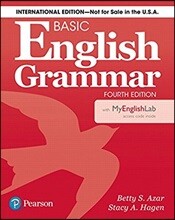
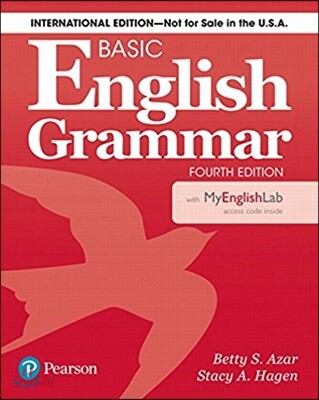
A Basic English Grammar 4e Student Book with MyEnglishLab, International Edition
Paperback, 4th Edition, International Edition
Azar, Betty S. / Hagen, Stacy A.
Pearson Education ESL
2017.02.02.
- 3월 입고예정입니다
이미 소장하고 있다면 판매해 보세요.
- 국내배송만 가능
- 문화비소득공제 가능
Azar : English Grammar 4판
-
 A Basic English Grammar 4e Student Book with MyEnglishLab, International Edition 이동A Basic English Grammar 4e Student Book with MyEnglishLab, International Edition48,000원
 -
Fundamentals Of English Grammar : Student Book + MyLab English, 4/E 이동Fundamentals Of English Grammar : Student Book + MyLab English, 4/E53,000원
-
Basic English Grammar : Student Book A + Essential Online Resources, 4/E 이동Basic English Grammar : Student Book A + Essential Online Resources, 4/E33,000원
-
Fundamentals Of English Grammar : Student Book A + Essential Online Resources, 4/E 이동Fundamentals Of English Grammar : Student Book A + Essential Online Resources, 4/E33,000원
-
Fundamentals Of English Grammar : Student Book B + Essential Online Resources, 4/E 이동Fundamentals Of English Grammar : Student Book B + Essential Online Resources, 4/E33,000원
-
Basic English Grammar : Student Book B + Essential Online Resources, 4/E 이동Basic English Grammar : Student Book B + Essential Online Resources, 4/E33,000원
-
Basic English Grammar : Workbook B With Answer Key, 4/E 이동Basic English Grammar : Workbook B With Answer Key, 4/E5% 26,600원
-
Basic English Grammar Student Book with Answer Key, International Version 이동Basic English Grammar Student Book with Answer Key, International Version133,800원
-
Fundamentals of English Grammar, 4/E: Teacher's Guide 이동Fundamentals of English Grammar, 4/E: Teacher's Guide10% 30,600원
-
Fundamentals of English Grammar, 4/E: Student Book with CD 이동Fundamentals of English Grammar, 4/E: Student Book with CD15% 22,100원
-
Fundamentals of English Grammar, 4/E: Student Book B 이동Fundamentals of English Grammar, 4/E: Student Book B15% 16,150원
-
Fundamentals of English Grammar, 4/E : Student Book A 이동Fundamentals of English Grammar, 4/E : Student Book A10% 17,100원
-
Fundamentals of English Grammar Workbook Volume B, 4/E 이동Fundamentals of English Grammar Workbook Volume B, 4/E5% 22,800원
-
Fundamentals of English Grammar Workbook, Volume a 이동Fundamentals of English Grammar Workbook, Volume a5% 22,800원
-
Fundamentals of English Grammar (4/E) : Workbook 이동Fundamentals of English Grammar (4/E) : Workbook5% 31,350원
-
Fundamentals of English Grammar : Student Book with Answer Key, Audio CD 이동Fundamentals of English Grammar : Student Book with Answer Key, Audio CD20% 28,000원
-
Understanding and Using English Grammar, 4/E : Workbook (A+B 합본) 이동Understanding and Using English Grammar, 4/E : Workbook (A+B 합본)10% 48,580원
-
Understanding and Using English Grammar, 4/E : Teacher's Guide 이동Understanding and Using English Grammar, 4/E : Teacher's Guide10% 36,000원
-
Understanding and Using English Grammar, 4/E : Testbank 이동Understanding and Using English Grammar, 4/E : Testbank10% 31,500원
-
Understanding and Using English Grammar, 4/E : Student Book 이동Understanding and Using English Grammar, 4/E : Student Book15% 32,300원
-
Understanding and Using English Grammar, 4/E : CD-Rom (Examview Assessment) 이동Understanding and Using English Grammar, 4/E : CD-Rom (Examview Assessment)10% 32,400원
-
Understanding and Using English Grammar, 4/E : Workbook B 이동Understanding and Using English Grammar, 4/E : Workbook B10% 13,500원
-
Understanding and Using English Grammar, 4/E : Student Book B 이동Understanding and Using English Grammar, 4/E : Student Book B10% 22,500원
-
Understanding and Using English Grammar Answer Key 이동Understanding and Using English Grammar Answer Key10% 17,100원
-
Understanding and Using English Grammar, 4/E : Workbook A 이동Understanding and Using English Grammar, 4/E : Workbook A10% 13,500원
-
Understanding and Using English Grammar, 4/E : Student Book A 이동Understanding and Using English Grammar, 4/E : Student Book A10% 22,500원
책소개
목차
|
Chapter 1 USING BE
1-1 Singular pronouns + be 1-2 Plural pronouns + be 1-3 Singular nouns + b 1-4 Plural nouns + be 1-5 Contractions with be 1-6 Negative with be 1-7 Be + adjective 1-8 Be + a place 1-9 Summary: basic sentence patterns with be Chapter 2 USING BE AND HAVE 2-1 Yes/no questions with be 2-2 Short answers to yes/no questions 2-3 Questions with be using where 2-4 Using have and has 2-5 Using my , your , her , his , our , their 2-6 Using this and that 2-7 Using these and those 2-8 Asking questions with what and who + be Chapter 3 USING THE SIMPLE PRESENT 3-1 Form and basic meaning of the simple present tense 3-2 Frequency adverbs 3-3 Position of frequency adverbs 3-4 Spelling and pronunciation of final -es 3-5 Adding final -s / -es to words that end in -y 3-6 Irregular singular verbs: has , does , goes 3-7 Like to , want to , need to 3-8 Simple present tense: negative 3-9 Simple present tense: yes/no questions 3-10 Simple present tense: asking information questions with where and what 3-11 Simple present tense: asking information questions with when and what time Chapter 4 USING THE PRESENT PROGRESSIVE 4-1 Be + -ing the present progressive 4-2 Spelling of -ing 4-3 Present progressive: negatives 4-4 Present progressive: questions 4-5 Simple present tense vs. the present progressive 4-6 Non-action verbs not used in the present progressive 4-7 See , look at , watch , hear , and listen to 4-8 Think about and think that Chapter 5 TALKING ABOUT THE PRESENT 5-1 Using it to talk about time 5-2 Prepositions of time 5-3 Using it and what to talk about the weather 5-4 There + be 5-5 There + be yes/no questions 5-6 There + be asking questions with how many 5-7 Prepositions of place 5-8 More prepositions of place: a list 5-9 Would like 5-10 Would like vs. like Chapter 6 NOUNS AND PRONOUNS 6-1 Nouns: subjects and objects 6-2 Nouns as objects of prepositions 6-3 Adjectives with nouns 6-4 Subject pronouns and object pronouns 6-5 Nouns: singular and plural forms 6-6 Nouns: irregular plural forms 6-7 Possessive pronouns: mine , yours , his , hers , ours , theirs 6-8 Possessive nouns 6-9 Questions with whose 6-10 Possessive: irregular plural nouns Chapter 7 COUNT AND NONCOUNT NOUNS 7-1 Nouns: count and noncount 7-2 Using a vs. an 7-3 Using a / an vs. some 7-4 Measurements with noncount nouns 7-5 Using many , much , a few , a little 7-6 Using the 7-7 Using O (no article) to make generalizations 7-8 Using some and any Chapter 8 EXPRESSING PAST TIME, PART 1 8-1 Using be past time 8-2 Simple past tense of be negative 8-3 Past of be questions 8-4 Simple past tense: using --ed 8-5 Past time words: yesterday , last , and ago 8-6 Simple past tense: irregular verbs (Group 1) 8-7 Simple past tense: negative 8-8 Simple past tense: yes/no questions 8-9 Simple past tense: irregular verbs (Group 2) 8-10 Simple past tense: irregular verbs (Group 3) 8-11 Simple past tense: irregular verbs (Group 4) Chapter 9 EXPRESSING PAST TIME, PART 2 9-1 Simple past tense: using where , why , when , and what time 9-2 Questions with what 9-3 Questions with who and whom 9-4 Simple past tense: irregular verbs (Group 5) 9-5 Simple past tense: irregular verbs (Group 6) 9-6 Simple past tense: irregular verbs (Group 7) 9-7 Before and after in time clauses 9-8 When in time clauses 9-9 Present progressive and past progressive 9-10 Using while with past progressive 9-11 Simple past tense vs. past progressive Chapter 10 EXPRESSING FUTURE TIME, PART 1 10-1 Future time: using be going to 10-2 Using present progressive to express future time 10-3 Words used for past time and future time 10-4 Using a couple of or a few with ago (past) and in (future) 10-5 Using today , tonight , and this + morning , afternoon , evening , week , month , year 10-6 Future time: using will 10-7 Asking questions with will 10-8 Verb summary: present, past, and future 10-9 Verb summary: forms of be Chapter 11 EXPRESSING FUTURE TIME, PART 2 11-1 May / might vs. will 11-2 Maybe (one word) vs. may be (two words) 11-3 Future time clauses with before , after , and when 11-4 Clauses with if 11-5 Expressing future and habitual present with time clauses and if -clauses 11-6 Using what + a form of do Chapter 12 MODALS, PART 1: EXPRESSING ABILITY 12-1 Using can 12-2 Pronunciation of can and can't 12-3 Using can questions 12-4 Using know how to 12-5 Using could past of can 12-6 Using be able to 12-7 Using very and too + adjective Chapter 13 MODALS, PART 2: ADVICE, NECESSITY, REQUESTS, SUGGESTIONS 13-1 Using should 13-2 Using have + infinitive ( have to / has to / had to ) 13-3 Using must , have to / has to , and should 13-4 Polite questions: may I , could I , and can I 13-5 Polite questions: could you and would you 13-6 Imperative sentences 13-7 Modal auxiliaries 13-8 Summary chart: modal auxiliaries and similar expressions 13-9 Using let's Chapter 14 NOUNS AND MODIFIERS 14-1 Modifying nouns with adjectives and nouns 14-2 Word order of adjectives 14-3 Linking verbs + adjectives 14-4 Adjectives and adverbs 14-5 Expressions of quantity: all of , most of , some of , almost all of 14-6 Expressions of quantity: subject-verb agreement 14-7 Using every , everyone , everybody , everything 14-8 Indefinite pronouns: something , someone , somebody , anything , anyone , anybody Chapter 15 MAKING COMPARISONS 15-1 The comparative: using -er and more 15-2 The superlative: using -est and most 15-3 Using one of + superlative + plural noun 15-4 Making comparisons with adverbs 15-5 Comparisons: using the same ( as ), similar ( to ), and different ( from ) 15-6 Comparisons: using like and alike 15-7 Using but 15-8 Using verbs after but Appendix 1 English Handwriting Appendix 2 Numbers Appendix 3 Ways of Saying Time Appendix 4 Days/Months/Seasons Appendix 5 Supplementary Charts A5-1 Basic capitalization rules A5-2 Voiceless and voiced sounds for -s endings on verbs A5-3 Final -ed pronunciation for simple past verbs Listening Script Let's Talk: Answers |
관련 분류
품목정보
- 발행일
- 2017년 02월 02일
- 쪽수, 무게, 크기
- 510쪽 | 840g | 201*251*35mm
- ISBN13
- 9780134661155
사락 별점0
혜택 및 유의사항밑줄0
혜택 및 유의사항상품정보안내
직수입외서의 경우, 해외거래처에서 제공하는 정보가 부족하여 제목, 표지, 가격, 유통상태 등의 정보가 미비하거나 변경되는 경우가 있습니다. 정확한 확인을 원하시는 경우, 일대일 상담으로 문의하여 주시면 답변 드리겠습니다.
(판형과 판수 등이 다양한 도서는 찾으시는 도서의 ISBN을 알려 주시면 보다 빠르고 정확한 안내가 가능합니다.)
해외거래처에서 품절인 경우, 2차 거래선을 통해 유럽과 미국 출판사로 직접 수입이 진행될 수 있습니다.
수입 진행 시점으로 부터 2~3주가 추가로 소요되며, 해외에서도 유통이 원활하지 않은 도서는 품절 안내가 지연될 수 있습니다.
해당 경우, 문자와 메일로 별도 안내를 드리고 있사오니 마이페이지에서 휴대전화번호와 메일주소를 다시 한번 확인해주시기 바랍니다.
(판형과 판수 등이 다양한 도서는 찾으시는 도서의 ISBN을 알려 주시면 보다 빠르고 정확한 안내가 가능합니다.)
해외거래처에서 품절인 경우, 2차 거래선을 통해 유럽과 미국 출판사로 직접 수입이 진행될 수 있습니다.
수입 진행 시점으로 부터 2~3주가 추가로 소요되며, 해외에서도 유통이 원활하지 않은 도서는 품절 안내가 지연될 수 있습니다.
해당 경우, 문자와 메일로 별도 안내를 드리고 있사오니 마이페이지에서 휴대전화번호와 메일주소를 다시 한번 확인해주시기 바랍니다.
