
소득공제
외서
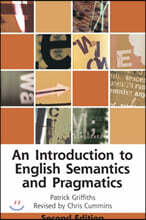
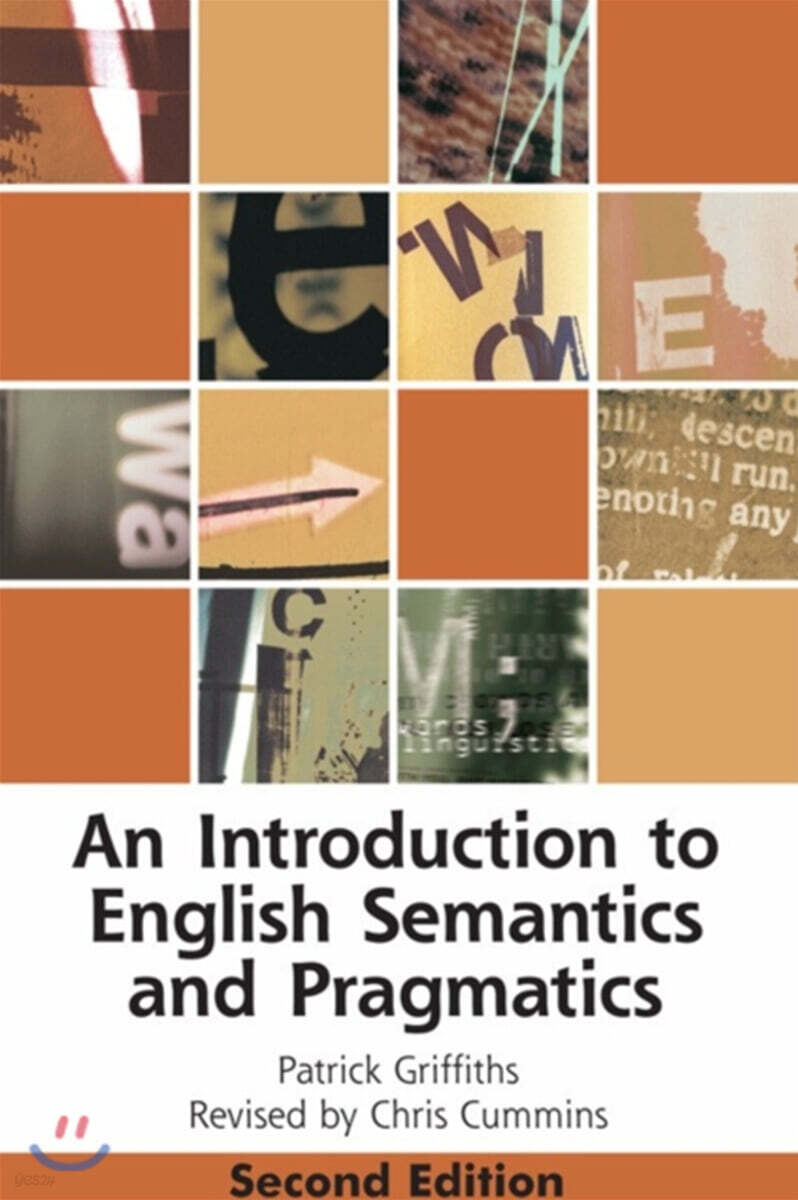
An Introduction to English Semantics and Pragmatics, 2/E
Paperback, 2nd Edition
Edinburgh University Press
2017.01.01.
이미 소장하고 있다면 판매해 보세요.
- 국내배송만 가능
- 문화비소득공제 가능
Edinburgh Textbooks on the English Language
-
 An Introduction to English Morphology: Words and Their Structure 이동An Introduction to English Morphology: Words and Their Structure26,000원
 -
An Introduction to English Semantics and Pragmatics, 2/E 이동An Introduction to English Semantics and Pragmatics, 2/E25,000원
-
An Introduction to International Varieties of English 이동An Introduction to International Varieties of English10% 38,160원
-
An Introduction to English Morphology : Words and Their Structure 이동An Introduction to English Morphology : Words and Their Structure23,000원
책소개
목차
|
Preface to the second edition
1. Studying meaning Overview 1.1 Sentences and utterances 1.2 Types of meaning 1.2.1 Denotation, sense, reference and deixis 1.3 Semantics vs. pragmatics 1.3.1 A first outline of semantics 1.3.2 A first outline of pragmatics Summary Exercises Recommendations for reading Notes 2. Sense relations Overview 2.1 Propositions and entailment 2.1.1 Meaning postulates 2.2 Compositionality 2.3 Synonymy 2.4 Complementarity, antonymy, converseness and incompatibility 2.5 Hyponymy 2.5.1 Hierarchies of hyponyms Summary Exercises Recommendations for reading Notes 3. Nouns Overview 3.1 The has-relation 3.1.1 Pragmatic inferences from the has-relation 3.1.2 Hyponymy and the has-relation 3.1.3 Parts can have parts 3.1.4 Spatial parts 3.1.5 Ends and beginnings 3.1.6 Body parts 3.2 Count nouns and mass nouns Summary Exercises Recommendations for reading 4. Adjectives Overview 4.1 Gradability 4.2 Composing adjectives with nouns 4.3 Adjective meanings in context Summary Exercises Recommendations for reading 5. Verbs Overview 5.1 Verb types and arguments 5.2 Causative verbs 5.2.1 More general causatives 5.3 Thematic relations Summary Exercises Recommendations for reading Notes 6. Tense and aspect Overview 6.1 Tense 6.1.1 Preliminaries 6.1.2 Present, Past and Future 6.1.3 Tense and adverbials 6.2 Aspect 6.2.1 Habituality and simple aspect 6.2.2 Progressive aspect 6.2.3 Perfect aspect 6.2.4 Perfect aspect or tense? Summary Exercises Recommendations for reading Notes 7. Modality, scope and quantification Overview 7.1 Modality 7.1.1 Modal verbs and tense 7.1.2 Deontic and epistemic modality 7.1.3 Core modal meanings 7.2 Semantic scope 7.3 Quantification 7.3.1 Some basics about sets 7.3.2 Simple quantifiers in terms of sets 7.3.3 Proportional quantifiers 7.3.4 Distributivity and collectivity 7.3.5 Quantifier scope Summary Exercises Recommendations for reading Notes 8. Pragmatics Overview 8.1 Implicature 8.2 The Gricean maxims 8.2.1 Quantity implicatures 8.2.2 Scalar implicatures 8.2.3 Relevance implicatures 8.2.4 Manner implicatures 8.3 Relevance Theory 8.4 Presuppositions Summary Exercises Recommendations for reading Notes 9. Figurative language Overview 9.1 Literal and figurative usage 9.2 Irony 9.3 Metaphor, metonymy and simile Summary Exercises Recommendations for reading Notes 10. Utterances in context Overview 10.1 Definiteness 10.2 Given and new material 10.2.1 Pseudo-clefts 10.2.2 It-clefts 10.2.3 Passives 10.2.4 Lexical and syntactic converses 10.2.5 Focal stress 10.3 The Question Under Discussion Summary Exercises Recommendations for reading Notes 11. Doing things with words Overview 11.1 Speech acts 11.2 Sentence types, and other indications 11.2.1 Syntactic cues and indirect speech acts 11.2.2 Lexical cues 11.2.3 Discourse cues 11.2.4 Integrating the information Summary Exercises Recommendations for reading Suggested answers to the exercises Bibliography Index |
관련 분류
품목정보
- 발행일
- 2017년 01월 01일
- 쪽수, 무게, 크기
- 208쪽 | 230g | 137*213*20mm
- ISBN13
- 9781474412834
사락 별점0
혜택 및 유의사항밑줄0
혜택 및 유의사항상품정보안내
직수입외서의 경우, 해외거래처에서 제공하는 정보가 부족하여 제목, 표지, 가격, 유통상태 등의 정보가 미비하거나 변경되는 경우가 있습니다. 정확한 확인을 원하시는 경우, 일대일 상담으로 문의하여 주시면 답변 드리겠습니다.
(판형과 판수 등이 다양한 도서는 찾으시는 도서의 ISBN을 알려 주시면 보다 빠르고 정확한 안내가 가능합니다.)
해외거래처에서 품절인 경우, 2차 거래선을 통해 유럽과 미국 출판사로 직접 수입이 진행될 수 있습니다.
수입 진행 시점으로 부터 2~3주가 추가로 소요되며, 해외에서도 유통이 원활하지 않은 도서는 품절 안내가 지연될 수 있습니다.
해당 경우, 문자와 메일로 별도 안내를 드리고 있사오니 마이페이지에서 휴대전화번호와 메일주소를 다시 한번 확인해주시기 바랍니다.
(판형과 판수 등이 다양한 도서는 찾으시는 도서의 ISBN을 알려 주시면 보다 빠르고 정확한 안내가 가능합니다.)
해외거래처에서 품절인 경우, 2차 거래선을 통해 유럽과 미국 출판사로 직접 수입이 진행될 수 있습니다.
수입 진행 시점으로 부터 2~3주가 추가로 소요되며, 해외에서도 유통이 원활하지 않은 도서는 품절 안내가 지연될 수 있습니다.
해당 경우, 문자와 메일로 별도 안내를 드리고 있사오니 마이페이지에서 휴대전화번호와 메일주소를 다시 한번 확인해주시기 바랍니다.
25,000원
총 1개
25,000원
