

소득공제
외서
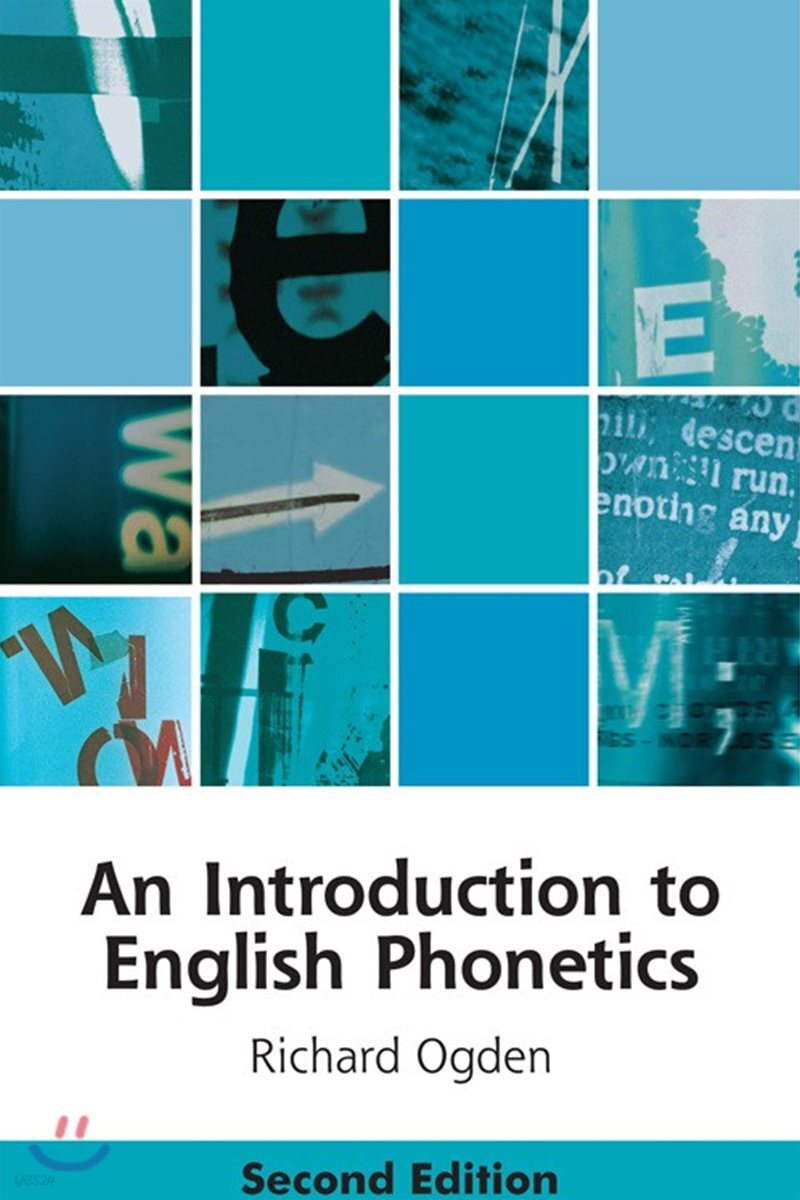
An Introduction to English Phonetics
Paperback, 2nd Edition
Ogden, Richard
Edinburgh University Press
2017.03.31.
이미 소장하고 있다면 판매해 보세요.
- 국내배송만 가능
- 문화비소득공제 가능
Edinburgh Textbooks on the English Language
-
 An Introduction to English Morphology: Words and Their Structure 이동An Introduction to English Morphology: Words and Their Structure26,000원
 -
An Introduction to English Semantics and Pragmatics, 2/E 이동An Introduction to English Semantics and Pragmatics, 2/E25,000원
-
An Introduction to International Varieties of English 이동An Introduction to International Varieties of English10% 38,160원
-
An Introduction to English Morphology : Words and Their Structure 이동An Introduction to English Morphology : Words and Their Structure23,000원
책소개
목차
|
List of figures and tables ix
To readers xiii Acknowledgements xv 1. Introduction to phonetics 1 1.1 What is phonetics? 1 1.2 What this book covers 3 1.3 Ways to talk about sounds 3 1.4 An overview of the book 5 Further reading 6 2. Overview of the human speech mechanism 7 2.1 The complexity of speech sounds 7 2.2 Breathing 7 2.3 The larynx and voicing 9 2.4 Airflow 10 2.5 Place of articulation 12 2.6 Manner of articulation 16 Summary 18 Exercises 18 Further reading 19 3. Representing the sounds of speech 20 3.1 Introduction 20 3.2 Phonetic transcription 20 3.3 Acoustic representations 32 3.4 Acoustic representations and segments 38 3.5 Representation and units in phonetics 38 Summary 39 Exercises 39 Further reading 41 4. The larynx, voicing and voice quality 42 4.1 Introduction 42 4.2 How the vocal folds vibrate 44 4.3 Fundamental frequency, pitch and intonation 45 4.4 Phrasing and intonation 48 4.5 Voice quality 52 Summary 56 Exercises 57 Further reading 57 5. Vowels 58 5.1 Introduction 58 5.2 Reference points for vowels: cardinal vowels 58 5.3 The acoustics of vowels 65 5.4 Other vocalic features 66 5.5 Vowels in English 'keywords' 67 5.6 Reduced vowels 77 5.7 Voiceless vowels 77 Summary 78 Exercises 78 Further reading 79 6. Approximants 80 6.1 Introduction 80 6.2 The palatal approximant [j] 81 6.3 A doubly articulated sound: the labiovelar approximant [w] 83 6.4 Laterals 85 6.5 'Rhotics' 91 Summary 95 Exercises 96 Further reading 97 7. Plosives 98 7.1 Introduction 98 7.2 Overview of the production of plosives 98 7.3 Voicing and plosives in English 101 7.4 Glottalisation 107 7.5 Long closure 108 7.6 Place of articulation 108 7.7 Release features of plosives 111 7.8 Taps 116 Summary 118 Exercises 118 Further reading 119 8. Fricatives 120 8.1 Introduction 120 8.2 The production of fricatives 120 8.3 Details of English fricatives 122 8.4 Non-lexical fricatives 133 Summary 138 Exercises 138 Further reading 139 9. Nasals 140 9.1 The production of nasals 140 9.2 Details of English nasals 142 9.3 Nasalised vowels 148 9.4 Syllabic nasals 150 Summary 154 Exercises 154 Further reading 155 10. Glottalic and velaric airstreams 156 10.1 Airstream mechanisms 156 10.2 The velaric airstream mechanism 156 10.3 The glottalic airstream mechanism 164 Summary 170 Exercises 171 Further reading 171 11. Sounds and structures 172 11.1 Introduction 172 11.2 Data 173 11.3 Assimilation: place of articulation across word boundaries 178 11.4 Glottal stops 181 11.5 Silent pauses within an utterance 184 11.6 Silent pauses after syntactic completion 187 11.7 Syntactically complete phrases followed immediately by more talk 191 Summary 191 Note on the data 192 Exercises 193 Further reading 194 12. Conclusion 195 Glossary 198 Discussion of the exercises 206 Further reading 212 Index 217 |
관련 분류
품목정보
- 발행일
- 2017년 03월 31일
- 쪽수, 무게, 크기
- 208쪽 | 290g | 137*213*15mm
- ISBN13
- 9781474411769
사락 별점0
혜택 및 유의사항밑줄0
혜택 및 유의사항상품정보안내
직수입외서의 경우, 해외거래처에서 제공하는 정보가 부족하여 제목, 표지, 가격, 유통상태 등의 정보가 미비하거나 변경되는 경우가 있습니다. 정확한 확인을 원하시는 경우, 일대일 상담으로 문의하여 주시면 답변 드리겠습니다.
(판형과 판수 등이 다양한 도서는 찾으시는 도서의 ISBN을 알려 주시면 보다 빠르고 정확한 안내가 가능합니다.)
해외거래처에서 품절인 경우, 2차 거래선을 통해 유럽과 미국 출판사로 직접 수입이 진행될 수 있습니다.
수입 진행 시점으로 부터 2~3주가 추가로 소요되며, 해외에서도 유통이 원활하지 않은 도서는 품절 안내가 지연될 수 있습니다.
해당 경우, 문자와 메일로 별도 안내를 드리고 있사오니 마이페이지에서 휴대전화번호와 메일주소를 다시 한번 확인해주시기 바랍니다.
(판형과 판수 등이 다양한 도서는 찾으시는 도서의 ISBN을 알려 주시면 보다 빠르고 정확한 안내가 가능합니다.)
해외거래처에서 품절인 경우, 2차 거래선을 통해 유럽과 미국 출판사로 직접 수입이 진행될 수 있습니다.
수입 진행 시점으로 부터 2~3주가 추가로 소요되며, 해외에서도 유통이 원활하지 않은 도서는 품절 안내가 지연될 수 있습니다.
해당 경우, 문자와 메일로 별도 안내를 드리고 있사오니 마이페이지에서 휴대전화번호와 메일주소를 다시 한번 확인해주시기 바랍니다.
25,000원
총 1개
25,000원