
소득공제
수입
직수입양서
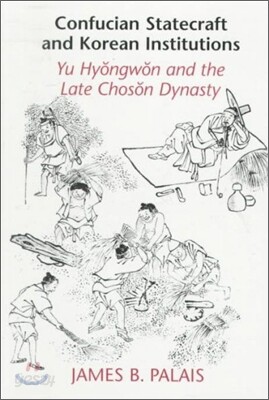
Confucian Statecraft and Korean Institutions: Yu Hyongwon and the Late Choson Dynasty
Yu Hyongwon and the Late Choson Dynasty
Hardcover
Palais, James B.
University of Washington Press
1996.06.01.
이미 소장하고 있다면 판매해 보세요.
- 국내배송만 가능
- 해외 거래처 사정에 의하여 품절/지연 가능
- 도서 정보 중 미표기 사항 안내?
- 문화비소득공제 가능
Korean Studies of the Henry M. Jackson School of International Studies
-
 Confucian Statecraft and Korean Institutions: Yu Hyongwon and the Late Choson Dynasty 이동Confucian Statecraft and Korean Institutions: Yu Hyongwon and the Late Choson Dynasty10% 168,300원
책소개
목차
|
Acknowledgments
Introduction 1 Confucian Statecraft in the Founding of Choson 2 The Disintegration of the Early Choson System to 1592 3 Post-Imjin Developments in Military Defense and the Economy 4 Remolding the Ruling Class through Education and Schools 5 New Schools: Conservative Restraints on Radicalism 6 Slavery: The Slow Path to Abolition 7 Land Reform: Compromises with the Well Field Model 8 Redistributing Wealth through Land Reform 9 Late Choson Land Reform Proposals 10 The Royal Division Model: Rotating Duty Soldiers and Support Taxpayers 11 The Debate over the Military Training Agency, 1651-82 12 The Search for Alternative Modes of Military Finance 13 Military Reorganization, Weapons, and Walls 14 The Military Service System, 1682-1870 15 The King and His Court 16 Reforming the Central Bureaucracy 17 Personnel Policy 18 Provincial and Local Administration 19 The Community Compact System (Hyangyak) 20 Yu Hyongwon's Community Compact Regulations 21 Tribute and the Taedong Reform 22 The Taedong Model for Official Salaries and Expenses 23 Copper Cash and the Monetary System 24 Yu Hyongwon's Analysis of Currency 25 A Cycle of Inflation and Deflation 26 Cash and Economic Change after 1731 Epilogue: The Complexities of Korean Confucian Statecraft Notes Glossary List of Kings of the Choson Dynasty List of Names Bibliography Index |
품목정보
- 발행일
- 1996년 06월 01일
- 쪽수, 무게, 크기
- 1279쪽 | 1778g | 170*240*50mm
- ISBN13
- 9780295974552
사락 별점0
혜택 및 유의사항밑줄0
혜택 및 유의사항상품정보안내
직수입외서의 경우, 해외거래처에서 제공하는 정보가 부족하여 제목, 표지, 가격, 유통상태 등의 정보가 미비하거나 변경되는 경우가 있습니다. 정확한 확인을 원하시는 경우, 일대일 상담으로 문의하여 주시면 답변 드리겠습니다.
(판형과 판수 등이 다양한 도서는 찾으시는 도서의 ISBN을 알려 주시면 보다 빠르고 정확한 안내가 가능합니다.)
해외거래처에서 품절인 경우, 2차 거래선을 통해 유럽과 미국 출판사로 직접 수입이 진행될 수 있습니다.
수입 진행 시점으로 부터 2~3주가 추가로 소요되며, 해외에서도 유통이 원활하지 않은 도서는 품절 안내가 지연될 수 있습니다.
해당 경우, 문자와 메일로 별도 안내를 드리고 있사오니 마이페이지에서 휴대전화번호와 메일주소를 다시 한번 확인해주시기 바랍니다.
(판형과 판수 등이 다양한 도서는 찾으시는 도서의 ISBN을 알려 주시면 보다 빠르고 정확한 안내가 가능합니다.)
해외거래처에서 품절인 경우, 2차 거래선을 통해 유럽과 미국 출판사로 직접 수입이 진행될 수 있습니다.
수입 진행 시점으로 부터 2~3주가 추가로 소요되며, 해외에서도 유통이 원활하지 않은 도서는 품절 안내가 지연될 수 있습니다.
해당 경우, 문자와 메일로 별도 안내를 드리고 있사오니 마이페이지에서 휴대전화번호와 메일주소를 다시 한번 확인해주시기 바랍니다.
168,300원
총 1개
168,300원
