

소득공제
수입
직수입양서
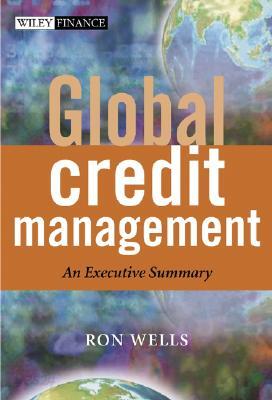
Global Credit Management
An Executive Summary
Hardback, 1st Edition
Wells, Ron
Wiley
2003.12.22.
이미 소장하고 있다면 판매해 보세요.
- 국내배송만 가능
- 해외 거래처 사정에 의하여 품절/지연 가능
- 도서 정보 중 미표기 사항 안내?
- 문화비소득공제 가능
Wiley Finance (Hardcover)
-
 The End of Accounting and the Path Forward for Investors and Managers 이동The End of Accounting and the Path Forward for Investors and Managers18% 69,620원
 -
Creating Value Through Corporate Restructuring 이동Creating Value Through Corporate Restructuring18% 146,370원
-
Structured Finance and Collateralized Debt Obligations 이동Structured Finance and Collateralized Debt Obligations10% 252,450원
-
Modelling Prices in Competitive Electricity Markets 이동Modelling Prices in Competitive Electricity Markets18% 264,860원
-
European Fixed Income Markets: Money, Bond and Interest Rate Derivatives 이동European Fixed Income Markets: Money, Bond and Interest Rate Derivatives18% 257,890원
-
Global Repo Markets: Instruments & Applications 이동Global Repo Markets: Instruments & Applications18% 202,130원
-
Managing Global Financial and Foreign Exchange Rate Risk 이동Managing Global Financial and Foreign Exchange Rate Risk45,000원
-
Applied Risk Analysis: Moving Beyond Uncertainty in Business with CDROM 이동Applied Risk Analysis: Moving Beyond Uncertainty in Business with CDROM18% 125,380원
-
Financing Technology's Frontier: Decision-Makingmodels for Investors and Advisors 이동Financing Technology's Frontier: Decision-Makingmodels for Investors and Advisors18% 111,440원
-
Analysing and Interpreting the Yield Curve 이동Analysing and Interpreting the Yield Curve18% 153,340원
-
Absolute Returns: The Risk and Opportunities of Hedge Fund Investing 이동Absolute Returns: The Risk and Opportunities of Hedge Fund Investing50,000원
-
Risk Management and Value Creation in Financial Institutions 이동Risk Management and Value Creation in Financial Institutions58,000원
책소개
목차
|
Preface.
PART I: CREDIT POWER AND BUSINESS DEVELOPMENT: THE STRATEGIC OVERVIEW. 1. Why Grant Credit? 1.1 Introduction. 1.2 Product offer enhancement credit strategy. 1.3 Comparative cost of money credit strategy. 1.4 Credit strategy for administrative efficiency. 1.5 Credit strategy to build trust. 1.6 Credit strategy for business development. 1.7 Conclusion. 2. Customer Risk. 2.1 It’s people! People make the difference! 2.2 Due diligence. 2.2.1 Credit fraud. 2.3 Customer payment risk. 2.4 Customer risk analysis tools. 2.5 Analysis of financial information. 2.5.1 However reported, operating cash flow can be misleading . . . . 2.6 Analysis of information about the future. 2.7 Credit scoring. 2.8 Trade Credit Risk ScoreCard. 2.9 Customer limits. 2.10 Authority to approve credit limits. 2.11 Powerful collections. 2.11.1 Specialized trade debt collectors and debt trader s. 3. Country Risk. 3.1 The mismanagement of Oolretaw. 3.2 Introduction. 3.2.1 Transfer or sovereign risk and local factors risk. 3.3 Country risk management. 3.4 Country risk rating agencies. 3.5 Unique-company-product-or-service country factors. 3.6 A practical country risk management process. 4. Bank Risk. 4.1 Introduction. 4.2 Well, we have the bank’s commitment but are we safe? 4.3 Understanding bank risk. 4.3.1 International bank supervision. 4.3.2 Basel II. 4.4 Bank risk analysis and bank exposure limit decisions. 4.5 Two practical bank risk management processes. 5. Risk Mitigation Power. 5.1 Introduction. 5.2 Cash in advance. 5.3 Credit insurance. 5.3.1 Export credit agency cover. 5.3.2 Pre-shipment or pre-delivery risk cover. 5.3.3 Country risk. 5.3.4 Catastrophe cover. 5.3.5 Difficult markers. 5.3.6 Post-loss insurance. 5.4 Letters of credit UCP 500 and eUCP. 5.4.1 Warning! Warning! 5.4.2 LC myths and legends. 5.4.3 LC reality. 5.4.4 LCs may be past their ‘‘use-by-date’’ but . . . . 5.4.5 Alternatives for high-volume, low-value transactions. 5.4.6 Alternatives for low-volume, high-value transactions. 5.4.7 Supplement to UCP 500 for electronic presentation (eUCP) ? version 1.0. 5.4.8 Warning! Buyers beware. 5.5 Standby letters of credit subject to ISP98. 5.6 Bank guarantees and Uniform Rules for Demand Guarantees (URDG). 5.6.1 URDG. 5.7 Parent company guarantees. 5.7.1 Transactional parent or sibling company guarantees. 5.7.2 Letters of comfort. 5.8 Payment undertakings and risk-sharing agreements. 5.8.1 Historical development of payment undertakings. 5.8.2 Payment undertakings and risk sharing in practice. 5.9 Documentary collections. 5.9.1 Documents against payment (DP). 5.9.2 Documents against acceptance (DA). 5.9.3 Documents against bank guaranteed acceptance (DA*). 5.10 Credit derivatives. 5.10.1 Credit default swaps (CDSs). 5.11 Netting agreements. 5.12 Collateral security. 5.12.1 Security interest. 5.12.2 Outright transfer. 5.13 Bills of exchange and promissory notes. 5.14 Discounting receivables and forfeiting. 5.15 Securitization. 5.16 Other ideas and conclusion. 5.16.1 Bonded (customs supervised) storage. 5.16.2 Retention of ownership. 5.16.3 Selling direct to better buyers. 5.16.4 Countertrade. PART II: GLOBAL CREDIT POWER IN THE TWENTY-FIRST CENTURY: THE NEW SOURCES OF POWER. 6. Receivable Asset Management ? Portfolio Power. 6.1 Background. 6.1.1 Cost of capital. 6.2 What does all of this mean to me, Boss? 6.3 Managing the portfolio dynamic of transactions. 6.3.1 A scenario for illustration purposes. 6.4 Managing correlation risk. 6.5 Managing concentration risk. 6.5.1 Payment risk swaps. 6.5.2 Bilateral swap contracts. 7. Electronic Commerce ? Internet Power. 7.1 Introduction. 7.2 Automation of the order-to-cash process. 7.2.1 An example sales transaction with LC and STP. 7.3 New credit risk mitigation techniques. 7.3.1 TradeCard prerequisites. 7.3.2 The TradeCard process. 7.4 Credit analysis and decision. 7.4.1 Authentication. 7.4.2 Pre-qualification. 7.4.3 Instant decisions. 7.5 Finding credit risk cover efficiently. 7.5.1 Trade financing and/or payment risk auction sites. 8. Outsourcing ? Alliance Power. 8.1 Introduction. 8.2 Implications for trade credit management. 8.3 Outsourcing order-to-cash. 8.4 Adding value. PART III: POWER BLUEPRINTS ? PRACTICAL TOOLS: THE HOW. 9. Measuring ? Switch on Credit Power. 9.1 The reward system is the lever. 9.2 Connecting the lever to credit power. 9.2.1 Match competitors/provide competitive edge/expand the market. 9.2.2 Cost of capital. 9.2.3 Receivables/cash flow/bad debts. 9.2.4 Sales-weighted DSO ? the alternative that works. 10. A Practical Country Risk Management Process. 10.1 Preamble. 10.2 The 11-step process. 10.3 The country risk limit decision process explained. 10.3.1 Shareholders’ equity. 10.3.2 Risk categories and equity allocation. 10.3.3 Country risk rating agency. 10.3.4 Link risk ratings with risk categories. 10.3.5 Choose a list of countries. 10.3.6 Calculate the initial country limit. 10.3.7 Evaluate company-specific elements. 10.3.8 Adjust the initial limit. 10.3.9 Overall review. 10.3.10 Monitor and manage exposure. 10.3.11 Review and update limits. 11. Two Practical Bank Risk Management Processes. 11.1 Preamble. 11.2 The five-step process. 11.3 The five-step bank limit decision process explained. 11.3.1 Determine the acceptability of the bank. 11.3.2 Bank’s own funds. 11.3.3 Decide a factor. 11.3.4 Monitor and manage exposure. 11.3.5 Review and update limits. 11.4 A Bank Credit ScoreCard ? balanced analysis. 11.5 A bank exposure limit model and internal rating scheme. 11.5.1 Rules of the bank limit model. 11.5.2 Internal bank credit rating conversion chart. 12. Promissory Notes and Demand Guarantees. 12.1 Introduction. 12.2 Promissory notes (PN). 12.3 Demand guarantees (DG). 12.4 Alternative one. 12.5 Alternative two. 12.6 Risk considerations. 12.6.1 Buyer’s point of view. Appendix 12.1 Promissory note format. Appendix 12.2 Demand guarantee format. Appendix 12.3 Demand guarantee format (no promissory note). 13. Payment Undertakings and Risk Sharing in Practice. 13.1 Introduction. 13.2 Historical development of payment undertakings. 13.3 Utilizing payment undertakings as a foundation for an alternative form of payment security. 13.3.1 Buyer’s bank guarantee. 13.3.2 Documentary credits (LCs). 13.3.3 Promissory notes. 13.3.4 On the other hand. 13.4 The payment undertaking alternative process. 13.5 Negative points. 13.6 Positive points. 13.7 Summary. Appendix 13.1 Payment undertaking format. Appendix 13.2 Risk participation agreement example text. 14. Trade Credit Risk ScoreCard and Limit Model. 14.1 Introduction. 14.2 A Trade Credit Risk ScoreCard. 14.3 A trade credit limit model and internal rating scheme. 14.3.1 Rules of the trade credit limit model. 14.3.2 Credit limit model considerations. 14.3.3 Commercial usage. 14.3.4 Relating the maximum credit level to cost of sales. 14.3.5 Internal trade credit rating conversion chart and maximum limit indicator. Appendices: Credit ScoreCard Analysis Examples. I. Bank A ? Subsidiary of an international bank. II. Bank B ? Local bank in an emerging market country. III. Company A. IV. Company B. V. Company C. VI. Company D. Bibliography. Index. |
저자 소개
In the words of Paul Bennett (Global Head of Credit & Receivables Management for ChevronTexaco Corporation), 'Ron Wells devotes considerable energy to maintaining his professional contacts and activities, and staying abreast of - indeed, at the cutting edge of - current developments and new products in his field.? He continues as a thought leader amongst his peers, and has successfully implemented new products and practices which have added value to the company in his area.'
Ron believes passionately in the positive contribution that active credit management can make through increasing quality sales, improving the balance sheet structure and enhancing the risk profile of any business.? He has spoken in many forums and written numerous articles on this theme, and on practical aspects of commercial credit management.
Ron is a Certified Credit Executive (CCE), an Associate of the Chartered Institute of Bankers (ACIB), a Chartered Management Accountant (ACMA), and a Fellow of the Institute of Chartered Secretaries and Administrators (FCIS).? He has practical experience in a range of commercial undertakings, in corporate and trade finance banking, and most recently as the Credit Executive for ChevronTexaco supporting its high value commercial activities in Europe, Russia, Africa and the Middle East.
Ron believes passionately in the positive contribution that active credit management can make through increasing quality sales, improving the balance sheet structure and enhancing the risk profile of any business.? He has spoken in many forums and written numerous articles on this theme, and on practical aspects of commercial credit management.
Ron is a Certified Credit Executive (CCE), an Associate of the Chartered Institute of Bankers (ACIB), a Chartered Management Accountant (ACMA), and a Fellow of the Institute of Chartered Secretaries and Administrators (FCIS).? He has practical experience in a range of commercial undertakings, in corporate and trade finance banking, and most recently as the Credit Executive for ChevronTexaco supporting its high value commercial activities in Europe, Russia, Africa and the Middle East.
품목정보
- 발행일
- 2003년 12월 22일
- 쪽수, 무게, 크기
- 192쪽 | 482g | 178*248*24mm
- ISBN13
- 9780470851111
사락 별점0
혜택 및 유의사항밑줄0
혜택 및 유의사항상품정보안내
직수입외서의 경우, 해외거래처에서 제공하는 정보가 부족하여 제목, 표지, 가격, 유통상태 등의 정보가 미비하거나 변경되는 경우가 있습니다. 정확한 확인을 원하시는 경우, 일대일 상담으로 문의하여 주시면 답변 드리겠습니다.
(판형과 판수 등이 다양한 도서는 찾으시는 도서의 ISBN을 알려 주시면 보다 빠르고 정확한 안내가 가능합니다.)
해외거래처에서 품절인 경우, 2차 거래선을 통해 유럽과 미국 출판사로 직접 수입이 진행될 수 있습니다.
수입 진행 시점으로 부터 2~3주가 추가로 소요되며, 해외에서도 유통이 원활하지 않은 도서는 품절 안내가 지연될 수 있습니다.
해당 경우, 문자와 메일로 별도 안내를 드리고 있사오니 마이페이지에서 휴대전화번호와 메일주소를 다시 한번 확인해주시기 바랍니다.
(판형과 판수 등이 다양한 도서는 찾으시는 도서의 ISBN을 알려 주시면 보다 빠르고 정확한 안내가 가능합니다.)
해외거래처에서 품절인 경우, 2차 거래선을 통해 유럽과 미국 출판사로 직접 수입이 진행될 수 있습니다.
수입 진행 시점으로 부터 2~3주가 추가로 소요되며, 해외에서도 유통이 원활하지 않은 도서는 품절 안내가 지연될 수 있습니다.
해당 경우, 문자와 메일로 별도 안내를 드리고 있사오니 마이페이지에서 휴대전화번호와 메일주소를 다시 한번 확인해주시기 바랍니다.
209,100원
총 1개
209,100원