
이미 소장하고 있다면 판매해 보세요.
- 국내배송만 가능
- 문화비소득공제 가능
책소개
목차
|
Introduction; Capitalism in Asia
Theoretical Contexts and Analytical Framework Organization of the Argument PART I: Recent Changes in Asian Capitalism 1. Formation and Development of Capitalism in the Modernization of East Asia: An Alternative Theoretical Explication Introduction A Theory of Selective Modernization and Alternative Modernities: A Synopsis The Birth of Capitalism in the First-Wave Modernization in East Asia The Development of the Modern Capitalism in the Second-Wave Modernization in East Asia In Closing 2. Comparing Capitalisms, East and West Introduction Why Totalize Capitalism?: ‘The Map is Not the Same as the Territory’?Borges Plurality and Layered Analysis 3. Regional Capitalisms and Global Technoscience: Controllable or Uncontrollable Forces of Planetary Change? Introduction The Capitalism plus Technoscience Conundrum Capitalism As It Is and As It Should Be Technoscience As It Is and As It Could Be Final Remarks 4. A New “Spirit” of Capitalism?: Globalization and Its Impact on the Diffusion of Neoliberal Management Thinking in Germany and the East Asian Economies Introduction Theoretical Foundations Methodology Global Elites as Pacemakers? German Top-Managers as Global Elites? Global Elites in East Asia? A New Neoliberal Spirit of Capitalism? The Financial Market Mindset amongst German Managers The Neoliberal Management Mindset: German Top Managers on Leadership The Collective Mindsets of Top Managers in East Asia Conclusions PART II Diversity of Asian Capitalism: China, Japan and Indonesia 5. Capitalism in China: A Centrally Managed Capitalism (CMC) and Its Future Introduction The Role of the State in Capitalism Forms of State Capitalism Centrally Managed Capitalism The CMC in the Marketplace and Its Costs Challenges to CMC Legitimizing CMC: From Marxism to Economic Growth and Social Stability Transforming Ideology: Towards Xiaokang and Datong? The Transforming CMC: Democratization? Conclusion: The Future of Chinese Capitalism 6. State Neoliberalism: The Chinese Road to Capitalism in Comparative Perspective China and Developmental State Capitalism in the South China and Neoliberal Capitalism in the West China and Neoliberal Reforms in Post-Socialist Eastern Europe State Neoliberalism and the Ceaseless Drive of Capital Accumulation State Neoliberalism in China: Distinctive Characteristics Whither the Chinese Road to Capitalism 7. The End of the Long Boom?: A Comparative Institutional Analysis of Long-term Growth in China Introduction Historical Evolution and Global Insertion Private-Public Growth Alliances: A Chinese Mode of Coordination Key Institutional Domains Summary and Outlook 8. Beyond Predatory Productivism?: The Political Economy of Welfare Capitalism in Post-New Order Indonesia Introduction Explaining Welfare Capitalism Actors, Interests, and Agendas The Political Economy of Welfare Capitalism in Indonesia Conclusion PART III Asia Capitalism in Global Context 9. How Financial Liberalization Transformed the East Asian Development Model Introduction Financial Liberalization in Japan, Korea, and Chinas Financial Liberalization and Transformation of the East Asian Development Model Conclusion 359 10. The “Renminbi Swap Lines” and the Emergent Role of China as an Emergency Lender: Evidence from Argentina Introduction and Objectives Reviewing Chinese Measures toward an International Yuan-Renminbi Case Study: The Sino-Argentine Swap Line Concluding Remarks 11. East Asia’s Inter- and Intra-Regional Trade Networks and Changing Roles in Global Mobile Phone Value Chains Introduction International Trade and Divergence in GVC Integration Data and Methods International Trade of Mobile Phones and Parts Countries’ Changing Positions in the Mobile Phone GVC Inter- and Intra-Reginal Trade Networks of Mobile Phones and Parts Intra-Asian Trade Networks of Mobile Phones and Parts Conclusions 12. Development Cooperation and the Legacy of the Developmental State: Government Initiative and State-Business Partnership in Korean Development Cooperation with Mozambique and Rwanda Introduction First Case: State-Led Development Coopration and “Resource Diplomacy” in Mozambique Second Case: Extending into New Markets in Rwanda through Public Private Partnership Conclusions Conclusion: Exploring 21st Century Capitalisms and Asia: The Impact of Financialization Introduction Financialization and Capitalism East Asian Capitalism and Financialization Conclusions Biographies Index |
저자 소개 3
He is Mellichamp Professor of Global Studies and Sociology at the University of California, Santa Barbara. He specializes in globalization, development studies and cultural anthropology. He was previously at the University of Illinois Urbana-Champaign, the Institute of Social Studies in The Hague, the University of Cape Coast
He is Mellichamp Professor of Global Studies and Sociology at the University of California, Santa Barbara. He specializes in globalization, development studies and cultural anthropology. He was previously at the University of Illinois Urbana-Champaign, the Institute of Social Studies in The Hague, the University of Cape Coast, Ghana, and the University of Amsterdam. He holds a part-time chair at Maastricht University. He currently focuses on new trends in twenty-first-century globalization and the implications of economic crisis. He is on the editorial board of Clarity Press, the Journal of Global Studies and e-global, and is associate editor of the European Journal of Social Theory, Ethnicities, Third Text and the Journal of Social Affairs.
창원대학교 사회학과 교수. 연세대학교 사회학과를 졸업하고 동 대학원에서 석사 학위를 받은 뒤 미국 일리노이대학교(시카고)에서 사회학 박사 학위를 받았다. 한국노총 중앙연구원 연구위원을 역임했으며, 한국의 노사관계, 발전국가, 아시아 자본주의에 관한 연구를 진행하고 있다.
황석만의 다른 상품
Hyun-Chin Lim
서울대학교 사회학과에서 학사 및 석사를 마쳤고, 미국 하버드대학교에서 사회학 박사학위를 받았다. 주요 관심 분야는 발전사회학, 정치사회학, 지구사회학, 비교사회학, 민주주의론 등이다. 주요 연구저서로 『전환기 한국의 정치와 사회: 지식, 권력, 운동』(2005), 『한국의 사회운동과 진보정당』(2009), 『세계화와 반세계화』(2011), 『지구시민사회의 구조와 역학』(2012), 『비교시각에서 본 박정희 발전모델: 라틴아메리카의 브라질, 멕시코, 아르헨티나, 칠레와 아시아의 한국』(2017), Global Capitalism and Culture in East Asia (201
서울대학교 사회학과에서 학사 및 석사를 마쳤고, 미국 하버드대학교에서 사회학 박사학위를 받았다. 주요 관심 분야는 발전사회학, 정치사회학, 지구사회학, 비교사회학, 민주주의론 등이다. 주요 연구저서로 『전환기 한국의 정치와 사회: 지식, 권력, 운동』(2005), 『한국의 사회운동과 진보정당』(2009), 『세계화와 반세계화』(2011), 『지구시민사회의 구조와 역학』(2012), 『비교시각에서 본 박정희 발전모델: 라틴아메리카의 브라질, 멕시코, 아르헨티나, 칠레와 아시아의 한국』(2017), Global Capitalism and Culture in East Asia (2019), 『글로벌 아시아』(2021) 등이 있다. 현재 서울대 명예교수 및 대한민국학술원 회원이며 East Asian Sociological Association 회장, 경실련 공동대표, 국무총리실 시민사회발전위원회 위원장을 맡은 바 있다.
Hyun-Chin Lim is Professor Emeritus of Sociology and Founding Director of Asia Center at Seoul National University. He is an elected member of the National Academy of Sciences, Republic of Korea. He is also an Adjunct Professor of Asian-Pacific Studies Institute at Duke University. He received his B.A. and M.A. in Sociology from Seoul National University, and his Ph.D. in Sociology from Harvard University. He taught and researched at Harvard, Chicago, University of California (San Diego), Duke, Paris Diderot, Free University of Berlin, and Vietnam National University (Hanoi), and Jilin University. He has received a number of honors, including Harvard-Yenching Fellowship, Fulbright Fellowship and National Distinguished Scholar Fellowship. He was an editorial writer for Hankook Daily and a consultant at World Bank. He was previously the dean of Faculty of Liberal Education, the dean of the College of Social Sciences, and the founding director of Asia Center, all at Seoul National University. He worked as a member of the Executive Council, Society for the Advancement of Socio-Economics. He also served as the president of professional associations including Korean Association of NGO Studies, Korean Sociological Association, International Development and Cooperation Association, Korean Association for Political Society, and Korean Social Science Research Council. In addition, he has been active in leading civil society in Korea working as a Co-Chair for Citizens’ Coalition for Economic Justice and for Citizens’ Coalition for Scientific Society.
Hyun-Chin Lim is Professor Emeritus of Sociology and Founding Director of Asia Center at Seoul National University. He is an elected member of the National Academy of Sciences, Republic of Korea. He is also an Adjunct Professor of Asian-Pacific Studies Institute at Duke University. He received his B.A. and M.A. in Sociology from Seoul National University, and his Ph.D. in Sociology from Harvard University. He taught and researched at Harvard, Chicago, University of California (San Diego), Duke, Paris Diderot, Free University of Berlin, and Vietnam National University (Hanoi), and Jilin University. He has received a number of honors, including Harvard-Yenching Fellowship, Fulbright Fellowship and National Distinguished Scholar Fellowship. He was an editorial writer for Hankook Daily and a consultant at World Bank. He was previously the dean of Faculty of Liberal Education, the dean of the College of Social Sciences, and the founding director of Asia Center, all at Seoul National University. He worked as a member of the Executive Council, Society for the Advancement of Socio-Economics. He also served as the president of professional associations including Korean Association of NGO Studies, Korean Sociological Association, International Development and Cooperation Association, Korean Association for Political Society, and Korean Social Science Research Council. In addition, he has been active in leading civil society in Korea working as a Co-Chair for Citizens’ Coalition for Economic Justice and for Citizens’ Coalition for Scientific Society.
임현진의 다른 상품




품목정보
- 발행일
- 2018년 08월 20일
- 쪽수, 무게, 크기
- 508쪽 | 153*224*35mm
- ISBN13
- 9788952120090
출판사 리뷰
|
아시아 자본주의 모델들의 공통성과 다양성
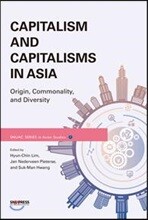
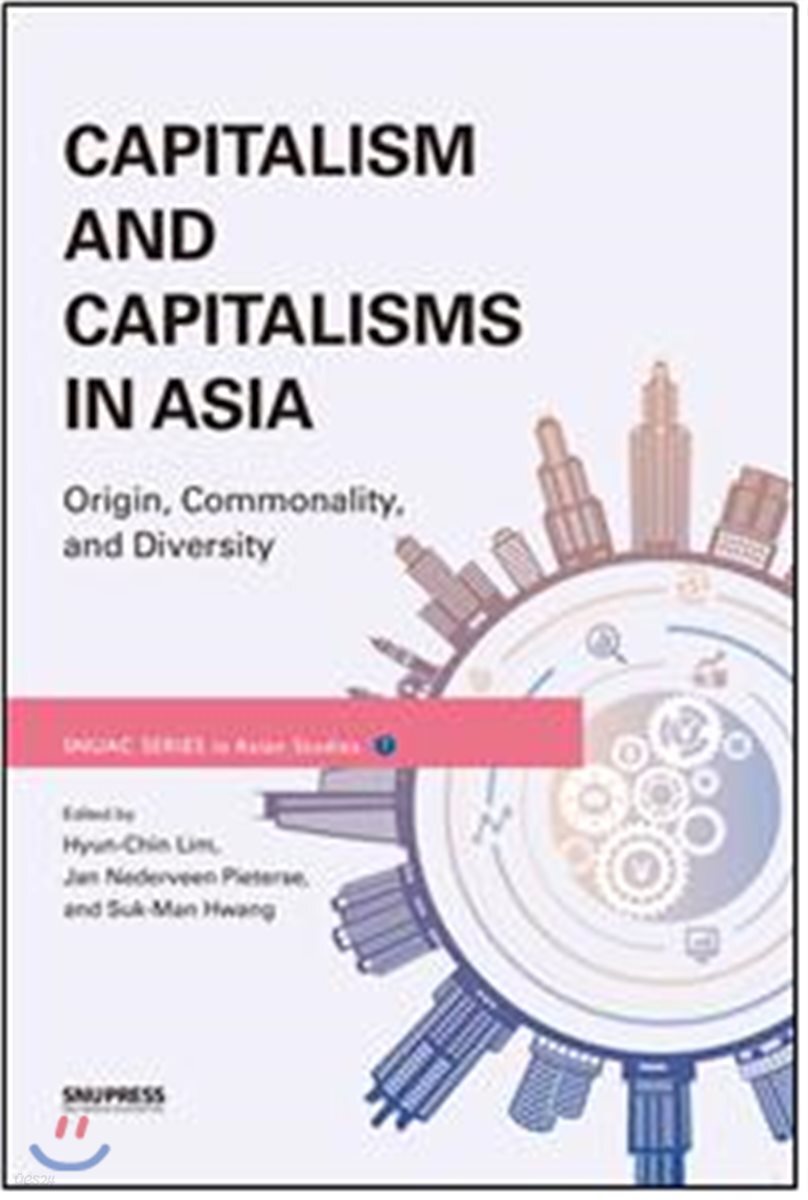
이 책은 아시아 여러 나라의 다양한 자본주의 사례를 다루면서 두 가지 중요한 아이디어를 공유하고 있다. 첫째는 아시아 자본주의는 서구 자본주의와 형태 및 메커니즘 면에서 다르게 발전해 왔으며 서구 자본주의와 공통점을 공유한다고 할지라도 앞으로도 계속 고유한 특징을 유지할 것이라는 점, 둘째는 아시아 국가의 자본주의가 서로에게 상당히 영향을 미치지만 아시아 자본주의는 하나의 이론이나 모델로 구성하기가 매우 어렵다는 점이다. 저자들은 아시아 자본주의가 서구 자본주의 개념을 공유하면서도, 아시아 각국마다 특정한 역사적, 정치적, 사회적 상황에서 자본주의를 어떻게 발전시켰는지 분석한다. 또한 특정 수준의 자본주의 발전을 이룩한 아시아 국가들이 세계화 과정에 어떻게 반응하고 변화하고 있는지에 초점을 맞추고 있다. 제1부는 거시적 역사와 이론 논쟁의 측면에서 아시아 자본주의를 다룬다. 즉, 동아시아 자본주의 모델들의 유사성과 차이점을 거시 역사적인 근대화(modernization) 측면에서 분석하고 있다. 또한 현대 자본주의의 근본적인 문제(전 지구적 환경문제 등)와 해결 가능성을 가늠해 본다. 제2부는 현재 세계화의 흐름에서 아시아 각국 내부 제도와 체제의 변화를 중국과 인도네시아를 중심으로 분석하고 있다. 중국 자본주의의 변화를 역사적으로 추적하고 전망하며, 중국의 급격한 성공의 제도적 조건들을 분석하고 그 원인을 “제도적 적합성”(“institutional fit”) 개념으로 설명한다. 그리고 인도네시아의 정치 질서 변화와 복지국가체제의 변화를 분석한다. 제3부는 좀 더 국제적 차원에서 글로벌 네트워크와 공적개발원조(ODA, official development assistance) 등에 의해 아시아 국가들이 맺는 상호작용의 의미를 분석하고 있다. 중국 위안화의 국제화와 그 영향, 휴대전화의 글로벌가치사슬(Global Value Chain)의 변화, 그리고 한국의 ODA 사례 등을 분석하고 있다. 아시아 자본주의 체제에 대한 좀 더 면밀한 분석은 급변하는 세계 경제 및 정치적 중요성을 고려할 때 시급한 것이다. 이 필요성에 부응하여 서울대학교 아시아연구소는 아시아 자본주의에 관한 10권의 시리즈를 만들고 있으며, 여기에는 향후 5년간 아시아 및 다른 국가의 저명한 학자들이 수행한 연구가 포함될 예정이다. 이번에 출간된 [Capitalism and Capitalisms in Asia]는 그 첫 번째 책으로서, 이 책은 학자, 정책 입안자 및 그 밖의 많은 독자에게 아시아 자본주의의 다양한 측면과 관련된 최신 쟁점을 살펴볼 수 있는 기회를 제공할 것이다. |
사락 별점0
혜택 및 유의사항밑줄0
혜택 및 유의사항
60,000원
총 1개
60,000원