
소득공제
수입
직수입양서
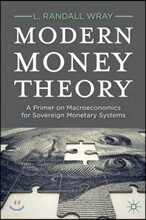
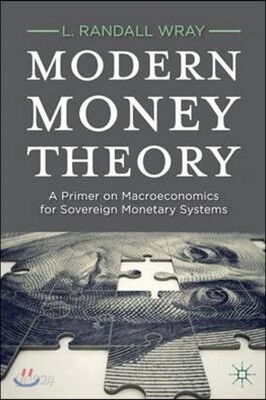
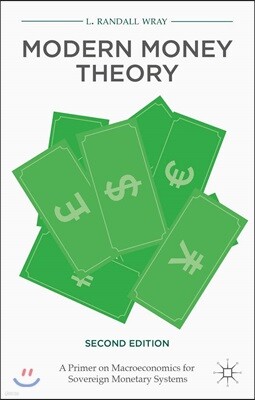
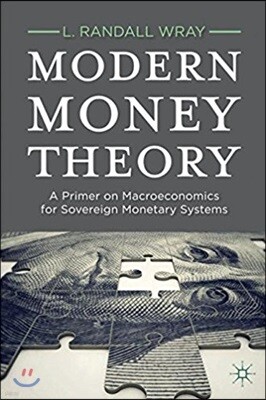
Modern Money Theory: A Primer on Macroeconomics for Sovereign Monetary Systems
A Primer on Macroeconomics for Sovereign Monetary Systems
Paperback
L. 랜덜 레이 저
Palgrave MacMillan
2012.08.07.
이미 소장하고 있다면 판매해 보세요.
- 국내배송만 가능
- 해외 거래처 사정에 의하여 품절/지연 가능
- 도서 정보 중 미표기 사항 안내?
- 문화비소득공제 가능
책소개
목차
|
List of Illustrations viii
Preface ix Box: Definitions xv 1. The Basics of Macroeconomic Accounting 1 1.1 The basics of accounting for stocks and flows 1 1.2 MMT, sectoral balances, and behavior 6 1.3 Government budget deficits are largely nondiscretionary: the case of the Great Recession of 2007 15 1.4 Accounting for real versus financial 21 1.5 Recent US sectoral balances: Goldilocks and the global crash 27 1.6 Stocks, flows, and balance sheet: a bathtub analogy 30 2. Spending by Issuer of Domestic Currency 39 2.1 What is a sovereign currency? 39 2.2 What backs up currency and why would anyone accept it? 44 2.3 Taxes drive money 47 2.4 What if the population refuses to accept the domestic currency? 52 2.5 Keeping track of stocks and flows: the money of account 58 2.6 Returning to real versus nominal stocks and flows 62 2.7 Sustainability conditions 65 3. The Domestic Monetary System: Banking and Central Banking 76 3.1 IOUs denominated in the national currency: government and private 76 3.2 Clearing and the pyramid of liabilities 83 3.3 Central bank operations in crisis: lender of last resort 89 3.4 Balance sheets of banks, monetary creation by banks, and interbank settlement 92 3.5 Exogenous interest rates and quantitative easing 97 3.6 The technical details of central bank and treasury coordination: the case of the Fed 98 3.7 Treasury debt operations 105 4. Fiscal Operations in a Nation That Issues Its Own Currency 110 4.1 Introductory principles 110 4.2 Effects of sovereign government budget deficits on saving, reserves, and interest rates 114 4.3 Government budget deficits and the "two-step" process of saving 120 4.4 What if foreigners hold government bonds? 126 4.5 Currency solvency and the special case of the US Dollar 133 4.6 Sovereign currency and government policy in the open economy 138 4.7 What about a country that adopts a foreign currency? 144 5. Modern Money Theory and Alternative Exchange Rate Regimes 148 5.1 The gold standard and fixed exchange rates 149 5.2 Floating exchange rates 150 5.3 Commodity money coins? metalism versus nominalism, from Mesopotamia to Rome 153 5.4 Commodity money coins? metalism versus nominalism, after Rome 159 5.5 Exchange rate regimes and sovereign defaults 164 5.6 The Euro: the set-up of a nonsovereign currency 169 5.7 The crisis of the Euro 173 5.8 Endgame for the Euro? 181 5.9 Currency regimes and policy space: conclusion 185 6. Monetary and Fiscal Policy for Sovereign Currencies: What Should Government Do? 187 6.1 Just because government can afford to spend does not mean government ought to spend 187 6.2 The "free" market and the public purpose 190 6.3 Functional finance 193 6.4 Functional finance versus the government budget constraint 198 6.5 The debate about debt limits (US case) 203 6.6 A budget stance for economic stability and growth 208 6.7 Functional finance and exchange rate regimes 211 6.8 Functional finance and developing nations 216 6.9 Exports are a cost, imports are a benefit: a functional finance approach 217 7. Policy for Full Employment and Price Stability 221 7.1 Functional finance and full employment 221 7.2 The JG/ELR for a developing nation 227 7.3 Program manageability 230 7.4 The JG/ELR and real world experience 233 7.5 Conclusions on full employment policy 236 7.6 MMT for Austrians: can a libertarian support the JG? 238 7.7 Inflation and the consumer price index 241 7.8 Alternative explanations of hyperinflation 246 7.9 Real-world hyperinflations 252 7.10 Conclusions on hyperinflation 256 7.11 Conclusion: MMT and policy 258 8. What Is Money? Conclusions on the Nature of Money 261 8.1 Is money a physical thing? 262 8.2 Propositions on the nature of money 264 8.3 Money is debt 269 8.4 Liquidity and default risks on money IOUs 274 8.5 Why are banks special? 279 Conclusions 282 Notes 283 Bibliography 284 Index 289 |
저자 소개 1
L. Randall Wray
미국 캔사스 시티의 미주리 대학에서 경제학과 교수를 역임하고 있으며, 뉴욕 바드 칼리지의 레비경제연구소Levy Economics Institute의 선임학자이다. 세인트 루이스의 워싱턴 대학에서 공부할 당시 하이먼 P. 민스키의 제자였으며, 통화 이론과 통화 정책, 거시경제학, 금융 불안정성, 고용 정책 등을 연구하였다. 학술지에 여러 편의 논문을 게재하였고 여러 책에 공저자로 참여하였다. 저서로는 Why Minsky Matters(2015), Understanding Modern Money: The Key to Full Employment and Price Stability(1
미국 캔사스 시티의 미주리 대학에서 경제학과 교수를 역임하고 있으며, 뉴욕 바드 칼리지의 레비경제연구소Levy Economics Institute의 선임학자이다. 세인트 루이스의 워싱턴 대학에서 공부할 당시 하이먼 P. 민스키의 제자였으며, 통화 이론과 통화 정책, 거시경제학, 금융 불안정성, 고용 정책 등을 연구하였다. 학술지에 여러 편의 논문을 게재하였고 여러 책에 공저자로 참여하였다. 저서로는 Why Minsky Matters(2015), Understanding Modern Money: The Key to Full Employment and Price Stability(1998), Money and Credit in Capitalist Economies(1990) 등이 있으며 Credit and State Theories of Money(2004)를 편집하고 Contemporary Post Keynesian Analysis(2005), Money, Financial Instability and stabilization Policy(2006), Keynes for the Twenty-First Century(2008) 등의 책을 공동으로 편집했다. 패서픽 대학에서 학사를, 워싱턴 대학에서 석사와 박사학위를 받았고 로마 대학, 파리 대학, 베르가모 대학, 볼로냐 대학 , UNAM(멕시코 시티) 등에서 초빙 교수를 역임하였다. 1996년 가을 캔사스 시티 미주리 대학의 버나딘-해스캘 교수Bernardin-Haskell Professor가 되었고, 1999년 여름 경제학과 정교수로서 같은 대학에 취임하였다.
L. 랜덜 레이의 다른 상품
-
Modern Money Theory: A Primer on Macroeconomics for Sovereign Monetary Systems 이동Modern Money Theory: A Primer on Macroeconomics for Sovereign Monetary Systems173,230원 10%
품목정보
- 발행일
- 2012년 08월 07일
- 쪽수, 무게, 크기
- 294쪽 | 390g | 137*213*20mm
- ISBN13
- 9780230368897
사락 별점0
혜택 및 유의사항밑줄0
혜택 및 유의사항상품정보안내
직수입외서의 경우, 해외거래처에서 제공하는 정보가 부족하여 제목, 표지, 가격, 유통상태 등의 정보가 미비하거나 변경되는 경우가 있습니다. 정확한 확인을 원하시는 경우, 일대일 상담으로 문의하여 주시면 답변 드리겠습니다.
(판형과 판수 등이 다양한 도서는 찾으시는 도서의 ISBN을 알려 주시면 보다 빠르고 정확한 안내가 가능합니다.)
해외거래처에서 품절인 경우, 2차 거래선을 통해 유럽과 미국 출판사로 직접 수입이 진행될 수 있습니다.
수입 진행 시점으로 부터 2~3주가 추가로 소요되며, 해외에서도 유통이 원활하지 않은 도서는 품절 안내가 지연될 수 있습니다.
해당 경우, 문자와 메일로 별도 안내를 드리고 있사오니 마이페이지에서 휴대전화번호와 메일주소를 다시 한번 확인해주시기 바랍니다.
(판형과 판수 등이 다양한 도서는 찾으시는 도서의 ISBN을 알려 주시면 보다 빠르고 정확한 안내가 가능합니다.)
해외거래처에서 품절인 경우, 2차 거래선을 통해 유럽과 미국 출판사로 직접 수입이 진행될 수 있습니다.
수입 진행 시점으로 부터 2~3주가 추가로 소요되며, 해외에서도 유통이 원활하지 않은 도서는 품절 안내가 지연될 수 있습니다.
해당 경우, 문자와 메일로 별도 안내를 드리고 있사오니 마이페이지에서 휴대전화번호와 메일주소를 다시 한번 확인해주시기 바랍니다.
125,980원
총 1개
125,980원
