
소득공제
수입
직수입양서
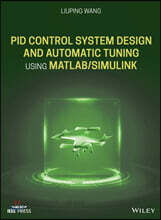
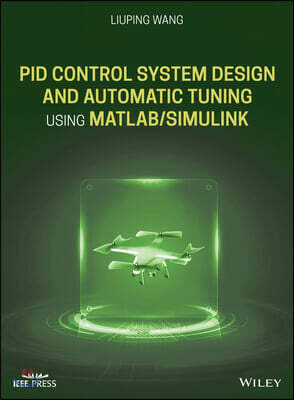
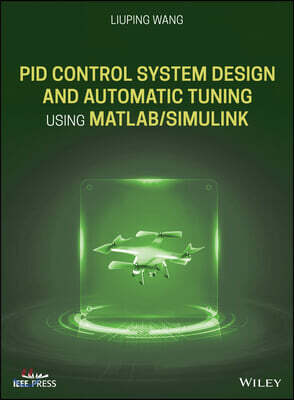
PID Control System Design and Automatic Tuning using MATLAB/Simulink
Hardback, 1st Edition
Wang, Liuping
Wiley-IEEE Press
2020.04.20.
이미 소장하고 있다면 판매해 보세요.
- 국내배송만 가능
- 해외 거래처 사정에 의하여 품절/지연 가능
- 도서 정보 중 미표기 사항 안내?
- 문화비소득공제 가능
이 상품의 태그
-
상품명 이동Federated Learning with Python: Design and implement a federated learning system and develop applications using existing frameworks36,000원
-
상품명 이동Gas Turbine Design, Components and System Design Integration: Second Revised and Enhanced Edition10% 422,080원
-
상품명 이동Control System Design Guide: Using Your Computer to Understand and Diagnose Feedback Controllers10% 135,590원










책소개
목차
|
Preface xv Acknowledgment xvii List of Symbols and Acronyms xix About the Companion Website xxi 1 Basics of PID Control 1 1.1 Introduction 1 1.2 PID Controller Structure 1 1.2.1 Proportional Controller 1 1.2.2 Proportional Plus Derivative Controller 3 1.2.3 Proportional Plus Integral Controller 5 1.2.4 PID Controllers 9 1.2.5 The Commercial PID Controller Structure 12 1.2.6 Food for Thought 13 1.3 Classical Tuning Rules for PID Controllers 13 1.3.1 Ziegler?Nichols Oscillation Based Tuning Rules 13 1.3.2 Tuning Rules based on the First Order Plus Delay Model 15 1.3.3 Food for Thought 17 1.4 Model Based PID Controller Tuning Rules 18 1.4.1 IMC-PID Controller Tuning Rules 18 1.4.2 Padula and Visioli Tuning Rules 19 1.4.3 Wang and Cluett Tuning Rules 20 1.4.4 Food for Thought 21 1.5 Examples for Evaluations of the Tuning Rules 21 1.5.1 Examples for Evaluating the Tuning Rules 21 1.5.2 Fired Heater Control Example 25 1.6 Summary 27 1.7 Further Reading 28 Problems 28 2 Closed-loop Performance and Stability 31 2.1 Introduction 31 2.2 Routh?Hurwitz Stability Criterion 31 2.2.1 Determining Closed-loop Poles 32 2.2.2 Routh?Hurwitz Stability Criterion 33 2.2.3 Food for Thought 36 2.3 Nyquist Stability Criterion 36 2.3.1 Nyquist Diagram 36 2.3.1.1 Gain Margin 38 2.3.1.2 Phase Margin 38 2.3.1.3 Delay Margin 38 2.3.2 Rework of Tuning Rules based PID Controllers 40 2.3.3 Food for Thought 42 2.4 Control System Structures and Sensitivity Functions 42 2.4.1 One Degree of Freedom Control System Structure 43 2.4.2 Two Degrees of Freedom Design 44 2.4.2.1 Two degrees of freedom implementation of PI controllers 45 2.4.3 Sensitivity Functions in Feedback Control 45 2.4.4 Food for Thought 47 2.5 Reference Following and Disturbance Rejection 47 2.5.1 Closed-loop Bandwidth 47 2.5.2 Reference Following and Disturbance Rejection with PID Controllers 50 2.5.3 Reference Following and Disturbance Rejection with Resonant Controllers 53 2.5.4 Food for Thought 54 2.6 Disturbance Rejection and Noise Attenuation 54 2.6.1 Conflict between Disturbance Rejection and Noise Attenuation 54 2.6.2 PID Controller for Disturbance Rejection and Noise Attenuation 55 2.6.3 Food for Thought 58 2.7 Robust Stability and Robust Performance 59 2.7.1 Modeling Errors 59 2.7.2 Robust Stability 60 2.7.3 Case Study: Robust Control of Polymer Reactor 62 2.7.4 Food for Thought 65 2.8 Summary 65 2.9 Further Reading 67 Problems 67 3 Model-Based PID and Resonant Controller Design 71 3.1 Introduction 71 3.2 PI Controller Design 71 3.2.1 Desired Closed-loop Performance Specification 71 3.2.2 Model and Controller Structures 72 3.2.3 Closed-loop Transfer Functions for Different Configurations 75 3.2.4 Food for Thought 77 3.3 Model Based Design for PID Controllers 78 3.3.1 PD Controller Design 78 3.3.2 Analytical Examples for Ideal PID with Pole-zero Cancellation 81 3.3.3 Analytical Examples for PID Controllers with Filters 84 3.3.4 PID Controller Design without Pole?Zero Cancellation 92 3.3.5 MATLAB Tutorial on Solution of a PID Controller with Filter 94 3.3.6 Food for Thought 95 3.4 Resonant Controller Design 96 3.4.1 Resonant Controller Design 96 3.4.2 Steady-state Error Analysis 97 3.4.3 Pole?Zero Cancellation in the Design of a Resonant Controller 99 3.4.4 Food for Thought 101 3.5 Feedforward Control 102 3.5.1 Basic Ideas about Feedforward Control 102 3.5.2 Three Springs and Double Mass System 103 3.5.3 Food for Thought 108 3.6 Summary 108 3.7 Further Reading 108 Problems 109 4 Implementation of PID Controllers 113 4.1 Introduction 113 4.2 Scenario of a PID Controller at work 113 4.3 PID Controller Implementation using the Position Form 114 4.3.1 The Steady-state Information Needed 114 4.3.2 Discretization of a PID Controller 115 4.3.3 Food for Thought 116 4.4 PID Controller Implementation using the Velocity Form 117 4.4.1 Discretization of a PI Controller 117 4.4.2 Discretization of a PID Controller using the Velocity Form 119 4.4.3 Improving Accuracy in a Slower Sampling Environment 120 4.4.4 Food for Thought 122 4.5 Anti-windup Implementation using the Position Form 122 4.5.1 Integrator Windup Scenario 122 4.5.2 Anti-windup Mechanisms in the Position Form of PI Controllers 124 4.5.3 Food for Thought 125 4.6 Anti-windup Mechanisms in the Velocity Form 126 4.6.1 Anti-windup Mechanism on the Amplitude of the Control Signal 126 4.6.2 Limits on the Rate of Change of the Control Signal 129 4.6.3 Food for Thought 129 4.7 Tutorial on PID Anti-windup Implementation 130 4.8 Dealing with Other Implementation Issues 133 4.8.1 Plant Start-up 134 4.8.2 Dealing with Quantization Errors in PID Controller Implementation 135 4.9 Summary 136 4.10 Further Reading 137 Problems 137 5 Disturbance Observer- Based PID and Resonant Controller 139 5.1 Introduction 139 5.2 Disturbance observer-Based PI Controller 139 5.2.1 Estimation of Disturbance with Control 139 5.2.1.1 Choice of Proportional Controller K1 140 5.2.1.2 Compensation of Steady-state Error 140 5.2.1.3 The closed-loop poles 141 5.2.1.4 Implementation procedure 142 5.2.2 Equivalence to PI controller 143 5.2.3 MATLAB Tutorial for Implementation of a PI Controller via Estimation 144 5.2.4 Examples for Estimator based PI Controllers 145 5.2.5 Food for Thought 148 5.3 Disturbance observer-Based PID Controller 149 5.3.1 Proportional Plus Derivative Control 149 5.3.2 Adding Integral Action 150 5.3.3 Equivalence to a PID Controller 151 5.3.4 MATLAB Tutorial on the Implementation of a disturbance observer-based PID Controller 153 5.3.5 Examples for Disturbance observer-based PID Controller 155 5.3.6 Food for Thought 156 5.4 Disturbance observer-Based Resonant Controller 156 5.4.1 Resonant Controller Design 156 5.4.2 Resonant Controller Implementation 158 5.4.3 Equivalence to a Resonant Controller 159 5.4.4 MATLAB Tutorial on Disturbance observer-Based Resonant Controller Implementation 160 5.4.5 Examples for Disturbance observer-Based Resonant Controllers 162 5.4.6 Food for Thought 167 5.5 Multi-frequency Resonant Controller 167 5.5.1 Adding Integral Action to the Resonant Controller 168 5.5.2 Adding More Periodic Components 170 5.5.3 Food for Thought 171 5.6 Summary 172 5.7 Further Reading 172 Problems 173 6 PID Control of Nonlinear Systems 179 6.1 Introduction 179 6.2 Linearization of the Nonlinear Model 179 6.2.1 Approximation of a Nonlinear Function 179 6.2.2 Linearization of nonlinear differential equations 181 6.2.3 Case Study: Linearization of the Coupled Tank Model 181 6.2.4 Case Study: Linearization of the Induction Motor Model 184 6.2.5 Food for Thought 186 6.3 Case Study: Ball and Plate Balancing System 187 6.3.1 Dynamics of the Ball and Plate Balancing System 187 6.3.2 Linearization of the Nonlinear Model 188 6.3.3 PID Controller Design 189 6.3.4 Implementation and Experimental Results 190 6.3.4.1 Disturbance Rejection 191 6.3.4.2 Making a Square Movement 192 6.3.4.3 Making a Circle Movement 192 6.3.4.4 Making more Complicated Movements 194 6.3.5 Food for Thought 194 6.4 Gain Scheduled PID Control Systems 194 6.4.1 TheWeighting Parameters 194 6.4.2 Gain Scheduled Implementation using PID Velocity Form 196 6.4.3 Gain Scheduled Implementation using an Estimator Based PID Controller 197 6.4.4 Food for Thought 199 6.5 Summary 199 6.6 Further Reading 199 Problems 200 7 Cascade PID Control Systems 203 7.1 Introduction 203 7.2 Design of a Cascade PID Control System 203 7.2.1 Design Steps for a Cascade Control System 203 7.2.2 Simple Design Examples 204 7.2.3 Achieving Closed-loop Performance Invariance (Approximate) in a Cascade Structure 208 7.2.4 Food for Thought 209 7.3 Cascade Control System for Input Disturbance Rejection 209 7.3.1 Frequency Characteristics for Disturbance Rejection 210 7.3.2 Simulation Studies 211 7.3.3 Food for Thought 213 7.4 Cascade Control System for Actuator Nonlinearities 214 7.4.1 Cascade Control for Actuator with a Deadzone 214 7.4.2 Cascade Control for Actuators with Quantization Errors 218 7.4.3 Cascade Control for Actuators with Backlash Nonlinearity 221 7.4.4 Food for Thought 227 7.5 Summary 230 7.6 Further Reading 230 Problems 231 8 PID Controller Design for Complex Systems 233 8.1 Introduction 233 8.2 PI Controller Design via Gain and Phase Margins 233 8.2.1 PI Controller Design Using Gain Margin and Phase Margin Specifications 233 8.2.2 Design Examples 234 8.2.3 Food for Thought 238 8.3 PID Controller Design using Two Frequency Points 238 8.3.1 Finding the PID Controller Parameters 238 8.3.2 Desired Closed-loop Performance Specification using Two Frequency Points 240 8.3.3 Design Examples 242 8.3.4 MATLAB Tutorial on PID Controller Design Using two Frequency Points 243 8.3.5 PID Controller Design for Beer Filtration Process 245 8.3.6 Food for Thought 248 8.4 PID Controller Design for Integrating Systems 249 8.4.1 The Approximate Model 249 8.4.2 Selection of Desired Closed-loop Performance 250 8.4.3 Normalization of the Parameters and Empirical Rules 251 8.4.4 Gain and Phase Margins 253 8.4.5 Simulation Examples 253 8.4.6 Food for Thought 256 8.5 Summary 256 8.6 Further Reading 257 Problems 257 9 Automatic Tuning of PID Controllers 259 9.1 Introduction 259 9.2 Relay Feedback Control 259 9.2.1 Relay Control with Hysteresis 259 9.2.2 Relay Control with Integrator 263 9.2.3 Food for Thought 267 9.3 Estimation of Frequency Response using the Fast Fourier Transform (FFT) 267 9.3.1 FFT Estimation 268 9.3.2 MATLAB Tutorial using the FFT for Estimation 269 9.3.3 Monte-Carlo Simulation Studies 270 9.3.4 Food for Thought 272 9.4 Estimation of Frequency Response Using the frequency sampling filter (FSF) 273 9.4.1 Frequency Sampling FilterModel 273 9.4.2 MATLAB Tutorial on Estimation Using the FSF Model 276 9.4.3 Monte-Carlo Simulation using the FSF Estimation 278 9.4.4 Food for Thought 279 9.5 Monte-Carlo Simulation Studies 279 9.5.1 Effect of Unknown Constant Disturbance 279 9.5.2 Effect of Unknown Low Frequency Disturbance 280 9.5.3 Estimation of the Steady-state Value 282 9.5.4 Food for Thought 283 9.6 Auto-tuner Design for Stable Plant 283 9.6.1 MATLAB Tutorial on Auto-tuner for Stable Plant 284 9.6.2 Evaluation of the Auto-tuner for a Stable Plant 286 9.6.2.1 PID Controller Parameters 287 9.6.2.2 Nyquist Plots 287 9.6.2.3 Closed-loop Simulation Results 288 9.6.3 Comparative Studies 289 9.6.4 Food for Thought 290 9.7 Auto-tuner Design for a Plant with an Integrator 291 9.7.1 Estimation of an Integrating Plus Delay Model 291 9.7.2 Auto-tuner for Integrating Systems 292 9.7.3 Auto-tuning of Cascade Control Systems 297 9.7.4 Food for Thought 300 9.8 Summary 300 9.9 Further Reading 301 Problems 302 10 PID Control of Multi-rotor Unmanned Aerial Vehicles 305 10.1 Introduction 305 10.2 Multi-rotor Dynamics 305 10.2.1 Dynamic Models for Attitude Control 305 10.2.2 Actuator Dynamics for Quadrotor UAVs 307 10.2.3 Actuator Dynamics of Hexacopters 309 10.2.4 Food for Thought 311 10.3 Cascade Attitude Control of Multi-rotor UAVs 311 10.3.1 Linearized Model for the Secondary Plant 312 10.3.2 Linearized Model for the Primary Plant 313 10.3.3 Food for Thought 313 10.4 Automatic Tuning of Attitude Control Systems 313 10.4.1 Test Rigs for Auto-tuning Cascade PI Controllers of Multi-rotor UAVs 314 10.4.2 Experimental Results for Quadrotor UAV 314 10.4.3 Experimental Results for Hexacopter 320 10.4.4 Food for Thought 324 10.5 Summary 324 10.6 Further Reading 325 Problems 325 Suggestions to Food for Thought Questions 327 Bibliography 331 Index 341 |
저자 소개
LIUPING WANG, PHD, is a Professor at RMIT University in Australia. An electrical engineer by training, Professor Wang gained substantial process control experience by working in the Chemical Engineering Department at the University of Toronto, Canada, and the Center for Integrated Dynamics at the University of Newcastle, Australia. She is the author of four books in the areas of model predictive control, control systems for electric drives and power converters, system identification, and PID control.
품목정보
- 발행일
- 2020년 04월 20일
- 쪽수, 무게, 크기
- 368쪽 | 168*236*23mm
- ISBN13
- 9781119469346
사락 별점0
혜택 및 유의사항밑줄0
혜택 및 유의사항상품정보안내
직수입외서의 경우, 해외거래처에서 제공하는 정보가 부족하여 제목, 표지, 가격, 유통상태 등의 정보가 미비하거나 변경되는 경우가 있습니다. 정확한 확인을 원하시는 경우, 일대일 상담으로 문의하여 주시면 답변 드리겠습니다.
(판형과 판수 등이 다양한 도서는 찾으시는 도서의 ISBN을 알려 주시면 보다 빠르고 정확한 안내가 가능합니다.)
해외거래처에서 품절인 경우, 2차 거래선을 통해 유럽과 미국 출판사로 직접 수입이 진행될 수 있습니다.
수입 진행 시점으로 부터 2~3주가 추가로 소요되며, 해외에서도 유통이 원활하지 않은 도서는 품절 안내가 지연될 수 있습니다.
해당 경우, 문자와 메일로 별도 안내를 드리고 있사오니 마이페이지에서 휴대전화번호와 메일주소를 다시 한번 확인해주시기 바랍니다.
(판형과 판수 등이 다양한 도서는 찾으시는 도서의 ISBN을 알려 주시면 보다 빠르고 정확한 안내가 가능합니다.)
해외거래처에서 품절인 경우, 2차 거래선을 통해 유럽과 미국 출판사로 직접 수입이 진행될 수 있습니다.
수입 진행 시점으로 부터 2~3주가 추가로 소요되며, 해외에서도 유통이 원활하지 않은 도서는 품절 안내가 지연될 수 있습니다.
해당 경우, 문자와 메일로 별도 안내를 드리고 있사오니 마이페이지에서 휴대전화번호와 메일주소를 다시 한번 확인해주시기 바랍니다.
197,710원
총 1개
197,710원