
소득공제
크레마클럽
PDF
eBook
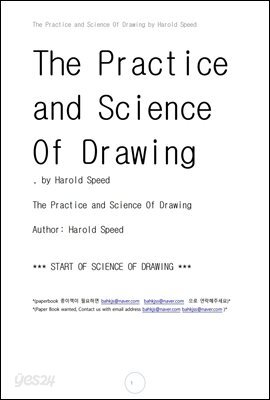
데생 도화의 실습과 기술 (The Practice and Science Of Drawing by Harold Speed)
PDF
이 상품의 태그



소개
목차
|
CONTENTS
I. INTRODUCTION II. DRAWING III. VISION IV. LINE DRAWING V. MASS DRAWING VI. THE ACADEMIC AND CONVENTIONAL VII. THE STUDY OF DRAWING VIII. LINE DRAWING: PRACTICAL IX. MASS DRAWING: PRACTICAL X. RHYTHM XI. RHYTHM: VARIETY OF LINE XII. RHYTHM: UNITY OF LINE XIII. RHYTHM: VARIETY OF MASS XIV. RHYTHM: UNITY OF MASS XV. RHYTHM: BALANCE XVI. RHYTHM: PROPORTION XVII. PORTRAIT DRAWING XVIII. THE VISUAL MEMORY XIX. PROCEDURE XX. MATERIALS XXI. CONCLUSION APPENDIX INDEX |
저자 소개
데생 도화의 실습과 기술.The Practice and Science Of Drawing by Harold Speed
HAROLD SPEED
Associ? de la Soci?t? Nationale des Beaux- Arts, Paris; Member of
the Royal Society of Portrait Painters, &c.
HAROLD SPEED
Associ? de la Soci?t? Nationale des Beaux- Arts, Paris; Member of
the Royal Society of Portrait Painters, &c.
품목정보
- 발행일
- 2019년 06월 26일
- 지원기기
- 크레마, PC(윈도우 - 4K 모니터 미지원), 아이폰, 아이패드, 안드로이드폰, 안드로이드패드, 전자책단말기(저사양 기기 사용 불가), PC(Mac)
- 파일/용량
- PDF(DRM) | 9.73MB ?
- ISBN13
- 9791187318767
출판사 리뷰
|
In writing upon any matter of experience, such as art, the possibilities of
misunderstanding are enormous, and one shudders to think of the things that may be put down to one's credit, owing to such misunderstandings. It is like writing about the taste of sugar, you are only likely to be understood by those who have already experienced the flavour; by those who have not, the wildest interpretation will be put upon your words. The written word is necessarily confined to the things of the understanding because only the understanding has written language; whereas art deals with ideas of a different mental texture, which words can only vaguely suggest. However, there are a large number of people who, although they cannot viibe said to have experienced in a full sense any works of art, have undoubtedly the impelling desire which a little direction may lead on to a fuller appreciation. And it is to such that books on art are useful. So that although this book is primarily addressed to working students, it is hoped that it may be of interest to that increasing number of people who, tired with the rush and struggle of modern existence, seek refreshment in artistic things. To many such in this country modern art is still a closed book; its point of view is so different from that of the art they have been brought up with, that they refuse to have anything to do with it. Whereas, if they only took the trouble to find out something of the point of view of the modern artist, they would discover new beauties they little suspected. |