
소득공제
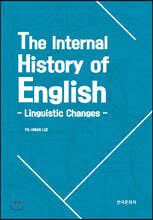
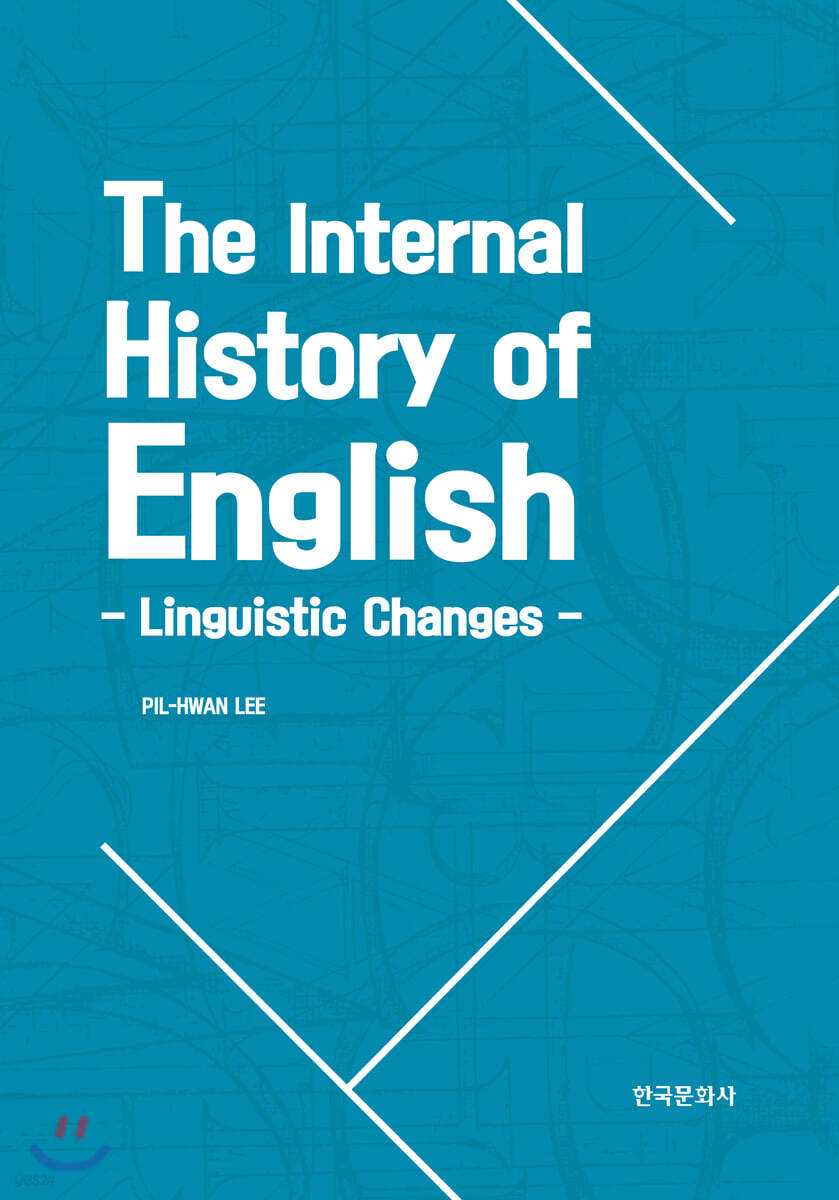
The Internal History of English - Linguistic Changes -
- 베스트
- 기호학/언어학 top100 3주
이미 소장하고 있다면 판매해 보세요.
- 해외배송 가능?
- 문화비소득공제 가능
책소개
목차
|
Preface
CHAPTER 1. Language Change 1.1. Language-external Causes for Language Change 1.2. Language-internal Causes for Language Change CHAPTER 2. Changes in Vocabulary: Lexical Change 2.1. Borrowing Words from Foreign Sources 2.2. Creating Words from Native Sources 2.3. Current Changes in English Vocabulary CHAPTER 3. Changes in Spelling and Pronunciation:Orthographic and Phonetic Change 3.1. Spelling Change 3.2. Pronunciation Change 3.3. Remedies for Discrepancy: Efforts for Spelling Reforms CHAPTER 4. Changes in Word Form: Morphological Change 4.1. Inflection: Declension and Conjugation 4.2. Pronouns 4.3. Articles and Demonstratives 4.4. Nouns 4.5. Adjectives and Adverbs 4.6. Verbs CHAPTER 5. Changes in Grammar: Syntactic Change 5.1. Word Order 5.2. Internal Structure of the Noun Phrase 5.3. Internal Structure of the Verb Phrase 5.4. Grammatical Functions CHAPTER 6. Changes in Meaning: Semantic Change 6.1. Aspects of Meaning 6.2. Metaphoric and Metonymic Transfer of Meaning 6.3. Synesthesia 6.4. Abstraction of Meaning 6.5. Objectivization and Subjectivization of Meaning 6.6. Broadening and Narrowing 6.7. Pejoration and Amelioration 6.8. Taboo and Euphemism 6.9. Semantic Bleaching 6.10. Why does Meaning Change? 6.11. Meaning Change and Dictionaries Cited Bibliography Index |
저자 소개 1
계명대학교 영어영문학과 교수이다. 서울대학교 영어영문학과 박사학위를 졸업했다. 저서로는 『English Diachronic Syntax』, 『Syntactic Changes in English』 등이 있다.
이필환의 다른 상품
-
The external History of English - Stories of English - 이동The external History of English - Stories of English -19,000원
품목정보
- 발행일
- 2019년 08월 31일
- 쪽수, 무게, 크기
- 192쪽 | 392g | 175*250*11mm
- ISBN13
- 9788968177903
책 속으로
|
One of the most conspicuous aspect of language change is the appearance of new words. It is inevitable to receive new words from foreign languages. For example, our language, Korean, is also provided with a lot of foreign words, especially from English these days.
There are some ‘language purists’ who are trying to refuse and expel foreign elements from a language. However, borrowing of words is a natural process for any language to a large degree, just as language is bound to change. Although some people are lamenting that English is ‘killing’ other languages, English itself has been influenced by a lot of foreign sources. We can see the evidence for that in the amount and variety of words poured into English. That is, new words have been pouring into English at a prodigious rate throughout its history, and the rate of introduction of new words is now perhaps greater than at any previous time. Language contact is mutual, which is easily evidenced in the exchange of words between languages. The borrowing of words can make the word stock of a language rich. Besides the borrowing of words, there is another source to make a rich word stock. It is the creation of new words using its own material; word-coinage or word formation. Getting new words (either through borrowing or through creating) is an important aspect of language change. The word inventory of a language changes according to the flow of time. An old word can just disappear, or can be replaced by the one imported from a foreign language, or can be transformed into a new one. --- 본문 중에서 |
출판사 리뷰
|
Why do we have to study the history of English?
There are already so many books on the history of English, both large and small, that this book seems redundant and unnecessary. What is more, this book does rarely give new academic findings on the topic. Nevertheless, I decided to make this book to be brought into the world, since it was written for pedagogical purposes, not for strictly academic ones. The main readers of this book will be Korean university students. These days, we, Korean professors, are forced to take such ‘practical’ classes like TOEIC, English Composition, English Grammar, etc., as the major courses of the Department of English and, at the same time, are pressed to give up teaching the so-called ‘academic’ subjects, including the history of English. “Most English-language courses, nowadays, are either concerned with developing a practical competence or with understanding the synchronic structure of English” (Rastall 2002: 31). There is a prediction that artificial intelligence will overcome language barriers as a tool beyond what we can imagine in a near future. The barriers of language will soon disappear, and the day of liberation from the difficulty and boredom of learning foreign languages is not far. Then we may not have to waste time and effort in studying English. The purpose of language education is not to secure ‘communication tools’, however, but to provide an opportunity for the mutual understanding of the culture and the promotion of the individual’s cultivation to alleviate the conflict and to eliminate its cause. From this point of view, the meaning of learning the history of English is revealed. It is an attempt to understand the whole English-American culture. Nevertheless, the history of English was taught too atomistically without the proper connection with contemporary English. So I believe that what matters is not the course itself but the teaching method and textbooks for the course. For “English in Historical Perspective”, advocated by Rastall (2002), the history of English should be taught at a university-level, at least for the students of English major. In spite of the need to seek for the explanation of contemporary English usage in a historical light, we did not achieve this goal at the courses of the Department of English. This situation is severely observed in the non-native environment, as at Korean universities. It is a greatly worrying situation that the students’ interest in English linguistics (not the study of the so-called ‘practical’ English), English literature, or the humanities in general, has recently been weakening in Korea. However, I am confident that the study of the history of English will be of great help in studying contemporary ‘practical’ English, too. This book was written to be used as a(n easy) textbook for the graduate course of the history of English at Korean Universities. This book deals with the ‘internal’ history of English in a more detailed way than most other introductory textbooks in this field; phonological, morphological, semantic and syntactic changes, since I hope that this book will be used as a starting material for the students of graduate level to find some interesting research topics here. For the ‘external’ history of English, it is recommended to refer to the separate volume, titled The External History of English: Stories of English. Lastly, I should confess that I feel uneasy in publishing this book, because I am greatly worried about the possibility of infringing copyright. This book contains not a few direct quotations. I have tried to reveal all the primary sources of the quotations, but it was limited and not always possible. I apologize for any infringement of copyright, if any. Pil-Hwan Lee Youngam Hall, Keimyung University, January 2019 |
사락 별점0
혜택 및 유의사항밑줄0
혜택 및 유의사항
13,000원
총 1개
13,000원