


소득공제
수입
직수입양서
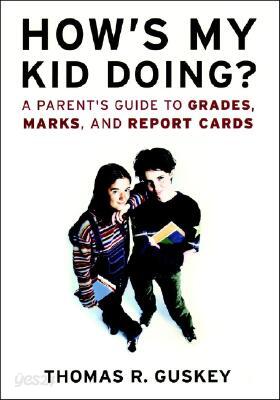
How's My Kid Doing?
A Parent's Guide to Grades, Marks, and Report Cards
Paperback, 1st Edition
Guskey, Thomas R.
Jossey-Bass
2003.03.14.
이미 소장하고 있다면 판매해 보세요.
- 국내배송만 가능
- 해외 거래처 사정에 의하여 품절/지연 가능
- 도서 정보 중 미표기 사항 안내?
- 문화비소득공제 가능
Jossey-Bass Education Series
-
 From Outrageous to Inspired: How to Build a Community of Leaders in Our Schools 이동From Outrageous to Inspired: How to Build a Community of Leaders in Our Schools18% 51,190원
-
Finders and Keepers: Helping New Teachers Survive and Thrive in Our Schools 이동Finders and Keepers: Helping New Teachers Survive and Thrive in Our Schools18% 45,260원
-
Paving the Way in Reading and Writing: Strategies and Activities to Support Struggling Students in Grades 6-12 이동Paving the Way in Reading and Writing: Strategies and Activities to Support Struggling Students in Grades 6-1218% 44,280원
-
Learning to Trust: Transforming Difficult Elementary Classrooms Through Developmental Discipline 이동Learning to Trust: Transforming Difficult Elementary Classrooms Through Developmental Discipline18% 44,280원
-
Because Writing Matters: Improving Student Writing in Our Schools 이동Because Writing Matters: Improving Student Writing in Our Schools18% 41,440원
-
Primary Games: Experiential Learning Activities for Teaching Children K-8 이동Primary Games: Experiential Learning Activities for Teaching Children K-818% 27,600원
-
Intellectual Character: What It Is, Why It Matters, and How to Get It 이동Intellectual Character: What It Is, Why It Matters, and How to Get It18% 34,520원
-
Building Character in Schools Resource Guide 이동Building Character in Schools Resource Guide18% 48,350원
-
The Connected School: Technology and Learning in High School 이동The Connected School: Technology and Learning in High School18% 37,350원
-
The Power of Portfolios: What Children Can Teach Us about Learning and Assessment 이동The Power of Portfolios: What Children Can Teach Us about Learning and Assessment18% 38,740원
책소개
목차
|
Preface viii 1. Getting Started 1 What Do We Mean by Grading and Reporting? 1 Are Grading and Reporting Essential? 3 Why Are Educators Changing Their Grading and Reporting Methods? 4 What Are the Purposes of Grading and Reporting? 6 Why Should We Develop a Reporting System? 8 How Do We Develop a Reporting System? 9 How Do We Clarify the Purpose of Each Reporting Tool? 11 Summary 12 2. Perceptions and Responsibilities 13 Parents' Perceptions of Grading and Reporting 13 Parents' Perceptions of Teachers 16 Teachers' Perceptions of Grading and Reporting 17 Sources of Teachers' Grading and Reporting Practices 18 Students' Perceptions of Grading and Reporting 20 The Points-Driven Academic Economy of Classrooms 21 Summary 23 3. Challenges for Teachers in Grading and Reporting 25 Limiting Subjectivity in Grading 25 Balancing Instructional Concerns with Grading Requirements 26 Establishing Grading Criteria: Norm-Referenced Versus Criterion-Referenced Criteria 27 Clarifying Learning Criteria 28 Deciding What Sources of Evidence to Use 31 Relating Evidence to Purpose 38 Summary 39 4. Grading and Reporting Methods 41 Letter Grades 42 Plus and Minus Letter Grades 48 Categorical Grades 50 Percentage Grades 54 Standards-Based Grading 56 Narratives and Comments 63 Summary 68 5. Special Issues in Grading and Reporting 71 Grading on the Curve 71 Selecting Valedictorians 74 Setting Grade Cutoffs 76 Using Weighted Grades 81 Dealing with Grade Inflation 83 Summary 87 6. Developing Better Grading and Reporting Systems 89 The Importance of Purpose 89 The Challenge of Effective Communication 90 Tools for a Comprehensive Reporting System 91 Technology and Grading 106 Summary 111 7. Making Improvements in Grading and Reporting 113 Working with Teachers 113 Working with Children 118 Gradual Change Strategies 124 Conclusion 126 References 127 The Author 135 Index 137 |
저자 소개
Thomas R. Guskey is a professor of Educational Policy Studies and Evaluation at the University of Kentucky. He has taught at all school levels, worked as a school administrator in the Chicago Public Schools, and was the first director of the Center for the Improvement of Teaching and Learning, a national educational research center.
품목정보
- 발행일
- 2003년 03월 14일
- 쪽수, 무게, 크기
- 176쪽 | 231g | 152*229*15mm
- ISBN13
- 9780787967352
사락 별점0
혜택 및 유의사항밑줄0
혜택 및 유의사항상품정보안내
직수입외서의 경우, 해외거래처에서 제공하는 정보가 부족하여 제목, 표지, 가격, 유통상태 등의 정보가 미비하거나 변경되는 경우가 있습니다. 정확한 확인을 원하시는 경우, 일대일 상담으로 문의하여 주시면 답변 드리겠습니다.
(판형과 판수 등이 다양한 도서는 찾으시는 도서의 ISBN을 알려 주시면 보다 빠르고 정확한 안내가 가능합니다.)
해외거래처에서 품절인 경우, 2차 거래선을 통해 유럽과 미국 출판사로 직접 수입이 진행될 수 있습니다.
수입 진행 시점으로 부터 2~3주가 추가로 소요되며, 해외에서도 유통이 원활하지 않은 도서는 품절 안내가 지연될 수 있습니다.
해당 경우, 문자와 메일로 별도 안내를 드리고 있사오니 마이페이지에서 휴대전화번호와 메일주소를 다시 한번 확인해주시기 바랍니다.
20,680원
총 1개
20,680원
