
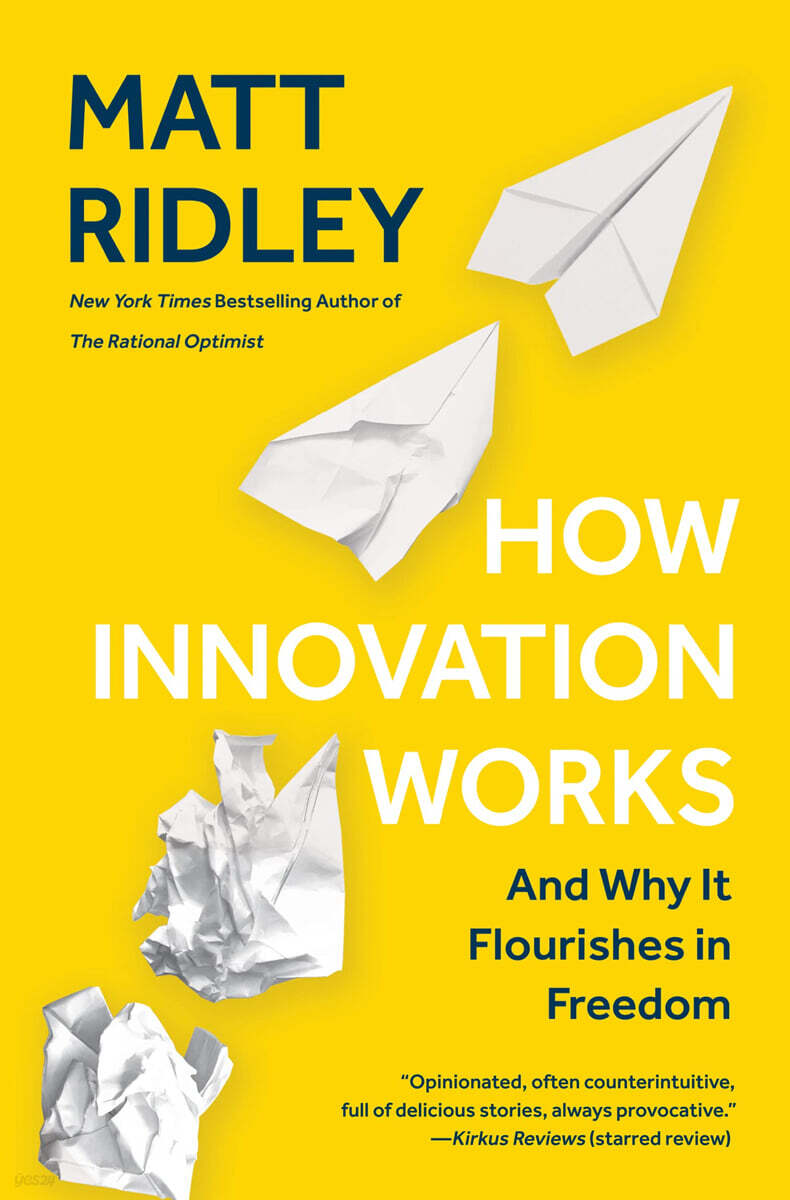
이미 소장하고 있다면 판매해 보세요.
- 국내배송만 가능
- 해외 거래처 사정에 의하여 품절/지연 가능
- 도서 정보 중 미표기 사항 안내?
- 문화비소득공제 가능
책소개
목차
|
Introduction: The Infinite Improbability Drive 1
1. Energy Of heat, work and light 13 What Watt wrought 24 Thomas Edison and the invention business 26 The ubiquitous turbine 32 Nuclear power and the phenomenon of disinnovation 36 Shale gas surprise 41 The reign of fire 48 2. Public health Lady Mary's dangerous obsession 50 Pasteur's chickens 55 The chlorine gamble that paid off 57 How Pearl and Grace never put a foot wrong 61 Fleming's luck 64 The pursuit of polio 69 Mud huts and malaria 73 Tobacco and harm reduction 75 3. Transport The locomotive and its line 80 Turning the screw 87 Internal combustion's comeback 89 The tragedy and triumph of diesel 94 The Wright stuff 95 International rivalry and the jet engine 103 Innovation in safety and cost 107 4. Food The tasty tuber 112 How fertilizer fed the world 118 Dwarfing genes from Japan 129 Insect nemesis 136 Gene editing gets crisper 141 Land sparing versus land sharing 147 5. Low-technology innovation When numbers were new 149 The water trap 155 Crinkly tin conquers the Empire 159 The container that changed trade 162 Was wheeled baggage late? 170 Novelty at the table 173 The rise of the sharing economy 176 6. Communication and computing The first death of distance 178 The miracle of wireless 183 Who invented the computer? 189 The ever-shrinking transistor 196 The surprise of search engines and social media 204 Machines that learn 211 7. Prehistoric innovation The first farmers 216 The invention of the dog 222 The (Stone Age) great leap forward 227 The feast made possible by fire 234 The ultimate innovation: life itself 237 8. Innovation's essentials Innovation is gradual 240 Innovation is different from invention 245 Innovation is often serendipitous 246 Innovation is recombinant 250 Innovation involves trial and error 253 Innovation is a team sport 255 Innovation is inexorable 257 Innovation's hype cycle 261 Innovation prefers fragmented governance 264 Innovation increasingly means using fewer resources rather than more 267 9. The economics of innovation The puzzle of increasing returns 271 Innovation is a bottom-up phenomenon 275 Innovation is the mother of science as often as it is the daughter 282 Innovation cannot be forced upon unwilling consumers 286 Innovation increases interdependence 287 Innovation does not create unemployment 289 Big companies are bad at innovation 294 Setting innovation free 297 10. Fakes, frauds, fads and failures Fake bomb detectors 300 Phantom games consoles 303 The Theranos debacle 304 Failure through diminishing returns to innovation: mobile phones 310 A future failure: Hyperloop 313 Failure as a necessary ingredient of success: Amazon and Google 317 11. Resistance to innovation When novelty is subversive: the case of coffee 324 When innovation is demonized and delayed: the case of biotechnology 328 When scares ignore science: the case of weedkiller 335 When government prevents innovation: the case of mobile telephony 337 When the law stifles innovation: the case of intellectual property 342 When big firms stifle innovation: the case of bagless vacuum cleaners 350 When investors divert innovation: the case of permissionless bits 356 12. An innovation famine How innovation works 359 A bright future 360 Not all innovation is speeding up 363 The innovation famine 365 China's innovation engine 368 Regaining momentum 371 Sources and further reading 375 Acknowledgements 389 Index 391 |
저자 소개 1
Matt Ridley
저널리스트, 사업가, 대중 과학 저술가, 상원의원. 옥스퍼드 대학에서 동물학 박사학위를 받았다. 주간지 <이코노미스트(The Economist)>의 과학 전문 기자를 거쳐 1993년부터는 <데일리 텔레그래프(The Daily Telegraph)> 칼럼니스트로 활동하기 시작했다. 지금까지 <월스트리트 저널(The Wall Street Journal)>, <런던 타임스(The Timesof London)>, <이코노미스트>, <데일리 텔레그래프> 등의 매체에 과학, 환경, 경제 분야의 글을 써왔다. 《모든 것의 진화(The Evolution of Everything)》, 《이성적 낙
저널리스트, 사업가, 대중 과학 저술가, 상원의원. 옥스퍼드 대학에서 동물학 박사학위를 받았다. 주간지 <이코노미스트(The Economist)>의 과학 전문 기자를 거쳐 1993년부터는 <데일리 텔레그래프(The Daily Telegraph)> 칼럼니스트로 활동하기 시작했다. 지금까지 <월스트리트 저널(The Wall Street Journal)>, <런던 타임스(The Timesof London)>, <이코노미스트>, <데일리 텔레그래프> 등의 매체에 과학, 환경, 경제 분야의 글을 써왔다. 《모든 것의 진화(The Evolution of Everything)》, 《이성적 낙관주의자(The Rational Optimist)》, 《게놈(Genome)》, 《붉은 여왕(The Red Queen)》 등 여러 상을 수상한 베스트셀러를 집필했으며, 그의 저서는 32개의 언어로 출간되어 세계에서 100만 부가 넘게 팔렸다.
매트 리들리의 다른 상품
-
How Innovation Works: And Why It Flourishes in Freedom 이동How Innovation Works: And Why It Flourishes in Freedom25,810원 18%
-
How Innovation Works: And Why It Flourishes in Freedom 이동How Innovation Works: And Why It Flourishes in Freedom65,930원 18%
-
How Innovation Works Lib/E: And Why It Flourishes in Freedom 이동How Innovation Works Lib/E: And Why It Flourishes in Freedom86,080원 18%
-
How Innovation Works: And Why It Flourishes in Freedom 이동How Innovation Works: And Why It Flourishes in Freedom71,730원 18%
-
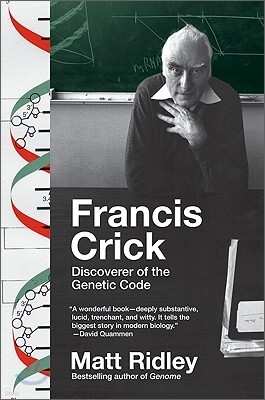
Francis Crick: Discoverer of the Genetic Code 이동Francis Crick: Discoverer of the Genetic Code24,480원
품목정보
- 발행일
- 2020년 05월 19일
- 쪽수, 무게, 크기
- 416쪽 | 152*216*38mm
- ISBN13
- 9780062916594
사락 별점0
혜택 및 유의사항밑줄0
혜택 및 유의사항상품정보안내
직수입외서의 경우, 해외거래처에서 제공하는 정보가 부족하여 제목, 표지, 가격, 유통상태 등의 정보가 미비하거나 변경되는 경우가 있습니다. 정확한 확인을 원하시는 경우, 일대일 상담으로 문의하여 주시면 답변 드리겠습니다.
(판형과 판수 등이 다양한 도서는 찾으시는 도서의 ISBN을 알려 주시면 보다 빠르고 정확한 안내가 가능합니다.)
해외거래처에서 품절인 경우, 2차 거래선을 통해 유럽과 미국 출판사로 직접 수입이 진행될 수 있습니다.
수입 진행 시점으로 부터 2~3주가 추가로 소요되며, 해외에서도 유통이 원활하지 않은 도서는 품절 안내가 지연될 수 있습니다.
해당 경우, 문자와 메일로 별도 안내를 드리고 있사오니 마이페이지에서 휴대전화번호와 메일주소를 다시 한번 확인해주시기 바랍니다.
(판형과 판수 등이 다양한 도서는 찾으시는 도서의 ISBN을 알려 주시면 보다 빠르고 정확한 안내가 가능합니다.)
해외거래처에서 품절인 경우, 2차 거래선을 통해 유럽과 미국 출판사로 직접 수입이 진행될 수 있습니다.
수입 진행 시점으로 부터 2~3주가 추가로 소요되며, 해외에서도 유통이 원활하지 않은 도서는 품절 안내가 지연될 수 있습니다.
해당 경우, 문자와 메일로 별도 안내를 드리고 있사오니 마이페이지에서 휴대전화번호와 메일주소를 다시 한번 확인해주시기 바랍니다.