

소득공제
수입
직수입양서
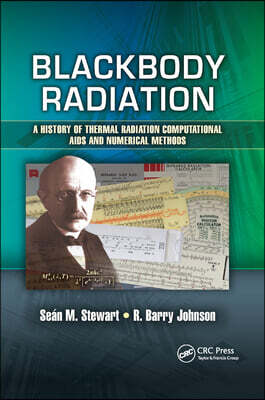
Blackbody Radiation
A History of Thermal Radiation Computational Aids and Numerical Methods
Paperback, 1st Edition
Johnson, R. Barry (Alabama A&M University, Huntsville, USA)
CRC Press
2019.12.12.
이미 소장하고 있다면 판매해 보세요.
- 국내배송만 가능
- 해외 거래처 사정에 의하여 품절/지연 가능
- 도서 정보 중 미표기 사항 안내?
- 문화비소득공제 가능
Optical Sciences and Applications of Light
-
 High-Speed 3D Imaging with Digital Fringe Projection Techniques 이동High-Speed 3D Imaging with Digital Fringe Projection Techniques10% 258,720원
 -
High-Speed 3D Imaging with Digital Fringe Projection Techniques 이동High-Speed 3D Imaging with Digital Fringe Projection Techniques10% 175,920원
-
High-Speed 3D Imaging with Digital Fringe Projection Techniques 이동High-Speed 3D Imaging with Digital Fringe Projection Techniques10% 434,700원
책소개
목차
|
SECTION I: THE BLACKBODY PROBLEM Chapter 1. Thermal radiation and the blackbody problem 1.1 Towards a solution to the blackbody problem 1.2 Planck and the blackbody problem 1.3 The work of the experimentalists 1.4 Thermal laws from dimensional analysis 1.5 Transition and new beginnings SECTION II: THEORETICAL AND NUMERICAL MATTERS Chapter 2. Theoretical developments 2.1 Spectral representations 2.2 Two important special functions 2.2.1 Polylogarithms 2.2.2 The Lambert W function 2.3 Two common spectral scales used to represent blackbody radiation 2.4 Other spectral scale representations 2.5 Ephemeral spectral peaks 2.6 Logarithmic spectral scales 2.7 The radiometric and actinometric cases 2.8 Normalized spectral exitance 2.9 The Stefan?Boltzmann law 2.9.1 The traditional approach 2.9.2 A polylogarithmic approach 2.10 Fractional functions of the ?rst kind 2.11 Fractional functions of other kinds 2.12 Centroid and median wavelengths 2.13 The standard probability distribution and cumulative probability distribution functions for blackbody radiation 2.14 Infrared, visible, and ultraviolet components in the spectral distribution of blackbody radiation Chapter 3. Computational and numerical developments 3.1 Approximations to the spectral exitance 3.1.1 The laws of Wien and Rayleigh?Jeans 3.1.2 Extended Wien and Rayleigh?Jeans approximations 3.1.3 Polynomial interpolation and logarithmic correction factors 3.1.4 Laurent polynomials and non-rational approximations of Erminy 3.2 Computation of the fractional function of the ?rst kind 3.2.1 Series expansion methods 3.2.1.1 Large arguments 3.2.1.2 Small arguments 3.2.1.3 Division point |
관련 분류
품목정보
- 발행일
- 2019년 12월 12일
- 쪽수, 무게, 크기
- 414쪽 | 770g | 160*230mm
- ISBN13
- 9780367871116
리뷰/한줄평0
상품정보안내
직수입외서의 경우, 해외거래처에서 제공하는 정보가 부족하여 제목, 표지, 가격, 유통상태 등의 정보가 미비하거나 변경되는 경우가 있습니다. 정확한 확인을 원하시는 경우, 일대일 상담으로 문의하여 주시면 답변 드리겠습니다.
(판형과 판수 등이 다양한 도서는 찾으시는 도서의 ISBN을 알려 주시면 보다 빠르고 정확한 안내가 가능합니다.)
해외거래처에서 품절인 경우, 2차 거래선을 통해 유럽과 미국 출판사로 직접 수입이 진행될 수 있습니다.
수입 진행 시점으로 부터 2~3주가 추가로 소요되며, 해외에서도 유통이 원활하지 않은 도서는 품절 안내가 지연될 수 있습니다.
해당 경우, 문자와 메일로 별도 안내를 드리고 있사오니 마이페이지에서 휴대전화번호와 메일주소를 다시 한번 확인해주시기 바랍니다.
(판형과 판수 등이 다양한 도서는 찾으시는 도서의 ISBN을 알려 주시면 보다 빠르고 정확한 안내가 가능합니다.)
해외거래처에서 품절인 경우, 2차 거래선을 통해 유럽과 미국 출판사로 직접 수입이 진행될 수 있습니다.
수입 진행 시점으로 부터 2~3주가 추가로 소요되며, 해외에서도 유통이 원활하지 않은 도서는 품절 안내가 지연될 수 있습니다.
해당 경우, 문자와 메일로 별도 안내를 드리고 있사오니 마이페이지에서 휴대전화번호와 메일주소를 다시 한번 확인해주시기 바랍니다.
175,920원
총 1개
175,920원